I did not think about my soil type for the first year I owned a house. Then I tried to dig a hole for a new shrub. My shovel bounced off the ground like I was hitting concrete. Welcome to clay soil.
Your soil type affects everything. How fast water drains. How well grass roots grow. How often you need to fertilize. Even which grass type will survive in your yard. Most homeowners ignore soil type. Then they wonder why their lawn struggles.
Here is how to figure out your soil type and what to do about it.
The Three Main Soil Types
Soil comes in three basic types. Clay. Sand. And loam. Most yards are a mix of all three. But one type usually dominates.
Clay Soil
Clay soil has tiny particles that pack together tightly. Water drains slowly. Roots struggle to push through. Clay soil is heavy and sticky when wet. It turns rock hard when dry.
My yard is heavy clay. I know because I can roll wet clay soil into a long ribbon between my fingers without it breaking. Try that with your soil. If you can make a ribbon longer than two inches, you have clay.
September Outdoor Sale — Save Up to 52%
A new month means new ways to upgrade your patio, garden & lawn for less. We’ve rounded up popular outdoor picks with savings up to 52%. Don’t wait—these offers can change anytime!
Clay soil holds nutrients well. That is its one advantage. But the poor drainage and compaction usually outweigh that benefit.
Sandy Soil
Sandy soil has large particles with big gaps between them. Water drains too fast. Nutrients wash right through before grass can use them. Sandy soil feels gritty. It falls apart when you squeeze it.
If your lawn dries out two days after rain while your neighbor stays green, you probably have sandy soil. Sandy soil is easy to dig. But it does not hold water or nutrients well.
Loam Soil
Loam is the goldilocks soil. It has a balance of clay, sand, and organic matter. It drains well but holds enough water. It is soft enough for roots but firm enough to support grass. Loam is dark, crumbly, and smells earthy.
If you have loam soil, you are lucky. Most yards are not naturally loam. Builders often strip the good topsoil during construction and leave compacted subsoil.
How to Test Your Soil Type (The Jar Test)
The jar test takes 5 minutes of setup and 24 hours of waiting. It tells you exactly what your soil is made of.
September Outdoor Sale — Save Up to 52%
A new month means new ways to upgrade your patio, garden & lawn for less. We’ve rounded up popular outdoor picks with savings up to 52%. Don’t wait—these offers can change anytime!
Dig down 4 inches and collect a cup of soil. Remove rocks and roots. Put the soil in a clear jar with a lid. Fill the jar two-thirds with water. Add a drop of dish soap. Shake hard for two minutes. Set it down and do not touch it.
After 24 hours, the soil separates into layers. Sand settles on the bottom within a minute. Silt settles next within a few hours. Clay settles last and stays cloudy for a full day. Organic matter floats on top.
Measure each layer. If sand is the thickest, you have sandy soil. If clay is thickest, you have clay soil. If layers are roughly equal, you have loam.
Soil Type Comparison
| Feature | Clay | Sand | Loam |
|---|---|---|---|
| Drainage | Slow | Fast | Just right |
| Nutrient holding | Excellent | Poor | Good |
| Compaction | High | Low | Low to medium |
| Warms up in spring | Slowly | Quickly | Moderate |
| Ease of digging | Hard | Easy | Easy |
Best Grass Types for Each Soil
Clay soil: Tall fescue handles clay best. Its deep roots punch through compacted clay. Kentucky bluegrass also works if you improve drainage first.
Sandy soil: Bermuda grass and zoysia thrive in sandy soil. They have deep root systems that chase water and nutrients down through fast-draining sand.
Loam soil: Any grass type grows well in loam. Pick based on your climate, not your soil.
September Outdoor Sale — Save Up to 52%
A new month means new ways to upgrade your patio, garden & lawn for less. We’ve rounded up popular outdoor picks with savings up to 52%. Don’t wait—these offers can change anytime!
How to Improve Any Soil Type
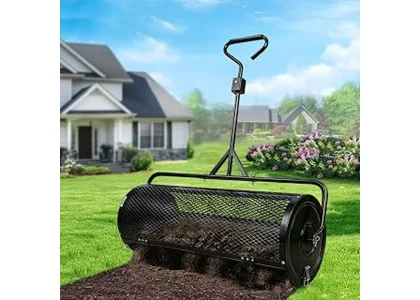
No matter what soil you have, adding organic matter helps. Compost, aged manure, grass clippings, and shredded leaves all improve soil structure.
For clay soil, organic matter opens up spaces between particles. Water drains better. Roots penetrate deeper. I add a half inch of compost to my clay lawn every spring.
For sandy soil, organic matter acts like a sponge. It holds water and nutrients that would otherwise wash through. I mix compost into sandy soil before seeding.
Top-dressing with compost is the single best thing you can do for any soil type. It takes time. But it works.
Frequently Asked Questions
How do I know what soil type I have?
Do the jar test or the ribbon test. For the ribbon test, take a handful of moist soil and try to roll it into a ribbon between your thumb and forefinger. Clay forms a long ribbon over 2 inches. Loam forms a short ribbon that breaks. Sand will not form a ribbon at all.
Can I change my soil type?
You cannot completely change clay into loam or sand into loam. But you can improve any soil by adding organic matter every year. Over 3 to 5 years, compost and organic amendments transform poor soil into productive soil.
September Outdoor Sale — Save Up to 52%
A new month means new ways to upgrade your patio, garden & lawn for less. We’ve rounded up popular outdoor picks with savings up to 52%. Don’t wait—these offers can change anytime!
What is the best soil for growing grass?
Loam is the best soil for growing grass. It has the right balance of drainage and water retention. Most lawns are not naturally loam. Builders leave compacted subsoil after construction. Improving your soil with compost is worth the effort.
Shop Understanding Soil Types for Lawn: Clay Sand Loam on Amazon