Last Updated on October 22, 2026 by D. Ruddy
If you’ve ever pulled an apple from storage only to find it wrinkled or mushy, you know proper storage makes all the difference. The best way to store apples keeps them crisp, sweet, and fresh for weeks or even months, preserving their texture and nutritional value. Whether you have a small harvest from your backyard tree or a bulk purchase from the farmers market, the right approach prevents waste and ensures every bite tastes as good as the day you picked it.
The best way to store apples is in a cool, dark, and humid environment like a refrigerator or root cellar. Keep them in breathable containers, away from other produce, and check regularly for spoilage to extend their shelf life significantly.
Why Proper Apple Storage Matters
Apples continue to respire after being picked, which means they release ethylene gas—a natural plant hormone that speeds up ripening. If not stored correctly, this gas can cause apples to soften, lose flavor, or even spoil prematurely. Proper storage slows down respiration, reducing ethylene’s impact and preserving freshness.
Temperature and humidity play critical roles. Apples stored at room temperature ripen and spoil up to ten times faster than those kept in cooler conditions. According to the University of Maine Cooperative Extension, apples stored at 30-35°F (0-2°C) with 90-95% humidity can last 4-6 months, while those kept at room temperature may only last a week or two.
This makes controlled environments like refrigerators or root cellars ideal for long-term storage.
- Prevents ethylene damage by isolating apples from other ethylene-sensitive produce
- Maintains crispness through optimal humidity levels
- Preserves nutritional value, including vitamins and antioxidants
- Reduces food waste by extending shelf life significantly
- Saves money by allowing bulk purchases when apples are in season and cheaper
Preparing Apples For Storage
Before storing apples, proper preparation is key to maximizing their lifespan. Start by selecting only the best specimens—apples with bruises, cuts, or signs of rot will spoil faster and can affect nearby apples. Gently wipe off any dirt with a soft cloth, but avoid washing them, as excess moisture can promote mold growth.
Sort apples by variety if possible, as different types have varying storage needs. For example, late-season varieties like Fuji and Granny Smith store better than early-season ones like McIntosh. Handle apples carefully to avoid bruising, which accelerates spoilage.
If you’ve picked apples from your own trees, allow them to cool gradually after harvest before moving them to storage.
Tip: If you must wash apples before storage, ensure they are completely dry before packing them away. Even a small amount of moisture can lead to mold.
- Inspect each apple for damage, bruises, or signs of rot. Discard any that are compromised.
- Do not wash apples before storage unless absolutely necessary. Dirt can be brushed off later.
- Sort by variety if storing different types, as some keep longer than others.
- Allow apples to cool if they’ve been in warm conditions (e.g., freshly picked from a sunny orchard).
- Use clean containers to prevent contamination from previous storage.
Best Storage Methods For Apples
The method you choose for storing apples depends on how long you plan to keep them and the space available to you. For short-term storage (up to a month), the refrigerator is often the most convenient option. For longer storage, a root cellar or other cool, dark, and humid environment is ideal.
Below are the most effective methods, ranked by effectiveness and practicality.
Refrigerator Storage
The refrigerator is the most accessible option for most households. Store apples in the crisper drawer, where humidity is higher. Use perforated plastic bags or loosely wrapped plastic to retain moisture while still allowing some airflow.
Avoid sealing apples in airtight containers, as this traps ethylene gas and speeds up spoilage.
| Pros | Cons |
|---|---|
| Convenient and easy to access | Limited space for bulk storage |
| Maintains consistent temperature | Humidity may not be optimal |
| Ideal for short-term storage | Not suitable for very long-term storage |
Refrigerator storage works best for apples you plan to eat within 1-2 months. Check them periodically and remove any that show signs of spoilage to prevent ethylene from affecting the others.
Root Cellar Storage
A root cellar provides the ideal environment for long-term apple storage. The cool, dark, and humid conditions slow down respiration and preserve freshness. If you don’t have a traditional root cellar, a basement, garage, or even a cool closet can work as long as the temperature stays between 30-40°F (0-4°C) and humidity remains high.
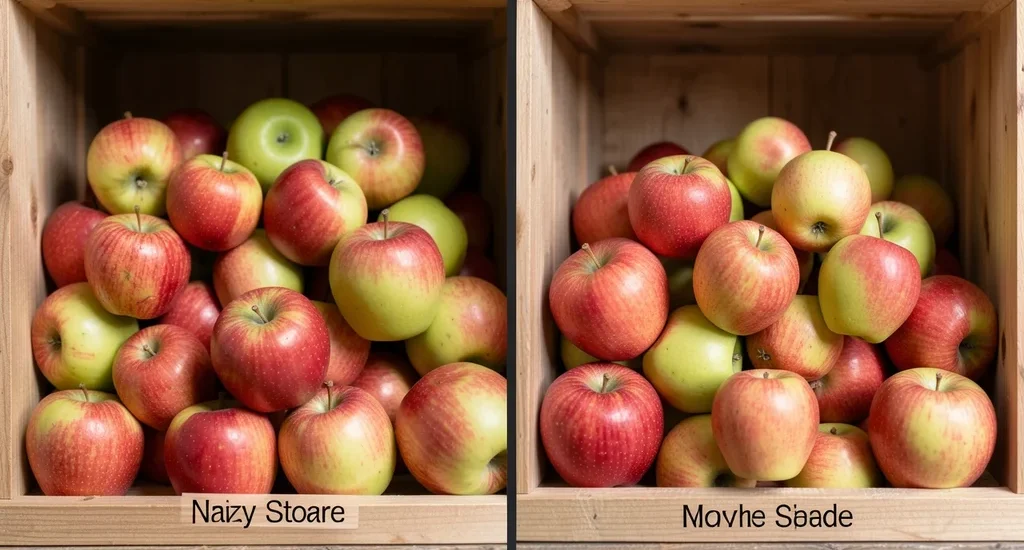
Store apples in wooden crates, cardboard boxes, or baskets lined with straw or newspaper. Avoid plastic containers, as they can trap moisture and lead to mold. Space apples out so they’re not touching each other to reduce the spread of ethylene gas and potential rot.
Important: If using a basement or garage, monitor the temperature closely. Fluctuations can reduce storage life. A thermometer and hygrometer can help maintain ideal conditions.
| Pros | Cons |
|---|---|
| Best for long-term storage (4-6 months) | Requires a suitable space (not available in all homes) |
| Maintains high humidity naturally | Temperature fluctuations can be an issue |
| Cost-effective for bulk storage | Requires regular monitoring for spoilage |
Freezer Storage
Freezing is an excellent option if you plan to use apples for cooking, baking, or making applesauce. While frozen apples lose their crisp texture, they retain their flavor and nutritional value. To freeze apples, first wash, peel (optional), and slice them.
Treat the slices with an ascorbic acid solution (or lemon juice) to prevent browning, then drain and pat dry. Spread the slices on a baking sheet to freeze individually before transferring them to airtight containers or freezer bags.
Warning: Frozen apples will be soft when thawed and are best used in cooked dishes rather than eaten raw.
- Blanching apples before freezing can help preserve their texture and color.
- Use airtight containers to prevent freezer burn.
- Label containers with the date to keep track of storage time (frozen apples last 8-12 months).
- Portion apples in recipe-sized amounts for convenience.
- Avoid refreezing thawed apples, as this can degrade quality.
What To Avoid When Storing Apples
Even with the best intentions, common mistakes can ruin your apple storage efforts. One of the biggest errors is storing apples near other fruits or vegetables. Apples produce ethylene gas, which can cause nearby produce like bananas, avocados, or leafy greens to ripen and spoil faster.
Conversely, some produce (like onions or potatoes) can absorb odors or release gases that affect apples.
Another mistake is using airtight containers without ventilation. While it might seem logical to seal apples to keep out pests or moisture, this traps ethylene gas and accelerates spoilage. Always use breathable containers or leave slight openings in plastic bags to allow gas to escape.
- Avoid storing apples near ethylene-sensitive produce like bananas, avocados, or tomatoes.
- Do not use airtight containers for long-term storage, as they trap ethylene.
- Avoid warm or fluctuating temperatures, which speed up ripening and spoilage.
- Do not store damaged apples with healthy ones, as rot can spread quickly.
- Avoid direct sunlight, which can cause apples to overripen and lose flavor.
- Do not wash apples before storage unless you’re sure they’ll dry completely.
How To Tell If Stored Apples Have Gone Bad
Regularly checking your stored apples ensures you catch any issues early. The most obvious sign of spoilage is visible mold or rot, which appears as soft, discolored spots on the skin or flesh. A musty or off smell is another red flag—if your storage area starts to smell funky, it’s time to inspect your apples closely.
Texture changes are also a giveaway. Apples that have lost their crispness and become mealy or mushy are past their prime. Wrinkled skin is another sign of dehydration, which happens if the humidity in your storage area is too low.
If you notice any of these signs, remove the affected apples immediately to prevent the problem from spreading to the rest of your batch.
| Sign of Spoilage | What It Means | Action to Take |
|---|---|---|
| Soft, brown spots | Mold or rot | Remove immediately and check nearby apples |
| Musty or sour smell | Fermentation or spoilage | Inspect all apples and discard affected ones |
| Wrinkled skin | Dehydration | Increase humidity in storage area |
| Mealy or mushy texture | Overripening | Use for cooking or compost |
Best Apple Varieties For Long-Term Storage
Not all apples are created equal when it comes to storage. Some varieties naturally last longer due to their thicker skins, higher acidity, or lower moisture content. Late-season apples, harvested in the fall, tend to store better than early-season varieties.
Below are some of the best apple types for long-term storage, along with their approximate shelf life when stored properly.
| Variety | Storage Life | Best For |
|---|---|---|
| Fuji | 5-6 months | Eating fresh, baking |
| Granny Smith | 5-6 months | Pies, salads, eating fresh |
| Honeycrisp | 4-5 months | Eating fresh, cider |
| Pink Lady | 4-5 months | Eating fresh, salads |
| Jonagold | 4-5 months | Baking, eating fresh |
| Braeburn | 4-5 months | Baking, cider |
Early-season varieties like McIntosh, Gala, or Red Delicious typically store for only 1-2 months, even under ideal conditions. If you’re planning to store apples for the winter, opt for the longer-lasting varieties listed above.
Common Mistakes To Avoid
Even experienced gardeners and cooks make mistakes when storing apples. One of the most common is assuming that all apples can be stored the same way. As mentioned earlier, early-season varieties spoil much faster than late-season ones, so it’s important to know what you’re working with.
Another mistake is overcrowding apples in storage containers, which can lead to bruising and increased ethylene exposure.
Temperature fluctuations are another frequent issue. If your storage area experiences warm spells or cold snaps, the apples’ respiration rate can vary, leading to inconsistent ripening. For example, apples stored in a garage that gets warm during the day and cold at night will spoil faster than those in a consistently cool environment.
- Assuming all apples store equally – Late-season varieties last much longer than early-season ones.
- Overcrowding containers – Apples need space to prevent bruising and ethylene buildup.
- Ignoring temperature fluctuations – Consistency is key for long-term storage.
- Using non-breathable containers – Plastic bags without ventilation trap ethylene and moisture.
- Storing apples with other produce – Keep them separate to avoid cross-contamination from ethylene.
- Forgetting to check for spoilage – Regular inspections prevent one bad apple from ruining the bunch.
Pro Tips For Extending Apple Freshness
If you want to go the extra mile to keep your apples fresh, there are a few pro tips worth trying. One effective method is to wrap each apple individually in newspaper or tissue paper before placing them in a box or crate. This absorbs excess moisture and further isolates the apples from ethylene gas, extending their shelf life by several weeks.
Another tip is to store apples in a slightly elevated position, such as on a shelf or in a hanging basket, to improve airflow. This is especially useful in root cellars or basements where air circulation might be limited. You can also add a damp cloth or a small bowl of water to the storage area to maintain humidity levels if your environment is too dry.
- Wrap apples individually in newspaper or tissue paper to absorb moisture and isolate ethylene.
- Elevate apples on shelves or in hanging baskets to improve airflow.
- Add moisture with a damp cloth or bowl of water if humidity is too low.
- Use cedar shavings in storage containers to repel pests naturally.
- Store stem-side down to reduce moisture loss through the stem end.
- Avoid plastic liners in boxes, as they can trap moisture and cause mold.
Frequently Asked Questions
How long can apples be stored?
The storage life of apples depends on the variety and storage conditions. Late-season varieties like Fuji or Granny Smith can last 5-6 months in ideal conditions (30-35°F with 90-95% humidity). Early-season apples typically last only 1-2 months, even when stored properly.
In a refrigerator, most apples will stay fresh for 1-2 months.
Can I store apples at room temperature?
Apples can be stored at room temperature for short periods, but they will ripen and spoil much faster—usually within 1-2 weeks. If you plan to eat them quickly, room temperature is fine. For longer storage, always use a cooler environment like a refrigerator or root cellar.
Why do apples get mealy in storage?
Apples become mealy when their cell walls break down, which happens due to overripening or improper storage conditions. This is often caused by exposure to ethylene gas, temperature fluctuations, or low humidity. Storing apples in a cool, humid, and well-ventilated environment helps prevent this texture change.
Can I store apples with potatoes?
No, you should not store apples with potatoes. Apples release ethylene gas, which can cause potatoes to sprout prematurely. Additionally, potatoes release moisture and gases that can affect the apples’ flavor and texture.
Keep these two produce items separate to avoid mutual spoilage.
What is the best container for storing apples?
The best containers for storing apples are wooden crates, cardboard boxes, or baskets lined with straw or newspaper. These materials allow for airflow while maintaining humidity. For refrigerator storage, perforated plastic bags or loosely wrapped plastic work well.
Avoid airtight containers, as they trap ethylene gas and moisture.
Final Thoughts
The best way to store apples depends on your needs and resources, but the key principles are consistent: keep them cool, dark, and humid, with good airflow and isolation from other produce. Whether you choose a refrigerator, root cellar, or freezer, proper preparation and regular checks will ensure your apples stay fresh and delicious for as long as possible. By avoiding common mistakes and following these best practices, you can enjoy crisp, flavorful apples for months after harvest.