I stood in the fertilizer aisle holding two bags. One was bright green with big numbers like 30-0-4. The other was brown paper with small numbers like 5-1-1. I had no idea which one was better for my lawn.
That was five years ago. Since then I have tested both organic and synthetic fertilizers on my lawn. I have burned grass with too much synthetic. I have waited weeks for organic to show results. I learned the real differences the hard way.
Here is the honest truth about organic versus synthetic fertilizer. No marketing. No hype. Just what actually happens on real grass.
The Big Difference in One Sentence
Synthetic fertilizer feeds the plant directly. Organic fertilizer feeds the soil, which then feeds the plant. That is the whole game.
Everything else flows from that one difference. Speed. Burn risk. Cost. Environmental impact. All of it comes back to plant food versus soil food.
What Is Synthetic Fertilizer?
Synthetic fertilizer is made in factories. Chemicals are processed into concentrated nutrients that dissolve fast in water. Grass absorbs them almost immediately through its roots.
September Outdoor Sale — Save Up to 52%
A new month means new ways to upgrade your patio, garden & lawn for less. We’ve rounded up popular outdoor picks with savings up to 52%. Don’t wait—these offers can change anytime!
The NPK numbers are high. Something like 30-0-4 means the bag is 30% nitrogen by weight. That is a lot. A 50-pound bag of 30-0-4 contains 15 pounds of pure nitrogen.
Synthetic fertilizers are like an energy drink for your lawn. Fast energy. Quick results. But also a crash if you overdo it.
What Is Organic Fertilizer?
Organic fertilizer comes from natural materials. Plant matter, animal waste, bone meal, blood meal, compost. Things that were once alive.
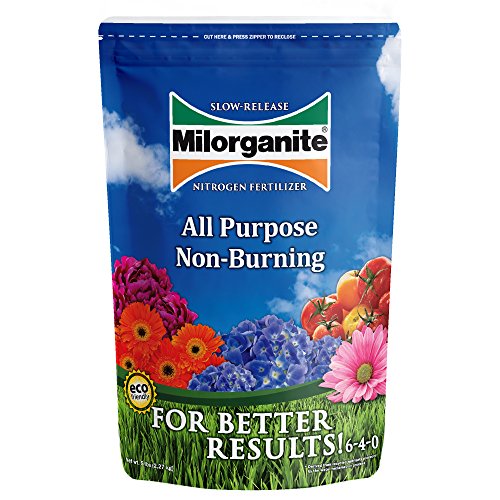
The NPK numbers are low. Milorganite is 6-4-0. That means only 6% nitrogen. The rest is organic matter that feeds soil microbes. Those microbes break down the organic material slowly and release nutrients bit by bit.
Organic fertilizers are like a home-cooked meal for your lawn. Slower to prepare. But better for long-term health.
Organic vs Synthetic: Head-to-Head Comparison
| Feature | Synthetic | Organic |
|---|---|---|
| Speed of results | 3 to 7 days | 2 to 4 weeks |
| Duration of feeding | 4 to 6 weeks | 8 to 12 weeks |
| Burn risk | High if over-applied | Almost zero |
| Cost per application | $15 to $30 | $20 to $50 |
| Improves soil health | No | Yes, builds organic matter |
| Safe for kids/pets | Keep off for 24-48 hours | Safe immediately |
| Runoff risk | Higher | Much lower |
When I Use Synthetic Fertilizer
I use synthetic fertilizer in early spring when I want fast green-up. After a long winter, I want my lawn to look good fast. Scotts Turf Builder gives me visible results in about 5 days.
September Outdoor Sale — Save Up to 52%
A new month means new ways to upgrade your patio, garden & lawn for less. We’ve rounded up popular outdoor picks with savings up to 52%. Don’t wait—these offers can change anytime!
I also use synthetic before a big outdoor event. If I am having a barbecue in two weeks, synthetic makes the lawn look its best in time.
And I use synthetic on lawns that have serious nitrogen deficiency. Yellow, weak grass needs nitrogen now. Not in three weeks. Synthetic delivers.
When I Use Organic Fertilizer
I use organic fertilizer through summer when heat stress is high. Synthetic fertilizer can burn grass when temperatures top 85 degrees.

feeds slowly with zero burn risk.
September Outdoor Sale — Save Up to 52%
A new month means new ways to upgrade your patio, garden & lawn for less. We’ve rounded up popular outdoor picks with savings up to 52%. Don’t wait—these offers can change anytime!
I use organic on new lawns and after overseeding. Young grass has tender roots. Synthetic fertilizer can damage them. Organic is gentle.
I also use organic on lawns with poor soil. If your soil is compacted clay or sandy junk, organic matter improves it over time. Synthetic fertilizer does nothing for soil structure.
The Cost Difference (Real Numbers)
Synthetic fertilizer costs less per bag. A 5,000 square foot bag of Scotts is about $25. That is $5 per 1,000 square feet per application.
Organic costs more. Milorganite covers only 2,500 square feet per $20 bag. That is $8 per 1,000 square feet. Almost double.
But organic feeds longer. You might apply synthetic four times per year and organic only three times. The yearly cost ends up closer than you think. I spend about $120 per year on synthetic and $140 on organic for my 6,000 square foot lawn.
Can You Mix Organic and Synthetic?
Yes. I do it all the time. It is called a hybrid approach. I use synthetic in spring for fast green-up. Then I switch to organic through summer. In fall, I might use synthetic winterizer with high potassium.
September Outdoor Sale — Save Up to 52%
A new month means new ways to upgrade your patio, garden & lawn for less. We’ve rounded up popular outdoor picks with savings up to 52%. Don’t wait—these offers can change anytime!
This gives me the fast results of synthetic when I want them plus the soil-building benefits of organic long-term. Best of both worlds.
Just do not apply both on the same day. Space them at least two weeks apart. You do not want to double up on nitrogen by accident.
Frequently Asked Questions
Is organic fertilizer better than synthetic?
It depends on your goal. Organic is better for long-term soil health and is safer for kids and pets. Synthetic is better for fast results and costs less per bag. Many lawn owners use both at different times of year.
Does organic fertilizer work as well as synthetic?
Organic fertilizer works but slower. You will not see results for 2 to 4 weeks compared to 1 week with synthetic. But the results last longer. Organic feeds for 8 to 12 weeks. Synthetic lasts 4 to 6 weeks.
Can I switch from synthetic to organic fertilizer?
Yes. There is no adjustment period needed. Just start using organic on your next scheduled feeding. Your lawn will not go into shock. The green color might fade slightly during the transition because organic releases nitrogen slower. That is normal. It comes back.
Why does organic fertilizer cost more?
Organic materials are bulkier and heavier to ship. Manufacturing costs are higher because the raw materials are natural products like manure and bone meal. Synthetic fertilizer is made from cheap industrial chemicals and concentrated into smaller, lighter bags.
September Outdoor Sale — Save Up to 52%
A new month means new ways to upgrade your patio, garden & lawn for less. We’ve rounded up popular outdoor picks with savings up to 52%. Don’t wait—these offers can change anytime!