Walk into any garden center and you will see two types of pruners: bypass and anvil. They look similar. They cost about the same. But they work in completely different ways. Pick the wrong one and you will damage your plants.
I have used both types for years. Here is the honest breakdown of how they work, when to use each, and which one you should buy.
The Simple Difference
Bypass pruners have two curved blades that pass by each other. Picture scissors. One sharp blade slices past a thicker, unsharpened blade. The cut is clean and precise. This is how surgeons cut. This is how you should cut live plant tissue.
Anvil pruners have one straight, sharp blade that closes against a flat metal plate (the anvil). Picture a knife on a cutting board. The blade presses into the branch until it splits. The cut crushes more than it slices.
That one design difference changes everything about how the pruner performs on different types of wood.
How Bypass Pruners Work

🍂 The Silent Lawn Killer: Damp Leaves Will Suffocate Your Grass
Trapped wet leaves create a breeding ground for destructive snow mold. Clear the yard fast with a high-power cordless blower before the ground freezes.
In a bypass pruner, the sharp blade slides along the counter blade. The branch is pinched between them and sliced cleanly. There is almost no crushing. The plant cells at the cut site are severed cleanly, which means they heal quickly.
A clean cut seals over with callus tissue within days. Water loss from the cut is minimal. Disease organisms have a harder time entering. The plant barely notices the cut.
Bypass pruners are designed for live, green wood. That includes stems, branches, vines, and anything that is still growing. If the branch bends before it breaks, it is live wood. Use bypass pruners.
The curved blade also lets you get into tight spaces. You can reach inside a shrub and cut a specific stem without damaging the ones around it. The precision of a bypass pruner is unmatched.
How Anvil Pruners Work

In an anvil pruner, the sharp blade comes down directly onto a flat metal surface. The branch sits on the anvil. The blade presses into it from above. Instead of slicing, the blade splits the wood fibers apart.
🍂 The Silent Lawn Killer: Damp Leaves Will Suffocate Your Grass
Trapped wet leaves create a breeding ground for destructive snow mold. Clear the yard fast with a high-power cordless blower before the ground freezes.
On dead wood, this works fine. Dead wood is hard and brittle. It does not need a clean cut because there are no living cells to protect. The crushing action of an anvil pruner actually helps split through the dry, tough fibers.
But on live wood, the crushing is a problem. The anvil mashes the soft tissue at the cut site. Cells are ruptured, not severed. This creates a ragged wound that takes longer to heal. More water is lost. Disease organisms find it easier to enter.
Anvil pruners also give you less precision. The straight blade and flat anvil are bulkier. It is harder to reach inside a dense plant and cut just one stem.
Side-by-Side Comparison
| Feature | Bypass Pruners | Anvil Pruners |
|---|---|---|
| How they cut | Slice (like scissors) | Crush/split (like knife on board) |
| Best for | Live, green wood | Dead, dry wood |
| Cut quality | Clean, precise | Ragged, crushed |
| Healing time | Fast | Slow |
| Precision | High (curved blade) | Lower (straight blade) |
| Effort required | Moderate | Slightly lower (leverage advantage) |
| Max cut thickness | 3/4 to 1 inch | 3/4 to 1 inch |
| Blade maintenance | Sharpen one beveled side | Sharpen both sides |
| Common uses | Roses, shrubs, fruit trees, perennials | Dead branches, dry stems, old wood |
Why Bypass Is the Default Choice for Most Gardeners
90% of the pruning you do in a garden is on live plants. Roses. Hydrangeas. Tomato suckers. Apple tree branches. Raspberry canes. All of these are living tissue that heals better with a clean bypass cut.
If you buy only one pair of pruners, make them bypass. The Felco F-2, Corona BP 3180, and ARS HP-VS8Z are all bypass pruners. They handle 90% of garden tasks perfectly. An anvil pruner is a specialty tool for the remaining 10%.
I own both. But my bypass pruners get used 50 times for every time I reach for the anvil pruners. The anvil only comes out when I am clearing dead branches from a shrub or cutting back old, dry perennial stems in spring cleanup.
🍂 The Silent Lawn Killer: Damp Leaves Will Suffocate Your Grass
Trapped wet leaves create a breeding ground for destructive snow mold. Clear the yard fast with a high-power cordless blower before the ground freezes.
When Anvil Pruners Actually Make Sense
Anvil pruners are not bad tools. They are misused tools. In the right situation, they work better than bypass pruners. Here is when to use them:
Dead, dry branches. Old rose canes that died over winter. Dead twigs inside a shrub. Dry, hardened stems from last year’s perennials. Dead wood is tough and brittle. The anvil splits through it with less effort than a bypass pruner requires.
Very hard wood. Some plants produce wood that is almost like stone when dry. Bamboo stakes. Old grapevine wood. The crushing action of an anvil pruner breaks through these better than a bypass blade, which might twist or chip.
When you have arthritis or weak hands. Anvil pruners require slightly less grip strength than bypass pruners because the flat anvil provides a stable base. The blade only has to push down – it does not have to slide past another blade. This small mechanical advantage matters if your hands are weak. That said, ratchet pruners are an even better solution for hand pain.
Cutting near the ground. If you are cutting stems at soil level, dirt and grit are unavoidable. Grit damages bypass blades because it gets between the two blades and acts like sandpaper. Anvil pruners handle dirty conditions better because there is less blade-to-blade contact.
Can You Use Anvil Pruners on Live Plants?
You can. The plant probably will not die. But you are making the plant’s job harder. A crushed cut heals slower than a clean slice. The ragged wound loses more moisture. Fungal spores have more surface area to land on. If you do this to one or two stems, the plant handles it. If you prune an entire rose bush with anvil pruners, you might see dieback and disease later in the season.
🍂 The Silent Lawn Killer: Damp Leaves Will Suffocate Your Grass
Trapped wet leaves create a breeding ground for destructive snow mold. Clear the yard fast with a high-power cordless blower before the ground freezes.
Think of it like surgery. You want a scalpel (bypass), not a butter knife (anvil). Both can cut. One heals better.
Bypass vs Anvil Loppers
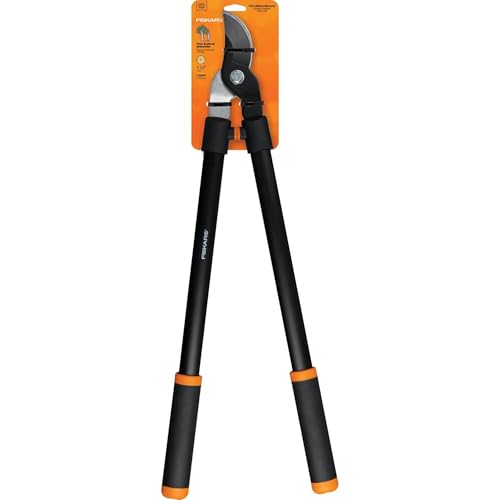
Everything I said about hand pruners applies to loppers too. Bypass loppers for live wood. Anvil loppers for dead wood. The only difference is scale – loppers cut branches 1 to 2 inches thick instead of the 3/4 inch that hand pruners handle.
If you buy loppers, get bypass first. Add anvil loppers later if you regularly clear dead branches from trees. I have both. The bypass loppers (Fiskars PowerGear2) do almost everything. The anvil loppers come out maybe twice a year for dead limb cleanup.
Ratchet Pruners: A Third Option
Ratchet pruners can be either bypass or anvil. The ratchet mechanism is separate from the blade design. Ratchet bypass pruners give you clean cuts with less hand strength. Ratchet anvil pruners give you crushing cuts with less hand strength.
If you need a ratchet mechanism for hand pain, get a ratchet bypass pruner rather than a ratchet anvil pruner. You get the benefit of reduced effort AND clean cuts. The Fiskars PowerGear2 Ratchet is my top recommendation in that category.
My Recommendation
Buy a good pair of bypass pruners first. That is your everyday tool for live plants. Spend $25 to $60 on something quality – it will last years. The Corona BP 3180 ($25) is the best budget bypass pruner. The Felco F-2 ($60) is the best at any price.
🍂 The Silent Lawn Killer: Damp Leaves Will Suffocate Your Grass
Trapped wet leaves create a breeding ground for destructive snow mold. Clear the yard fast with a high-power cordless blower before the ground freezes.
If you find yourself regularly cutting dead, dry branches – cleaning up shrubs, clearing old perennial stems, removing winter-killed wood – then buy a cheap pair of anvil pruners as your second tool. A $15 anvil pruner handles dead wood just fine. You do not need to spend Felco money on an anvil pruner because precision matters less on dead wood.
For 90% of home gardeners, one good pair of bypass pruners is all you need.
Frequently Asked Questions
Do professionals use anvil pruners?
Rarely. Most professional gardeners and arborists use bypass pruners almost exclusively. The clean cut is better for plant health and the curved blade provides more precision. Anvil pruners are considered a utility tool for rough work on dead material.
Why do anvil pruners cost less than bypass pruners?
Anvil pruners are mechanically simpler. One blade closes against a flat surface. No need for two precisely curved blades that must align perfectly. The simpler design costs less to manufacture. The lower price does not mean they are bad tools – they are just simpler tools.
Can I sharpen an anvil pruner?
Yes. Anvil pruner blades are usually beveled on both sides (unlike bypass blades which are beveled on one side only). Sharpen both sides at the existing angle. Do not sharpen the anvil surface – keep it flat. Replace the anvil if it becomes grooved or worn.
What about parrot-beak pruners?
Parrot-beak pruners have blades shaped like a parrot’s beak. They are a type of bypass pruner with a more aggressive curve. They are mostly used in vineyards and orchards for specific cuts. For home gardeners, standard bypass pruners are more versatile.
🍂 The Silent Lawn Killer: Damp Leaves Will Suffocate Your Grass
Trapped wet leaves create a breeding ground for destructive snow mold. Clear the yard fast with a high-power cordless blower before the ground freezes.
Is there any plant I should never use bypass pruners on?
No plant requires anvil pruners. Bypass pruners work on all live plants. The only situation where bypass pruners struggle is cutting dead, hard wood where the blade can twist or chip. In that case, use loppers or a pruning saw instead of risking your good bypass pruners.
🍂 The Silent Lawn Killer: Damp Leaves Will Suffocate Your Grass
Trapped wet leaves create a breeding ground for destructive snow mold. Clear the yard fast with a high-power cordless blower before the ground freezes.