Last Updated on October 23, 2026 by D. Ruddy
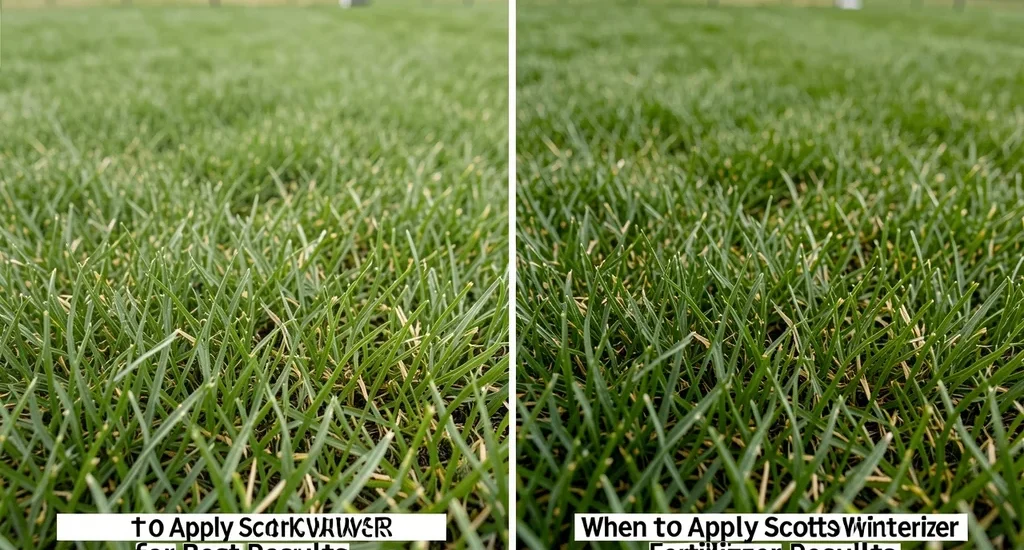
Timing is everything when it comes to lawn care, and knowing when to apply Scotts Winterizer fertilizer can make the difference between a lackluster lawn and a lush, green one next spring. Winterizer fertilizer strengthens grass roots before dormancy, helping them survive harsh winter conditions and bounce back faster when temperatures rise. This guide covers the ideal timing, application tips, and common mistakes to avoid so your lawn gets the nutrients it needs at the right moment.
Apply Scotts Winterizer fertilizer in late fall, 2-4 weeks before the first expected frost in your region. This timing allows grass to absorb nutrients while still actively growing but prepares roots for winter dormancy.
Why Fall Is the Best Time for Winterizer Fertilizer
Fall is the most critical season for lawn care, and Scotts Winterizer is specifically designed to capitalize on this period. Cool-season grasses like Kentucky bluegrass, tall fescue, and perennial ryegrass enter a growth phase in early fall, then shift energy to root development as temperatures drop. Winterizer fertilizer provides a high-nitrogen formula (often with potassium) to strengthen these roots, ensuring they store essential nutrients for winter survival and spring regrowth.
According to the NC State Turf Files, fall fertilization can improve lawn density by up to 30% compared to spring-only feeding. The cooler air temperatures reduce stress on grass blades while soil remains warm enough for root uptake. This combination helps grass recover from summer heat and build resilience against cold, frost, and snow.
Key Benefits of Fall Application
- Stronger root systems that resist winter damage and disease
- Early spring green-up as stored nutrients fuel new growth
- Reduced weed competition since weeds are less active in cooler months
- Improved drought tolerance for the following summer
- Enhanced disease resistance with healthier, thicker turf
Tip: Apply Scotts Winterizer when daytime temperatures consistently drop to 50-60°F (10-15°C), but before the ground freezes. This is typically 6-8 weeks before winter dormancy begins.
Exact Timing by Grass Type and Region
The ideal window for applying Scotts Winterizer depends on your grass type and local climate. Cool-season grasses (common in northern states) and warm-season grasses (found in southern regions) have different growth cycles, so timing varies significantly. Below is a regional breakdown to help you plan.
| Grass Type | Region | Best Application Window | Notes |
|---|---|---|---|
| Kentucky Bluegrass | Northern US, Midwest | Late September to Early November | Aim for 6 weeks before first frost |
| Tall Fescue | Transition Zone, Midwest | Mid-October to Late November | Apply after last mowing of the season |
| Perennial Ryegrass | Northern US, Pacific Northwest | Early October to Mid-November | Best for mixed grass lawns |
| Bermuda Grass | Southern US | Late August to Early October | Apply before first frost; earlier than cool-season grasses |
| Zoysia Grass | Southern US, Transition Zone | Mid-September to Early November | Avoid late applications in cold climates |
For warm-season grasses like Bermuda and Zoysia, the window is earlier because they enter dormancy sooner. In contrast, cool-season grasses like Kentucky bluegrass can handle later applications. Always check your local frost dates—resources like the Old Farmer’s Almanac provide reliable frost predictions based on historical data.
Important: If you miss the ideal window, apply Scotts Winterizer as late as possible before the ground freezes. Late applications are better than none, but avoid spreading on frozen soil or snow-covered lawns.
How to Apply Scotts Winterizer Fertilizer Correctly
Applying winterizer fertilizer isn’t just about timing—proper technique ensures even coverage and maximum effectiveness. Scotts Winterizer comes in granular form, which requires a broadcast or drop spreader for uniform distribution. Uneven application can lead to patchy growth or fertilizer burn in concentrated areas.
Start by mowing your lawn slightly shorter than usual (about 2-2.5 inches for cool-season grasses) to allow the granules to reach the soil. Remove any leaves or debris that could block the fertilizer. Water the lawn lightly before application to help the granules stick to the soil, then water thoroughly afterward to activate the nutrients.
Step-by-Step Application Process
- Calibrate Your Spreader
Adjust your spreader settings according to the Scotts Winterizer bag instructions. Most Scotts products provide a recommended setting for common spreader models. Test the spreader on a small area first to ensure even distribution.
- Divide the Lawn into Sections
Split your lawn into manageable sections (e.g., front yard, back yard) to avoid missing spots or overlapping. Overlapping can cause fertilizer burn, while gaps leave areas undernourished.
- Apply in Two Passes
Walk in one direction (e.g., north to south) to apply half the recommended amount, then walk perpendicular (east to west) to apply the second half. This cross-hatching method ensures even coverage.
- Avoid Overlapping at Edges
Be careful around driveways, sidewalks, and flower beds. Use a handheld spreader or apply by hand to prevent fertilizer from washing into non-lawn areas.
- Water Thoroughly
Water the lawn immediately after application to dissolve the granules and move nutrients into the soil. Aim for 0.5 inches of water, either from irrigation or rainfall within 24-48 hours.
| Spreader Type | Setting for Scotts Winterizer | Coverage (sq. ft.) |
|---|---|---|
| Scotts Broadcast Spreader | 5.5 | 5,000 |
| Scotts Drop Spreader | 8 | 5,000 |
| AccuGreen Broadcast Spreader | 6 | 5,000 |
Always follow the bag’s instructions for your specific product, as Scotts offers different formulations (e.g., Winterizer with or without weed control). Using too much fertilizer can harm your lawn, so stick to the recommended rates.
Signs You Applied Scotts Winterizer at the Right Time
How do you know if your timing was spot-on? A well-timed application of Scotts Winterizer will show visible results in the weeks following treatment and into the next growing season. Here’s what to look for:
- Darker Green Color within 7-14 days, even as temperatures drop. This indicates active nutrient uptake.
- Reduced Thatch Buildup as the fertilizer promotes microbial activity that breaks down organic matter.
- Faster Spring Green-Up compared to untreatd areas. Lawns fed with winterizer typically green up 1-2 weeks earlier.
- Improved Disease Resistance—healthier grass is less susceptible to fungal infections like snow mold.
- Stronger Root Mass visible when lifting a small section of turf. Roots should appear dense and white.
Warning: If your lawn turns yellow or brown after application, you may have applied too much fertilizer or done so during a heatwave. Flush the area with water immediately to dilute the excess nutrients.
What to Expect by Season
| Season | What You’ll See | What’s Happening Below Soil |
|---|---|---|
| Fall (Post-Application) | Darker green color, thicker turf | Roots absorb nitrogen and potassium for storage |
| Winter | Dormant, brown appearance | Stored nutrients protect roots from freeze damage |
| Early Spring | Faster green-up, fewer bare spots | Roots use stored nutrients to fuel new growth |
Common Mistakes to Avoid When Applying Scotts Winterizer
Even with the best intentions, homeowners often make mistakes that reduce the effectiveness of Scotts Winterizer. Avoiding these pitfalls ensures your lawn gets the maximum benefit from the application.
Overapplying Fertilizer
More isn’t better when it comes to fertilizer. Excess nitrogen can burn your lawn, turning it yellow or brown, and may leach into waterways, causing environmental harm. Always follow the bag’s recommended application rate—typically 1 lb of nitrogen per 1,000 sq.
ft. for winterizer formulas.
Applying Too Early or Too Late
Applying Scotts Winterizer in early fall may promote top growth instead of root development, leaving your lawn vulnerable to winter damage. Conversely, applying too late (after the ground freezes) means the fertilizer won’t be absorbed. Stick to the 2-4 week pre-frost window for best results.
Skipping the Watering Step
Fertilizer granules need moisture to dissolve and release nutrients into the soil. If you don’t water after application, the granules may sit on the surface, leading to uneven feeding or runoff during the next rain. Water within 24-48 hours to activate the fertilizer.
Ignoring Soil pH
Scotts Winterizer works best when your soil pH is between 6.0 and 7.0. If your soil is too acidic or alkaline, the grass may not absorb the nutrients efficiently. Test your soil pH with a home kit (available at garden centers) and amend if necessary before applying winterizer.
Using the Wrong Spreader Settings
Incorrect spreader settings can lead to uneven distribution, with some areas receiving too much fertilizer and others too little. Always calibrate your spreader according to the product instructions, and test it on a small section of your lawn first.
Applying to Wet Lawns
Spreading fertilizer on a wet lawn can cause the granules to clump together or stick to the grass blades, leading to uneven coverage and potential burning. Wait until the lawn is dry before application, and avoid applying just before heavy rain, which can wash the fertilizer away.
Tip: If you’re unsure about your soil’s pH or nutrient levels, consider a soil test from your local Cooperative Extension Service. Many offer low-cost testing with detailed recommendations.
How Weather Affects Scotts Winterizer Application
Weather plays a significant role in the success of your Scotts Winterizer application. Ideal conditions include cool temperatures, moderate soil moisture, and no extreme weather events like heavy rain or drought. Here’s how different weather scenarios impact your lawn care plan:
Ideal Weather Conditions
- Temperature: 50-65°F (10-18°C) during the day, with nighttime temperatures above freezing.
- Soil Moisture: Slightly damp soil (not waterlogged) to help granules adhere and dissolve.
- Wind: Light or no wind to prevent granules from blowing off-target.
- Rain Forecast: No heavy rain expected within 24-48 hours after application.
Adjusting for Less-Than-Ideal Weather
| Weather Condition | Adjustment | Reason |
|---|---|---|
| Drought or Dry Soil | Water lawn lightly before and after application | Granules need moisture to dissolve and activate |
| Heavy Rain Expected | Delay application until after rain passes | Prevents runoff and nutrient loss |
| Extreme Heat (Above 80°F) | Wait for cooler temperatures or apply in early morning | Reduces risk of fertilizer burn |
| Frost or Freezing Temperatures | Apply before ground freezes; do not apply on frozen soil | Frozen soil prevents nutrient absorption |
If you’re facing unpredictable weather, check local forecasts and soil temperatures. Tools like the National Weather Service or soil temperature maps from university extension programs can help you time your application perfectly.
Important: If heavy rain occurs within 24 hours of application, you may need to reapply a light dose of Scotts Winterizer to compensate for nutrient loss.
Scotts Winterizer vs Regular Fertilizer What’s the Difference
Not all fertilizers are created equal, and Scotts Winterizer is specifically formulated for late-fall application. While regular fertilizers provide balanced nutrition for general lawn maintenance, winterizer formulas are designed to meet the unique needs of grass as it prepares for dormancy.
| Feature | Scotts Winterizer | Regular Fertilizer |
|---|---|---|
| Nitrogen (N) Content | High (e.g., 24-0-11) | Moderate (e.g., 10-10-10) |
| Potassium (K) Content | High (for root strength) | Moderate |
| Phosphorus (P) Content | Low (not needed in fall) | Moderate (for root growth) |
| Purpose | Strengthen roots for winter, early spring green-up | General lawn maintenance, balanced growth |
| Best Application Time | Late fall (2-4 weeks before frost) | Spring to early fall |
Why Winterizer Has More Nitrogen
Winterizer fertilizers like Scotts contain higher nitrogen levels (often 20-30%) to promote root development and nutrient storage. Nitrogen is essential for protein synthesis in grass, which helps build strong cell walls and store energy for winter survival. The potassium in winterizer (often the second number in the NPK ratio) enhances disease resistance and cold tolerance.
In contrast, regular fertilizers provide a more balanced NPK ratio suited for steady growth throughout the growing season. Using a regular fertilizer in late fall may encourage top growth at the expense of root development, leaving your lawn less prepared for winter.
What to Do After Applying Scotts Winterizer
Your work isn’t done once the fertilizer is spread. Proper post-application care ensures the nutrients are fully absorbed and your lawn stays healthy through winter and into spring. Follow these steps to maximize the benefits of Scotts Winterizer:
Post-Application Care Checklist
- Water Thoroughly
Water the lawn within 24-48 hours after application to dissolve the granules and move nutrients into the soil. Aim for 0.5 inches of water, either from irrigation or rainfall. Avoid overwatering, which can wash away the fertilizer.
- Avoid Heavy Traffic
Keep pets, children, and heavy foot traffic off the lawn for at least 24 hours after application. This prevents the granules from being dispersed unevenly or crushed into the soil before they dissolve.
- Continue Mowing as Needed
If your grass continues to grow after application, mow as usual but avoid cutting more than one-third of the blade length at a time. This prevents stress on the grass while it absorbs the nutrients.
- Rake Up Leaves
Falling leaves can block sunlight and trap moisture, leading to disease. Rake leaves regularly in the weeks following application to allow your lawn to breathe and absorb nutrients.
- Monitor for Pests and Diseases
Winterizer strengthens your lawn, but it’s still vulnerable to pests like grubs or diseases like snow mold. Inspect your lawn regularly and treat any issues promptly.
- Plan for Spring
Mark your calendar for a spring fertilizer application (4-6 weeks after the last frost) to continue the momentum from your winterizer treatment. This two-step approach ensures year-round lawn health.
Tip: If you live in an area with heavy leaf litter, consider using a mulching mower to chop leaves into small pieces. This returns organic matter to the soil and reduces the need for raking.
Frequently Asked Questions
Can I apply Scotts Winterizer in early fall?
It’s not recommended. Early fall applications may promote top growth instead of root development, leaving your lawn less prepared for winter. Stick to the 2-4 week pre-frost window for best results.
If you apply too early, the nitrogen may encourage blade growth at the expense of root strength.
What happens if I apply Scotts Winterizer too late?
Applying winterizer after the ground freezes means the fertilizer won’t be absorbed, wasting the product and leaving your lawn vulnerable. If you miss the ideal window, apply as late as possible before the ground freezes. Avoid spreading on snow or frozen soil.
Do I need to water after applying Scotts Winterizer?
Yes, watering is critical. The granules need moisture to dissolve and release nutrients into the soil. Water within 24-48 hours after application, aiming for 0.5 inches of water.
If rain is forecast within this window, you can skip manual watering.
Can I use Scotts Winterizer on new lawns?
Scotts Winterizer is safe for established lawns but not recommended for newly seeded or sodded lawns in their first year. Young grass has shallow roots and may not absorb the high-nitrogen formula effectively. Wait until the lawn is well-established (at least one full growing season) before applying winterizer.
How often should I apply Scotts Winterizer?
Scotts Winterizer is designed for a single late-fall application per year. Overapplying can lead to nutrient runoff or lawn burn. Pair it with a spring fertilizer for a balanced annual feeding program.
Some homeowners also apply a light feeding in early summer for additional nutrition.
Final Thoughts
Applying Scotts Winterizer at the right time—2-4 weeks before the first frost—gives your lawn the best chance to survive winter and thrive in spring. Pair proper timing with correct application techniques, post-care, and weather considerations for a lush, resilient lawn. Remember, the key to when to apply Scotts Winterizer fertilizer is aligning it with your grass’s natural growth cycle and local climate conditions.