Last Updated on October 23, 2026 by D. Ruddy
A lush, green lawn starts with proper care, and knowing when to aerate lawn spring or fall can make all the difference. Aeration helps relieve soil compaction, allowing water, nutrients, and air to reach grass roots more effectively. This simple step can transform a struggling lawn into a thriving one, but timing is everything.
Do it at the wrong time, and you might do more harm than good. This guide covers the best seasons for aeration, how to do it right, and what to expect afterward.
The best time to aerate your lawn is during the growing season when grass can recover quickly. For cool-season grasses, early fall is ideal. For warm-season grasses, late spring to early summer works best. Avoid aerating during drought or extreme heat.
Why Aeration Matters for Your Lawn
Over time, soil becomes compacted from foot traffic, heavy equipment, or even natural settling. Compacted soil restricts the flow of air, water, and nutrients to the grass roots, leading to thin, weak, or patchy lawns. Aeration creates small holes in the soil, allowing these essential elements to penetrate deeper.
This process also helps break up thatch, the layer of dead grass and debris that can choke your lawn.
Regular aeration improves root development, making your grass more resilient to drought, disease, and pests. It also enhances the effectiveness of fertilizers and watering, as these can reach the roots more easily. Most lawns benefit from aeration once a year, though heavily used or clay-based soils may need it twice.
- Relieves soil compaction from foot traffic and heavy objects
- Improves nutrient absorption for healthier grass
- Enhances water penetration to prevent runoff
- Reduces thatch buildup that can suffocate your lawn
- Encourages deeper root growth for a stronger lawn
Important: If your lawn has a thatch layer thicker than half an inch, aeration alone may not be enough. You may need to dethatch first or use a core aerator to remove plugs of soil.
Cool-Season vs Warm-Season Grasses
The best time to aerate depends on the type of grass in your lawn. Cool-season grasses and warm-season grasses have different growing cycles, so aeration timing varies. Knowing which type you have is the first step to proper lawn care.
Cool-season grasses, like Kentucky bluegrass, fescue, and ryegrass, thrive in cooler temperatures and have their peak growing periods in spring and fall. Warm-season grasses, such as Bermuda, Zoysia, and St. Augustine, grow most actively in late spring and summer.
Aerating during the active growth phase ensures your lawn can recover quickly from the stress of aeration.
| Grass Type | Examples | Best Aeration Time |
|---|---|---|
| Cool-Season | Kentucky Bluegrass, Fescue, Ryegrass | Early Fall (Late August to October) |
| Warm-Season | Bermuda, Zoysia, St. Augustine, Centipede | Late Spring to Early Summer (May to July) |
If you’re unsure about your grass type, check with a local nursery or extension service. They can help you identify your grass and recommend the best care schedule.
Spring Aeration Pros and Cons
Spring is a popular time for lawn care, but is it the best time to aerate? For some lawns, spring aeration can be beneficial, but it also has drawbacks. Understanding the pros and cons can help you decide if spring is the right time for your lawn.
Spring aeration is best for warm-season grasses, as they enter their active growth phase during this time. It can also help address winter compaction and prepare your lawn for the growing season. However, for cool-season grasses, spring aeration may promote weed growth, as weeds also thrive in the spring.
Additionally, if the soil is too wet, aeration can cause further compaction.
- Pros of Spring Aeration
- Encourages early root growth for warm-season grasses
- Helps relieve compaction from winter foot traffic
- Prepares the lawn for summer stress
- Allows for better seed-to-soil contact if overseeding
- Cons of Spring Aeration
- May promote weed growth in cool-season lawns
- Soil can be too wet, leading to further compaction
- Less ideal for cool-season grasses, which grow best in fall
- Increased risk of disease if conditions are too damp
Tip: If you aerate in spring, do it early in the season when the soil is dry enough to work but not yet too hard. Avoid aerating during rainy periods.
Fall Aeration Pros and Cons
Fall is widely considered the best time to aerate cool-season grasses. The cooler temperatures and increased moisture create ideal conditions for recovery and growth. However, fall aeration isn’t perfect for every lawn, and there are some potential downsides to consider.
For cool-season grasses, fall aeration allows the lawn to recover quickly and establish strong roots before winter dormancy. It also reduces weed competition, as many weeds are less active in the fall. Additionally, fall aeration can be combined with overseeding to fill in bare spots and improve lawn density.
For warm-season grasses, fall aeration may not be ideal, as the grass is entering dormancy and may not recover as well.
| Pros of Fall Aeration | Cons of Fall Aeration |
|---|---|
|
|
According to the National Association of Landscape Professionals, aerating in early fall (late August to October) gives cool-season grasses the best chance to recover and thrive before winter.
How to Aerate Your Lawn Step by Step
Aerating your lawn is a straightforward process, but doing it correctly ensures the best results. Follow these steps to aerate your lawn like a pro, whether you’re using a manual or mechanical aerator.
Before you start, make sure your lawn is ready. Mow the grass slightly shorter than usual to make the aeration process easier. Water the lawn thoroughly the day before to soften the soil, especially if it’s dry or compacted.
This makes it easier for the aerator to penetrate the soil.
- Choose the Right Aerator
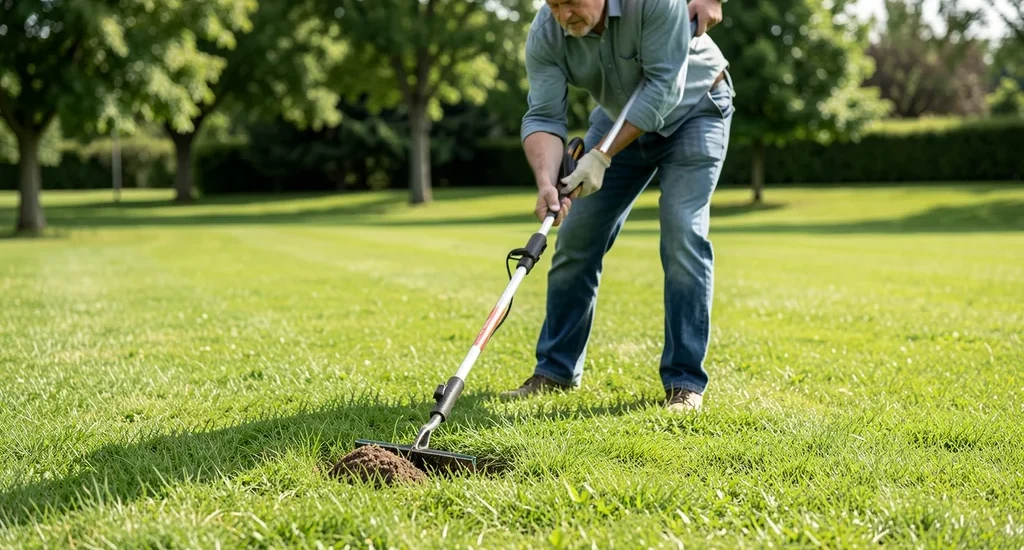
There are two main types of aerators: spike aerators and core (plug) aerators. Spike aerators poke holes in the soil, while core aerators remove small plugs of soil. Core aerators are more effective for heavily compacted soils, as they create more space for air, water, and nutrients to enter.
- Manual aerators: Best for small lawns. Requires physical effort but is cost-effective.
- Towel-behind aerators: Ideal for medium to large lawns. Can be rented from hardware stores.
- Motorized aerators: Best for large lawns. More expensive but saves time and effort.
- Prepare Your Lawn
Mark any sprinkler heads, utility lines, or shallow roots to avoid damaging them. Clear the lawn of debris, sticks, and rocks that could interfere with the aerator. Water the lawn deeply the day before to ensure the soil is moist but not soggy.
- Start Aerating
Begin at one corner of the lawn and work in a systematic pattern, similar to mowing. Make two passes over heavily compacted areas, crossing the first pass at a perpendicular angle. This ensures thorough coverage.
- Leave the Cores on the Lawn
After aerating, leave the soil cores on the lawn. They will break down naturally, returning nutrients to the soil. If the cores are too thick or unsightly, you can rake them lightly to distribute them evenly.
- Follow Up with Lawn Care
After aeration, your lawn is primed for additional care. Apply fertilizer to provide nutrients directly to the roots. If overseeding, spread the seed immediately after aeration to ensure good seed-to-soil contact.
Water the lawn thoroughly to help the soil and seeds settle.
Warning: Avoid aerating during drought or extreme heat, as this can stress your lawn further. Also, do not aerate if the soil is too wet, as this can cause additional compaction.
Common Aeration Mistakes to Avoid
Aeration is a simple process, but even small mistakes can reduce its effectiveness or even harm your lawn. Being aware of these common pitfalls can help you get the most out of your aeration efforts.
One of the most common mistakes is aerating at the wrong time. As discussed earlier, timing is crucial for the best results. Another mistake is using the wrong type of aerator.
Spike aerators, while cheaper, can actually increase compaction in some cases. Core aerators are generally more effective for most lawns.
- Aerating Too Frequently
While aeration is beneficial, doing it too often can stress your lawn. Most lawns only need aeration once a year, though heavily used or clay-based soils may benefit from twice-yearly aeration.
- Not Watering Before or After
Dry soil makes aeration difficult, and failing to water afterward can prevent proper recovery. Always water deeply the day before and after aeration.
- Using Dull or Improper Equipment
Dull tines on an aerator won’t penetrate the soil effectively. Make sure your equipment is in good working condition before you start.
- Aerating During Dormancy
Aerating during your grass’s dormant period can weaken it further. Always aerate during the active growing season.
- Skipping Overseeding or Fertilizing
Aeration creates the perfect opportunity to overseed or fertilize your lawn. Skipping these steps means missing out on maximizing the benefits of aeration.
Signs Your Lawn Needs Aeration
Not every lawn needs aeration every year, but knowing the signs can help you determine if it’s time. If your lawn shows any of these symptoms, aeration may be the solution to revive its health and appearance.
One of the most obvious signs is soil compaction. If your lawn feels hard to the touch or water pools on the surface instead of absorbing, compaction is likely the culprit. Thatch buildup, a layer of dead grass and debris thicker than half an inch, is another sign that aeration is needed.
Other indicators include thin or patchy grass, weak growth despite proper care, or a lawn that dries out quickly after watering.
- Water Pools on the Surface
If water runs off or pools on your lawn instead of soaking in, the soil may be too compacted for proper absorption.
- Thin or Patchy Grass
Compacted soil restricts root growth, leading to thin or bare spots in your lawn.
- Hard, Dry Soil
If the soil feels rock-hard or cracks when dry, it’s a clear sign of compaction.
- Excessive Thatch
A thatch layer thicker than half an inch can prevent water and nutrients from reaching the roots.
- Poor Response to Fertilizer
If your lawn doesn’t improve after fertilizing, the nutrients may not be reaching the roots due to compaction.
- High Foot Traffic Areas
Lawns with heavy foot traffic, such as play areas or paths, are more prone to compaction and may need more frequent aeration.
| Sign | What It Means | Solution |
|---|---|---|
| Water pooling | Soil compaction prevents absorption | Aerate to improve drainage |
| Thin grass | Roots can’t grow in compacted soil | Aerate and overseed |
| Hard soil | Severe compaction | Core aeration needed |
If you notice several of these signs, it’s a good idea to aerate your lawn to improve its health and appearance.
Frequently Asked Questions
Can I aerate my lawn in the summer?
Aerating in the summer is not recommended for most lawns, as the heat and stress can damage the grass. However, if you have warm-season grass and the summer is mild, late spring to early summer aeration can be effective. Always avoid aerating during drought or extreme heat.
How often should I aerate my lawn?
Most lawns benefit from aeration once a year. Lawns with heavy foot traffic, clay soil, or thatch buildup may need aeration twice a year. For cool-season grasses, aerate in early fall.
For warm-season grasses, aerate in late spring to early summer.
Should I mow before or after aeration?
Mow your lawn slightly shorter than usual before aeration to make the process easier. After aeration, avoid mowing for at least a week to allow the grass to recover. This gives the roots time to take advantage of the improved soil conditions.
Can I aerate a newly seeded lawn?
It’s best to wait until your new grass is well-established before aerating. Typically, you should wait at least one full growing season (about 6-12 months) before aerating a newly seeded lawn. Aerating too soon can disrupt the young roots and seedling growth.
Is it better to aerate in spring or fall?
For cool-season grasses, fall is the best time to aerate. The cooler temperatures and increased moisture create ideal conditions for recovery. For warm-season grasses, late spring to early summer is the best time.
Aerating during the active growing season ensures your lawn can recover quickly.
Final Thoughts
Deciding when to aerate lawn spring or fall depends on your grass type and local climate. For most homeowners, early fall is the best time for cool-season grasses, while late spring to early summer works best for warm-season varieties. Proper timing, combined with the right technique, can transform your lawn’s health and appearance.
Remember to follow up with watering, fertilizing, and overseeding to maximize the benefits. With the right approach, your lawn will be greener, thicker, and more resilient in no time.