Last Updated on October 23, 2026 by D. Ruddy
If you want a lush, healthy lawn next spring, knowing how late in the fall can you aerate your lawn is key to timing this essential task correctly. Aerating relieves soil compaction and allows water, nutrients, and oxygen to reach grass roots more effectively. Doing it too late in the season can stress your grass, while doing it too early may reduce its benefits.
You can aerate your lawn as late as 4-6 weeks before the first frost, ideally when grass is still actively growing but temperatures have cooled. For most regions, this falls between late September and early November.
Why Fall Is the Best Time to Aerate Your Lawn
Fall aeration offers several advantages that make it the optimal time for this lawn care task. The cooler temperatures and increased moisture create ideal conditions for grass recovery and root growth. During this season, weeds are less aggressive, giving your grass a better chance to fill in bare spots.
Soil compaction builds up over summer from foot traffic, mowing, and heavy use. Aerating in fall helps alleviate this compaction before winter sets in. The process also enhances the effectiveness of fall fertilization, as nutrients can penetrate deeper into the soil.
- Cooler Temperatures: Reduce stress on grass while promoting root development
- Moisture Retention: Fall typically brings more consistent rainfall, helping soil stay moist
- Weed Control: Fewer weed seeds germinate in fall, reducing competition
- Fertilizer Synergy: Aeration holes allow fall fertilizer to reach roots more effectively
- Disease Prevention: Improved air circulation reduces fungal disease risk
- Overseeding Success: Aeration creates perfect conditions for new grass seed to establish
Tip: Combine aeration with overseeding for the best results. The holes created by aeration provide perfect pockets for new grass seeds to take root.
Signs Your Lawn Needs Aeration
Not all lawns require aeration every year, but several visible signs indicate your lawn could benefit from this treatment. If you notice any of these symptoms, it’s time to consider aerating before winter arrives.
Heavy thatch buildup (more than 1/2 inch thick) prevents water and nutrients from reaching the soil. Compacted soil feels hard to the touch and may cause water to pool on the surface. Thin or patchy grass, despite regular care, often signals poor soil conditions that aeration can improve.
| Sign | What It Means | Solution |
|---|---|---|
| Thick thatch layer | Prevents water and nutrient absorption | Core aeration to remove plugs |
| Water pools on surface | Compacted soil prevents drainage | Aerate to improve soil structure |
| Sparse grass growth | Poor root development due to compaction | Aerate and overseed |
| Hard, dry soil | Soil compaction from foot traffic | Core aeration to relieve pressure |
| Frequent pest problems | Compacted soil stresses grass, attracting pests | Aerate to improve grass health |
Aeration addresses these issues by creating channels in the soil that allow air, water, and nutrients to reach grass roots more effectively.
Ideal Grass Types for Fall Aeration
Different grass types have varying ideal aeration windows. Cool-season grasses thrive with fall aeration, while warm-season grasses may require a different approach. Understanding your grass type helps determine the best timing for aeration.
Cool-season grasses like Kentucky bluegrass, fescue, and ryegrass benefit most from fall aeration. These grasses experience their peak growth in cooler temperatures, making fall the perfect time for recovery after aeration. Warm-season grasses like Bermuda, Zoysia, and St.
Augustine typically prefer late spring or early summer aeration.
| Grass Type | Best Aeration Time | Notes |
|---|---|---|
| Kentucky Bluegrass | Early fall or spring | Recovers quickly in cool weather |
| Tall Fescue | Late summer to early fall | Drought-tolerant, benefits from fall aeration |
| Perennial Ryegrass | Early fall | Fast germinator, ideal for overseeding |
| Bermuda Grass | Late spring to early summer | Warm-season grass, avoid fall aeration |
| Zoysia Grass | Late spring | Slow to recover, needs warm soil |
According to the National Association of Landscape Professionals, over 80% of homeowners with cool-season grasses see significant improvement in lawn health after fall aeration.
How to Determine the Latest Safe Date for Aeration
Timing is everything when it comes to fall aeration. The latest safe date depends on your climate zone, grass type, and local weather patterns. The general rule is to complete aeration at least 4-6 weeks before the first expected frost.
For most regions in the northern U.S., this means completing aeration by mid-October to early November. In milder southern climates, you may have until late November. The key is ensuring your grass has enough time to recover before dormant winter conditions set in.
- Check Your Frost Date: Find the average first frost date for your area from local agricultural extension services
- Count Back 6 Weeks: This gives your grass ample recovery time before cold weather arrives
- Monitor Grass Growth: Ensure grass is still actively growing (green and growing, not brown or dormant)
- Watch the Forecast: Avoid aerating if a sudden cold snap is predicted within 2 weeks
- Soil Temperature Check: Ideal soil temperature for cool-season grass recovery is 50-65°F
Important: Never aerate frozen soil or when grass is dormant. This can damage roots and lead to poor recovery.
Step-by-Step Guide to Fall Lawn Aeration
Proper aeration technique is just as important as timing. Following these steps ensures you get the maximum benefit from your fall aeration efforts. The process involves preparation, execution, and follow-up care.
Begin by mowing your lawn slightly shorter than usual to make the aeration process more effective. Water the lawn thoroughly 1-2 days before aerating to soften the soil. Mark any sprinkler heads, utility lines, or shallow roots to avoid damaging them during the process.
Preparing Your Lawn for Aeration
- Mow the Lawn: Cut grass to about 2 inches to make aeration easier
- Water Deeply: Soften the soil by watering 1-2 days before aerating
- Mark Obstructions: Flag sprinkler heads, utility lines, and shallow roots
- Remove Debris: Clear leaves, sticks, and other debris from the lawn
- Check Soil Moisture: Soil should be moist but not muddy (like a wrung-out sponge)
Executing the Aeration Process
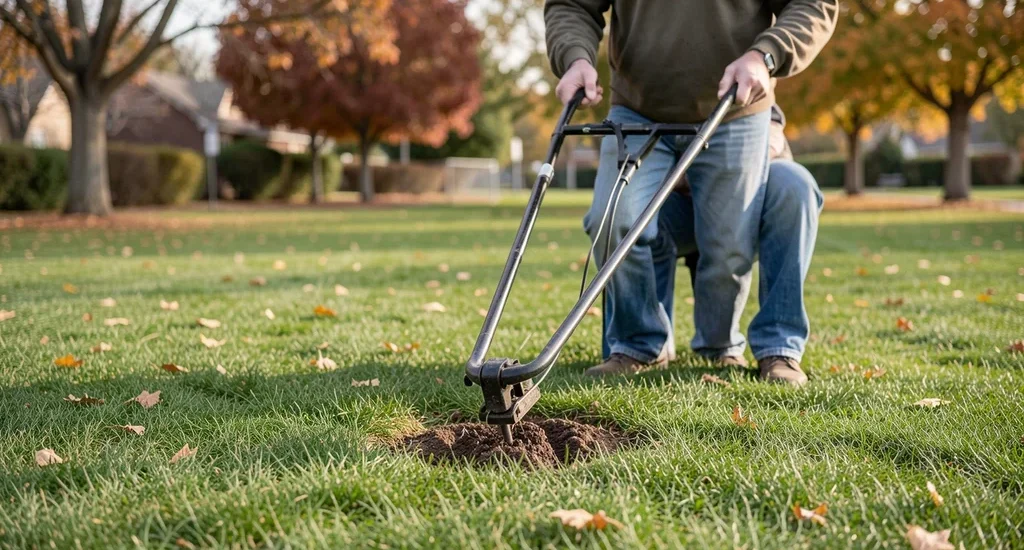
Use a core aerator (also called a plug aerator) that removes small cores of soil from your lawn. These machines are available for rent at most hardware stores and home improvement centers. Spike aerators, which simply punch holes in the soil, are less effective and can actually increase compaction.
- Make Multiple Passes: Go over the lawn in two perpendicular directions for thorough coverage
- Focus on High-Traffic Areas: Pay special attention to compacted areas near walkways and play areas
- Leave the Plugs: Don’t remove the soil plugs – they’ll break down and return nutrients to the soil
- Overlap Slightly: Ensure complete coverage by overlapping your passes slightly
- Adjust Depth: Set the aerator to remove cores about 2-3 inches deep
Post-Aeration Care
After aeration, your lawn needs proper care to recover and take full advantage of the treatment. This is the perfect time to overseed, fertilize, and address any other lawn issues.
- Overseed Immediately: Apply grass seed right after aeration for best germination
- Apply Fertilizer: Use a fall-specific fertilizer to promote root growth
- Water Regularly: Keep the soil moist (not soggy) for the first 2-3 weeks
- Avoid Heavy Use: Limit foot traffic on the lawn for at least a week
- Continue Regular Care: Resume normal mowing and watering schedules as grass recovers
Tip: Rent a core aerator for about $60-$100 per day. For larger lawns, consider hiring a professional lawn care service.
Common Mistakes to Avoid When Aerating in Fall
Even with good intentions, many homeowners make mistakes that reduce the effectiveness of fall aeration. Being aware of these common pitfalls can help you avoid them and get the best results from your efforts.
One of the most frequent mistakes is aerating too late in the season. As mentioned earlier, grass needs time to recover before winter. Another common error is using the wrong type of aerator.
Spike aerators can actually increase soil compaction, while core aerators provide the best results.
- Aerating Too Late: Waiting until grass is dormant or frost is imminent prevents proper recovery
- Using Spike Aerators: These can compact soil further; always use core/plug aerators
- Skipping Preparation: Not mowing or watering before aeration makes the process less effective
- Removing Soil Plugs: These break down naturally and return nutrients to the soil
- Overlooking High-Traffic Areas: These compacted areas need the most attention
- Not Overseeding After: Missing the opportunity to improve thin areas of your lawn
- Aerating When Soil is Too Dry: Hard soil makes aeration difficult and less effective
| Mistake | Why It’s a Problem | Solution |
|---|---|---|
| Aerating too late | Grass can’t recover before winter | Complete 4-6 weeks before first frost |
| Using spike aerator | Can increase compaction | Use core/plug aerator instead |
| Not watering before | Hard soil reduces effectiveness | Water 1-2 days before aerating |
| Removing soil plugs | Wastes valuable soil nutrients | Leave plugs to decompose naturally |
The University of Nebraska-Lincoln Extension reports that proper aeration can improve water infiltration by up to 50% and reduce runoff significantly.
What to Do After Fall Aeration
Post-aeration care is crucial for maximizing the benefits of your efforts. The holes created by aeration provide direct pathways for water, nutrients, and grass seed to reach the soil. Taking the right steps after aeration ensures your lawn recovers quickly and looks its best.
Immediately after aeration, consider overseeding to fill in thin or bare spots. Fall is the ideal time for this as the cooler temperatures and increased moisture create perfect conditions for seed germination. Apply a starter fertilizer to provide essential nutrients for new grass growth.
- Overseed: Apply high-quality grass seed matched to your existing lawn
- Fertilize: Use a fall fertilizer with higher potassium content for root development
- Water: Keep soil consistently moist (1/4 inch of water every 2-3 days) for the first 2-3 weeks
- Top-Dress: Apply a thin layer of compost to fill aeration holes and improve soil
- Control Weeds: Apply pre-emergent herbicide if needed, but avoid if overseeding
- Monitor Growth: Watch for new grass sprouts and adjust care as needed
- Resume Mowing: Once new grass reaches about 3-4 inches tall
Warning: Avoid using herbicides for at least 4-6 weeks after overseeding, as they can prevent new grass seed from germinating.
Tools and Equipment for Fall Aeration
Having the right tools makes fall aeration more effective and less labor-intensive. While you can rent equipment for a one-time job, owning the right tools can make this an easier annual task. The type of equipment you need depends on your lawn size and budget.
For small lawns, a manual spike aerator might suffice, though it’s less effective than core aeration. For medium to large lawns, a walk-behind core aerator provides the best results. These can be rented from most home improvement stores for about $60-$100 per day.
| Tool/Equipment | Best For | Cost | Notes |
|---|---|---|---|
| Manual Spike Aerator | Very small lawns | $20-$50 | Less effective than core aeration |
| Manual Core Aerator | Small lawns | $50-$150 | Good workout, effective results |
| Walk-Behind Core Aerator | Medium to large lawns | $100-$300 | Most effective for homeowners |
| Tow-Behind Aerator | Very large lawns | $200-$500+ | Requires a tractor or ATV |
| Aerator Shoes | Tiny areas | $20-$40 | Minimal effectiveness, good for spot treatment |
For most homeowners, renting a walk-behind core aerator for a weekend provides the best balance of effectiveness and cost. According to Consumer Reports, about 60% of homeowners who rent aeration equipment report being very satisfied with the results.
Frequently Asked Questions
Can I aerate my lawn too late in the fall?
Yes, aerating too late in the fall can harm your lawn. If you aerate when grass is entering dormancy or after the first frost, the grass won’t have time to recover. This can leave your lawn vulnerable to winter damage and spring weeds.
Always aim to complete aeration at least 4-6 weeks before the first expected frost in your area.
What’s the latest month I can aerate my lawn in fall?
The latest month depends on your climate zone. In northern regions with early frosts (October-November), September to early October is ideal. In milder climates, you may aerate as late as November.
The key is timing it so grass has 4-6 weeks of active growth before winter. Check your local agricultural extension for specific dates.
Is it better to aerate in fall or spring?
For most lawns, fall is the superior time to aerate. The cooler temperatures, increased moisture, and reduced weed competition create ideal conditions for recovery. Spring aeration can be effective, especially for addressing winter compaction, but it may encourage more weed growth.
If you must choose one, fall aeration typically provides better long-term results for cool-season grasses.
How do I know if my lawn needs aeration in the fall?
Several signs indicate your lawn could benefit from fall aeration. If water pools on the surface after rain, if your lawn feels hard to the touch, or if you notice thin or patchy grass despite regular care, these are all signs of soil compaction. Additionally, if you haven’t aerated in the past year or if your lawn receives heavy use, fall aeration is likely beneficial.
What should I do immediately after aerating my lawn in fall?
After aerating, the most important step is to overseed and fertilize. The holes created by aeration provide perfect pockets for grass seed to establish. Apply a fall-specific fertilizer to promote root growth.
Water the lawn thoroughly after aeration and keep the soil consistently moist for the first 2-3 weeks to ensure proper seed germination and recovery.
Final Thoughts
Knowing how late in the fall can you aerate your lawn helps you time this crucial lawn care task for maximum benefit. Aim to complete aeration 4-6 weeks before your first expected frost, giving your grass ample time to recover. Fall aeration improves soil structure, enhances nutrient absorption, and sets the stage for a healthier, more vibrant lawn next spring.