Last Updated on October 23, 2026 by D. Ruddy
As the leaves begin to turn, many homeowners wonder should you aerate or dethatch my lawn in the fall to keep their grass healthy. Both processes improve lawn health but serve different purposes. Aeration relieves soil compaction, while dethatching removes the layer of dead grass and debris that can choke your lawn.
Choosing the right one depends on your lawn’s current condition and needs.
For most lawns, fall is the best time to aerate if your soil is compacted or water pools on the surface. Dethatch only if the thatch layer exceeds 1/2 inch. Many lawns benefit from aeration annually, while dethatching is needed less frequently.
Signs Your Lawn Needs Aeration
Aeration creates small holes in the soil, allowing air, water, and nutrients to reach grass roots more effectively. This process is essential if your lawn shows signs of stress due to compacted soil.
Compacted soil prevents proper root growth and can lead to thin, patchy grass. If you notice water pooling on your lawn after rain or your grass feels spongy underfoot, these are clear indicators that aeration might be necessary. Additionally, if your lawn gets heavy foot traffic or was recently established, it’s likely to benefit from aeration.
- Water pooling on the surface after rain
- Grass that feels spongy when walked on
- Thin or patchy areas in high-traffic zones
- Soil that feels hard when dry
- Poor response to fertilizer applications
- Excessive weed growth in bare spots
- Shallow root systems (grass pulls up easily)
Tip: Test for compaction by pushing a screwdriver into the soil. If it’s difficult to push in more than a few inches, your lawn likely needs aeration.
When to Choose Dethatching Instead
Dethatching removes the layer of dead grass, roots, and debris that accumulates between the soil and the green grass blades. While a thin layer of thatch (up to 1/2 inch) is normal and beneficial, too much can prevent water and nutrients from reaching the soil.
If your lawn has a thick thatch layer, it may feel springy when you walk on it. You can check by cutting a small section of grass and measuring the brown layer between the soil and the green blades. If it’s more than 1/2 inch thick, dethatching is recommended.
This is particularly common in lawns with certain grass types like Kentucky bluegrass, Bermuda grass, or Zoysia grass.
| Sign | Description |
|---|---|
| Thick brown layer | Visible thatch over 1/2 inch between soil and grass |
| Springy feel | Grass feels soft and bouncy when walked on |
| Poor water absorption | Water runs off instead of soaking in |
| Increased pests | More insects and diseases in the thatch layer |
Dethatching is more stressful for your lawn than aeration, so it’s important to do it at the right time. Early fall is ideal because the grass is actively growing and can recover quickly.
Best Practices for Fall Lawn Aeration
Fall aeration gives your lawn the best chance to recover and strengthen before winter. The cooler temperatures and increased moisture create ideal conditions for root growth. For most lawns, core aeration (which removes small plugs of soil) is more effective than spike aeration.
Before aerating, water your lawn thoroughly the day before to soften the soil. Use a core aerator to remove plugs about 2-3 inches deep and 1/2 inch wide, spaced 2-4 inches apart. After aerating, leave the soil plugs on the lawn to decompose naturally—they’ll return valuable nutrients to the soil.
- Mow your lawn slightly shorter than usual before aerating
- Water deeply the day before to soften the soil
- Mark sprinkler heads and utility lines to avoid damage
- Make two passes with the aerator in perpendicular directions
- Leave the plugs on the lawn to decompose
- Fertilize and overseed immediately after aerating
- Water lightly daily for the first week after aeration
Important: Avoid aerating during drought conditions or when the soil is too dry, as it won’t be effective. Also, don’t aerate if your lawn is dormant or stressed.
Step-by-Step Guide to Dethatching Your Lawn
Dethatching is a more intensive process that should be done carefully to avoid damaging your lawn. The best time is early fall when the grass is actively growing. Start by mowing your lawn to half its normal height to make the process easier.
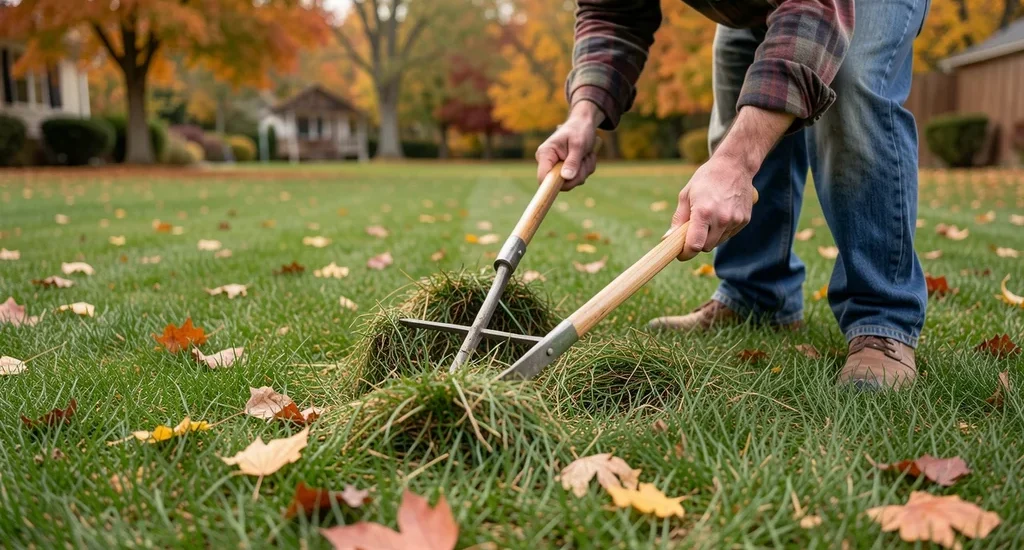
Use a dethatching rake or a power dethatcher (for larger lawns). Work in small sections, removing the thatch layer without tearing up the healthy grass. After dethatching, your lawn may look rough, but it will recover quickly with proper care.
- Mow the lawn to half its normal height
- Rake up loose debris before starting
- Use a dethatching rake or power dethatcher
- Work in small sections to avoid missing spots
- Remove the thatch and compost it or dispose of it
- Water the lawn thoroughly after dethatching
- Fertilize and overseed to help recovery
| Tool | Best For | Pros | Cons |
|---|---|---|---|
| Dethatching rake | Small lawns | Inexpensive, good control | Labor-intensive |
| Power dethatcher | Large lawns | Faster, less effort | More expensive, requires more space |
| Tow-behind dethatcher | Very large lawns | Most efficient for big areas | Requires a tractor, expensive |
After dethatching, your lawn will need some extra care. Water deeply every day for the first week, then gradually reduce to normal watering. Fertilize with a high-nitrogen fertilizer to promote recovery, and overseed any bare spots that appear.
Can You Aerate and Dethatch at the Same Time
While it’s technically possible to aerate and dethatch at the same time, it’s generally not recommended. Both processes are stressful for your lawn, and doing them together can cause too much damage. It’s better to space them out by at least a few weeks to allow your lawn to recover between treatments.
If your lawn needs both, start with dethatching first, as it’s the more intensive process. Wait 2-4 weeks for your lawn to recover, then aerate. This timing allows your grass to regrow and strengthen before the aeration process.
- Aerate first if compaction is your main issue
- Dethatch first if thatch is the primary problem
- Wait 2-4 weeks between treatments
- Monitor recovery before proceeding with the second treatment
- Avoid doing both if your lawn is already stressed
Warning: Never aerate and dethatch on the same day. This can remove too much of the lawn’s protective layer and expose it to disease and weeds.
Post-Treatment Lawn Care Tips
Proper care after aeration or dethatching is crucial for your lawn’s recovery. Both processes open up the soil and grass, making them more susceptible to stress. Following these care tips will help your lawn bounce back stronger and healthier.
Watering is the most important aspect of post-treatment care. After aeration, water lightly daily for the first week to keep the soil plugs moist and help them break down. After dethatching, water deeply every day for the first week, then reduce to normal watering.
This helps the grass recover and encourages new growth.
- Water consistently for the first 1-2 weeks
- Fertilize with a high-nitrogen fertilizer
- Overseed any bare or thin spots
- Avoid heavy foot traffic for at least a week
- Mow when grass reaches about 1/3 taller than normal height
- Apply a thin layer of compost to improve soil health
- Monitor for weeds and treat as needed
| Timeframe | After Aeration | After Dethatching |
|---|---|---|
| First 24 hours | Light watering | Deep watering |
| First week | Daily light watering | Daily deep watering |
| Second week | Reduce to normal watering | Reduce to normal watering |
| Fertilizing | Immediately after | 3-5 days after |
| Mowing | When grass is 1/3 taller | Wait until fully recovered |
Remember that your lawn may look a bit rough immediately after treatment, but with proper care, it will recover and be healthier than before. The key is consistency in watering and avoiding additional stress during the recovery period.
Common Mistakes to Avoid
Many homeowners make mistakes when aerating or dethatching that can harm their lawn rather than help it. Being aware of these common pitfalls can help you avoid them and ensure your lawn care efforts are successful.
One of the most common mistakes is doing these treatments at the wrong time of year. Both aeration and dethatching are stressful for your lawn, so timing is crucial for recovery. Another mistake is using the wrong equipment or technique, which can cause unnecessary damage to your grass.
- Wrong timing: Avoid doing either treatment during extreme heat or drought
- Too frequent: Don’t aerate or dethatch more than once a year unless absolutely necessary
- Improper equipment: Using a spike aerator instead of a core aerator for compacted soil
- Too aggressive: Removing too much thatch or soil can damage grass roots
- Skipping post-care: Not watering or fertilizing after treatment can slow recovery
- Aerating too shallow: Plugs should be at least 2 inches deep to be effective
- Dethatching when damp: Always dethatch when the lawn is dry to avoid tearing grass
Warning: Never aerate or dethatch a lawn that’s already stressed from drought, disease, or pests. Always address these issues first and wait for the lawn to recover.
Frequently Asked Questions
How often should I aerate my lawn?
Most lawns benefit from annual aeration, especially if they receive heavy foot traffic or have clay soil. Lawns with sandy soil may only need aeration every 2-3 years. The best way to determine if your lawn needs aeration is to check for compaction using the screwdriver test mentioned earlier.
Can I dethatch my lawn in the spring?
While you can dethatch in spring, fall is generally the better time for cool-season grasses. Spring dethatching can be done for warm-season grasses, but avoid doing it too early in the season when the grass is still dormant or just coming out of dormancy.
What’s the best grass type for aeration and dethatching?
All grass types can benefit from aeration, but some need it more frequently than others. Kentucky bluegrass, Bermuda grass, and Zoysia grass tend to develop thick thatch layers and may need more frequent dethatching. Fine fescue and tall fescue typically require less frequent treatment.
Should I remove the soil plugs after aeration?
No, you should leave the soil plugs on your lawn after aeration. They will naturally break down and return valuable nutrients to the soil. The plugs also help to improve soil structure as they decompose.
How do I know if my lawn needs dethatching?
The easiest way is to cut a small section of grass and measure the thatch layer (the brown, spongy layer between the soil and the green grass). If it’s more than 1/2 inch thick, your lawn would benefit from dethatching. Also, if your lawn feels springy when you walk on it, that’s a good indicator of excess thatch.
Final Thoughts
Deciding whether to aerate or dethatch your lawn in the fall depends on your lawn’s specific needs. Aeration is best for compacted soil, while dethatching addresses thick thatch layers. Most lawns benefit from annual aeration, while dethatching is needed less frequently.
By understanding the signs and following proper techniques, you can help your lawn stay healthy and vibrant through the changing seasons.