Last Updated on October 22, 2026 by D. Ruddy
Keeping carrots fresh and flavorful for weeks or even months is easier than you think. With the right methods, you can how to preserve carrots without losing their crunch or nutrients. Whether you have a garden harvest or store-bought bunch, proper storage makes all the difference.
Store unwashed carrots with tops removed in the fridge for 3-4 weeks. For long-term storage, blanch and freeze, or use a root cellar for 4-6 months. Properly preserved carrots retain most of their nutrients and texture.
What You Need Before You Start
Before you begin, gather the essentials. Fresh, high-quality carrots are key—choose firm, bright orange ones without cracks or soft spots. You will also need a few basic tools depending on your method.
For refrigeration, a perforated plastic bag or airtight container works best. Freezing requires a pot for blanching, ice water for cooling, and freezer-safe bags or containers. Dehydrating calls for a food dehydrator or oven, while canning needs jars, a canner, and vinegar or brine.
- Fresh, unblemished carrots (preferably with tops removed)
- Sharp knife and cutting board
- Peeler (optional, for smoother texture)
- Perforated plastic bags or airtight containers
- Large pot and ice bath setup (for blanching)
- Freezer bags or vacuum sealer (for freezing)
- Food dehydrator or oven (for drying)
- Mason jars and canning equipment (for pickling/canning)
How to Preserve Carrots in the Refrigerator
Refrigeration is the simplest way to extend the life of your carrots. The key is controlling moisture and airflow. Carrots stored properly in the fridge can last 3-4 weeks while maintaining their crispness and sweetness.
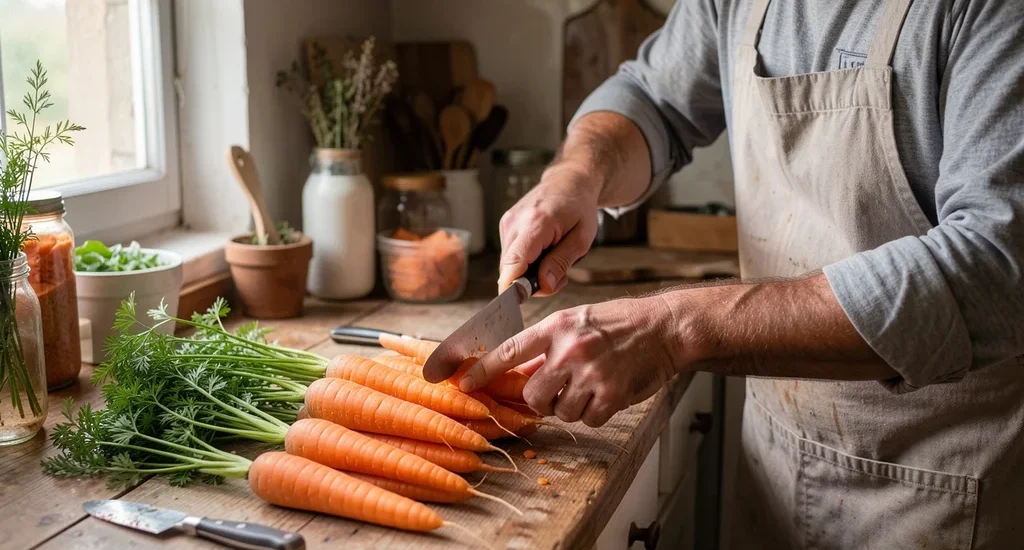
Start by removing the green tops, as they draw moisture from the roots. Leave about an inch of stem to prevent the carrots from drying out. Avoid washing them before storage—excess moisture speeds up spoilage.
If your carrots are dirty, brush off the soil instead.
- Prepare the carrots: Trim the tops, leaving 1 inch of stem. Do not wash.
- Choose the right container: Use a perforated plastic bag or wrap them in a damp paper towel inside an airtight container.
- Store in the crisper drawer: This part of the fridge has higher humidity, ideal for root vegetables.
- Check regularly: Remove any carrots that start to soften or develop mold to prevent spoilage.
Tip: If your carrots come with tops, save them! Carrot greens can be used in pestos, soups, or as a garnish.
Step by Step Guide to Freezing Carrots
Freezing is one of the best methods for long-term storage. It locks in nutrients and flavor, making carrots available for months. Blanching before freezing is crucial—it stops enzyme activity that can cause loss of flavor, color, and texture.
According to the National Center for Home Food Preservation, blanched and frozen carrots retain their quality for 12-18 months. The process is straightforward but requires attention to detail, especially the blanching time.
Blanching and Freezing Process
- Wash and peel: Clean the carrots thoroughly and peel if desired. Cut into slices, dice, or leave whole if small.
- Blanch the carrots: Boil a large pot of water. Add carrots and blanch for 3-5 minutes depending on size (3 minutes for small whole carrots, 5 for slices).
- Cool immediately: Plunge into an ice water bath for the same amount of time as blanching to stop the cooking process.
- Drain and dry: Remove from ice water and pat dry with a clean towel to prevent ice crystals.
- Pack for freezing: Place in freezer bags, removing as much air as possible. Label with the date.
- Freeze: Lay bags flat in the freezer to save space. Once frozen, you can stack them.
| Blanching Time | Carrot Preparation |
|---|---|
| 3 minutes | Whole small carrots |
| 4 minutes | Carrot sticks |
| 5 minutes | Sliced or diced carrots |
Frozen carrots work well in soups, stews, and casseroles. They may be slightly softer than fresh but retain most of their nutritional value.
Dehydrating Carrots for Long Shelf Life
Dehydrating removes moisture, preventing bacterial growth and spoilage. Dried carrots can last 6-12 months when stored properly. They are lightweight, easy to store, and perfect for backpacking, snacks, or rehydrating in recipes.
You can use an electric dehydrator, oven, or even air-dry in a warm, dry climate. The USDA notes that properly dehydrated vegetables should be leathery or brittle, with no moisture remaining.
Dehydrating Methods Compared
| Method | Temperature | Time | Pros | Cons |
|---|---|---|---|---|
| Dehydrator | 125-135°F (52-57°C) | 6-12 hours | Even drying, energy efficient | Initial cost |
| Oven | 170°F (77°C) or lowest setting | 8-12 hours | No extra equipment needed | Uneven heat, higher cost |
| Air Drying | Warm, dry climate | Several days | No cost, traditional | Slow, weather dependent |
Step by Step Dehydrating
- Prepare carrots: Wash, peel, and slice into ¼-inch pieces for even drying. Blanching is optional but helps preserve color.
- Arrange on trays: Place slices in a single layer without overlapping. Leave space between pieces for airflow.
- Set temperature: For dehydrators, use 125-135°F (52-57°C). For ovens, set to the lowest temperature (usually 170°F/77°C) and prop the door open slightly.
- Dry thoroughly: Check after 6 hours. Carrots are done when brittle and cool to the touch.
- Cool and store: Let cool completely, then store in airtight containers with a moisture absorber like silica gel.
Warning: If carrots are not completely dry, they can develop mold during storage. Always check for any moisture before sealing.
Pickling Carrots for Tangy Flavor
Pickling is a fantastic way to preserve carrots while adding vibrant flavors. Pickled carrots can last 1-2 years unopened and several months after opening when refrigerated. They are great for snacks, salads, or as a tangy side dish.
There are two main methods: quick pickling (refrigerator pickles) and traditional canning. Quick pickling is easier and ready in 24 hours, while canning requires more effort but allows for room-temperature storage.
Quick Pickled Carrots Recipe
- Ingredients:
- 1 lb (450g) carrots, sliced into sticks
- 1 cup white vinegar or apple cider vinegar
- 1 cup water
- 1 tbsp sugar or honey
- 1 tbsp salt
- 2 garlic cloves, smashed
- 1 tsp dill seeds or mustard seeds (optional)
- ½ tsp red pepper flakes (optional)
- Instructions:
- Pack carrot sticks into clean mason jars.
- Combine vinegar, water, sugar, and salt in a saucepan. Heat until sugar dissolves.
- Add garlic and spices to the brine, then pour over carrots, ensuring they are fully submerged.
- Let cool to room temperature, then seal and refrigerate.
- Wait at least 24 hours before eating. Flavor improves over time.
Traditional Canned Pickled Carrots
For shelf-stable pickled carrots, use a water bath canner. This method requires sterilized jars and proper canning techniques to prevent spoilage. The University of Georgia Extension reports that properly canned pickled vegetables can be safely stored at room temperature for up to a year.
- Prepare carrots and brine as above, but use canning or pickling salt (no iodine).
- Pack carrots into sterilized jars, leaving ½ inch headspace.
- Pour hot brine over carrots, removing air bubbles with a knife or chopstick.
- Wipe rims, apply lids, and process in a water bath canner for 15 minutes (adjust for altitude).
- Let cool and check seals after 24 hours. Store in a cool, dark place.
Root Cellar Storage for Bulk Preservation
A root cellar provides ideal conditions for storing carrots long-term. With temperatures between 32-40°F (0-4°C) and high humidity (90-95%), carrots can last 4-6 months. This method works best for gardeners with a large harvest.
Historically, root cellars were a primary method of food preservation. These days, you can use a basement corner, a buried container, or even a well-insulated box in a garage if temperatures stay cool and consistent.
How to Store Carrots in a Root Cellar
- Harvest carefully: Pull carrots on a dry day, brushing off excess soil. Avoid washing.
- Trim tops: Remove green tops to 1-2 inches to prevent moisture loss.
- Cure carrots: Lay them out in a single layer in a well-ventilated area for 1-2 days to toughen the skin.
- Choose containers: Use wooden crates, cardboard boxes, or perforated plastic bags. Avoid airtight containers.
- Layer with moisture: Alternate layers of carrots with damp sand, sawdust, or straw to maintain humidity.
- Store properly: Keep carrots off the floor and away from walls to allow air circulation. Check regularly for spoilage.
Important: Do not store carrots near apples, pears, or other fruits that release ethylene gas, as it can cause bitterness and spoilage.
Common Mistakes to Avoid
Even with the best intentions, small errors can ruin your preservation efforts. Knowing these pitfalls helps ensure your carrots stay fresh and delicious for as long as possible.
One of the most common mistakes is washing carrots before storage. Moisture accelerates spoilage, so it is best to brush off dirt instead. Another error is leaving the tops on, which continues to draw moisture and nutrients from the roots.
- Washing before storage: Excess moisture leads to mold and softening. Only wash right before use.
- Not removing tops: Greens pull moisture from the roots, causing them to wilt faster.
- Storing near ethylene producers: Apples, bananas, and avocados release ethylene gas, which can make carrots bitter.
- Using airtight containers for fresh carrots: Carrots need airflow. Use perforated bags or breathable containers.
- Skipping the blanching step for freezing: Blanching preserves color, texture, and flavor. Without it, frozen carrots can become mushy.
- Overcrowding during dehydrating: Carrots need space for proper airflow. Overlapping leads to uneven drying.
- Ignoring temperature fluctuations: Store carrots in the coldest part of the fridge or root cellar. Warmth speeds up spoilage.
Pro Tips for Maximum Freshness
To get the most out of your preserved carrots, a few extra steps can make a big difference. These tips help maintain quality, flavor, and nutritional value throughout the storage period.
For refrigeration, wrapping carrots in a damp paper towel before placing them in a bag helps retain moisture. For freezing, using a vacuum sealer removes more air than regular bags, reducing freezer burn. When dehydrating, slicing carrots uniformly ensures even drying.
- For refrigeration:
- Use a separate crisper drawer for carrots and other root vegetables.
- Check weekly for any soft or moldy carrots and remove them immediately.
- Re-moisten the paper towel if it dries out.
- For freezing:
- Blanch in small batches to maintain water temperature.
- Use ice-cold water for the cooling bath to stop cooking quickly.
- Label bags with the date to track storage time.
- For dehydrating:
- Slice carrots into even pieces for consistent drying.
- Rotate trays halfway through for uniform results.
- Store in dark glass jars to protect from light.
- For pickling:
- Use distilled or filtered water to prevent cloudy brine.
- Add a grape leaf or tannin-rich spice to keep carrots crisp.
- Sterilize jars properly to prevent contamination.
Frequently Asked Questions
Can I freeze carrots without blanching?
You can, but it is not recommended. Without blanching, enzymes remain active, leading to loss of color, flavor, and texture over time. Blanched carrots retain their quality for up to 18 months, while unblanched may only last 3-4 months.
How do I know if preserved carrots have gone bad?
Signs of spoilage include mold, slimy texture, off smells, or excessive softness. For canned carrots, discard if the lid is bulging or leaking. For frozen carrots, freezer burn (ice crystals) affects quality but not safety—just trim affected parts.
What is the best way to preserve baby carrots?
Baby carrots are more delicate due to their higher surface area. Store them in the fridge submerged in water in an airtight container, changing the water every 2-3 days. For longer storage, blanch and freeze them using the same method as regular carrots.
Can I preserve carrot tops?
Yes! Carrot tops can be used fresh in salads or as a garnish. To preserve, wash and dry thoroughly, then chop and freeze in ice cube trays with a little water or olive oil.
They can also be dehydrated and ground into a powder for seasoning.
How long do pickled carrots last?
Quick-pickled carrots (refrigerator pickles) last about 1-2 months in the fridge. Traditionally canned pickled carrots, when properly sealed and stored in a cool, dark place, can last up to a year. Once opened, refrigerate and use within a month.
Final Thoughts
Preserving carrots effectively comes down to choosing the right method for your needs and storage space. Refrigeration works for short-term, while freezing, dehydrating, and pickling extend shelf life significantly. Avoid common mistakes like washing before storage or skipping blanching to maintain quality.
With these techniques, you can enjoy fresh-tasting carrots year-round, reducing waste and saving money.