Last Updated on October 23, 2026 by D. Ruddy
A lush, green lawn starts with proper care, and knowing how to aerate lawn in fall can make a huge difference in its health and appearance. Aeration helps relieve soil compaction, allowing water, nutrients, and oxygen to reach the roots more effectively. This simple process can transform a lackluster lawn into a vibrant, thriving space.
Below, we’ll walk you through everything you need to know to aerate your lawn like a pro.
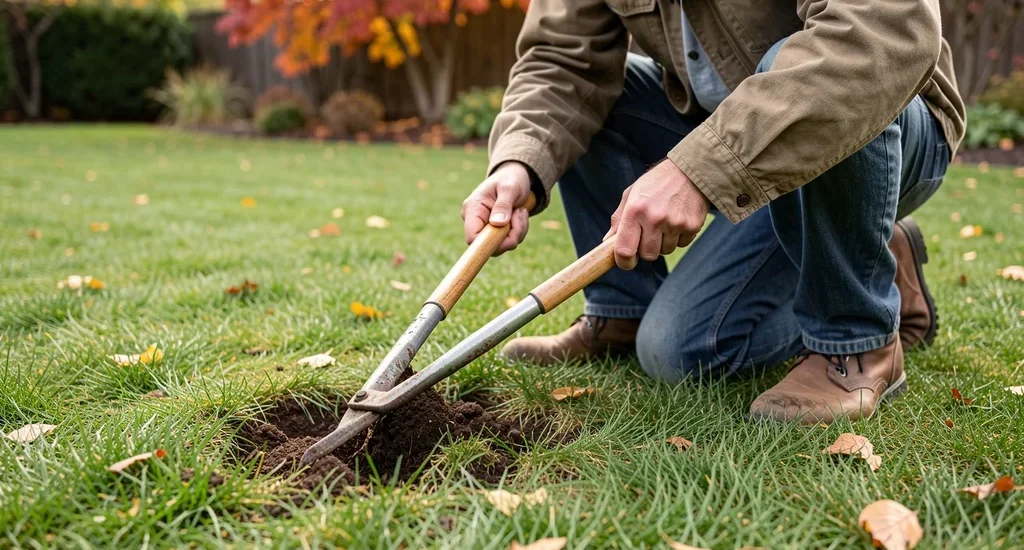
Aerating your lawn in fall involves removing small soil plugs to improve root growth. Use a core aerator for best results, focusing on high-traffic areas. Do this when the soil is slightly moist for easier penetration.
Why Aerate Your Lawn in Fall
Fall is the ideal time to aerate your lawn because the soil is still warm, which encourages root growth, while the cooler air temperatures reduce stress on the grass. This season also tends to have more consistent moisture, which helps the lawn recover quickly after aeration.
Aeration addresses common lawn problems like compaction, which occurs when soil particles are pressed together, reducing pore space. Compacted soil restricts root development and limits the movement of air, water, and nutrients. By aerating in the fall, you give your lawn the best chance to absorb fertilizers and prepare for the dormant winter months.
- Encourages deeper root growth by allowing roots to expand into the loosened soil
- Improves water absorption, reducing runoff and puddling
- Enhances fertilizer effectiveness by helping nutrients reach the root zone
- Reduces thatch buildup, which can smother grass if left unchecked
- Promotes microbial activity in the soil, breaking down organic matter
Tip: If your lawn feels spongy or water pools on the surface, it’s a sign that aeration is needed.
Signs Your Lawn Needs Aeration
Not every lawn requires aeration every year, but certain signs indicate it’s time to break out the aerator. If your lawn sees heavy foot traffic, from kids playing to frequent mowing, the soil likely compacts faster. Similarly, clay-heavy soils compact more easily than sandy or loamy soils.
Watch for these red flags: water puddles that take hours to absorb, thin or patchy grass despite regular care, or a lawn that feels hard to the touch. Another test is to dig up a small section of lawn—if the roots are shallow (less than 2-3 inches deep), aeration can help.
| Sign | What It Means |
|---|---|
| Water pools on the surface | Soil compaction prevents drainage |
| Grass thins despite fertilizing | Roots can’t access nutrients due to compaction |
| Lawn feels hard or spongy | Soil is either compacted or has excessive thatch |
| Weeds or moss are taking over | Weak grass from poor soil conditions |
If you notice two or more of these signs, it’s time to aerate. Even healthy lawns benefit from aeration every 1-2 years as preventive maintenance.
Types of Lawn Aerators
Not all aerators are created equal. The right tool for you depends on your lawn size, soil type, and budget. Core aerators, also called plug aerators, are the gold standard—they remove small plugs of soil and thatch, creating channels for air and water.
Spike aerators, on the other hand, simply poke holes in the ground, which can sometimes worsen compaction.
For small lawns, manual aerators work fine, but for larger areas, a powered aerator will save you time and effort. Some homeowners also use aerator sandals, which strap to your shoes, though these are less effective for heavily compacted soil.
| Aerator Type | Pros | Cons | Best For |
|---|---|---|---|
| Core/Plug Aerator | Most effective, long-lasting results | More expensive, heavier | Large lawns, heavily compacted soil |
| Spike Aerator | Cheaper, lighter | Less effective, can compact soil further | Small lawns, light compaction |
| Manual Aerator | Affordable, no power needed | Labor-intensive | Small lawns, DIYers |
| Powered Aerator | Fast, efficient for large areas | Expensive, requires storage space | Large lawns, frequent use |
For most homeowners, a core aerator is the best investment. You can rent one from a local hardware store if you don’t want to purchase it outright.
What You Need to Aerate Your Lawn
Before you start, gather all the necessary tools and materials. Having everything on hand will make the process smoother and more efficient. The essentials include an aerator (core aerator preferred), a lawn mower, a garden hose or sprinkler, a rake, and lawn fertilizer or seed if you plan to overseed afterward.
If you’re renting an aerator, check that it’s in good working condition and that you understand how to operate it. Some rental places offer brief tutorials—take advantage of them if you’re new to aeration. Also, mark any underground utilities or sprinkler lines to avoid damaging them during the process.
- Core aerator (manual or powered)
- Lawn mower to cut grass to the right height before aerating
- Garden hose or sprinkler to water the lawn before and after aeration
- Rake to remove debris and break up soil plugs
- Lawn fertilizer to apply after aeration for optimal nutrient absorption
- Grass seed if you’re overseeding bare or thin spots
- Flags or markers to denote underground utilities or obstacles
- Safety gear like gloves, closed-toe shoes, and eye protection
Important: Aerate only when the soil is slightly moist—not too dry or muddy. Dry soil is hard to penetrate, while wet soil can clog the aerator.
Step by Step How to Aerate Lawn in Fall
Timing and technique are everything when it comes to aeration. Aim to aerate in early fall, around 4-6 weeks before the first frost. This gives your lawn enough time to recover and establish new growth before winter.
The grass should be actively growing but not under heat stress.
Start by mowing your lawn slightly shorter than usual to make the aeration process easier. Water the lawn deeply 1-2 days before aerating to soften the soil. If the soil is too hard, the aerator won’t penetrate deeply enough, and if it’s too wet, the machine may get stuck or create a mess.
- Prepare Your Lawn
Mow the lawn to a height of about 2-2.5 inches. Remove any debris, sticks, or rocks that could interfere with the aerator. Water the lawn thoroughly 1-2 days before aeration to ensure the soil is moist but not soggy.
- Mark Obstacles
Use flags or spray paint to mark sprinkler heads, underground utilities, or other obstacles to avoid damaging them. This step is crucial if you’re using a powered aerator, which can cause serious damage to hidden lines.
- Set Up the Aerator
If using a powered aerator, adjust the depth setting to remove plugs about 2-3 inches deep. For manual aerators, follow the manufacturer’s instructions for optimal depth. The plugs should be spaced about 2-3 inches apart for the best results.
- Aerate the Lawn
Start at one corner of the lawn and work in straight lines, similar to mowing. Make two passes over the lawn in perpendicular directions to ensure thorough coverage. Focus on high-traffic areas, but don’t skip the edges or less-used sections.
- Break Up the Plugs
After aerating, use a rake or the back of a garden fork to break up the soil plugs left on the surface. This helps them decompose faster and return nutrients to the soil. Leave the plugs on the lawn—they’ll dissolve naturally over time.
- Overseed (Optional)
If your lawn has thin or bare spots, now is the perfect time to overseed. Spread grass seed evenly over the aerated area, then lightly rake to ensure seed-to-soil contact. Water the lawn lightly but frequently to keep the soil moist until the new grass establishes.
- Fertilize and Water
Apply a high-quality lawn fertilizer after aeration to take advantage of the improved nutrient absorption. Water the lawn deeply to help the fertilizer reach the roots. Continue watering regularly for the next few weeks to support recovery.
Tip: If you’re overseeding, choose a seed blend that matches your existing grass type for a uniform look.
Best Practices for Fall Lawn Aeration
While the basic steps are straightforward, a few pro tips can take your aeration game to the next level. For instance, avoid aerating during a drought or extreme heat, as this stresses the grass. Instead, pick a cool, overcast day to minimize stress on the lawn.
Another key practice is to aerate when the grass is actively growing. For cool-season grasses like Kentucky bluegrass, fescue, or ryegrass, early fall is ideal. Warm-season grasses like Bermuda or Zoysia should be aerated in late spring or early summer, but if you missed that window, early fall can still work if the weather is mild.
- Aerate in the right season for your grass type (early fall for cool-season grasses)
- Water deeply before and after to soften the soil and aid recovery
- Avoid aerating during drought or extreme temperatures
- Use a core aerator for the best results, especially for heavily compacted soil
- Overseed immediately after aeration if your lawn has bare or thin spots
- Fertilize post-aeration to maximize nutrient uptake
- Repeat annually or biennially depending on soil compaction and lawn usage
| Grass Type | Best Aeration Time | Notes |
|---|---|---|
| Cool-Season (Kentucky Bluegrass, Fescue, Ryegrass) | Early fall (4-6 weeks before frost) | Ideal for root growth before winter |
| Warm-Season (Bermuda, Zoysia, St. Augustine) | Late spring to early summer | Can be done in early fall if mild |
Always check your local climate and grass type to determine the best timing for aeration.
Common Mistakes to Avoid
Even with the best intentions, it’s easy to make mistakes that can reduce the effectiveness of aeration or even harm your lawn. One of the most common errors is aerating at the wrong time of year. Aerating during the hottest part of summer can stress the grass, while doing it too late in the fall may not give the lawn enough time to recover before winter.
Another mistake is using a spike aerator on heavily compacted soil. Spike aerators can actually worsen compaction by pushing soil particles together. Always opt for a core aerator for the best results.
Additionally, failing to water the lawn before aeration can make the process more difficult and less effective.
- Aerating at the Wrong Time
Avoid aerating during extreme heat or drought. For cool-season grasses, early fall is best. Warm-season grasses should be aerated in late spring or early summer.
- Using the Wrong Aerator
Spike aerators are less effective than core aerators, especially for heavily compacted soil. Invest in or rent a core aerator for the best results.
- Skipping Pre-Aeration Watering
Dry soil is hard to penetrate. Water the lawn deeply 1-2 days before aeration to soften the soil without making it muddy.
- Not Aerating Deep Enough
Shallow aeration won’t effectively relieve compaction. Aim for plugs that are 2-3 inches deep for optimal results.
- Ignoring Post-Aeration Care
Failing to fertilize or water after aeration can limit the benefits. Always follow up with proper care to help the lawn recover and thrive.
Warning: Never aerate a lawn that’s under stress from drought, disease, or pests. Wait until the lawn has recovered.
When to Call a Professional
While DIY aeration is manageable for most homeowners, there are times when calling in a professional makes sense. If your lawn is very large (over an acre), or if you have physical limitations that make operating an aerator difficult, hiring a pro can save you time and effort. Professionals also have access to commercial-grade equipment that may be more effective than rental machines.
Another reason to consider a professional is if your lawn has severe compaction or drainage issues. A pro can assess the soil and recommend additional treatments, such as topdressing with compost or amending the soil, to improve its structure over time.
- Large lawns (over an acre) may require professional equipment
- Physical limitations that make DIY aeration difficult
- Severe compaction or drainage issues that need expert assessment
- Lack of time or equipment to do the job properly
- Desire for additional services like overseeding or fertilization
| DIY Aeration | Professional Aeration |
|---|---|
| Cost-effective for small to medium lawns | More expensive but efficient for large lawns |
| Requires time and physical effort | Saves time and labor |
| Access to rental equipment | Access to commercial-grade equipment |
| Good for hands-on homeowners | Ideal for those with physical limitations or large properties |
If you decide to hire a professional, get quotes from a few companies and check reviews to ensure you’re working with a reputable service.
Frequently Asked Questions
How often should I aerate my lawn?
Most lawns benefit from aeration once a year, particularly in high-traffic areas or if the soil is clay-heavy. If your lawn is in good condition and sees minimal use, aerating every other year may be sufficient. Always assess the lawn’s condition—if you notice signs of compaction, it’s time to aerate.
Can I aerate my lawn too much?
Yes, over-aerating can stress the lawn and damage the grass roots. Stick to once a year for most lawns, or every other year for low-traffic areas. If you’re unsure, observe how your lawn responds after aeration—if it bounces back quickly, you’re on the right track.
Should I aerate before or after fertilizing?
Aerate before fertilizing to maximize nutrient absorption. The holes created by aeration allow fertilizer to reach the root zone more effectively. Apply fertilizer immediately after aeration for the best results.
Is it better to aerate in spring or fall?
For cool-season grasses, fall is the best time to aerate because the soil is warm, and the air is cool, promoting root growth. Spring aeration can work, but it may encourage weed growth if not followed by overseeding. Warm-season grasses should be aerated in late spring or early summer.
Do I need to remove the soil plugs after aeration?
No, leave the soil plugs on the lawn. They’ll decompose naturally over time, returning nutrients to the soil. You can use a rake to break them up and help them dissolve faster, but removing them entirely isn’t necessary.
Final Thoughts
Aerating your lawn in the fall is one of the best things you can do to ensure a healthy, vibrant lawn next year. By relieving soil compaction, you allow water, nutrients, and oxygen to reach the roots more effectively, promoting stronger growth. Remember to aerate at the right time, use the right tools, and follow up with proper care.
With these how to aerate lawn in fall tips, your lawn will thank you with lush, green grass.