Last Updated on October 23, 2026 by D. Ruddy
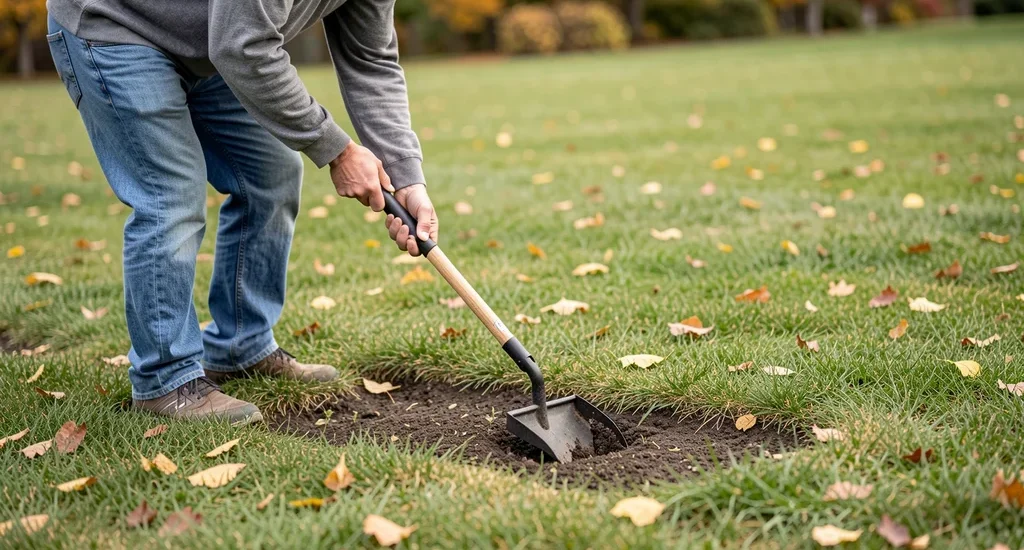
If your North Carolina lawn looks tired despite regular care, knowing when to aerate lawn fall NC can make all the difference. Fall aeration in NC helps relieve compacted soil and allows water, nutrients, and oxygen to reach grassroots before winter. This guide covers the ideal timing, signs your lawn needs aeration, and step-by-step tips for the best results.
The best time to aerate your lawn in North Carolina is early to mid-fall, typically September to early October. This timing allows cool-season grasses to recover and warm-season grasses to store nutrients before dormancy.
Why Fall Is The Best Time To Aerate In North Carolina
North Carolina’s climate makes fall the ideal season for lawn aeration. The cooler temperatures and increased rainfall help grass recover quickly from the stress of aeration. Cool-season grasses like tall fescue and Kentucky bluegrass thrive with fall aeration, as it encourages deep root growth before winter.
Warm-season grasses like Bermuda and Zoysia also benefit from fall aeration in NC. It allows them to store nutrients and strengthen their roots for the next growing season. Aerating in fall also helps reduce thatch buildup, which can suffocate your lawn over time.
- Cooler temperatures reduce stress on grass
- Increased rainfall aids recovery
- Encourages deep root growth before winter
- Reduces thatch buildup
- Improves soil compaction from summer foot traffic
Tip: Aerate when the soil is slightly moist—not too dry or muddy—for the best results.
Signs Your North Carolina Lawn Needs Aeration
Not sure if your lawn needs aeration? Look for these common signs that it’s time to aerate your NC lawn:
- Thin or patchy grass – If your lawn has bare spots or thin areas, compacted soil may be preventing grass from growing properly.
- Water pools on the surface – If water sits on your lawn instead of absorbing, the soil is likely compacted.
- Hard, dry soil – If it’s difficult to push a screwdriver into your lawn, the soil is too compacted.
- Excessive thatch – A thatch layer thicker than 0.5 inches can block water and nutrients from reaching the roots.
- High foot traffic areas – Lawns with heavy use (play areas, paths) compact faster and need more frequent aeration.
| Sign | What It Means |
|---|---|
| Grass turns brown quickly in summer | Compacted soil prevents deep root growth, making grass more susceptible to heat stress |
| Weeds growing in bare spots | Weeds thrive in compacted, thin areas where grass struggles to grow |
| Grass feels spongy underfoot | Excess thatch layer (over 0.5 inches) creates a spongy feel |
According to NC State University’s Turf Files, most North Carolina lawns benefit from annual aeration, especially those with clay soils common in the Piedmont region.
Best Aeration Methods For North Carolina Lawns
There are two main methods for aerating your lawn: spike aeration and core (plug) aeration. Each has its pros and cons for NC lawns.
Spike Aeration
Spike aeration uses solid tines to poke holes in the soil. It’s simpler and often cheaper, but less effective for heavily compacted soils common in NC.
- Good for small lawns with minor compaction
- Can be done with simple manual tools
- Less effective for clay soils
- Holes can compact around the edges
Core (Plug) Aeration
Core aeration removes small plugs of soil from your lawn, creating better air, water, and nutrient flow. This is the recommended method for most NC lawns, especially those with clay soil.
- Most effective for heavily compacted soils
- Creates long-lasting benefits
- Allows better water and nutrient penetration
- Can be done with manual or powered aerators
| Method | Best For | Effectiveness | Cost |
|---|---|---|---|
| Spike Aeration | Small lawns, minor compaction | Moderate | $ |
| Core Aeration | Most NC lawns, clay soils | High | $$ |
Important: For NC lawns with clay soil, core aeration is significantly more effective than spike aeration for long-term soil health.
Step By Step Guide To Aerating Your Lawn In NC
Follow this process for the best results when aerating your North Carolina lawn in fall.
Step 1: Prepare Your Lawn
Start by mowing your lawn slightly shorter than usual. This makes it easier for the aerator to penetrate the soil. Water your lawn thoroughly 1-2 days before aerating to soften the soil.
- Mow lawn to about 1.5-2 inches
- Remove any debris or sticks
- Mark sprinkler heads and utility lines
- Water deeply 24-48 hours before aerating
Step 2: Choose Your Aeration Equipment
For small lawns, a manual core aerator may suffice. For larger lawns, consider renting a powered aerator from a local hardware store. In NC, many homeowners find that renting a core aerator for a day is the most cost-effective option.
- Manual core aerators: Good for small lawns (under 5,000 sq ft)
- Powered core aerators: Best for larger lawns
- Spike aerators: Only for very small areas with minor compaction
- Towel spike sandals: Least effective, only for very small areas
Step 3: Aerate Your Lawn
Begin aerating in one direction, then make a second pass perpendicular to the first for maximum coverage. Focus on high-traffic areas and spots showing signs of compaction.
- Start at one corner of your lawn
- Make parallel passes about 2-3 feet apart
- Make a second pass at a 90-degree angle to the first
- Pay extra attention to compacted areas
- Leave the soil plugs on the lawn—they’ll break down naturally
Step 4: Overseed (Optional But Recommended)
Fall is the perfect time to overseed your NC lawn after aeration. The holes created by aeration provide ideal spots for new grass seed to make contact with the soil.
- Choose a grass seed mix suitable for your NC region
- Apply seed immediately after aerating
- Lightly rake to ensure seed-to-soil contact
- Keep the area consistently moist for 2-3 weeks
Step 5: Fertilize And Water
After aeration (and overseeding if done), apply a fall fertilizer to help your lawn recover and store nutrients for the winter. Water thoroughly after fertilizing.
- Use a fertilizer with a 3-1-2 or 4-1-2 ratio of nitrogen, phosphorus, and potassium
- Follow package instructions for application rates
- Water deeply after applying fertilizer
- Continue regular watering for the next few weeks
Tip: In North Carolina, late September to early October is ideal for cool-season grasses, while late August to early September works better for warm-season grasses.
What To Do After Aerating Your NC Lawn
Proper post-aeration care is crucial for getting the most benefit from your efforts. Here’s what to do after aerating your North Carolina lawn:
Watering Schedule
Keep your lawn consistently moist for the first two weeks after aeration. This helps the grass recover and encourages new root growth.
- Water deeply 2-3 times per week
- Early morning is the best time to water
- Avoid evening watering to prevent disease
- Water enough to moisten the soil 4-6 inches deep
Mowing Tips
Wait at least 5-7 days after aeration before mowing. When you do mow, set your mower to a slightly higher setting than usual to avoid stressing the grass.
- Wait 5-7 days before first mowing post-aeration
- Mow at a higher setting (3-3.5 inches for most NC grasses)
- Never remove more than 1/3 of the grass blade at once
- Keep mower blades sharp to prevent tearing grass
Fertilization Timeline
Apply a fall fertilizer within 1-2 days after aeration. This helps your lawn recover and store nutrients for the winter. For cool-season grasses, a second application can be made 6-8 weeks later.
| Time After Aeration | Action |
|---|---|
| Immediately | Apply fall fertilizer |
| 1-2 weeks | Keep soil consistently moist |
| 5-7 days | First mowing (if needed) |
| 6-8 weeks (cool-season grasses) | Second fertilizer application |
Common Mistakes To Avoid When Aerating In NC
Even with the best intentions, many homeowners make mistakes that reduce the effectiveness of lawn aeration. Here are the most common pitfalls to avoid:
- Aerating at the wrong time – Aerating during summer heat or winter dormancy can stress your lawn. Stick to early fall for best results in NC.
- Using dull or improper equipment – Dull tines won’t penetrate properly, and spike aerators may not be effective for clay soils. Always use sharp, core aeration equipment for NC lawns.
- Aerating when soil is too dry or too wet – Soil that’s bone dry is hard to penetrate, while muddy soil can clog your aerator. Aim for slightly moist soil.
- Skipping overseeding – Fall is the perfect time to overseed after aeration. Skipping this step means missing an opportunity to thicken your lawn.
- Not watering properly after aeration – Your lawn needs consistent moisture to recover. Neglecting watering can lead to poor results.
- Aerating too shallowly – For NC lawns, aim for aeration holes 2-3 inches deep. Shallow holes won’t effectively relieve compaction.
- Ignoring soil conditions – If your soil is extremely compacted or has a heavy clay content, you may need to aerate twice in fall, spaced 4-6 weeks apart.
Warning: Aerating during a drought or extreme heat can severely damage your lawn. Always check the weather forecast before scheduling aeration.
How Often Should You Aerate Your Lawn In North Carolina
The frequency of aeration depends on several factors specific to your NC lawn:
Lawn Type
Different grass types have different aeration needs. Cool-season grasses like tall fescue and Kentucky bluegrass typically need annual aeration in NC. Warm-season grasses like Bermuda and Zoysia may need aeration every 1-2 years, depending on soil conditions.
- Cool-season grasses (fescue, bluegrass, rye): Annually
- Warm-season grasses (Bermuda, Zoysia, Centipede): Every 1-2 years
- New lawns: Wait until the second year before aerating
Soil Type
North Carolina has diverse soil types, from sandy coastal soils to heavy clay in the Piedmont. Clay soils compact more easily and may require more frequent aeration.
| Soil Type | Aeration Frequency | Notes |
|---|---|---|
| Clay | Annually | Compacts easily, common in Piedmont NC |
| Loam | Every 1-2 years | Balanced soil, less compaction |
| Sandy | Every 2-3 years | Drains well, less compaction, common in coastal NC |
Lawn Usage
Lawns with high foot traffic compact more quickly and may need more frequent aeration. If your lawn gets heavy use from kids, pets, or frequent entertaining, consider aerating twice a year—in early fall and late spring.
- Low traffic: Every 1-2 years
- Moderate traffic: Annually
- High traffic: Twice annually (spring and fall)
Important: If your NC lawn has a history of heavy thatch buildup, you may need to aerate more frequently, regardless of other factors.
Frequently Asked Questions
Can I aerate my lawn in spring in North Carolina?
While you can aerate in spring, fall is generally better for NC lawns. Spring aeration can be done for warm-season grasses, but it may encourage weed growth. If you must aerate in spring, do it in late spring when the soil has warmed up, and be prepared to deal with more weeds.
How deep should I aerate my North Carolina lawn?
For most NC lawns, aim for aeration holes that are 2-3 inches deep. This depth effectively relieves compaction while allowing water and nutrients to reach the root zone. If your soil is extremely compacted, you may need to go slightly deeper, but don’t exceed 4 inches.
Should I remove the soil plugs after aerating?
No, leave the soil plugs on your lawn after aeration. They’ll break down naturally within a few weeks, returning valuable nutrients to your soil. Removing them would waste this natural resource and could create bare spots in your lawn.
Can I aerate my lawn myself, or should I hire a professional?
Most homeowners in NC can aerate their lawns themselves, especially with small to medium-sized lawns. Renting a core aerator from a local hardware store is a cost-effective option. However, if you have a very large lawn, extremely compacted soil, or physical limitations, hiring a professional may be worth the investment.
How long does it take for a lawn to recover after aeration?
In North Carolina’s fall conditions, most lawns show visible improvement within 2-3 weeks after aeration. Complete recovery, including new grass growth from overseeding, may take 4-6 weeks. Proper watering and fertilization can speed up this process significantly.
Final Thoughts
Knowing when to aerate lawn fall NC gives your turf the best chance to recover, store nutrients, and develop deep roots before winter. For most North Carolina lawns, early to mid-fall is the sweet spot, with core aeration being the most effective method. Pair aeration with overseeding and proper post-care for a thicker, healthier lawn next spring.
Start planning your fall lawn care now for the best results.