Last Updated on October 23, 2026 by D. Ruddy
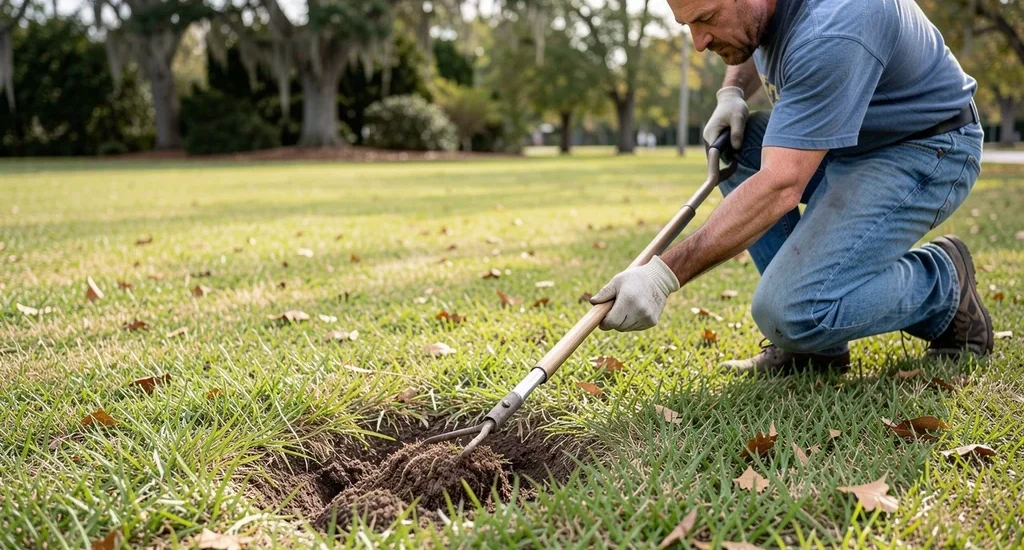
If your lawn in Northwest Florida looks compacted or water pools on the surface, when to aerate lawn in fall northwest florida is a key question to ask. Fall is the ideal time because the soil is still warm but the air is cooler, giving grass roots a chance to recover before winter. This post covers the best timing, signs your lawn needs aeration, and step-by-step guidance to do it right.
The best time to aerate your lawn in Northwest Florida is in early to mid-fall, typically from late September to early November. This timing allows grass to recover quickly while weeds are less active.
Why Fall Is the Best Time for Lawn Aeration in Northwest Florida
Northwest Florida’s warm-season grasses, like Bermuda, Zoysia, and Centipede, thrive when aerated in the fall. The soil stays warm enough to encourage root growth, but cooler air temperatures reduce stress on the grass blades. This balance helps your lawn recover faster after aeration.
Aerating in fall also minimizes weed competition. Many weeds in this region go dormant or grow more slowly as temperatures drop, so your grass has a better chance to fill in the holes left by aeration without weeds taking over.
Additionally, fall often brings more consistent rainfall to Northwest Florida, which helps the soil stay moist and promotes deeper root growth after aeration. This natural moisture reduces the need for extra watering, making the process easier and more effective.
- Warm soil encourages root recovery and growth
- Cooler air reduces stress on grass blades
- Less weed competition allows grass to fill in bare spots
- Natural rainfall helps moisture penetrate the soil
- Ideal for overseeding if you want to introduce new grass varieties
Tip: If your lawn has a lot of thatch (a layer of dead grass and roots), fall aeration helps break it up, allowing water and nutrients to reach the soil more effectively.
Signs Your Northwest Florida Lawn Needs Aeration
Not sure if your lawn needs aeration? Look for these common signs that indicate it’s time to break up compacted soil and improve airflow, water, and nutrient absorption.
Compacted soil is a major issue in Northwest Florida due to heavy clay content in many areas. When soil is compacted, grass roots can’t expand, leading to thin, weak turf. Aeration relieves this compaction, giving your lawn room to breathe and grow.
| Sign | What It Means | Solution |
|---|---|---|
| Water pools on the surface | Soil is too compacted to absorb water | Aerate to improve drainage |
| Grass is thin or patchy | Roots can’t penetrate compacted soil | Aerate and overseed |
| Hard, dry soil | Lacks airflow and moisture retention | Aerate and add compost |
| Footprints remain visible | Soil is too dense to spring back | Aerate to loosen soil |
| Frequent pest or disease issues | Poor soil health weakens grass | Aerate and improve soil quality |
If you notice two or more of these signs, your lawn is likely due for aeration. Addressing these issues in the fall gives your grass the best chance to recover before the cooler months.
Step-by-Step Guide to Aerating Your Lawn in Northwest Florida
Aerating your lawn is a straightforward process, but doing it correctly ensures the best results. Follow these steps to aerate your Northwest Florida lawn like a pro.
- Prepare Your Lawn
Start by mowing your lawn slightly shorter than usual. This makes it easier for the aerator to penetrate the soil. Water your lawn deeply 1-2 days before aeration to soften the soil, especially if your yard has clay-heavy soil common in Northwest Florida.
- Choose the Right Aerator
For most homeowners, a core aerator (which removes small plugs of soil) is the best choice. Spike aerators (which just poke holes) are less effective but work for small lawns. You can rent a core aerator from a local hardware store or hire a professional service.
- Core aerators remove soil plugs for better airflow
- Spike aerators are cheaper but less effective
- Manual aerators work for small lawns
- Towel aerators are great for large areas
- Mark Utility Lines and Sprinklers
Before you start, mark any underground utility lines, sprinkler heads, or shallow roots to avoid damaging them. Call 811 to have utility lines marked if you’re unsure where they are.
- Aerate the Lawn
Run the aerator over your lawn in two perpendicular passes to ensure thorough coverage. Focus on high-traffic areas and spots where the soil is most compacted. Leave the soil plugs on the lawn—they’ll break down naturally and return nutrients to the soil.
Important: Set the aerator to remove cores about 2-3 inches deep and 0.5-0.75 inches in diameter for best results.
- Overseed and Fertilize
After aeration, it’s the perfect time to overseed your lawn if needed. The holes created by aeration provide ideal seed-to-soil contact. Apply a slow-release fertilizer to give your grass the nutrients it needs to recover and grow.
- Water and Maintain
Water your lawn lightly every day for the first week after aeration to help the soil plugs break down and encourage root growth. After that, return to your normal watering schedule.
Best Aeration Tools for Northwest Florida Lawns
Choosing the right aeration tool depends on the size of your lawn, your budget, and how often you plan to aerate. Here are the best options for Northwest Florida homeowners.
| Tool | Best For | Pros | Cons |
|---|---|---|---|
| Manual Spike Aerator | Small lawns, budget-friendly |
|
|
| Manual Core Aerator | Medium lawns, DIYers |
|
|
| Towed Core Aerator | Large lawns, frequent use |
|
|
| Aeration Sandals | Very small lawns, rental properties |
|
|
For most Northwest Florida homeowners, renting a tow-behind core aerator for a weekend is the best balance of cost and effectiveness. If you have a small lawn, a manual core aerator may be sufficient.
Common Mistakes to Avoid When Aerating in Northwest Florida
Aerating your lawn seems simple, but there are a few common mistakes that can reduce its effectiveness or even damage your grass. Avoid these pitfalls to get the best results.
- Aerating at the Wrong Time
Aerating in the middle of summer or during a drought can stress your lawn. Stick to early fall for the best results in Northwest Florida. Aerating too late in the fall may not give your grass enough time to recover before winter.
- Skipping Preparation
Not mowing your lawn short or watering beforehand makes aeration harder and less effective. Always prep your lawn by mowing it slightly shorter and watering deeply 1-2 days before aeration.
- Using the Wrong Tool
Spike aerators are better than nothing, but they don’t remove soil plugs, which means they can actually compact the soil further. Whenever possible, use a core aerator for the best results.
- Not Aerating Deeply Enough
Shallow aeration (less than 2 inches deep) won’t effectively relieve compaction. Aim for cores that are 2-3 inches deep to allow for proper airflow, water, and nutrient penetration.
- Ignoring High-Traffic Areas
High-traffic areas, like pathways or play areas, often need extra attention. Make sure to go over these spots multiple times to break up the most compacted soil.
- Forgetting to Overseed or Fertilize
Aeration creates the perfect conditions for overseeding and fertilizing. Skipping these steps means missing out on a prime opportunity to improve your lawn’s thickness and health.
- Aerating Too Frequently or Not Enough
For most lawns in Northwest Florida, aerating once a year is sufficient. However, if your lawn has heavy clay soil or gets a lot of foot traffic, you may need to aerate twice a year (once in fall and once in spring).
Warning: Avoid aerating if your lawn is dormant or under severe stress, such as during a drought or extreme heat. Wait until conditions improve.
How Often Should You Aerate Your Lawn in Northwest Florida
The frequency of lawn aeration depends on several factors, including your soil type, grass type, and how much foot traffic your lawn gets. In Northwest Florida, most homeowners should aerate at least once a year, but some lawns may benefit from more frequent aeration.
Lawns with clay-heavy soil, which is common in parts of Northwest Florida, compact more easily and may need aeration twice a year—once in the fall and once in the spring. Clay soil holds moisture but can become very dense, restricting root growth.
If your lawn gets heavy foot traffic from kids, pets, or frequent gatherings, it’s also a good idea to aerate twice a year. High traffic areas compact the soil faster, so more frequent aeration helps keep your lawn healthy.
For lawns with sandy soil, which drains quickly and compacts less, once a year is usually enough. Sandy soil doesn’t hold nutrients as well as clay, but it also doesn’t compact as easily.
| Lawn Type | Soil Type | Recommended Frequency |
|---|---|---|
| Bermuda, Zoysia, Centipede | Clay | Twice a year (fall and spring) |
| Bermuda, Zoysia, Centipede | Sandy | Once a year (fall) |
| St. Augustine | Clay or Loamy | Once a year (fall) |
| High-traffic lawns | Any | Twice a year (fall and spring) |
Post-Aeration Care for Your Northwest Florida Lawn
Proper care after aeration ensures your lawn recovers quickly and reaps the full benefits of the process. Follow these steps to help your grass thrive after aeration.
- Leave the Soil Plugs
It might be tempting to rake up the soil plugs left behind by the aerator, but leaving them on your lawn is beneficial. These plugs contain valuable microorganisms that break down and return nutrients to the soil, improving its overall health.
- Water Lightly and Frequently
For the first week after aeration, water your lawn lightly every day. This helps the soil plugs break down and encourages deep root growth. After the first week, you can return to your normal watering schedule.
- Overseed if Needed
Fall is the perfect time to overseed your lawn, especially after aeration. The holes created by the aerator provide direct soil contact for the seeds, increasing the chances of successful germination. Choose a grass seed that’s well-suited to Northwest Florida’s climate, such as Bermuda, Zoysia, or Centipede.
- Apply Fertilizer
After aeration, apply a slow-release fertilizer to give your grass the nutrients it needs to recover and grow. Look for a fertilizer with a balanced ratio of nitrogen, phosphorus, and potassium (e.g., 16-4-8) to promote healthy root and blade growth.
- Avoid Heavy Foot Traffic
Try to minimize foot traffic on your lawn for at least a week after aeration. This gives the grass time to recover and reduces the risk of recompacting the soil.
- Monitor for Pests and Diseases
After aeration, your lawn may be more vulnerable to pests and diseases. Keep an eye out for any unusual brown patches, thinning grass, or signs of pest activity, and address them promptly if they arise.
Tip: If you’re overseeding, consider using a starter fertilizer, which is higher in phosphorus to promote root growth in new seedlings.
Frequently Asked Questions
How do I know if my Northwest Florida lawn needs aeration?
Look for signs like water pooling on the surface, thin or patchy grass, hard and dry soil, visible footprints that don’t disappear, or frequent pest and disease issues. If you notice two or more of these signs, your lawn likely needs aeration. You can also perform a simple test: if a screwdriver is hard to push into the soil, it’s a sign of compaction.
Can I aerate my lawn in Northwest Florida during the summer?
It’s not recommended. Aerating during the summer, especially in Northwest Florida’s hot and humid climate, can stress your lawn and lead to damage. The best time to aerate is in early to mid-fall when the soil is warm but the air is cooler, giving your grass the best chance to recover.
What’s the difference between core aeration and spike aeration?
Core aeration removes small plugs of soil from your lawn, creating holes that allow air, water, and nutrients to penetrate deeply. Spike aeration, on the other hand, simply pokes holes into the soil without removing any material. Core aeration is more effective because it doesn’t compact the soil further, whereas spike aeration can sometimes make compaction worse.
How deep should I aerate my lawn in Northwest Florida?
For the best results, aim for aeration holes that are 2-3 inches deep. This depth allows for proper airflow, water, and nutrient penetration, helping your grass roots grow deeper and stronger. If your lawn has particularly compacted soil, you may need to go slightly deeper, but avoid exceeding 3 inches.
Is it necessary to overseed after aerating my lawn?
While it’s not strictly necessary, overseeding after aeration is highly recommended, especially if your lawn is thin or patchy. Aeration creates the perfect conditions for seed-to-soil contact, increasing the chances of successful germination. Fall is the ideal time for overseeding in Northwest Florida, as the cooler temperatures and natural rainfall help new grass establish itself.
Final Thoughts
Knowing when to aerate lawn in fall northwest florida can make a big difference in the health and appearance of your turf. Early to mid-fall is the sweet spot, giving your grass time to recover before winter while taking advantage of cooler temperatures and natural rainfall. Aeration relieves soil compaction, improves drainage, and creates the ideal conditions for overseeding and fertilizing.
By following the steps outlined in this guide, avoiding common mistakes, and providing proper post-aeration care, you’ll set your Northwest Florida lawn up for success. A well-aerated lawn is thicker, greener, and more resilient, making it the envy of the neighborhood.