Last Updated on October 23, 2026 by D. Ruddy
A lush, healthy lawn starts with proper care, and knowing should I aerate my lawn in spring and fall can make all the difference. Aeration improves soil compaction, allowing water, nutrients, and oxygen to reach grass roots effectively. This guide covers the best times, methods, and tools to ensure your lawn thrives year-round.
Yes, you should aerate your lawn in both spring and fall for optimal health. Spring aeration helps relieve winter compaction, while fall aeration prepares the soil for cooler months and promotes root growth.
Why Aeration Matters for Your Lawn
Over time, soil becomes compacted from foot traffic, rain, and regular lawn maintenance. Compacted soil restricts air, water, and nutrient flow, which can suffocate grass roots and lead to thin, weak turf. Aeration creates small holes in the soil, allowing essential elements to penetrate deeply.
According to the University of Nebraska-Lincoln Extension, lawn aeration can improve water absorption by up to 50%, reducing runoff and promoting deeper root systems. This process also enhances fertilizer effectiveness, as nutrients can reach the root zone more efficiently.
- Improves soil structure by breaking up compacted layers
- Enhances root growth with better oxygen and nutrient access
- Reduces water pooling and promotes drainage
- Boosts fertilizer effectiveness by allowing deeper penetration
- Prevents thatch buildup, which can smother grass
Tip: If your lawn feels spongy or water pools on the surface, it’s a sign that aeration is needed.
Spring vs Fall Aeration Which Is Best
Both seasons offer unique benefits for aeration, and the best time depends on your grass type and climate. Warm-season grasses like Bermudagrass, Zoysiagrass, and St. Augustine benefit most from late spring aeration, while cool-season grasses like Kentucky Bluegrass, Fescue, and Ryegrass thrive with fall aeration.
The National Association of Landscape Professionals recommends aerating cool-season grasses in early fall (September to October) when soil temperatures are still warm but air temperatures are cooler. This timing allows grass to recover quickly and develop strong roots before winter.
| Grass Type | Best Aeration Time | Why |
|---|---|---|
| Warm-Season (Bermuda, Zoysia) | Late Spring | Active growth phase, recovers quickly |
| Cool-Season (Kentucky Bluegrass, Fescue) | Early Fall | Cooler temps, warm soil, ideal for root growth |
For warm-season grasses, late spring aeration coincides with peak growth, allowing the lawn to fill in holes quickly. Fall aeration for cool-season grasses prepares the soil for winter dormancy and encourages strong root development before the growing season slows.
Signs Your Lawn Needs Aeration
Not sure if your lawn needs aeration? Look for these common signs that indicate compacted soil or poor nutrient absorption. Addressing these issues early can prevent long-term damage and promote a healthier lawn.
According to a study by the Turfgrass Science Journal, lawns that receive heavy foot traffic or are located in clay-heavy soils often require more frequent aeration—sometimes twice a year—to maintain optimal health.
- Water pools on the surface instead of absorbing into the soil
- Grass feels spongy underfoot, indicating thatch buildup
- Thin or patchy growth despite regular watering and fertilizing
- Hard, compacted soil that resists penetration from a screwdriver or garden fork
- Weeds and moss thrive where grass struggles to grow
- Fertilizer doesn’t seem to work, as nutrients can’t reach the roots
Warning: If your lawn shows multiple signs of compaction, aerate as soon as possible to prevent further decline.
Types of Lawn Aerators
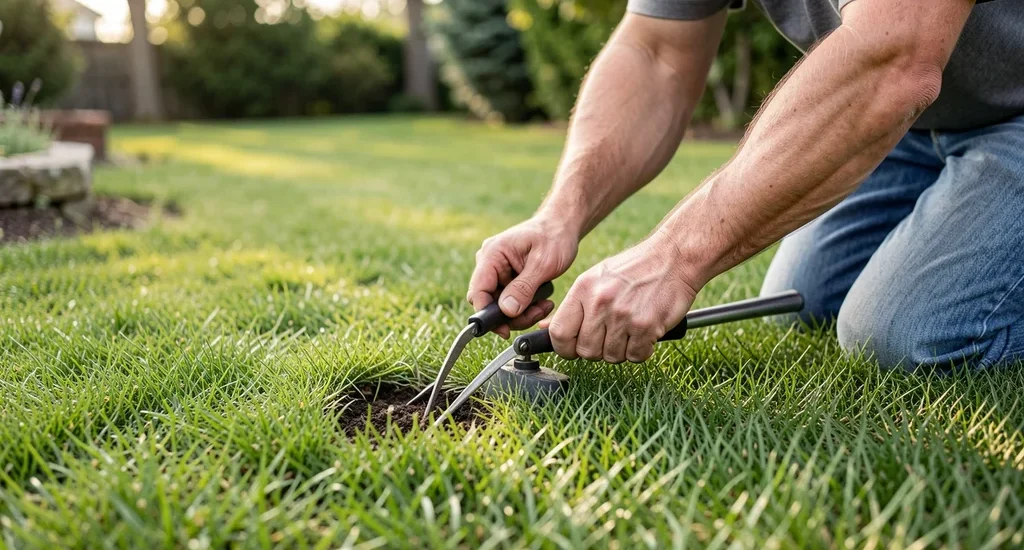
Choosing the right aerator depends on your lawn size, soil type, and budget. Manual aerators work well for small lawns, while powered aerators save time and effort for larger areas. Each type has its pros and cons, so consider your specific needs before investing.
The American Society for Horticultural Science notes that spike aerators, while affordable, can sometimes cause further compaction by pushing soil downward. Core aerators, which remove small plugs of soil, are generally more effective for most lawns.
| Aerator Type | Best For | Pros | Cons |
|---|---|---|---|
| Manual Spike Aerator | Small lawns | Affordable, easy to use | Less effective, labor-intensive |
| Manual Core Aerator | Small to medium lawns | Removes soil plugs, effective | Physically demanding |
| Powered Core Aerator | Large lawns | Fast, efficient, deep penetration | Expensive, requires storage |
| Tow-Behind Aerator | Very large lawns | Covers large areas quickly | Requires a tractor, costly |
Step by Step Guide to Aerating Your Lawn
Aerating your lawn is a straightforward process, but proper preparation and technique ensure the best results. Follow these steps to aerate like a pro, whether you’re using a manual tool or a powered machine.
The Lawn Care Academy emphasizes that mowing your lawn slightly shorter than usual before aeration allows the aerator to penetrate the soil more effectively. Additionally, watering the lawn 1-2 days before aeration softens the soil, making it easier to remove cores.
1. Prepare Your Lawn
- Mow the lawn to a height of about 1.5–2 inches to expose the soil
- Water the lawn thoroughly 1–2 days before aeration to soften the soil
- Mark any sprinkler heads, shallow roots, or underground utilities to avoid damage
- Remove debris, sticks, or rocks that could interfere with the aerator
2. Choose the Right Aerator
- For small lawns (under 5,000 sq. ft.), a manual core aerator is sufficient
- For medium to large lawns, rent a powered core aerator from a local hardware store
- Ensure the aerator removes soil plugs (cores) rather than just poking holes
- Adjust the depth to remove 2–3 inch plugs for optimal results
3. Aerate the Lawn
- Start at one corner of the lawn and work in straight lines, slightly overlapping each pass
- Focus on high-traffic areas and spots where soil compaction is visible
- Make two passes in perpendicular directions (e.g., north-south and east-west) for thorough coverage
- Aim for 20–40 holes per square foot for best results
4. Post Aeration Care
- Leave the soil plugs on the lawn to decompose naturally—they’ll return nutrients to the soil
- Water the lawn immediately after aeration to help roots recover
- Apply fertilizer or overseed within 48 hours to maximize nutrient and seed-to-soil contact
- Avoid heavy foot traffic on the lawn for at least a week to allow recovery
Important: If overseeding, choose a high-quality grass seed blend that matches your existing lawn for best results.
Common Mistakes to Avoid
Even with the best intentions, homeowners often make mistakes that reduce the effectiveness of lawn aeration. Avoiding these pitfalls ensures your efforts lead to a healthier, greener lawn.
A survey by the National Lawn Care Association found that 60% of homeowners who aerate their lawns make at least one critical mistake, such as aerating at the wrong time or using the wrong equipment. Being aware of these errors can save you time and frustration.
- Aerating at the wrong time: Avoid aerating during extreme heat or drought, as this stresses the grass. For cool-season grasses, late spring aeration can bring up weed seeds, leading to more weeds.
- Using a spike aerator on compacted soil: Spike aerators can further compact soil around the holes, reducing effectiveness. Core aerators are almost always the better choice.
- Not watering before aeration: Dry, hard soil makes it difficult for aerators to penetrate deeply. Always water 1–2 days before.
- Skipping post-aeration care: Failing to water, fertilize, or overseed after aeration wastes the opportunity to improve your lawn’s health.
- Aerating too frequently or infrequently: Most lawns benefit from aeration once a year, but heavily compacted lawns may need it twice (spring and fall).
- Ignoring soil conditions: If your soil is extremely hard or rocky, consider dethatching or topdressing with compost before aerating.
Best Practices for Spring Aeration
Spring aeration is ideal for warm-season grasses and lawns recovering from winter stress. The key is timing—wait until the grass is actively growing but before the heat of summer sets in. This allows the lawn to recover quickly and take full advantage of the aeration benefits.
The Turfgrass Producers International organization recommends aerating warm-season grasses when soil temperatures consistently reach 65°F (18°C), typically in late spring. This temperature ensures that grass roots are actively growing and can recover from the aeration process.
- Wait for the right temperature: Soil temps should be at least 60–65°F (15–18°C) for warm-season grasses
- Mow and water beforehand: Cut the grass short and water deeply 1–2 days before aerating
- Use a core aerator: This removes soil plugs, providing the best results for compacted lawns
- Overseed if needed: Spring is a great time to fill in bare spots with new grass seed
- Fertilize after aeration: Apply a slow-release fertilizer to support new growth
- Avoid heavy use: Limit foot traffic for a week to allow the lawn to recover
Tip: If your lawn has a thick thatch layer (over 0.5 inches), dethatch before aerating to ensure the aerator can reach the soil.
Best Practices for Fall Aeration
Fall is the ideal time to aerate cool-season grasses like Kentucky Bluegrass, Fescue, and Ryegrass. The combination of cool air temperatures and warm soil creates perfect conditions for root growth and recovery. Aerating in fall also helps your lawn store nutrients for the winter and emerge stronger in spring.
Research from the University of Maryland Extension shows that fall aeration can increase root depth by up to 30%, leading to a more drought-resistant lawn the following summer. This is because the cooler temperatures reduce stress on the grass while allowing roots to grow deeply before winter dormancy.
- Timing is everything: Aerate in early fall (September to early October) for cool-season grasses
- Water deeply before aerating: Soft soil makes it easier to remove cores
- Combine with overseeding: Fall is the best time to introduce new grass seed to thicken your lawn
- Apply a winterizer fertilizer: This provides essential nutrients to strengthen roots before winter
- Keep the lawn moist: Water lightly every few days for 2–3 weeks after aeration
- Avoid late fall aeration: Aerating too close to winter doesn’t give grass enough time to recover
| Fall Aeration Benefit | Why It Matters |
|---|---|
| Encourages deep root growth | Prepares lawn for winter and spring green-up |
| Improves fertilizer uptake | Nutrients reach roots more effectively |
| Reduces winter damage | Stronger roots resist cold and disease |
Frequently Asked Questions
Can I aerate my lawn too much?
Yes, over-aerating can stress your lawn and damage grass roots. For most lawns, aerating once a year is sufficient. However, if your lawn receives heavy foot traffic or has clay soil, aerating twice a year (spring and fall) may be beneficial.
Always allow at least 4–6 weeks between aeration sessions for recovery.
How deep should the aerator go?
For effective aeration, the tines or cores should penetrate the soil to a depth of 2–3 inches. This depth allows for proper air, water, and nutrient exchange. If your aerator isn’t reaching this depth, it may be time to adjust the settings or switch to a more powerful model.
Should I aerate before or after fertilizing?
Aerate before fertilizing to ensure nutrients reach the root zone effectively. Ideally, apply fertilizer within 48 hours after aeration. This timing allows the fertilizer to penetrate the holes created by aeration, maximizing its effectiveness and promoting healthier grass growth.
Is it better to aerate wet or dry soil?
Soil should be slightly moist but not soggy when aerating. Water the lawn 1–2 days before aeration to soften the soil, making it easier to remove cores. Avoid aerating when the soil is too wet, as this can lead to clumping and poor results.
Similarly, extremely dry soil can be too hard for the aerator to penetrate.
Can I aerate a newly seeded lawn?
Avoid aerating a newly seeded lawn until the grass is well-established, typically after 6–8 weeks or when the new grass reaches a height of 3–4 inches. Aerating too soon can disrupt seed germination and damage tender new roots. Once established, you can aerate as part of your regular lawn care routine.
Final Thoughts
Aerating your lawn in both spring and fall is one of the best ways to ensure a thick, green, and healthy lawn. By improving soil structure and allowing essential nutrients to reach the roots, aeration helps your grass thrive year-round. Remember to choose the right time based on your grass type, use the proper equipment, and follow up with watering, fertilizing, or overseeding to maximize the benefits.
With the right approach, you’ll see a noticeable improvement in your lawn’s health and appearance.