Last Updated on October 22, 2026 by D. Ruddy
As temperatures drop, many gardeners wonder how to save their prized pepper plants from the winter chill. How to over winter pepper plants is a common concern, especially for those growing rare or high-yielding varieties they want to keep alive for next season. With the right approach, you can successfully overwinter peppers indoors and enjoy a head start when spring arrives.
You can over winter pepper plants by pruning them back, potting them up, and moving them indoors before the first frost. Keep them in a sunny spot with consistent moisture and temperatures between 60-75°F for best results.
Why Overwinter Pepper Plants
Overwintering pepper plants offers several compelling benefits that make the effort worthwhile. First, it allows you to preserve your best-performing plants, saving you the time and cost of starting from seeds next season. This is especially valuable for heirloom or hard-to-find varieties that may not be readily available as seedlings.
Another significant advantage is the head start you’ll get in the growing season. Overwintered plants are already established when you move them back outside in spring, which means they’ll begin producing fruit 4-6 weeks earlier than new seedlings. According to the University of Minnesota Extension, overwintered peppers can produce up to 30% more fruit in their second year.
- Preserve genetic traits of your best plants
- Save money on seeds and seedlings
- Get a 4-6 week head start on production
- Potentially increase next year’s yield by 25-30%
- Maintain plants that have adapted to your specific growing conditions
Tip: Focus on overwintering your most productive or unique pepper varieties to maximize the return on your effort.
Additionally, overwintering can be particularly beneficial for perennial pepper varieties, which can live for several years under the right conditions. While most peppers are technically perennial, they’re often grown as annuals in colder climates. By overwintering, you’re allowing the plant to reach its full potential lifespan.
Best Pepper Varieties for Overwintering
Not all pepper plants respond equally well to overwintering. Some varieties are more resilient and adaptable to indoor conditions, making them better candidates for this process. Generally, smaller, compact varieties tend to do better indoors than large, sprawling plants.
Hot peppers often overwinter more successfully than sweet peppers. This is because many hot pepper varieties are naturally more disease-resistant and hardy. According to a study by the University of California Cooperative Extension, jalapeño, serrano, and cayenne peppers have particularly high success rates when overwintered indoors.
| Pepper Type | Overwintering Success | Notes |
|---|---|---|
| Jalapeño | Excellent | Compact, disease-resistant, adapts well to containers |
| Serrano | Excellent | Similar to jalapeño but slightly more cold-tolerant |
| Cayenne | Very Good | Tall but narrow growth habit, good for vertical spaces |
| Thai Chili | Very Good | Small size ideal for indoor growing |
| Bell Pepper | Good | Larger plants need more space, may require more pruning |
| Habanero | Good | Needs consistent warmth, may drop leaves in transition |
While most peppers can be overwintered, some larger varieties like big bell peppers or banana peppers may be more challenging due to their size. If you’re limited on indoor space, focus on your smaller, more compact plants.
When to Start Overwintering Pepper Plants
Timing is crucial when it comes to successfully overwintering pepper plants. Start the process too early, and you might bring pests indoors. Start too late, and your plants could suffer cold damage before you get them inside.
The ideal time to begin overwintering peppers is about 4-6 weeks before your first expected frost date. This gives the plants time to acclimate to indoor conditions gradually. According to the Old Farmer’s Almanac, most regions in the US experience their first frost between mid-October and early November, though this varies significantly by location.
- Monitor local weather forecasts: Watch for nighttime temperatures consistently dropping below 50°F (10°C). This is your signal to start the process.
- Check your pepper plants: Look for signs of stress like yellowing leaves or slowed growth, which indicate it’s time to act.
- Consider your plant’s health: Only overwinter healthy, vigorous plants. Weak or diseased plants are less likely to survive the transition.
- Plan for acclimation: The transition from outdoor to indoor conditions should be gradual over 7-10 days.
Warning: Never move peppers directly from outdoor garden to indoor heat without acclimation. The sudden change can shock the plant and cause leaf drop.
In regions with mild winters, you might get away with starting later, but it’s always better to err on the side of caution. Remember that peppers are tropical plants and can’t tolerate any frost. Even temperatures in the 40s°F (4-7°C) can cause damage to leaves and stems.
Step by Step How to Over Winter Pepper Plants
Follow this proven process to successfully overwinter your pepper plants and ensure they thrive until spring.
Step 1: Inspect and Select Plants
Begin by carefully inspecting all your pepper plants. Choose only the healthiest, most vigorous specimens for overwintering. Look for plants with:
- Strong, sturdy stems
- Vibrant green leaves with no spots or discoloration
- No signs of pests like aphids or whiteflies
- Good production history (your best performers)
- Compact growth habit (easier to manage indoors)
Discard or compost any plants showing signs of disease, severe pest infestation, or poor health. Bringing sick plants indoors can spread problems to your other houseplants.
Step 2: Prune the Plants
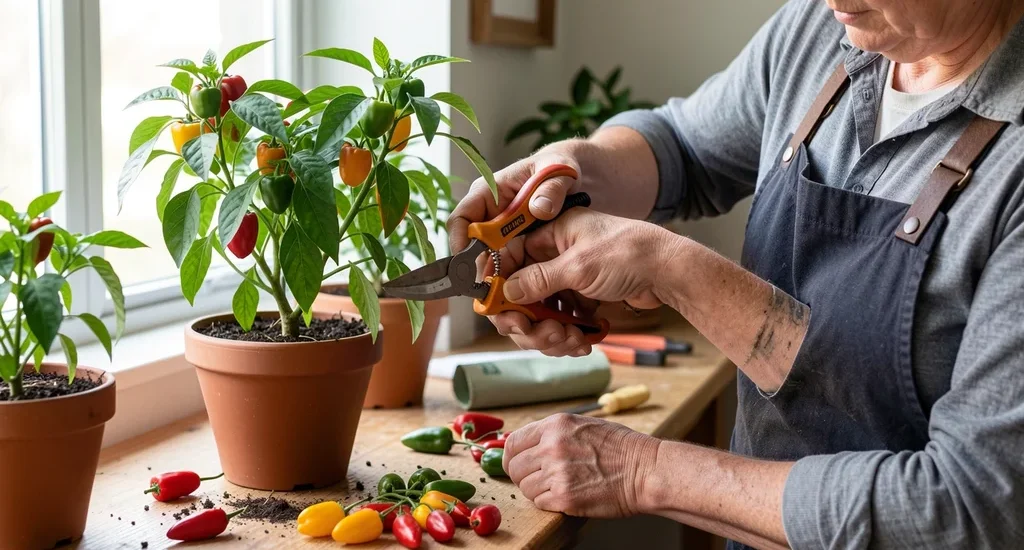
Pruning is essential for successful overwintering. It helps reduce the plant’s size for indoor living and encourages new growth. Use clean, sharp pruners or scissors to:
- Remove all remaining peppers, even if they’re not fully ripe
- Trim back the plant by about one-third to one-half of its current size
- Cut back any long, leggy branches to a main stem or branch junction
- Remove any yellow, damaged, or diseased leaves
- Thin out dense growth in the center to improve air circulation
Don’t be afraid to prune aggressively. Peppers are resilient and will regrow from the remaining stems. The goal is to create a more compact, manageable plant that can thrive in indoor conditions.
Step 3: Treat for Pests
Before bringing plants indoors, it’s crucial to eliminate any potential pest problems. Even if you don’t see pests now, they might be present in small numbers that can multiply quickly in indoor conditions.
| Pest | Treatment Method | When to Apply |
|---|---|---|
| Aphids | Insecticidal soap or neem oil | 3-5 days before bringing indoors |
| Whiteflies | Yellow sticky traps + neem oil | 1 week before, repeat after 3 days |
| Spider Mites | Water spray + horticultural oil | 2 applications, 3 days apart |
| Scale | Manual removal + systemic insecticide | 2 weeks before moving indoors |
For a comprehensive approach, you can also give your plants a gentle shower with lukewarm water to dislodge any hiding pests. After treatment, keep the plants in a sheltered outdoor location for a few days to monitor for any remaining pest activity before bringing them inside.
Step 4: Pot Up Your Plants
If your peppers are still in the ground, you’ll need to dig them up and pot them. Even if they’re already in containers, you might want to repot them into fresh soil to give them a clean start for the indoor growing period.
- Choose pots that are 2-3 inches larger in diameter than the current root ball
- Use well-draining potting mix, not garden soil
- Add a layer of gravel or perlite at the bottom for drainage
- Water the plant thoroughly a day before transplanting
- Gently loosen the roots when repotting to encourage new growth
- Don’t bury the stem deeper than it was originally planted
- Water lightly after repotting to settle the soil
If you’re digging up plants from the garden, try to keep as much of the root system intact as possible. The less root disturbance, the better your plant will handle the transition.
Step 5: Acclimate to Indoor Conditions
The transition from outdoor to indoor conditions can be stressful for pepper plants. To minimize shock, follow this acclimation process:
- Week 1: Move plants to a shaded outdoor area for 2-3 days, then gradually introduce them to indoor light conditions by placing them near a window for a few hours each day.
- Week 2: Increase the time spent indoors gradually. Start with 4-6 hours near the window, then slowly increase to full-time indoor living.
- Monitor closely: Watch for signs of stress like leaf drop or wilting. If you notice these, slow down the transition process.
- Adjust light: If your indoor light is significantly different from outdoor conditions, consider using grow lights to supplement.
During this period, maintain consistent moisture but avoid overwatering, as the plant’s water needs may decrease in lower light conditions.
Step 6: Choose the Right Indoor Location
Proper placement is key to keeping your pepper plants healthy throughout the winter. Peppers need:
- Light: A south-facing window is ideal, providing at least 6-8 hours of direct sunlight daily. If this isn’t available, consider using grow lights. LED grow lights are energy-efficient and provide the full spectrum of light peppers need.
- Temperature: Daytime temperatures between 65-75°F (18-24°C) and nighttime temperatures no lower than 55°F (13°C). Avoid placing plants near cold drafts or heat sources.
- Humidity: Peppers prefer moderate to high humidity. Indoor air can be dry, especially in winter, so consider using a humidity tray or room humidifier.
- Air Circulation: Good air movement helps prevent fungal diseases. A gentle fan on low setting can help, but avoid strong drafts.
Important: Rotate your plants every few days to ensure even growth, as they’ll naturally grow toward the light source.
If you notice your plants getting leggy or stretching toward the light, this is a sign they need more light. Consider moving them to a brighter location or adding supplemental grow lights.
Step 7: Adjust Your Care Routine
Indoor conditions are different from outdoor growing, so you’ll need to adjust your care routine:
- Watering: Water when the top inch of soil feels dry. Peppers prefer consistent moisture but dislike soggy roots. In winter, you may need to water less frequently than in summer.
- Fertilizing: Reduce fertilization during winter as the plant’s growth slows. A light application of balanced fertilizer (10-10-10) every 4-6 weeks is sufficient.
- Pruning: Continue to prune as needed to maintain shape and encourage bushier growth. Remove any yellow or dying leaves promptly.
- Pest Monitoring: Check your plants weekly for signs of pests. Indoor conditions can sometimes encourage spider mites or aphids.
- Support: If your plants are top-heavy, use small stakes or plant ties to provide support.
Remember that your peppers may not grow as vigorously indoors as they did outdoors. This is normal. The goal is to keep them healthy and alive until spring, not to maximize production during the winter months.
Common Mistakes to Avoid When Overwintering Peppers
Even with the best intentions, many gardeners make mistakes that can jeopardize their overwintering efforts. Being aware of these common pitfalls can help you avoid them.
One of the most common mistakes is overwatering. In cooler indoor conditions with less light, pepper plants need less water than they do during the active growing season. According to a survey by the National Gardening Association, overwatering is the number one cause of houseplant death, and this applies to overwintered peppers as well.
- Bringing in pests: Failing to properly inspect and treat plants for pests before bringing them indoors can lead to infestations that are difficult to control in your home.
- Insufficient light: Assuming that any window will provide enough light. South-facing windows are ideal, and even then, supplemental grow lights may be necessary.
- Temperature fluctuations: Placing plants near drafty windows or heat sources can cause temperature stress. Peppers prefer consistent temperatures.
- Over-fertilizing: Continuing to fertilize at the same rate as during the growing season can lead to salt buildup in the soil and potential root burn.
- Neglecting humidity: Indoor air, especially in winter, can be too dry for pepper plants. Low humidity can lead to leaf drop and pest problems.
- Skipping acclimation: Moving plants directly from outdoor to indoor conditions without a transition period can cause shock and leaf loss.
- Using garden soil: Garden soil can compact in containers and may contain pests or diseases. Always use a well-draining potting mix.
Warning: One of the biggest mistakes is giving up too soon. Pepper plants may look sad for a few weeks after moving indoors, but with proper care, they’ll often recover and thrive.
Another common issue is not providing enough space for the roots. If you’re moving a large pepper plant into a container that’s too small, the roots will become bound, which can stress the plant and limit its ability to take up water and nutrients.
Indoor Lighting Solutions for Overwintering Peppers
Proper lighting is one of the most critical factors for successfully overwintering pepper plants. Without adequate light, plants will become leggy, weak, and may eventually die. While a south-facing window can provide sufficient light for some varieties, many gardeners find that supplemental lighting is necessary, especially during the shorter days of winter.
There are several effective lighting options for overwintering peppers indoors. The best choice depends on your budget, space, and the number of plants you need to accommodate.
| Light Type | Pros | Cons | Cost |
|---|---|---|---|
| South-facing window | Free, natural light | May not be sufficient, varies by season | $0 |
| LED Grow Lights | Energy efficient, full spectrum, long lifespan | Initial investment required | $$ |
| Fluorescent Grow Lights | Affordable, good for small setups | Less efficient, shorter lifespan | $ |
| High-Intensity Discharge (HID) | Very bright, good for large plants | Hot, energy-intensive, expensive | $$$ |
For most home gardeners, LED grow lights offer the best balance of efficiency, effectiveness, and cost. When choosing LED grow lights, look for full-spectrum lights that provide both blue and red wavelengths, which are essential for plant growth.
Tip: Position grow lights 6-12 inches above the plants and keep them on for 12-16 hours per day to mimic natural daylight conditions.
If you’re using natural light from a window, remember to rotate your plants regularly to ensure even growth. Even with a south-facing window, plants will grow toward the light, leading to uneven growth if not rotated.
Preparing Peppers for Spring After Overwintering
As spring approaches, you’ll need to prepare your overwintered pepper plants for the transition back outdoors. This process, called hardening off, is just as important as the initial acclimation to indoor conditions.
Begin the hardening off process about 2-3 weeks before your last expected frost date. The goal is to gradually acclimate your plants to outdoor conditions, including wind, direct sunlight, and temperature fluctuations.
- Week 1: Start by moving your plants to a shaded outdoor area for 1-2 hours each day. Choose a calm, mild day for the first outing.
- Week 2: Gradually increase the time spent outdoors, adding an hour each day. Begin to introduce the plants to direct sunlight, starting with morning sun which is less intense.
- Week 3: By now, your plants should be spending most of the day outdoors. If nighttime temperatures are still dropping below 50°F (10°C), bring them back inside at night.
- Final Step: Once all danger of frost has passed and nighttime temperatures are consistently above 50°F (10°C), your plants can stay outdoors full-time.
During this transition period, keep a close eye on your plants for signs of stress, such as wilting or leaf scorch. If you notice these signs, slow down the hardening off process and give your plants more time to adjust.
Important: Before planting your overwintered peppers in the garden, prune them back lightly to encourage new growth and remove any dead or damaged branches.
Once your plants are fully acclimated to outdoor conditions, you can transplant them into your garden. Overwintered plants often have extensive root systems, so be sure to plant them at the same depth they were in their containers and water thoroughly after planting.
Frequently Asked Questions
Can all pepper plants be overwintered?
Technically, all pepper plants can be overwintered as they are perennial in their native tropical climates. However, some varieties adapt better to indoor conditions than others. Smaller, compact varieties like jalapeños, serranos, and Thai chilies tend to do better than large bell pepper plants.
The key is providing the right conditions and proper care throughout the winter.
How often should I water overwintered pepper plants?
Water your overwintered pepper plants when the top inch of soil feels dry to the touch. In winter, with lower light levels and cooler temperatures, you’ll likely need to water less frequently than during the active growing season. Overwatering is a common issue, so always check the soil moisture before watering.
A good rule of thumb is to water thoroughly, then let the top inch of soil dry out before watering again.
Do overwintered pepper plants produce more fruit the next year?
Yes, overwintered pepper plants often produce more fruit in their second year. This is because the plants have a more established root system and can focus their energy on fruit production rather than initial growth. According to research from Texas A&M AgriLife Extension, overwintered pepper plants can produce up to 30% more fruit in their second year compared to new plants grown from seed.
What if my pepper plant loses all its leaves after moving indoors?
It’s not uncommon for pepper plants to drop some or even all of their leaves when moved indoors. This is typically a shock response to the change in environment. As long as the stems remain green and healthy, the plant will usually regrow new leaves within a few weeks.
To minimize leaf drop, ensure a gradual transition and maintain consistent moisture levels. If the stems turn brown or mushy, this may indicate a more serious problem like root rot.
Can I overwinter pepper plants without grow lights?
Yes, you can overwinter pepper plants without grow lights if you have a sufficiently bright location in your home. A south-facing window that receives at least 6-8 hours of direct sunlight daily can be adequate for many pepper varieties. However, during the shortest days of winter, even a south-facing window may not provide enough light.
In this case, you might need to supplement with grow lights or accept that your plants may grow more slowly or become somewhat leggy until spring.
Final Thoughts
Overwintering pepper plants is a rewarding process that allows you to preserve your favorite varieties and get a head start on next year’s growing season. By following the steps outlined in this guide, from proper timing and pruning to providing the right indoor conditions, you can successfully keep your pepper plants alive and thriving through the winter months. Remember that each plant is unique, and you may need to adjust your approach based on your specific varieties and growing conditions.
With patience and proper care, your overwintered peppers will reward you with earlier and often more abundant harvests in the coming season.