Last Updated on October 22, 2026 by D. Ruddy
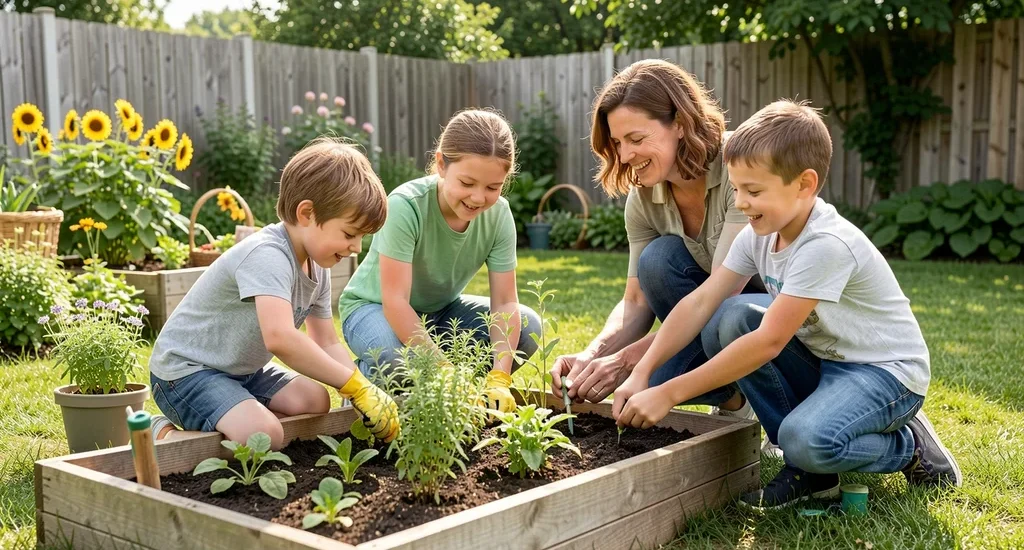
Transforming your backyard into a vibrant family space is easier than you think with gardening for families. This shared hobby teaches kids responsibility while giving everyone a chance to unplug and enjoy nature together. From planting flowers to growing vegetables, these activities create lasting memories and delicious rewards.
Gardening for families builds bonds while teaching kids about nature and healthy eating. Start with easy projects like herb gardens or sunflowers for quick wins.
Why Gardening is Perfect for Family Bonding
Gardening as a family activity does more than just beautify your yard. It fosters teamwork as everyone works toward a common goal. Kids learn patience watching seeds sprout, while parents can share their knowledge about plants and nature.
This shared experience creates opportunities for meaningful conversations. As you work side by side, you’ll find natural moments to discuss everything from how plants grow to why bees are important for our ecosystem.
- Teaches responsibility through plant care routines
- Encourages healthy eating with homegrown produce
- Provides sensory experiences for young children
- Reduces screen time with outdoor activity
- Creates a sense of accomplishment with visible results
Tip: Start with fast-growing plants like radishes to keep kids engaged with quick results.
Best Easy Plants for Family Gardens
Not all plants are equally suited for family gardening. The best choices are those that are easy to grow, maintain, and harvest. These plants should also be interesting enough to hold children’s attention throughout the growing season.
Consider starting with a mix of flowers and vegetables. Flowers add immediate visual appeal, while vegetables provide the reward of homegrown food. Both types offer valuable learning experiences about plant life cycles.
| Plant Type | Why It’s Great | Care Level |
|---|---|---|
| Sunflowers | Fast growth, impressive height | Easy |
| Cherry Tomatoes | Sweet taste, easy to harvest | Easy |
| Radishes | Ready in 3-4 weeks | Easiest |
| Marigolds | Bright colors, pest resistant | Easy |
| Lettuce | Continuous harvest possible | Moderate |
These plants offer a good mix of quick results and longer-term projects. According to the National Gardening Association, children are most engaged when they can see progress within a few weeks.
Creating a Kid Friendly Garden Space
Designing a garden that appeals to children requires some special considerations. The space should be safe, accessible, and fun. Think about incorporating elements that will spark their imagination and make them want to spend time there.
Start by designating a specific area just for them. This could be a small raised bed or even just a corner of your main garden. Give them ownership of this space to plant whatever they choose within reason.
- Safety First: Ensure all tools are kid-sized and safe. Avoid sharp edges and toxic plants.
- Accessible Design: Make garden beds low enough for children to reach easily.
- Fun Elements: Add garden decorations like painted rocks or wind chimes.
- Sensory Plants: Include plants with interesting textures, smells, or tastes.
- Shade and Seating: Provide a place to rest and observe the garden.
Important: Always supervise young children in the garden, especially when using tools or handling plants.
Family Gardening Projects for All Ages
Different age groups have different capabilities and interests when it comes to gardening. The key is to find projects that engage everyone while being appropriate for their skill level. Rotate activities to keep all family members interested.
For toddlers, focus on sensory experiences. Let them touch different leaves, smell herbs, or plant large seeds they can handle easily. Older children can take on more responsibility with planting, watering, and even simple garden design.
| Age Group | Suitable Projects | Skills Developed |
|---|---|---|
| Toddlers (2-4) | Planting large seeds, watering, sensory garden | Fine motor, sensory awareness |
| Young Kids (5-8) | Planting flowers, harvesting easy veggies, garden art | Responsibility, creativity |
| Older Kids (9-12) | Garden planning, seed starting, pest control | Planning, problem-solving |
| Teens (13+) | Landscape design, composting, plant propagation | Leadership, advanced skills |
Seasonal Gardening Activities for Families
Gardening offers different opportunities throughout the year. Each season brings its own set of activities that families can enjoy together. Planning your gardening calendar around these seasonal tasks keeps the experience fresh and exciting.
Spring is the perfect time for planting most vegetables and annual flowers. Summer focuses on maintenance and harvest, while fall offers opportunities for planting perennials and preparing for next year. Winter can be spent planning and starting seeds indoors.
Spring Gardening
- Start seeds indoors for summer plants
- Plant cool-season vegetables like lettuce and peas
- Prepare garden beds with compost
- Plant annual flowers for summer color
- Install trellises for climbing plants
Summer Gardening
- Harvest early crops like radishes and lettuce
- Water and weed regularly
- Plant heat-tolerant vegetables
- Deadhead flowers to encourage more blooms
- Start a compost pile with garden waste
Fall Gardening
- Plant spring-blooming bulbs
- Harvest late-season crops
- Plant cover crops to enrich soil
- Clean up garden debris
- Plant perennials for next year
Winter Gardening
- Plan next year’s garden layout
- Start seeds indoors for early spring planting
- Order seed catalogs and supplies
- Build or repair garden structures
- Learn about new plants and techniques
Warning: Be mindful of local frost dates when planting. The USDA Plant Hardiness Zone Map can help determine the best planting times for your area.
Gardening Tools Every Family Needs
Having the right tools makes family gardening more enjoyable and productive. While you don’t need expensive equipment, a few basic tools will help everyone participate effectively. Choose tools that are appropriately sized for different age groups.
For young children, look for lightweight, colorful tools that are easy to handle. Older children and adults can use standard gardening tools. Consider storing tools in a designated area where everyone can access them easily.
| Tool | Purpose | Age Appropriate |
|---|---|---|
| Hand Trowel | Planting and transplanting | 3+ years |
| Watering Can | Watering plants | 2+ years |
| Garden Gloves | Protect hands | All ages |
| Rake | Preparing soil, cleaning up | 6+ years |
| Pruners | Trimming plants | 10+ years |
| Wheelbarrow | Moving soil and plants | 8+ years |
The National Home Garden Club recommends starting with just a few essential tools and adding more as your family’s gardening skills develop.
Teaching Kids About Garden Ecology
Gardening provides an excellent opportunity to teach children about ecology and the natural world. As they work in the garden, they’ll naturally develop an understanding of how plants grow and the role of various creatures in the ecosystem.
Start with simple concepts like the importance of sunlight, water, and soil for plant growth. Gradually introduce more complex ideas like the role of pollinators, the nitrogen cycle, and composting. Use the garden as a living laboratory for these lessons.
- Pollinators: Explain how bees and butterflies help plants produce fruits and seeds
- Soil Health: Discuss the importance of worms and microorganisms in the soil
- Water Cycle: Show how plants absorb and release water
- Plant Life Cycle: Demonstrate the process from seed to plant to seed
- Companion Planting: Teach how some plants help each other grow
- Pest Control: Explain natural ways to control garden pests
Tip: Create a “bug hotel” in your garden to attract beneficial insects and provide a fun building project for kids.
Common Gardening Challenges for Families
While family gardening is rewarding, it’s not without its challenges. Being aware of common issues can help you prepare and find solutions before they become major problems. The key is to approach these challenges as learning opportunities rather than setbacks.
One of the most common challenges is maintaining interest over time. Children may be excited at the beginning but lose interest as the season progresses. To combat this, set small, achievable goals and celebrate successes along the way.
| Challenge | Solution |
|---|---|
| Short attention spans | Choose fast-growing plants and rotate activities |
| Pests and diseases | Use organic pest control and teach kids about beneficial insects |
| Limited space | Use containers, vertical gardening, and small raised beds |
| Weather issues | Have indoor gardening activities ready for bad weather days |
| Different interest levels | Assign roles based on interests and rotate tasks |
Frequently Asked Questions
How do I get my kids interested in gardening?
Start with projects that have quick results, like growing radishes or sunflowers. Let them choose some plants to grow and give them their own small garden space. Make it fun by incorporating games or challenges, like who can grow the tallest sunflower.
What are the best vegetables for families to grow together?
Easy and rewarding vegetables include cherry tomatoes, lettuce, radishes, green beans, and carrots. These are relatively simple to grow and produce visible results that kids can enjoy. Consider your climate and growing season when selecting plants.
How much time does family gardening take?
The time commitment varies by season and garden size. In spring, you might spend a few hours each weekend preparing and planting. During summer, daily watering may take 15-30 minutes, plus occasional weeding.
Fall cleanup might require a few hours spread over several days.
Can we garden if we don’t have a yard?
Absolutely! Container gardening on a balcony or patio works well for many plants. You can also try indoor gardening with herbs or small vegetables.
Community gardens offer another option for families without yard space.
How do I make gardening safe for young children?
Provide child-sized, rounded tools and supervise closely. Teach them to wash their hands after gardening and to never put plants or soil in their mouths. Choose non-toxic plants and avoid using chemical pesticides or fertilizers.
Final Thoughts
Gardening for families offers countless benefits beyond just the plants you grow. It creates opportunities for quality time together, teaches valuable life skills, and fosters a deeper connection with nature. Start small, keep it fun, and watch as your garden—and your family bonds—grow stronger together.