Last Updated on October 22, 2026 by D. Ruddy
Freezing butternut squash is a game-changer for meal prep, letting you enjoy its sweet, nutty flavor all year round. How to freeze butternut squash properly preserves texture and nutrients, whether you’re making soups, stews, or roasted sides. The key is in the prep—blanching or roasting first ensures the best results when you thaw it later.
You can freeze butternut squash raw in cubes or puréed, but blanching or roasting first locks in flavor and prevents mushiness. Raw cubes last 8-10 months, while cooked squash stays fresh for up to 12 months in a freezer-safe bag.
What You Need to Freeze Butternut Squash
Before you start, gather the right tools to make the process smooth. Having everything ready means less mess and better results.
- Butternut squash – Choose firm, heavy squash with a matte skin (shiny skin means it’s not ripe)
- Sharp knife and peeler – A chef’s knife works best for cutting through the tough skin
- Cutting board – Prefer a large, stable surface to avoid accidents
- Baking sheet – For flash-freezing cubes so they don’t stick together
- Freezer-safe bags or containers – Use heavy-duty bags to prevent freezer burn
- Blanching pot and ice bath – Only needed if you’re blanching (highly recommended)
- Measuring cups or scale – For portioning before freezing
Tip: Pick squash with a long, cylindrical neck—they’re easier to peel and cube than round ones.
Butternut squash is dense, so a good knife is non-negotiable. If your knife struggles, microwave the whole squash for 1-2 minutes to soften the skin slightly before peeling. This makes the job safer and faster.
For storage, vacuum-sealed bags work best, but zip-top freezer bags with all the air pressed out are a close second. Avoid thin plastic containers—they can crack in the freezer and let in air.
Should You Blanch Butternut Squash Before Freezing
Blanching is the secret to keeping your squash from turning mushy after thawing. It stops enzyme activity that breaks down texture and color over time.
According to the National Center for Home Food Preservation, blanching vegetables before freezing destroys enzymes that cause loss of flavor, color, and texture. For butternut squash, this step is optional but highly recommended for cubes. Purées don’t need blanching since they’ll be blended anyway.
| Method | Texture After Thawing | Best For | Shelf Life |
|---|---|---|---|
| Raw, Unblanched Cubes | Softer, may be mushy | Soups, purées | 8 months |
| Blanched Cubes | Firmer, holds shape | Roasting, stews, stir-fries | 12 months |
| Roasted Cubes | Caramelized, tender | Casseroles, mash, sides | 10 months |
| Puréed | Smooth, consistent | Soups, sauces, baked goods | 12 months |
Blanching adds about 10 minutes to the process but pays off in texture. If you’re short on time, roasting is a great alternative—it also enhances the squash’s natural sweetness.
How to Prepare Butternut Squash for Freezing
Proper prep is everything. Follow these steps to ensure your squash freezes well and tastes great when you use it later.
- Wash the squash under cool running water to remove dirt. Pat dry with a clean towel.
- Peel the skin using a vegetable peeler or sharp knife. Cut off the top and bottom first to create a flat surface.
- Cut in half lengthwise and scoop out the seeds and stringy pulp with a spoon. Save the seeds for roasting if you like.
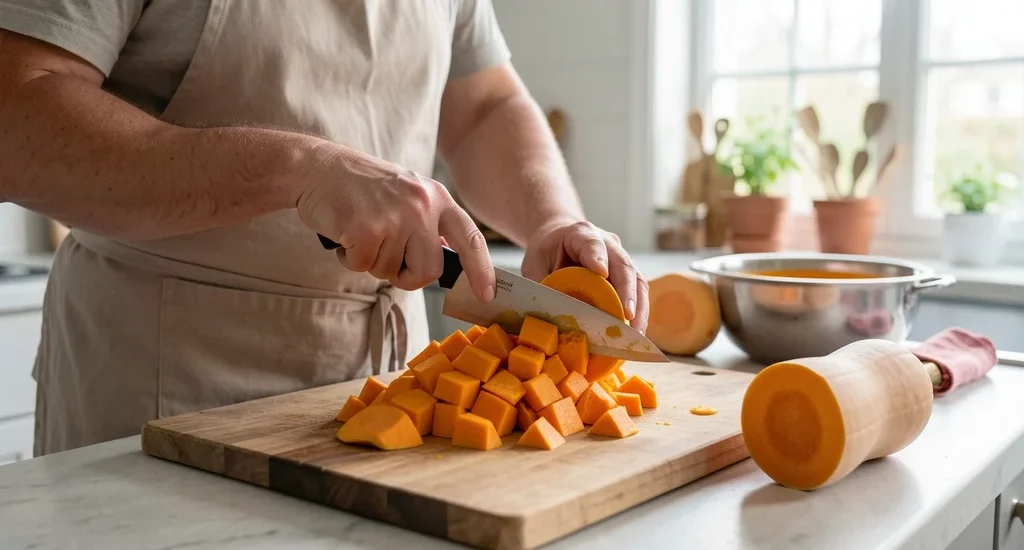
- Cube the squash into uniform 1-inch pieces for even cooking and freezing. Smaller cubes freeze faster but may soften more.
- Optional: Blanch the cubes in boiling water for 2-3 minutes, then shock in ice water to stop cooking. Drain well.
Warning: Never freeze butternut squash with the skin on—it becomes tough and inedible after thawing.
If you’re making purée, skip cubing and steam or roast the squash until tender, then blend until smooth. For roasting, toss cubes with a little olive oil and spread on a baking sheet at 400°F (200°C) for 20-25 minutes until fork-tender.
Properly prepped squash should look vibrant and smell fresh. If it has an off odor or soft spots before freezing, it’s best to use it immediately rather than freeze it.
Step by Step How to Freeze Butternut Squash
Now that your squash is prepped, follow these steps to freeze it correctly. Each method has slight variations, so pick the one that fits your needs.
Method 1: Flash Freezing Cubes (Best for Roasting Later)
- Arrange cubes in a single layer on a parchment-lined baking sheet, ensuring they don’t touch.
- Freeze for 1-2 hours or until solid. This prevents them from sticking together.
- Transfer to bags and squeeze out excess air before sealing. Label with the date.
- Store flat in the freezer to save space.
Flash freezing works best for cubes you plan to roast or sauté later. It keeps them separate so you can grab just what you need.
Method 2: Freezing Purée (Best for Soups and Baked Goods)
- Cool the purée completely after cooking. Hot purée can raise the freezer’s temperature.
- Portion into containers or ice cube trays for small amounts. Silicone molds work well for 1-cup portions.
- Freeze until solid, then transfer to freezer bags if using trays.
- Label clearly with the amount (e.g., “1 cup purée”) and date.
Puréed squash freezes beautifully and is perfect for adding to soups, sauces, or muffins. Ice cube trays let you use small amounts without thawing a whole batch.
Method 3: Freezing Roasted Cubes (Best for Meal Prep)
- Roast cubes as usual until caramelized and tender.
- Cool completely on a wire rack to prevent sogginess.
- Pack into bags in meal-sized portions. Press out all air.
- Freeze flat for easy storage.
Roasted squash retains its flavor well and can go straight from the freezer to a warm oven for reheating. It’s ideal for casseroles or as a side dish.
Important: Always let food cool completely before freezing. Adding warm food to the freezer can cause ice crystals to form on other items, leading to freezer burn.
Best Containers for Freezing Butternut Squash
The right container makes all the difference in preventing freezer burn and keeping your squash tasting fresh.
Freezer burn happens when air comes in contact with food, causing dehydration and off flavors. The USDA recommends using materials designed for freezer storage, which are moisture-vapor resistant.
| Container Type | Pros | Cons | Best For |
|---|---|---|---|
| Heavy-duty freezer bags |
|
|
Cubes, purée |
| Vacuum-sealed bags |
|
|
All methods |
| Glass jars |
|
|
Purée |
| Plastic containers |
|
|
Cubes, roasted |
For purées, wide-mouth glass jars are convenient because you can scoop out what you need without thawing the whole batch. Just leave 1 inch of headspace to allow for expansion.
For cubes, freezer bags are the most space-efficient. Lay them flat to stack neatly, and you’ll fit more in your freezer.
How to Thaw Frozen Butternut Squash
Thawing properly ensures your squash keeps its texture and flavor. The method you choose depends on how you plan to use it.
Never thaw squash at room temperature for more than 2 hours, as this can promote bacterial growth. The FDA recommends thawing in the refrigerator, in cold water, or in the microwave.
Refrigerator Thawing (Best for Purées and Cubes)
- Transfer from freezer to fridge the night before you plan to use it.
- Place in a bowl to catch any liquid as it thaws.
- Use within 2-3 days for best quality.
This method is the safest and preserves texture best. Purées may separate slightly—just stir before using.
Cold Water Thawing (Quick Method)
- Seal the bag tightly to prevent water from getting in.
- Submerge in cold water, changing the water every 30 minutes.
- Thaw in about 1-2 hours depending on the amount.
This works well for cubes you’re adding directly to a recipe. Don’t use warm water, as it can start cooking the squash unevenly.
Microwave Thawing (Fastest Method)
- Use the defrost setting on your microwave.
- Check and stir every minute to prevent hot spots.
- Cook immediately after thawing.
Microwaving is quick but can make squash mushy. It’s best for purées or when you’re in a hurry.
Cooking from Frozen (No Thaw Needed)
For soups, stews, or casseroles, you can add frozen cubes directly to the pot. This works especially well with blanched or roasted squash. Just add a few extra minutes to the cooking time.
Tip: If using frozen purée in baking, thaw it first and drain any excess liquid to avoid a soggy texture.
How to Use Frozen Butternut Squash in Recipes
Frozen butternut squash is incredibly versatile. Here are some delicious ways to use it, whether thawed or straight from the freezer.
- Soups and stews – Add frozen cubes directly to the pot. They’ll soften as they cook. Try butternut squash soup with coconut milk and curry for a creamy, spiced dish.
- Casseroles and bakes – Thawed or frozen cubes work well in dishes like butternut squash lasagna or gratin. Mix with cheese and breadcrumbs for a comforting side.
- Smoothies – Blend thawed purée with banana, spinach, and almond milk for a nutrient-packed drink. The squash adds natural sweetness.
- Muffins and bread – Fold thawed purée into batter for moist, flavorful baked goods. Butternut squash muffins with cinnamon and nutmeg are a fall favorite.
- Risottos and grain bowls – Stir thawed cubes into risotto during the last few minutes of cooking. Pair with sage and Parmesan for a restaurant-worthy dish.
- Baby food – Purée is perfect for homemade baby food. Mix with apples or sweet potatoes for a balanced meal.
- Pasta sauces – Blend thawed purée with garlic, olive oil, and a splash of pasta water for a creamy, veggie-packed sauce.
Frozen butternut squash retains most of its nutrients, making it a healthy addition to any meal. It’s rich in vitamin A (over 400% of your daily value per cup), vitamin C, and fiber. According to Healthline, butternut squash also contains antioxidants like beta-carotene, which supports eye health and immune function.
For best results, use frozen squash in cooked dishes rather than raw applications like salads. The freezing process softens the texture, which works well in warm, hearty meals.
Common Mistakes to Avoid When Freezing Butternut Squash
Even small mistakes can lead to disappointing results. Here are the most common pitfalls and how to avoid them.
- Skipping the peeling – Leaving the skin on makes the squash tough and unappetizing after freezing. Always peel before freezing.
- Not blanching cubes – While optional, blanching preserves texture and color. Without it, cubes may turn mushy.
- Freezing in large chunks – Big pieces freeze slowly and can develop ice crystals. Stick to 1-inch cubes for even freezing.
- Overfilling containers – Liquids expand when frozen. Leave 1 inch of headspace in containers to prevent cracking.
- Using thin plastic bags – Regular sandwich bags aren’t thick enough for long-term freezer storage. Use heavy-duty freezer bags.
- Not labeling or dating – It’s easy to forget what’s in your freezer. Label bags with the contents and date to track freshness.
- Thawing at room temperature – This can encourage bacterial growth. Always thaw in the fridge, cold water, or microwave.
Warning: Never refreeze butternut squash after thawing. This can lead to bacterial growth and a loss of texture and flavor.
Another mistake is freezing squash that’s past its prime. If it has soft spots or an off smell before freezing, it won’t improve in the freezer. Always start with fresh, high-quality squash.
Frequently Asked Questions
Can you freeze butternut squash without cooking it first?
Yes, you can freeze raw butternut squash cubes, but blanching first is highly recommended. Raw cubes may turn mushy after thawing, especially if used in dishes where they need to hold their shape. For purées, cooking before freezing is essential for a smooth texture.
How long does frozen butternut squash last?
Frozen butternut squash stays at best quality for 8-12 months. Raw cubes last about 8-10 months, while blanched or roasted cubes and purées can last up to 12 months. It’s safe to eat after this time, but the texture and flavor may decline.
Do you need to blanch butternut squash before freezing?
Blanching isn’t mandatory, but it’s strongly recommended for cubes. It stops enzyme activity that can cause loss of flavor, color, and texture. If you’re short on time, roasting is a good alternative that also enhances the squash’s natural sweetness.
Can you freeze butternut squash whole?
No, freezing a whole butternut squash isn’t a good idea. The skin becomes tough and inedible, and the flesh may not freeze evenly. Always peel, seed, and cut the squash before freezing for the best results.
Why does my frozen butternut squash turn watery?
Watery squash usually means it wasn’t blanched or drained properly before freezing. Butternut squash has a high water content, and freezing can cause the cells to rupture, releasing moisture. To reduce wateriness, blanch cubes before freezing and drain purées well.
Thaw in the fridge and drain again before using.
Final Thoughts
Freezing butternut squash is a simple way to extend its shelf life and always have a nutritious ingredient on hand. Whether you blanch, roast, or purée it first, the key is in the prep—peel, cut evenly, and use the right containers. With these tips, you’ll enjoy sweet, flavorful squash in your favorite recipes year-round, without the hassle of last-minute prep.