Last Updated on October 21, 2026 by D. Ruddy
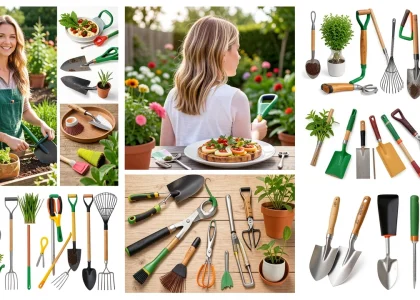
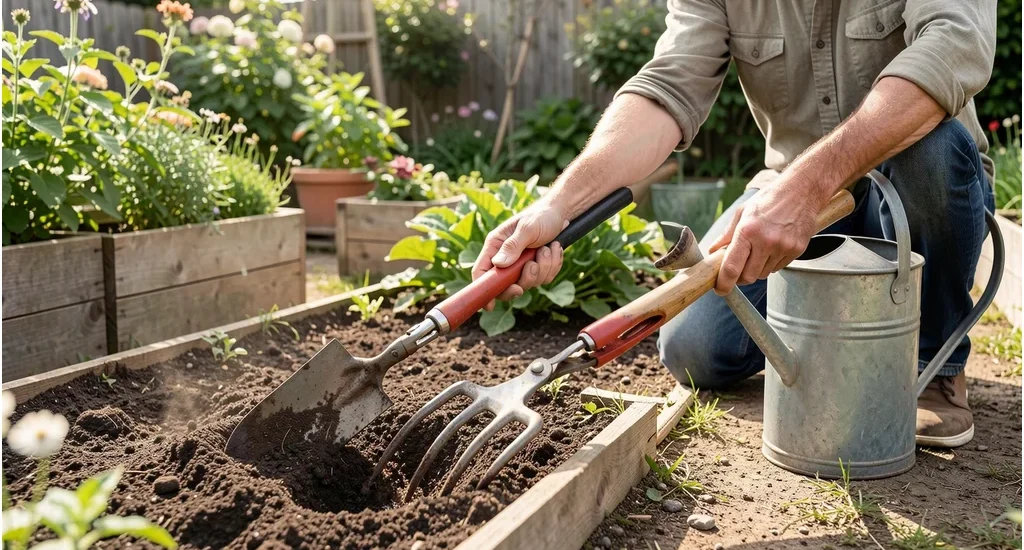
Whether you’re a beginner or a seasoned green thumb, knowing the right gardening tools names can transform your gardening experience. The right tools make planting, pruning, and maintaining your garden faster, easier, and more enjoyable. From basic hand tools to specialized equipment, each serves a unique purpose to help your plants thrive.
The most essential gardening tools include hand trowels, pruners, forks, hoes, rakes, spades, shears, and watering cans. These cover 90% of basic gardening tasks from planting to maintenance.
Hand Trowels The Must Have for Planting
A hand trowel is the most fundamental gardening tool, perfect for digging small holes, transplanting seedlings, and mixing soil amendments. Its compact size makes it ideal for container gardening and working in tight spaces between plants.
Most quality trowels feature stainless steel blades that resist rust and wooden or ergonomic handles for comfort. The blade typically has depth markings to help with precise planting.
🍂 The Silent Lawn Killer: Damp Leaves Will Suffocate Your Grass
Trapped wet leaves create a breeding ground for destructive snow mold. Clear the yard fast with a high-power cordless blower before the ground freezes.
- Best for digging small holes for seeds and seedlings
- Ideal for mixing fertilizer or compost into soil
- Useful for transplanting small plants
- Great for container and raised bed gardening
- Essential for herb and vegetable gardens
| Feature | Benefit |
|---|---|
| Stainless steel blade | Durable and rust-resistant |
| Ergonomic handle | Reduces hand fatigue |
| Depth markings | Precise planting depth |
| Compact size | Easy to use in tight spaces |
According to the National Gardening Association, over 77% of gardeners consider a hand trowel their most essential tool for everyday tasks. Its versatility makes it a top choice for both beginners and experts.
Tip: Choose a trowel with a bright handle to easily spot it in the garden soil.
Pruners and Shears For Precise Plant Care
Pruners and shears are indispensable for maintaining plant health and shape. Bypass pruners, with their scissor-like action, are perfect for cutting live stems up to 3/4 inch thick. Anvil pruners work better for dead wood, while hedge shears tackle larger shrubs.
Quality pruners feature carbon steel blades that stay sharp longer and ergonomic handles to reduce hand strain. Some models include sap grooves to prevent the blades from sticking together.
- Bypass Pruners – Best for live stems and precise cuts
- Anvil Pruners – Ideal for dead wood and tougher branches
- Hedge Shears – Perfect for shaping hedges and shrubs
- Grass Shears – Great for trimming grass in tight spaces
- Floral Snips – Designed for delicate flower cutting
| Pruner Type | Best For | Cutting Capacity |
|---|---|---|
| Bypass | Live stems | Up to 3/4 inch |
| Anvil | Dead wood | Up to 1 inch |
| Hedge Shears | Shrubs and hedges | Up to 1/2 inch |
Proper pruning promotes plant health by removing dead or diseased branches, encouraging new growth, and improving air circulation. The University of Extension reports that regular pruning can increase fruit production by up to 40% in fruit-bearing plants.
🍂 The Silent Lawn Killer: Damp Leaves Will Suffocate Your Grass
Trapped wet leaves create a breeding ground for destructive snow mold. Clear the yard fast with a high-power cordless blower before the ground freezes.
Warning: Always clean your pruners with rubbing alcohol between plants to prevent disease spread.
Garden Forks For Aerating and Turning Soil
A garden fork is one of the most versatile gardening tools names you’ll encounter, designed for turning soil, breaking up clumps, and aerating garden beds. Unlike a spade, its tines allow you to lift and turn soil without cutting through roots.
Forks come in different tine configurations: standard forks have 4-6 slightly curved tines, while border forks are narrower for working in tight spaces. The best forks feature forged steel tines and a comfortable D-handle for leverage.
- Essential for turning compost piles
- Perfect for aerating compacted soil
- Great for harvesting root vegetables like potatoes and carrots
- Ideal for mixing in soil amendments
- Useful for breaking up hard soil before planting
- Better than a spade for working in clay soil
| Fork Type | Tines | Best Use |
|---|---|---|
| Standard | 4-6 curved | General gardening |
| Border | 4-5 narrow | Tight spaces |
| Potato | 9-10 wide | Harvesting roots |
A study by the Royal Horticultural Society found that regular soil aeration with a garden fork can improve water absorption by up to 30% and reduce soil compaction significantly.
Hoes For Effective Weed Control
🍂 The Silent Lawn Killer: Damp Leaves Will Suffocate Your Grass
Trapped wet leaves create a breeding ground for destructive snow mold. Clear the yard fast with a high-power cordless blower before the ground freezes.
Hoes are essential for keeping weeds at bay and cultivating soil. The right hoe can save you hours of back-breaking work by making weed removal quick and efficient. Different hoe designs serve various purposes in the garden.
The most common types include the stirrup hoe (best for weeding), the eye hoe (great for cultivating), and the Warren hoe (ideal for heavy-duty work). Look for hoes with sharp blades and long handles to reduce bending.
- Stirrup Hoe – Oscillating blade cuts weeds just below soil surface
- Eye Hoe – Heavy duty for breaking up hard soil
- Warren Hoe – Heart-shaped blade for cultivating between plants
- Draw Hoe – Classic design for weeding and cultivating
- Collinear Hoe – Sharp blade for precision weeding
- Most efficient way to remove weeds without chemicals
- Great for cultivating soil around plants
- Essential for maintaining vegetable gardens
- Can be used to create furrows for planting seeds
- Helps break up soil crust to improve water penetration
Important: Use a hoe when the soil is dry and weeds are small for best results. Hoeing wet soil can create clumps.
Rakes For Garden Cleanup and Preparation
Rakes are versatile tools that help with everything from clearing debris to preparing seed beds. The right rake can make garden cleanup a breeze and help create the perfect soil surface for planting.
Bow rakes (also called garden rakes) have strong, rigid tines for moving soil and breaking up clumps. Leaf rakes have flexible tines for gathering leaves and light debris. Landscape rakes are wider for covering large areas quickly.
| Rake Type | Tine Material | Primary Use |
|---|---|---|
| Bow Rake | Steel | Soil preparation |
| Leaf Rake | Plastic/Metal | Leaf collection |
| Landscape Rake | Steel | Large area grading |
| Stone Rake | Heavy steel | Gravel spreading |
- Essential for preparing seed beds and planting areas
- Great for removing thatch from lawns
- Perfect for gathering leaves and garden debris
- Useful for leveling soil in raised beds
- Helps break up soil clumps after tilling
- Can be used to spread mulch evenly
Gardeners who use rakes regularly report spending up to 50% less time on garden cleanup tasks compared to those who don’t, according to a survey by Gardeners’ World magazine.
🍂 The Silent Lawn Killer: Damp Leaves Will Suffocate Your Grass
Trapped wet leaves create a breeding ground for destructive snow mold. Clear the yard fast with a high-power cordless blower before the ground freezes.
Spades and Shovels For Heavy Duty Digging
While often confused, spades and shovels serve different purposes in the garden. A spade has a flat, straight blade perfect for edging, cutting sod, and digging precise holes. A shovel has a curved blade designed for moving loose materials like soil, compost, or mulch.
Quality spades and shovels feature forged steel blades, long shafts for leverage, and comfortable D-handles. Some models have treads on the blade for extra foot pressure when digging.
| Tool | Blade Shape | Best For |
|---|---|---|
| Spade | Flat, straight | Edging, cutting sod |
| Round Shovel | Curved, rounded | Moving loose materials |
| Square Shovel | Curved, square | Digging holes |
| Trenching Spade | Narrow, straight | Digging trenches |
- Essential for planting trees and large shrubs
- Perfect for creating clean garden edges
- Great for moving compost and mulch
- Useful for dividing perennials
- Ideal for digging post holes
- Can be used for light trenching work
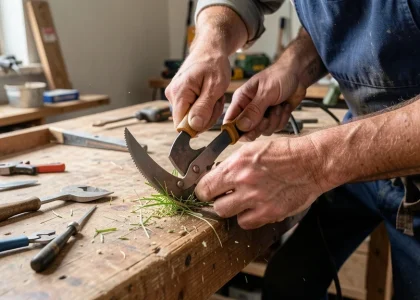
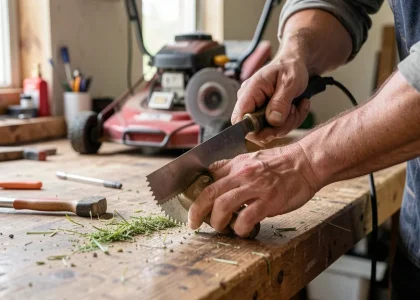
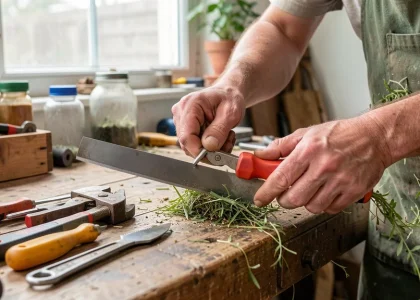
Tip: Sharpen your spade blade regularly with a file to make digging easier and reduce strain on your back.
Watering Tools For Plant Hydration
Proper watering is crucial for plant health, and having the right watering tools makes this task more efficient. From simple watering cans to sophisticated irrigation systems, each tool serves a specific purpose in maintaining optimal moisture levels.
The most common watering tools include watering cans, garden hoses, sprinklers, and drip irrigation systems. Each has its advantages depending on your garden size and plant types.
- Watering Can – Best for small gardens and container plants
- Garden Hose – Essential for medium to large gardens
- Sprinklers – Great for lawns and large planting areas
- Drip Irrigation – Most efficient for water conservation
- Soaker Hoses – Perfect for vegetable gardens and flower beds
| Tool | Capacity/Range | Best For |
|---|---|---|
| Watering Can | 1-5 gallons | Containers, seedlings |
| Garden Hose | 25-100 ft | General watering |
| Oscillating Sprinkler | Up to 4000 sq ft | Lawns, large areas |
| Drip System | Customizable | Water conservation |
- Watering cans allow precise watering at the plant base
- Hose nozzles provide adjustable spray patterns
- Sprinklers save time for large areas
- Drip irrigation delivers water directly to plant roots
- Soaker hoses provide gentle, even watering
- Timers can automate watering schedules
The Environmental Protection Agency reports that proper watering techniques can reduce outdoor water use by up to 30%, making efficient watering tools both environmentally and economically beneficial.
🍂 The Silent Lawn Killer: Damp Leaves Will Suffocate Your Grass
Trapped wet leaves create a breeding ground for destructive snow mold. Clear the yard fast with a high-power cordless blower before the ground freezes.
Specialized Gardening Tools For Unique Tasks
Beyond the basics, several specialized tools can make specific gardening tasks much easier. These tools are designed for particular purposes and can significantly improve your efficiency and results for specialized tasks.
While not every gardener needs all of these, having a few specialized tools can make certain jobs much more manageable and professional-looking.
- Weeders – Designed specifically for removing deep-rooted weeds
- Bulb Planters – Make planting bulbs quick and at the correct depth
- Grafting Tools – Essential for propagating plants through grafting
- Hori-Hori Knives – Japanese digging tool that serves multiple purposes
- Garden Kneelers – Protect your knees during long gardening sessions
- Plant Supports – Stakes, cages, and trellises for supporting plants
- Garden Carts – For hauling tools, soil, and plants around the garden
| Specialized Tool | Primary Use | When to Use |
|---|---|---|
| Dandelion Weeder | Remove deep taproots | Spring and fall |
| Bulb Planter | Plant bulbs at correct depth | Fall and spring |
| Grafting Knife | Cut precise graft cuts | Late winter/early spring |
| Hori-Hori | Digging, cutting, measuring | Year-round |
| Tomato Cage | Support tomato plants | Planting time |
Important: Invest in specialized tools as your gardening skills advance and you take on more complex projects.
Frequently Asked Questions
What are the most essential gardening tools names for beginners?
Beginners should start with a hand trowel, pruners, garden fork, hoe, rake, spade, and watering can. These seven tools cover the vast majority of basic gardening tasks from planting to maintenance. As you gain experience, you can add specialized tools to your collection based on your specific gardening interests.
How do I choose the right size gardening tools?
Choose tools that feel comfortable in your hands and match your physical strength. For most adults, standard-sized tools work well, but petite gardeners might prefer smaller, lighter tools. Consider the scale of your garden as well – larger gardens may require bigger tools, while container gardeners can get by with smaller versions.
What materials are best for gardening tools?
For durability, look for tools with forged steel blades and heads. Stainless steel resists rust but may not hold an edge as well as carbon steel. Handles should be made of hardwood or fiberglass for strength.
🍂 The Silent Lawn Killer: Damp Leaves Will Suffocate Your Grass
Trapped wet leaves create a breeding ground for destructive snow mold. Clear the yard fast with a high-power cordless blower before the ground freezes.
Avoid tools with plastic handles for heavy-duty work, as they can break under pressure.
How should I maintain my gardening tools?
Clean tools after each use to prevent rust and disease spread between plants. Dry them thoroughly and store in a dry place. Sharpen cutting tools regularly with a file or whetstone.
Apply a light coat of oil to metal parts before storing for long periods. Wooden handles benefit from occasional treatment with linseed oil.
Are expensive gardening tools worth the investment?
Quality tools last longer, perform better, and are more comfortable to use, making them worth the investment for serious gardeners. However, beginners can start with mid-range tools and upgrade as they gain experience. Consider the frequency of use – a tool you use weekly is worth investing in, while one for occasional use can be more basic.
Final Thoughts
Knowing the right gardening tools names and their purposes can transform your gardening experience from frustrating to fulfilling. Start with the essentials, maintain them properly, and add specialized tools as your skills and garden grow. The right tools not only make gardening easier but also help your plants thrive, turning your outdoor space into a beautiful, productive sanctuary.
🍂 The Silent Lawn Killer: Damp Leaves Will Suffocate Your Grass
Trapped wet leaves create a breeding ground for destructive snow mold. Clear the yard fast with a high-power cordless blower before the ground freezes.