Last Updated on October 22, 2026 by D. Ruddy
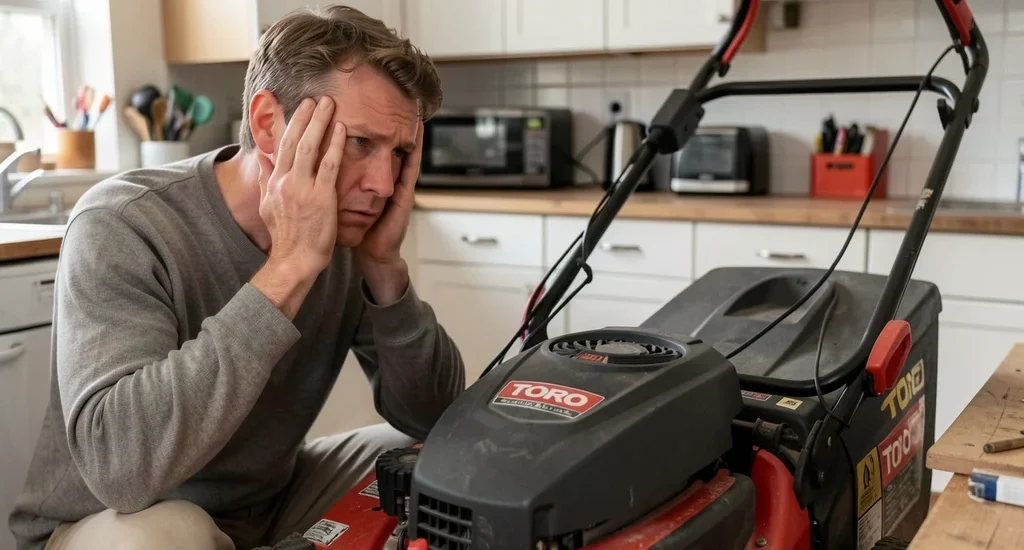
If your Toro walk-behind mower isn’t performing like it used to, toro walk behind mower troubleshooting can help you identify and fix common problems without a costly repair shop visit. From starting issues to uneven cuts, most problems have simple solutions you can handle at home with basic tools.
Most Toro walk-behind mower problems stem from old fuel, clogged air filters, or dull blades. Start with the simplest fixes like checking the spark plug or cleaning the deck before moving to complex repairs.
Quick Fixes for a Toro Mower That Won’t Start
A mower that refuses to start is often the most frustrating issue. Before assuming the worst, run through these basic checks. Many no-start problems are caused by stale fuel, a flooded engine, or a disconnected spark plug wire.
Begin by verifying there’s fresh fuel in the tank. Gasoline degrades over time, especially if left sitting for weeks. Old fuel can clog the carburetor and prevent the engine from firing.
If the fuel smells sour or looks discolored, drain it completely and refill with fresh gasoline mixed with the correct oil ratio if your model requires it.
- Check the fuel level and freshness – Drain and replace if older than 30 days.
- Inspect the spark plug – Remove, clean, and gap it to 0.030 inches or replace if fouled.
- Test the ignition switch – Ensure the wire connections are secure and the switch clicks when engaged.
- Clear a flooded engine – Remove the spark plug, pull the starter 3-4 times, then reinsert and try starting.
- Examine the air filter – Tap it out or replace if dirty to restore proper airflow.
| Common Start Issue | Likely Cause | Solution |
|---|---|---|
| Engine turns but won’t fire | Fouled spark plug | Clean or replace spark plug |
| No response when pulling cord | Dead battery (electric start models) | Charge or replace battery |
| Engine dies immediately after starting | Clogged carburetor | Clean carburetor or add fuel stabilizer |
If these steps don’t work, the issue might be a faulty ignition coil or a seized engine. According to Toro’s service data, over 60% of no-start issues in walk-behind models are resolved by addressing fuel or spark plug problems first.
Warning: Never remove the spark plug while the engine is running. Always disconnect the spark plug wire before performing any maintenance to prevent accidental starts.
Why Your Toro Mower Keeps Stalling and How to Fix It
An engine that starts but stalls after a few seconds or minutes is often starved for fuel or air. The most common culprits are a dirty carburetor, a clogged fuel filter, or an air leak in the fuel lines.
Start by checking the fuel filter, usually located inside the fuel tank or along the fuel line. A clogged filter restricts fuel flow, causing the engine to sputter and die. Replace it if it looks discolored or has debris.
Next, inspect the fuel lines for cracks or loose connections. Even a small air leak can disrupt the fuel-to-air ratio and cause stalling.
- Dirty carburetor – Use carburetor cleaner to remove varnish buildup from old fuel.
- Faulty fuel pump – Test by disconnecting the fuel line and checking for steady fuel flow.
- Improper choke setting – Ensure the choke is fully closed when starting cold and gradually opened as the engine warms.
- Low oil level – Some Toro models have a low-oil shutdown feature.
- Overheating – Check for debris blocking the cooling fins or a faulty flywheel key.
| Symptom | Check This First | Solution |
|---|---|---|
| Stalls after 10-15 seconds | Carburetor bowl | Clean bowl and jets |
| Stalls when hot | Vapor lock | Shield fuel lines from heat |
| Stalls under load | Weak spark or compression | Test spark and compression |
Toro recommends cleaning the carburetor every 100 hours of operation or at least once per season. If you’re not comfortable disassembling the carburetor, a can of carburetor cleaner spray can often restore performance without full disassembly.
Uneven Cutting Patterns and How to Correct Them
If your Toro mower is leaving streaks or uneven patches, the issue is usually mechanical rather than engine-related. Dull or damaged blades are the primary cause, but incorrect deck height, uneven tire pressure, or a bent deck can also create inconsistent cuts.
First, inspect the mower blades. Nicks, bends, or dull edges will tear grass instead of cutting it cleanly, leading to a brown, ragged appearance. Sharpen the blades at least once per season or after 25 hours of use.
If the blades are severely damaged or unbalanced, replace them entirely. An unbalanced blade can also cause excessive vibration, which is hard on the mower and the operator.
- Sharpen or replace blades – Use a file or grinder for sharpening, or install new OEM blades.
- Check deck levelness – Measure from the deck to the ground on all sides; adjust if uneven.
- Balance the blades – Use a blade balancer to ensure both ends weigh the same.
- Inspect tire pressure – Uneven tires cause the deck to tilt; inflate to manufacturer specs.
- Clean the deck underside – Grass buildup can obstruct airflow and lift, reducing cut quality.
Tip: Always disconnect the spark plug before working on the blades. To check blade balance, hang the blade on a nail through its center hole—if one end drops, file that side until balanced.
| Cutting Issue | Cause | Fix |
|---|---|---|
| Scalping grass | Deck too low or uneven | Adjust deck height; level deck |
| Double-cutting lines | Overlapping passes | Reduce overlap; mow in straight lines |
| Tearing grass | Dull or bent blades | Sharpen or replace blades |
According to the Outdoor Power Equipment Institute, dull mower blades can increase fuel consumption by up to 20% as the engine works harder to spin the blades through tough grass. Regular blade maintenance not only improves cut quality but also extends the life of your mower.
Toro Mower Losing Power or Sputtering During Operation
A mower that runs but loses power under load or sputters intermittently often has fuel delivery or air intake issues. This can manifest as a lack of acceleration when pushing through thick grass or a sudden drop in RPM.
Start by checking the air filter element. A dirty filter restricts airflow, causing the engine to run rich (too much fuel, not enough air). This can foul the spark plug and reduce power.
Paper filters can often be tapped clean, but if they’re caked with dirt, replace them. Foam filters should be washed in soap and water, then re-oiled with filter oil.
- Clogged air filter – Clean or replace based on type (paper, foam, or dual-element).
- Dirty fuel tank – Sediment in the tank can clog the fuel pick-up; clean with a fuel tank cleaner kit.
- Faulty spark plug – A weak spark can’t ignite the fuel-air mix efficiently; test or replace.
- Exhaust port blockage – Carbon buildup in the exhaust can restrict flow; clean with a wire brush.
- Governor issues – A sticky governor can prevent the engine from reaching full throttle; lubricate or adjust.
Important: If your Toro mower is under warranty, some repairs (like carburetor adjustments) may need to be done by an authorized dealer to maintain coverage. Check your warranty terms before disassembling major components.
Another often-overlooked issue is the condition of the flywheel key. This small, shearing metal piece connects the flywheel to the crankshaft. If the mower hits an object, the key can shear to protect the engine, but this misaligns the flywheel timing.
Symptoms include hard starting, backfiring, or loss of power. Replacing the flywheel key is a straightforward job but requires removing the flywheel.
Excessive Vibration or Noise from Your Toro Mower
Unusual vibration or noise can indicate a serious problem that needs immediate attention. Ignoring these signs can lead to further damage and costly repairs. Common causes include unbalanced blades, loose components, or engine issues.
Begin by inspecting the blades for damage or imbalance. Even a small nick can throw the blade off balance, causing vibration. If you’ve recently sharpened the blades, ensure they were balanced afterward.
An unbalanced blade can also cause the crankshaft to wear prematurely.
- Check blade balance – Use a blade balancer tool to verify both ends weigh the same.
- Inspect the crankshaft – Look for wobble or damage; a bent crankshaft requires professional repair.
- Tighten all bolts – Engine mounting bolts, deck bolts, and blade bolts can loosen over time.
- Examine the pulleys and belts – Worn or misaligned belts can cause squealing or vibration.
- Listen for engine knocking – A knocking sound may indicate low oil or internal engine damage.
| Noise/Vibration Type | Likely Cause | Action |
|---|---|---|
| Loud rattling | Loose heat shield or debris in deck | Tighten or remove debris |
| Squealing | Worn drive belt | Replace belt |
| Knocking from engine | Low oil or rod knock | Check oil; consult mechanic |
Toro’s service manuals note that excessive vibration can also stem from a bent deck or spindle assembly. If the deck is bent, it may need to be replaced. For spindle issues, listen for a grinding noise when the blades are engaged—a sign that the spindle bearings are failing and need replacement.
Belt and Drive System Problems in Toro Walk-Behind Mowers
The drive system is what propels your self-propelled Toro mower forward. If the mower isn’t moving or the drive feels sluggish, the issue is likely in the belt, transmission, or drive control assembly.
Start by checking the drive belt. Over time, belts can stretch, fray, or crack. A worn belt may slip under load or not engage the transmission properly.
To inspect the belt, tip the mower on its side (air filter up) and look for signs of wear. Replace the belt if it’s glossy, cracked, or has missing chunks.
- Worn drive belt – Replace if frayed, cracked, or stretched beyond adjustment.
- Loose or broken cable – The drive control cable may need adjustment or replacement.
- Clogged transmission – Old grease or debris can seizes the transmission; service as needed.
- Faulty traction control – On variable-speed models, the control may need adjustment.
- Debris in pulleys – Grass or dirt can jam the pulleys; clean thoroughly.
Tip: When replacing the drive belt, also check the idler pulleys. Worn or seized pulleys can cause the new belt to fail prematurely. Lubricate or replace pulleys as needed.
For Toro’s TimeMaster and Recycler models, the drive system includes a variable-speed control. If the mower moves at inconsistent speeds or doesn’t respond to the control lever, the issue may be a stretched cable or a worn control assembly. Adjusting the cable tension or replacing the assembly can restore proper operation.
Electrical Issues in Electric Start Toro Mowers
If your Toro mower has an electric start feature and it’s not working, the problem could be with the battery, starter solenoid, or wiring. Electric start systems add convenience but also introduce more potential failure points.
Begin with the battery. A weak or dead battery won’t have enough power to turn the engine over. Check the battery voltage with a multimeter—it should read at least 12.6 volts when fully charged.
If the battery is low, charge it fully. If it won’t hold a charge, replace it. Toro typically uses 12-volt lead-acid batteries in their electric start models.
- Test the battery – Use a multimeter to check voltage; charge or replace if below 12 volts.
- Inspect the starter solenoid – Listen for a clicking sound when turning the key; no click may indicate a bad solenoid.
- Check wiring connections – Corroded or loose wires can disrupt power; clean and tighten connections.
- Test the ignition switch – A faulty switch may not send power to the starter; replace if defective.
- Examine the starter motor – If the solenoid clicks but the engine doesn’t turn, the starter motor may be faulty.
| Symptom | Likely Cause | Solution |
|---|---|---|
| Clicking but no crank | Weak battery or bad solenoid | Charge/replace battery or solenoid |
| No sound when turning key | Blown fuse or bad ignition switch | Replace fuse or switch |
| Slow cranking | Low battery or corroded connections | Clean connections; charge/replace battery |
If the battery and connections are good but the starter still doesn’t work, the issue may be a seized engine. Try turning the engine by hand (with the spark plug removed) to see if it rotates freely. If it doesn’t, there may be internal engine damage requiring professional attention.
Common Mistakes to Avoid During Toro Mower Troubleshooting
Even experienced DIYers can make mistakes that turn a simple repair into a bigger problem. Avoiding these common pitfalls can save you time, money, and frustration.
One of the most frequent mistakes is skipping the basics. Many people jump straight to complex repairs without checking simple things like fuel level, spark plug condition, or air filter cleanliness. Always start with the easiest and most common issues before moving to more involved diagnostics.
- Ignoring safety precautions – Always disconnect the spark plug wire before working on the mower to prevent accidental starts.
- Using incorrect parts – Always use OEM Toro parts or high-quality aftermarket parts designed for your model.
- Overtightening bolts – Over-torquing can strip threads or warp components; follow torque specifications.
- Not cleaning the work area – Dirt and debris can fall into open ports or components; work on a clean surface.
- Mixing up fuel types – Never use E85 or high-ethanol fuel in small engines; stick to 87-octane gasoline with less than 10% ethanol.
Warning: Never tip a mower with a hot engine or on its carburetor side. This can cause fuel or oil to leak into the cylinder, leading to a hydrolocked engine or fire hazard. Always tip it on the air filter side.
Another common error is assuming a part is bad without testing it. For example, many people replace a carburetor when the issue is actually a clogged fuel filter or old fuel. Simple tests like checking for spark or fuel flow can prevent unnecessary part replacements.
Frequently Asked Questions
Why does my Toro mower start but then die immediately?
This is often caused by a clogged carburetor or a problem with the fuel system. Old fuel can leave varnish deposits that block the carburetor jets. Try cleaning the carburetor with a carburetor cleaner spray.
If that doesn’t work, the fuel filter or fuel lines may be clogged and need replacement or cleaning.
How often should I sharpen the blades on my Toro walk-behind mower?
As a general rule, sharpen the blades after every 25 hours of use or at least once per season. If you notice the grass looking torn instead of cleanly cut, or if the mower deck vibrates excessively, it’s a sign the blades need sharpening. Always balance the blades after sharpening to prevent vibration.
What type of oil should I use in my Toro mower?
Toro recommends using SAE 30 oil for temperatures above 40°F (4°C) and 5W-30 synthetic oil for colder temperatures. Always use high-quality detergent oil classified as SJ or higher. Check your mower’s manual for the exact oil capacity, which varies by model.
My Toro mower’s drive isn’t working. What should I check first?
Start by inspecting the drive belt for wear or damage. If the belt looks good, check the drive control cable for proper tension and connection. Also, ensure the traction control lever or bail is engaged correctly.
On some models, a loose or broken spring in the drive control assembly can cause drive issues.
How do I know if my Toro mower’s spark plug is bad?
A fouled or worn spark plug can cause hard starting, misfiring, or poor engine performance. Remove the spark plug and inspect the electrode. If it’s covered in carbon deposits, oil, or has a worn electrode, it needs cleaning or replacement.
Also, check the gap—it should be 0.030 inches for most Toro models. If the plug is cracked or damaged, replace it.
Final Thoughts
Toro walk behind mower troubleshooting doesn’t have to be complicated. Most common issues—like starting problems, uneven cutting, or power loss—can be resolved with basic maintenance and a systematic approach. Start with the simplest fixes, like checking the fuel, spark plug, and air filter, before moving to more complex diagnostics.
Regular maintenance, including blade sharpening, air filter cleaning, and oil changes, can prevent many problems from occurring in the first place. By keeping your Toro mower in good condition, you’ll ensure it runs smoothly and lasts for years to come.