Tall fescue is the workhorse of cool-season grasses. It is not the prettiest. It is not the softest. But it survives things that kill Kentucky bluegrass. Heat. Drought. Heavy foot traffic. Neglect.
I switched my front lawn from Kentucky bluegrass to tall fescue three years ago. My water bill dropped. My summer stress disappeared. The lawn is not quite as beautiful. But it is always green. And that trade-off was worth it.
What Makes Tall Fescue Different
Tall fescue has the deepest roots of any cool-season grass. They go two to three feet down. Kentucky bluegrass roots go six inches. Those deep roots reach water and nutrients that other grasses cannot touch. That is why tall fescue stays green when bluegrass goes brown.
Tall fescue is a clumping grass. It does not spread like Kentucky bluegrass. Each plant stays where you put it. This means bare spots stay bare until you reseed them. But it also means tall fescue does not invade your flower beds.
The leaf blades are wider and coarser than bluegrass. It is not as soft under bare feet. But modern turf-type tall fescue varieties are much finer than the old pasture-type fescue your grandparents had.
Tall Fescue vs Kentucky Bluegrass
| Feature | Tall Fescue | Kentucky Bluegrass |
|---|---|---|
| Root depth | 2-3 feet | 6-12 inches |
| Drought tolerance | Excellent | Poor |
| Shade tolerance | Moderate | Poor |
| Self-repairs | No | Yes |
| Texture | Medium-coarse | Fine, soft |
| Germination speed | 7-12 days | 14-28 days |
How to Plant Tall Fescue
Fall is the best time to plant tall fescue. Mid-August through September gives seedlings time to establish before winter. The soil is warm. Weeds are slowing down. Conditions are ideal.
🍂 The Silent Lawn Killer: Damp Leaves Will Suffocate Your Grass
Trapped wet leaves create a breeding ground for destructive snow mold. Clear the yard fast with a high-power cordless blower before the ground freezes.
Seed at 8 to 10 pounds per 1,000 square feet for a new lawn. For overseeding, use 4 to 6 pounds per 1,000 square feet. Tall fescue seed is larger than bluegrass. It needs better soil contact. Rake the seed lightly into the soil surface.
Water two to three times per day to keep the seedbed moist. Tall fescue germinates in 7 to 12 days. Once the grass reaches two inches, reduce watering frequency.
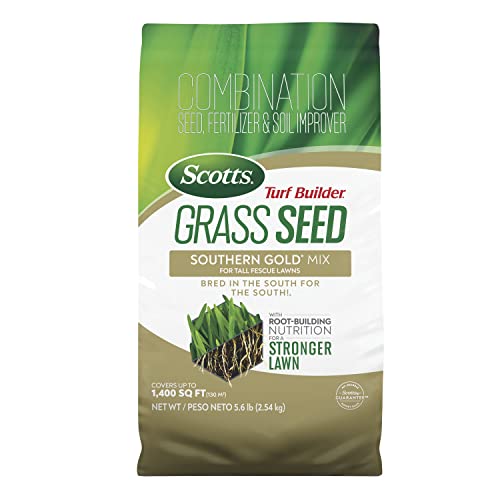
Find quality tall fescue seed on Amazon.
Tall Fescue Maintenance
Mowing: Mow tall fescue at 3 to 4 inches. This is higher than most grasses. Taller grass shades the soil and reduces weed pressure. It also encourages deeper roots. Never cut more than one-third of the blade at a time.
Watering: Tall fescue needs about one inch of water per week. Its deep roots access soil moisture that shallow-rooted grasses cannot reach. During drought, tall fescue will be the last grass to turn brown.
Fertilizing: Feed tall fescue three to four times per year. It needs about 3 to 4 pounds of nitrogen per 1,000 square feet annually. That is slightly less than Kentucky bluegrass. Fall fertilizing is most important for root development.
🍂 The Silent Lawn Killer: Damp Leaves Will Suffocate Your Grass
Trapped wet leaves create a breeding ground for destructive snow mold. Clear the yard fast with a high-power cordless blower before the ground freezes.
Overseeding: Because tall fescue does not spread, you need to overseed bare spots every fall. I walk my lawn in early September and patch any thin areas. It takes 15 minutes and keeps the lawn full.
Best Tall Fescue Varieties
Modern turf-type tall fescues are nothing like the old K-31 pasture grass. Look for these varieties on the seed label: Titanium, Rhambler, Amity, Traverse, or Falcon. These are fine-bladed, dark green, and dense.
Avoid anything labeled “K-31” or “Kentucky 31.” That is old pasture grass. It grows in wide ugly clumps. It is cheap but looks terrible in a lawn.
Frequently Asked Questions
Does tall fescue spread like bluegrass?
No. Tall fescue is a bunch-type grass. It does not spread through rhizomes or stolons. Bare spots must be reseeded. This is the main disadvantage of tall fescue compared to Kentucky bluegrass.
Is tall fescue good for high-traffic areas?
Yes. Tall fescue handles foot traffic better than Kentucky bluegrass or perennial ryegrass. Its deep roots and tough blades recover quickly from wear. It is the best cool-season grass for yards with kids and dogs.
Can tall fescue grow in shade?
Tall fescue tolerates moderate shade better than Kentucky bluegrass. But it still needs 4 to 6 hours of sun. Deep shade under dense trees requires fine fescue instead.
🍂 The Silent Lawn Killer: Damp Leaves Will Suffocate Your Grass
Trapped wet leaves create a breeding ground for destructive snow mold. Clear the yard fast with a high-power cordless blower before the ground freezes.
Why is my tall fescue clumpy?
Tall fescue naturally grows in clumps. If the clumps are wide and spaced far apart, you probably have old K-31 pasture fescue. Modern turf-type fescues form tighter denser clumps. Overseed bare areas between clumps to create a fuller lawn.
Shop Tall Fescue Guide: Best Drought-Tolerant Cool Grass on Amazon

🍂 The Silent Lawn Killer: Damp Leaves Will Suffocate Your Grass
Trapped wet leaves create a breeding ground for destructive snow mold. Clear the yard fast with a high-power cordless blower before the ground freezes.