Grass and trees do not get along. Trees steal sunlight. Their roots steal water and nutrients. Most grass types give up and die under heavy shade. But a few grasses can handle it.
I have a big maple tree in my backyard. For three years I tried to grow Kentucky bluegrass under it. Every spring it came in thin. Every summer it died. I finally switched to shade-tolerant grass seed and the difference was night and day.
Here are the best grass seeds for shady lawns.
Why Most Grass Fails in Shade
Grass needs sunlight for photosynthesis. Less sunlight means less energy. Less energy means weaker plants. Weaker plants cannot compete with tree roots for water and nutrients.
Shade also means less airflow. Grass stays damp longer after rain or watering. Damp grass gets fungus. Fungus kills grass. It is a chain reaction that starts with that tree you love.
No grass grows in complete darkness. If the area gets less than three hours of direct sun, you need a ground cover like pachysandra or mulch. Not grass.
🍂 The Silent Lawn Killer: Damp Leaves Will Suffocate Your Grass
Trapped wet leaves create a breeding ground for destructive snow mold. Clear the yard fast with a high-power cordless blower before the ground freezes.
Top 5 Grass Seeds for Shady Lawns
1. Fine Fescue (Best for Deep Shade)
Fine fescue is the most shade-tolerant grass available. It includes creeping red fescue, chewings fescue, hard fescue, and sheep fescue. These grasses evolved on forest floors. They know how to handle low light.
Fine fescue has thin needle-like blades. It does not need much fertilizer. It actually prefers poor soil. Too much nitrogen and fine fescue gets floppy and diseased.
The downside is that fine fescue does not handle foot traffic. It is for show, not for play. Find fine fescue seed on Amazon.
2. Scotts Turf Builder Dense Shade Mix
Scotts Dense Shade Mix is mostly fine fescue with some shade-tolerant Kentucky bluegrass. It handles the tricky areas under trees better than most big-box seed mixes.
The coated seeds retain moisture better than raw seed. This matters in shade because tree roots suck up water fast. Coated seeds give seedlings an extra day or two of moisture.
One 7-pound bag covers about 1,750 square feet for overseeding.
🍂 The Silent Lawn Killer: Damp Leaves Will Suffocate Your Grass
Trapped wet leaves create a breeding ground for destructive snow mold. Clear the yard fast with a high-power cordless blower before the ground freezes.
3. Jonathan Green Shady Nooks
Jonathan Green Shady Nooks contains fine fescues, tall fescue, and perennial ryegrass. The tall fescue adds some durability. The ryegrass gives fast germination. The fine fescue handles the long-term shade.
This mix works well under moderately dense trees where you still get 3 to 5 hours of sun. It is more durable than pure fine fescue.
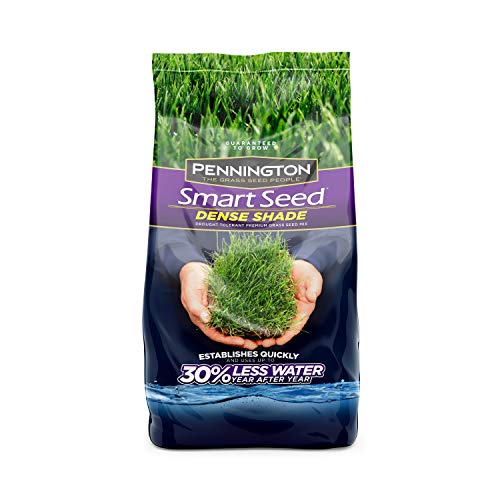
4. Pennington Smart Seed Shade Mix
Pennington Smart Seed Shade Mix uses improved tall fescue and fine fescue varieties that need less water. This matters in shade because tree roots compete for moisture. The lower water requirement gives the grass a fighting chance.
I have used this under a silver maple with good results. The grass is not perfect. But it is green. And in deep shade, green is a win.
5. Outsidepride Creeping Red Fescue (Pure Fine Fescue)
If you want pure fine fescue with no other grass types mixed in, Outsidepride sells high-quality creeping red fescue. It spreads slowly through short rhizomes. This helps fill bare spots in shade.
Pure fine fescue is the right choice for areas with less than four hours of sun. Any less light and even fine fescue will struggle.
🍂 The Silent Lawn Killer: Damp Leaves Will Suffocate Your Grass
Trapped wet leaves create a breeding ground for destructive snow mold. Clear the yard fast with a high-power cordless blower before the ground freezes.
Tips for Growing Grass in Shade
Prune your trees. Remove low branches to let in more light. Raise the canopy to at least 10 feet. This costs nothing and makes the biggest difference.
Mow higher. Cut shade grass at 3.5 to 4 inches. Taller blades catch more light. Longer grass also has deeper roots that compete better with tree roots.
Water less often. Shade grass stays wet longer. Water once per week deeply instead of frequent light watering. Wet grass in shade gets fungus fast.
Fertilize less. Shade grass grows slower. It needs about half the nitrogen of sun grass. Over-fertilizing shade grass makes it weak and disease-prone.
Overseed every fall. Shade grass thins out faster than sun grass. A yearly overseeding in early fall keeps it full.
Frequently Asked Questions
What grass grows in full shade?
No grass grows in full shade where there is zero direct sunlight. Fine fescue handles the deepest shade, surviving with as little as three hours of filtered sun. Below that, switch to shade-tolerant ground covers.
🍂 The Silent Lawn Killer: Damp Leaves Will Suffocate Your Grass
Trapped wet leaves create a breeding ground for destructive snow mold. Clear the yard fast with a high-power cordless blower before the ground freezes.
Can I grow St. Augustine grass in shade?
Yes. St. Augustine is the most shade-tolerant warm-season grass. It handles 4 to 5 hours of sun. Palmetto and CitraBlue are the best shade-tolerant St. Augustine varieties.
Do I need special fertilizer for shady grass?
Use a fertilizer with less nitrogen for shady grass. Something like 10-10-10 instead of 30-0-4. And fertilize half as often. Shade grass cannot use the extra nitrogen. It just makes the grass weak.

🍂 The Silent Lawn Killer: Damp Leaves Will Suffocate Your Grass
Trapped wet leaves create a breeding ground for destructive snow mold. Clear the yard fast with a high-power cordless blower before the ground freezes.