I live in an area with summer watering restrictions. My neighbor’s Kentucky bluegrass lawn turns brown every July. My tall fescue lawn stays green. The difference is the grass type. Not the water. Not the fertilizer. Just the seed I chose.
If you are tired of watching your lawn crisp up every summer, switch to a drought-tolerant grass. Here are the best drought-resistant grass seeds for both cool and warm climates.
What Makes a Grass Drought-Tolerant?
Drought-tolerant grasses have three features. Deep roots that reach water far below the surface. The ability to go dormant instead of dying when water runs out. And leaf blades that lose less water through evaporation.
Root depth matters most. Grass with roots two feet deep can access water that shallow-rooted grass cannot even reach. That is the difference between brown and green during a dry spell.
Best Drought-Tolerant Cool-Season Grasses
1. Turf-Type Tall Fescue (Best Overall)
Tall fescue has roots that reach 2 to 3 feet deep. Kentucky bluegrass roots go 6 inches. When surface soil dries out, tall fescue keeps drinking from deep moisture. It stays green weeks after bluegrass has gone brown and crunchy.
Modern turf-type tall fescues are finer and darker than old pasture fescue. Varieties like Titanium and Rhambler look good and handle drought. Find drought-tolerant tall fescue seed on Amazon.
🍂 The Silent Lawn Killer: Damp Leaves Will Suffocate Your Grass
Trapped wet leaves create a breeding ground for destructive snow mold. Clear the yard fast with a high-power cordless blower before the ground freezes.
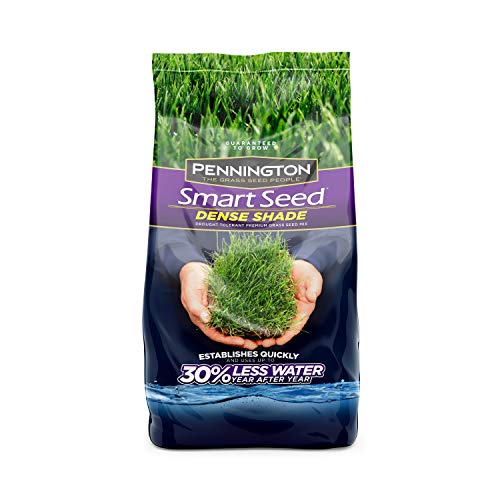
2. Pennington Smart Seed Tall Fescue
Pennington Smart Seed uses improved varieties bred specifically for water efficiency. These grasses need 30% less water than standard tall fescue. The secret is a waxy coating on the leaves that reduces water loss.
I recommend Smart Seed for areas with permanent watering restrictions. It costs more than regular tall fescue. But the water savings pay for the seed in one season.
3. Fine Fescue (Lowest Water Needs)
Fine fescue needs the least water of any cool-season grass. It thrives on neglect. Too much water actually kills it. Fine fescue is the grass for people who never want to water.
The trade-off is that fine fescue does not handle traffic. It is thin and wispy. Kids and dogs will destroy it. But for a lawn you only look at, fine fescue is unbeatable for drought.
Best Drought-Tolerant Warm-Season Grasses
1. Bermuda Grass
Bermuda grass is the king of drought tolerance in warm climates. Roots can go 6 feet deep in sandy soil. It goes dormant in drought but almost never dies. When rain returns, Bermuda greens up within days.
Common Bermuda is more drought-tolerant than hybrid Bermuda. The hybrids are prettier but need more water.
🍂 The Silent Lawn Killer: Damp Leaves Will Suffocate Your Grass
Trapped wet leaves create a breeding ground for destructive snow mold. Clear the yard fast with a high-power cordless blower before the ground freezes.
2. Buffalo Grass (Native Prairie Grass)
Buffalo grass is native to the Great Plains. It evolved to survive months without rain. It needs almost no water once established. It needs almost no fertilizer. It is the ultimate low-maintenance lawn.
The downside is that buffalo grass is gray-green, not dark green. It goes dormant earlier in fall than other warm-season grasses. And it does not handle heavy traffic. But for drought survival, nothing beats it.
3. Bahia Grass
Bahia grass is tough. It grows in sandy Florida soil and handles weeks without rain. It is coarse and light green. Not a show lawn. But it survives when everything else dies.
Bahia is popular on large rural properties where irrigation is not practical. It is seeded, not sodded, which keeps costs down for big areas.
Drought-Tolerant Grass Comparison
| Grass | Type | Root Depth | Water Needs |
|---|---|---|---|
| Tall Fescue | Cool-season | 2-3 feet | Low-moderate |
| Fine Fescue | Cool-season | 1-2 feet | Very low |
| Bermuda | Warm-season | 3-6 feet | Low |
| Buffalo Grass | Warm-season | 3-5 feet | Very low |
| Bahia | Warm-season | 3-4 feet | Low |
Frequently Asked Questions
What is the most drought-tolerant grass?
Buffalo grass is the most drought-tolerant lawn grass. It is native to the dry Great Plains and survives months without rain. For cool-season areas, fine fescue needs the least water. For warm-season areas, Bermuda and buffalo are tied for drought tolerance.
Can I make my existing lawn more drought-tolerant?
Yes. Water deeply but infrequently. This forces roots to grow deeper. Mow higher. Taller grass shades the soil and reduces evaporation. Add organic matter to improve soil water-holding capacity. These practices help any grass type handle drought better.
🍂 The Silent Lawn Killer: Damp Leaves Will Suffocate Your Grass
Trapped wet leaves create a breeding ground for destructive snow mold. Clear the yard fast with a high-power cordless blower before the ground freezes.
Should I let my lawn go dormant during drought?
Yes. Letting grass go dormant during severe drought is better than watering lightly. Dormant grass turns brown but the crown stays alive. It recovers when rain returns. Light watering during drought encourages shallow roots and wastes water.

🍂 The Silent Lawn Killer: Damp Leaves Will Suffocate Your Grass
Trapped wet leaves create a breeding ground for destructive snow mold. Clear the yard fast with a high-power cordless blower before the ground freezes.