Last Updated on October 22, 2026 by D. Ruddy
Proper placement for Dyson humidifier units can make the difference between dry, uncomfortable air and a perfectly balanced indoor climate. These smart devices work best when positioned strategically to maximize coverage and efficiency. Whether you’re using a Dyson AM10, PH01, or PH04 model, where you place it affects humidity distribution, energy use, and even the lifespan of your machine.
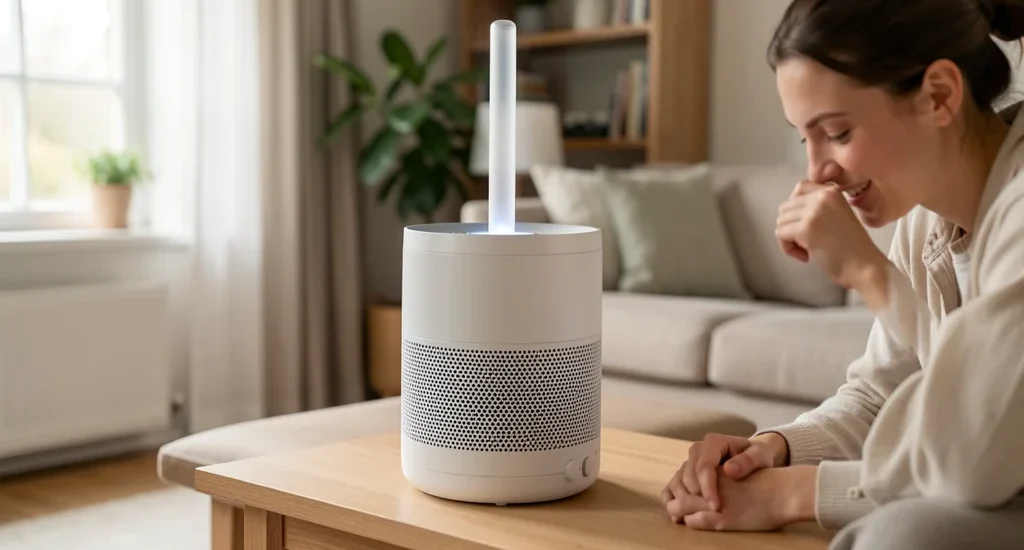
Place your Dyson humidifier on an elevated, flat surface in the center of the room you use most. Keep it 2-3 feet away from walls and furniture for optimal airflow and to prevent moisture damage to surfaces.
Best Rooms for Your Dyson Humidifier
The ideal room for your Dyson humidifier depends on your household needs and the model’s coverage capacity. Most Dyson humidifiers effectively cover 200-400 sq ft, making them perfect for bedrooms, living rooms, or home offices. The bedroom is often the top choice since we spend about 7-9 hours there daily, and proper humidity levels can significantly improve sleep quality.
Living rooms benefit from humidifiers too, especially if you have hardwood floors or musical instruments that can be damaged by dry air. Home offices are another excellent location, as proper humidity helps maintain focus and reduces static electricity that can damage electronics. According to the Environmental Protection Agency, maintaining indoor humidity between 30-50% can reduce the survival of flu viruses by up to 30%.
- Bedroom: Best for overnight use, improves sleep quality and respiratory comfort
- Living Room: Ideal for shared spaces with multiple people and furniture to protect
- Home Office: Helps with concentration and protects electronics from static
- Nursery: Safe for babies when used with distilled water (check model specifications)
- Basement: Good for moisture control in typically damp areas (if your model has hygrostats)
Important: Never place your Dyson humidifier in bathrooms, kitchens, or laundry rooms. These areas have moisture fluctuations that can trigger the device’s safety features or cause over-humidification.
Ideal Surface and Height for Placement
Dyson humidifiers perform best when elevated 2-4 feet off the ground. This elevation allows the mist to disperse more evenly throughout the room rather than settling near the floor. A sturdy nightstand, side table, or console table works perfectly.
Avoid placing the unit directly on the floor as this can lead to uneven humidity distribution and potential water damage to carpets or hardwood.
The surface should be flat, stable, and water-resistant. Dyson’s ultrasonic technology creates a fine mist that can condense on nearby surfaces, so choose materials that won’t be damaged by moisture. Glass, metal, or sealed wood surfaces are ideal.
Also consider the weight of the humidifier when filled with water—most Dyson models weigh between 4-8 lbs when empty and up to 15 lbs when full.
| Surface Type | Pros | Cons |
|---|---|---|
| Nightstand | Ideal height, usually near bed for overnight use | Limited space may restrict larger models |
| Side Table | Stable, elevated, good for living rooms | May not be tall enough for optimal dispersion |
| Console Table | Perfect height, often against walls (but maintain distance) | May be too narrow for some models |
| Dresser | Wide surface, elevated, stable | Can be too high if over 4 feet |
Remember that the mist output direction also matters. Most Dyson humidifiers have 360-degree output or directional nozzles. Position the unit so the mist isn’t blowing directly at walls, electronics, or furniture to prevent moisture damage.
Distance from Walls and Obstacles
Maintaining proper distance from walls and obstacles is crucial for both performance and safety. Dyson recommends keeping their humidifiers at least 2 feet (60 cm) away from walls and large furniture pieces. This spacing allows the mist to disperse properly without condensing on nearby surfaces, which could lead to mold growth or water damage.
The science behind this recommendation relates to airflow patterns. When the mist hits a wall too close to the unit, it creates a “rain shadow” effect where humidity doesn’t distribute evenly. Additionally, placing the humidifier too close to walls can cause the device’s sensors to give inaccurate readings, affecting its automatic humidity control features.
- Minimum Distance from Walls: 2 feet (60 cm) on all sides
- Distance from Furniture: 3 feet (90 cm) from sofas, beds, or large cabinets
- Distance from Electronics: 4 feet (120 cm) from TVs, computers, and other sensitive devices
- Distance from Curtains: 3 feet (90 cm) to prevent moisture absorption and potential mold
- Distance from Ceiling: At least 18 inches (45 cm) if placed on a tall piece of furniture
Tip: Use a laser measure or tape measure to check distances. In smaller rooms, you might need to place the humidifier more centrally rather than against a wall.
Placement by Dyson Model Specifications
Different Dyson humidifier models have varying specifications that affect optimal placement. The AM10, for example, is a hybrid humidifier and fan, while the PH01 and PH04 are pure humidifiers with different coverage areas. Understanding your specific model’s capabilities helps you place it most effectively.
The Dyson AM10 has a coverage area of up to 300 sq ft and includes a fan function, making it more versatile in placement options. The PH01 covers up to 200 sq ft, while the PH04 can handle larger spaces up to 400 sq ft. Newer models like the PH04 also include UV-C technology to purify water before humidification, which might influence where you’re comfortable placing it in your home.
| Model | Coverage Area | Best Room Size | Special Features | Placement Notes |
|---|---|---|---|---|
| AM10 | 300 sq ft | Medium bedrooms, small living rooms | Humidifier + fan, UV-C purification | Can be placed slightly closer to seating areas due to fan circulation |
| PH01 | 200 sq ft | Small bedrooms, nurseries, home offices | Ultra-quiet, hygroscopic water purification | Best for small, enclosed spaces; maintain maximum distance from walls |
| PH02 | 250 sq ft | Medium bedrooms, small living areas | UV-C purification, quiet operation | Good for overnight use in bedrooms; elevate 3-4 feet |
| PH04 | 400 sq ft | Large bedrooms, living rooms, open-plan spaces | UV-C purification, Intelligent Climate Control | Can cover larger areas; central placement recommended |
For models with UV-C purification like the PH02 and PH04, you have more flexibility in water source placement, as the UV light helps kill bacteria and mold in the water. However, always follow Dyson’s recommendations for water quality to maintain optimal performance and longevity of your device.
Seasonal Placement Considerations
Your Dyson humidifier’s optimal placement can change with the seasons. During winter months, when indoor air tends to be driest, you might need to run your humidifier more frequently and adjust its position for maximum effectiveness. The American Academy of Allergy, Asthma & Immunology notes that indoor humidity can drop below 20% in winter, which can exacerbate respiratory issues and dry skin.
In summer, if you’re using your humidifier in air-conditioned spaces, placement near return air vents can help distribute moisture more evenly. However, never place the humidifier directly in front of or too close to HVAC vents, as this can cause the moisture to be immediately sucked out of the air or create condensation in your ductwork.
- Winter: Place in the room where you spend the most time (usually bedroom). Elevate slightly higher (3-4 feet) as warm air rises and can carry moisture better.
- Spring/Fall: Central placement in living areas works well. Monitor humidity levels as outdoor humidity fluctuates.
- Summer: If using with AC, place near but not directly in front of return air vents. Consider shorter run times.
- Allergy Season: Position in bedrooms to help with overnight relief. Keep away from windows that might be opened.
Warning: Never place your Dyson humidifier near open windows, especially in cold weather. The cold air from outside can cause the mist to condense immediately, creating puddles and potentially damaging your device.
Common Placement Mistakes to Avoid
Even with the best intentions, many users make placement mistakes that reduce their Dyson humidifier’s effectiveness or even damage the unit. One of the most common errors is placing the humidifier too close to a wall or in a corner, which restricts airflow and creates uneven humidity distribution. This can lead to some areas being too humid while others remain dry.
Another frequent mistake is placing the humidifier on carpeted floors. The moisture from the mist can seep into the carpet, creating a breeding ground for mold and mildew. Similarly, placing the unit near electronics can expose your devices to moisture damage.
The Consumer Product Safety Commission reports that improper humidifier placement is a contributing factor in many home moisture-related incidents.
- Corner Placement: Restricts airflow and creates dead zones where humidity doesn’t reach
- Carpeted Surfaces: Can absorb moisture and lead to mold growth underneath the unit
- Near Electronics: Risk of moisture damage to TVs, computers, and other sensitive devices
- Direct Sunlight: Can cause algae growth in the water tank and affect the device’s sensors
- Unstable Surfaces: Vibrations from the ultrasonic humidifier can cause it to wobble or fall
- Enclosed Spaces: Placing in closets or small cabinets can create excessive humidity and damage stored items
- Near Heat Sources: Placing too close to radiators or heaters can cause the water to evaporate too quickly, reducing efficiency
Pro Tips for Optimal Performance
To get the most out of your Dyson humidifier, consider these professional tips. First, rotate the unit’s position occasionally to ensure even coverage throughout the room. This is especially important in larger spaces where one static position might leave some areas drier than others.
A simple rotation every few days can make a significant difference in overall humidity distribution.
Also, consider the layout of your room. If your space has an open floor plan, you might need to experiment with placement to find the spot that best serves multiple areas. For multi-level homes, remember that humidity tends to rise, so a first-floor placement might benefit second-floor rooms as well, though you may need a more powerful model like the PH04 for this to be effective.
- Use a Hygrometer: Place a separate humidity monitor across the room to verify readings and adjust placement as needed
- Rotate Positions: Change the humidifier’s location every 2-3 days for even coverage in large rooms
- Consider Airflow Patterns: Place near doorways or hallways to help distribute moisture to adjacent rooms
- Use Multiple Units: For spaces over 500 sq ft, consider using two humidifiers placed strategically
- Monitor for Condensation: Check windows and walls weekly for condensation, which indicates too much humidity
- Clean Regularly: Follow Dyson’s cleaning recommendations, as mineral buildup can affect performance and mist output
- Use Distilled Water: Reduces mineral buildup in the unit and prevents white dust from forming on nearby surfaces
Important: Dyson recommends cleaning your humidifier every 1-2 weeks and replacing the filter (if applicable) every 3-6 months for optimal performance and air quality.
Child and Pet Safety Considerations
If you have children or pets, additional safety considerations come into play when placing your Dyson humidifier. The good news is that Dyson humidifiers are designed with safety in mind, featuring automatic shut-off when the water tank is empty or if the unit is tipped over. However, there are still precautions you should take.
For homes with small children, place the humidifier in a location that’s out of reach. A high dresser or shelf can work well, as long as it’s stable and the mist can still disperse properly. Consider using Dyson’s child lock feature if available on your model.
For pets, especially cats who are notorious for knocking things over, ensure the humidifier is on a stable surface and consider placing it in a room where pets don’t have access when unsupervised.
- Out of Reach: Place on surfaces at least 4 feet high if you have toddlers or small children
- Stable Base: Ensure the surface can’t be easily shaken or tipped by pets
- Cord Management: Keep the power cord tidy and out of the way to prevent tripping or chewing
- Cool Mist Only: Dyson humidifiers use cool mist technology, which is safer than warm mist for homes with kids and pets
- Supervised Use: When first introducing the humidifier, supervise children and pets to ensure they don’t show undue curiosity
- Water Quality: Always use clean, fresh water to prevent any potential issues if a child or pet does come into contact with the mist
| Safety Feature | Dyson AM10 | Dyson PH01 | Dyson PH04 |
|---|---|---|---|
| Automatic Shut-off | Yes (empty tank) | Yes (empty tank) | Yes (empty tank, tip-over) |
| Tip-over Protection | No | No | Yes |
| Child Lock | No | No | Yes |
| Cool Mist Only | Yes | Yes | Yes |
Frequently Asked Questions
Can I place my Dyson humidifier on the floor?
While you technically can place your Dyson humidifier on the floor, it’s not recommended for optimal performance. Floor placement can lead to uneven humidity distribution, with moisture pooling near the ground and not reaching breathing level. For best results, elevate your humidifier 2-4 feet off the ground on a stable, flat surface like a nightstand or side table.
How far should Dyson humidifier be from bed?
For bedroom placement, position your Dyson humidifier about 3-6 feet from your bed. This distance allows the mist to disperse and mix with the air before reaching you, preventing direct exposure to the cool mist while you sleep. It also helps distribute humidity evenly throughout the room rather than creating a localized humid zone near your bed.
Is it safe to place Dyson humidifier near a window?
It’s generally not recommended to place your Dyson humidifier directly near a window, especially if the window is frequently opened. Cold air from outside can cause the mist to condense immediately, creating puddles and potentially damaging your device. If you must place it near a window, ensure the window stays closed and maintain at least 3 feet of distance.
Can I use my Dyson humidifier in multiple rooms?
Dyson humidifiers are designed for single-room use. While the mist might drift into adjacent rooms, it won’t effectively humidify multiple spaces. For whole-home humidification, you’d need either multiple units placed strategically or a whole-house humidification system.
However, you can move your Dyson humidifier between rooms as needed, just be sure to follow proper placement guidelines in each new location.
What’s the best placement for Dyson humidifier in a nursery?
For a nursery, place the Dyson humidifier on a stable surface about 4-5 feet from the crib, elevated 3-4 feet off the ground. This height and distance ensure the mist disperses before reaching your baby, and the elevation keeps it out of reach of curious little hands. Always use distilled water in a nursery to prevent any mineral particles from being released into the air.
Final Thoughts
Proper placement for Dyson humidifier units balances performance, safety, and convenience. Remember to elevate your device 2-4 feet, maintain at least 2 feet of clearance from walls, and choose a central location in your most-used room. Avoid common mistakes like floor placement or positioning near electronics.
With the right placement, your Dyson humidifier will efficiently maintain optimal humidity levels, improving your comfort and indoor air quality.