Last Updated on October 22, 2026 by D. Ruddy
Keeping carrots fresh for weeks instead of days comes down to proper storage methods. How to store carrots correctly prevents wilting, softness, and that unpleasant slimy texture that ruins your produce. Whether you have a bountiful harvest from your garden or a bulk purchase from the store, the right approach ensures crisp, flavorful carrots whenever you need them.
Remove the green tops immediately as they draw moisture from the roots. Store unwashed carrots in the fridge in a sealed container with a damp paper towel for 3-4 weeks. For long-term storage, layer them in damp sand in a cool, dark place.
Preparing Carrots For Storage
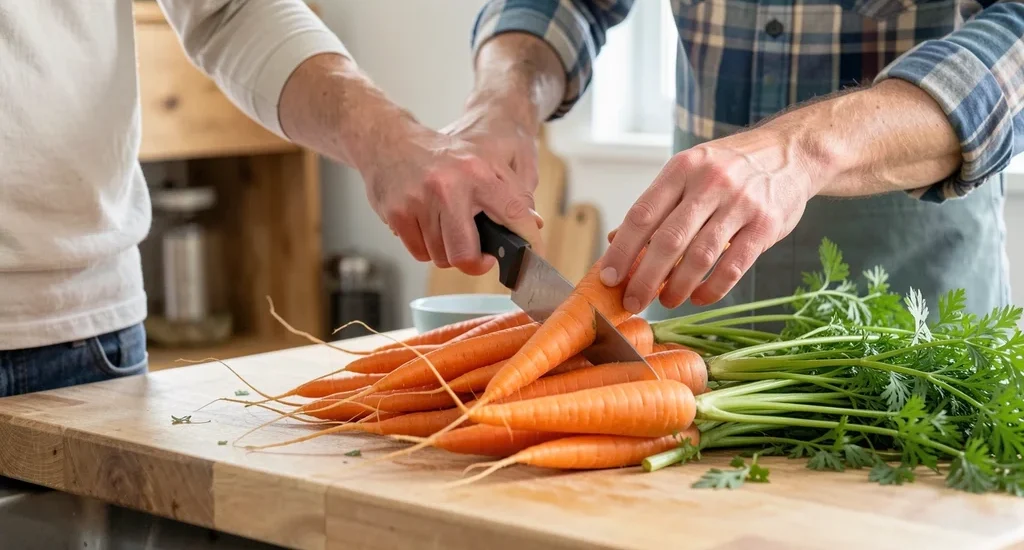
Proper preparation is the foundation of successful carrot storage. The first and most critical step is removing the leafy green tops, as they continue to draw moisture and nutrients from the roots even after harvesting. This process, called transpiration, can cause your carrots to become limp and rubbery within just a few days.
Next, resist the urge to wash your carrots before storing them. Moisture on the surface encourages mold growth and speeds up spoilage. If your carrots are particularly dirty, gently brush off excess soil with your hands or a soft brush.
For store-bought carrots, check if they’ve been pre-washed—these typically have a shorter shelf life and should be used within a week.
- Cut the tops immediately after harvesting or purchasing, leaving about 1-2 inches of stem if any
- Avoid washing until ready to use to prevent moisture-related spoilage
- Brush off dirt gently if needed, but don’t use water
- Inspect for damage and use any bruised or cut carrots first
- Don’t peel before storage as this removes the protective outer layer
Tip: If your carrots have green tops, don’t throw them away. They’re edible and can be used in pesto, soups, or as a garnish.
Short-Term Storage In The Refrigerator
The refrigerator is the most common and convenient place to store carrots for short-term use. When stored properly, carrots can last 3-4 weeks in the fridge, maintaining their crisp texture and sweet flavor. The key is controlling moisture and airflow.
Start by placing your unwashed, topped carrots in a plastic bag or airtight container. Add a damp paper towel to maintain humidity without creating a soggy environment. Alternatively, you can use a produce storage container designed for vegetables, which often have ventilation to prevent moisture buildup.
The vegetable crisper drawer is the ideal spot as it’s designed to maintain higher humidity levels than the rest of the fridge. If your refrigerator has humidity controls, set it to high for carrots. Remember to check your carrots periodically and remove any that show signs of spoilage to prevent it from spreading to the others.
- Choose the right container: Use perforated plastic bags, produce storage containers, or any airtight container
- Add moisture control: Include a damp paper towel or use a container with built-in humidity control
- Store in the crisper: This drawer maintains the ideal humidity level for root vegetables
- Keep away from ethylene: Store carrots away from fruits like apples and pears that produce ethylene gas
- Check regularly: Inspect every few days and remove any spoiled carrots immediately
| Storage Method | Duration | Best For |
|---|---|---|
| Plastic bag with paper towel | 3-4 weeks | Everyday use, small quantities |
| Produce storage container | 4-5 weeks | Those with space, better organization |
| Water in jar | 1-2 weeks | Quick access, ready-to-use |
For the longest fridge life, produce storage containers with built-in ventilation often outperform simple plastic bags. However, the paper towel method works nearly as well for most households.
Long-Term Storage Without Refrigeration
If you have a large harvest or want to store carrots for several months, refrigeration isn’t your only option. Traditional root cellaring methods can keep carrots fresh for 4-6 months when done correctly. This method works particularly well for gardeners with a bountiful harvest.
The most effective long-term storage method involves layering carrots in damp sand or sawdust. Choose a cool, dark, and well-ventilated location like a root cellar, basement, or even a garage in cooler climates. The ideal temperature range is 32-40°F (0-4°C) with high humidity.
Start with a clean container—wooden crates, cardboard boxes, or even plastic bins work well. Layer the bottom with 2-3 inches of slightly damp sand or sawdust. Place the carrots on top, ensuring they don’t touch each other.
Add another layer of sand, then another layer of carrots, repeating until the container is full. The top layer should be sand, completely covering the carrots.
- Choose the right location: Cool (32-40°F), dark, and well-ventilated
- Use damp sand or sawdust: Not wet, just slightly moist to the touch
- Prevent touching: Carrots shouldn’t touch each other to prevent rot from spreading
- Inspect regularly: Check every 2-3 weeks and remove any spoiled carrots
- Maintain humidity: If the sand dries out, lightly mist it with water
- Avoid freezing: While carrots can tolerate light frosts, prolonged freezing will damage them
Warning: Never store carrots near apples, pears, or other ethylene-producing fruits. This gas causes carrots to develop a bitter taste and can lead to premature spoilage.
Storing Carrots In Water
For those who use carrots frequently in cooking or snacking, storing them in water can be a convenient method. This approach keeps carrots crisp and ready to use, though it has a shorter shelf life than other methods. It’s particularly popular for baby carrots or pre-cut carrot sticks.
To store carrots in water, start by peeling and cutting them if desired. Place the carrots in a glass or plastic container and cover them completely with cold water. Change the water every 2-3 days to prevent bacterial growth.
This method works best when the container is stored in the refrigerator.
While this method is convenient for ready-to-eat carrots, it’s not ideal for long-term storage. Carrots stored in water will typically last 1-2 weeks before they start to soften or develop an off taste. For best results, use this method only for carrots you plan to consume quickly.
- Peel and cut carrots if desired (optional for whole carrots)
- Use clean water and ensure carrots are fully submerged
- Change water every 2-3 days without fail
- Refrigerate the container to slow down bacterial growth
- Use quickly as this method has the shortest shelf life
| Method | Pros | Cons |
|---|---|---|
| Water storage | Ready to use, maintains crispness | Shortest shelf life, requires frequent water changes |
| Refrigerator | Long shelf life, convenient | Takes up fridge space |
| Root cellar | Very long shelf life, no electricity needed | Requires suitable space, more effort |
While water storage offers convenience, the refrigerator method provides a better balance between shelf life and ease of use for most households.
Storing Baby Carrots And Pre-Cut Carrots
Baby carrots and pre-cut carrot sticks require special attention as they spoil faster than whole carrots. This is because cutting exposes more surface area to air and bacteria. According to the USDA, pre-cut vegetables have a higher risk of bacterial contamination and should be handled with extra care.
For baby carrots, which are often pre-washed and peeled, the best approach is to store them in a sealed container with a small amount of water. This maintains their crispness while preventing them from drying out. Change the water every 2-3 days and use the carrots within 1-2 weeks for best quality.
Pre-cut carrot sticks should be stored in an airtight container in the refrigerator. If they came in a bag with some moisture, transfer them to a dry container with a paper towel to absorb excess moisture. For even longer freshness, you can blanch the cut carrots in boiling water for 2-3 minutes before cooling and storing them.
This process helps preserve color, texture, and flavor.
- Store in water for baby carrots to maintain crispness
- Use airtight containers for pre-cut carrots to limit air exposure
- Change water frequently (every 2-3 days) for water-stored carrots
- Consider blanching pre-cut carrots for extended freshness
- Use quickly as cut carrots have a shorter shelf life than whole ones
- Keep refrigerated at all times to slow down bacterial growth
Important: The USDA FoodKeeper App reports that pre-cut carrots typically last only 2-3 weeks in the refrigerator, compared to 3-4 weeks for whole carrots.
Freezing Carrots For Long-Term Storage
Freezing is an excellent option for long-term carrot storage, allowing you to preserve your harvest or bulk purchase for up to 12 months. While frozen carrots won’t have the same crisp texture as fresh ones, they work perfectly in cooked dishes like soups, stews, and casseroles.
The key to successful freezing is blanching, which stops enzyme actions that can cause loss of flavor, color, and texture. Start by washing and peeling your carrots, then cut them into your desired shape—slices, dice, or sticks. Small carrots can be frozen whole.
To blanch, bring a large pot of water to a boil and prepare a bowl of ice water. Submerge the carrots in boiling water for 3-5 minutes (3 minutes for small whole carrots, 5 minutes for slices). Immediately transfer them to the ice water to cool completely, then drain and pat dry.
Spread the carrots on a baking sheet to freeze individually before transferring to airtight freezer bags or containers. This prevents them from sticking together.
- Wash and peel carrots thoroughly before freezing
- Cut uniformly for even blanching and freezing
- Blanch properly (3-5 minutes depending on size) to preserve quality
- Cool quickly in ice water to stop the cooking process
- Dry thoroughly before freezing to prevent ice crystals
- Pre-freeze on tray to prevent clumping in storage bags
- Label containers with date and contents for easy identification
| Carrot Type | Blanching Time | Freezer Life |
|---|---|---|
| Whole small carrots | 3 minutes | 12 months |
| Carrot slices/dice | 5 minutes | 12 months |
| Carrot sticks | 4 minutes | 12 months |
According to the National Center for Home Food Preservation, blanching is essential for maintaining the quality of frozen carrots. Without this step, carrots can develop off-flavors and textures during storage.
Common Mistakes To Avoid When Storing Carrots
Even with the best intentions, many people make mistakes that shorten their carrots’ shelf life. One of the most common errors is storing carrots in the same drawer as ethylene-producing fruits like apples and pears. This gas causes carrots to develop a bitter taste and can lead to premature spoilage.
Another frequent mistake is washing carrots before storage. While it might seem more hygienic, the moisture on the surface promotes mold growth and speeds up the spoilage process. It’s always better to store carrots dirty and wash them just before use.
Improper container choice can also lead to problems. Storing carrots in a completely airtight container without any moisture control can create a humid environment that encourages rot. On the other hand, leaving carrots uncovered can cause them to dry out and become rubbery.
- Avoid ethylene producers: Don’t store carrots near apples, pears, avocados, or bananas
- Don’t wash before storing: Moisture promotes mold growth and spoilage
- Choose the right container: Needs some ventilation but also moisture control
- Don’t mix with other veggies: Some vegetables like onions can cause carrots to spoil faster
- Avoid temperature fluctuations: Keep carrots in the coldest part of the fridge
- Don’t ignore spoiled carrots: Remove any soft or slimy carrots immediately to prevent spreading
- Avoid direct sunlight: Even in the fridge, light can cause carrots to turn green and develop a bitter taste
Warning: If you notice your carrots developing a white film or “blush,” this is a sign of dehydration. While they’re still safe to eat, they’ll have a less appealing texture. To prevent this, ensure your storage method includes proper humidity control.
How To Revive Limp Carrots
If you’ve discovered your carrots have gone limp, don’t throw them away just yet. In many cases, you can revive them to their former crispness. The most effective method is to submerge them in a bowl of ice water for 15-30 minutes.
This rehydrates the carrots and often restores their crisp texture.
For carrots that are slightly soft but not yet wrinkled, this method works wonderfully. However, if your carrots have become rubbery or developed a slimy texture, it’s best to discard them as these are signs of spoilage.
Another revival method works well for carrots you plan to cook. Simply peel and cut them as usual, then soak in cold water for about 15 minutes before cooking. This can plump up the carrots enough to work well in cooked dishes, even if they’re not crisp enough to eat raw.
- Ice water bath: Submerge limp carrots in ice water for 15-30 minutes
- Cold water soak: For cooking, soak cut carrots in cold water for 15 minutes
- Trim the ends: Sometimes cutting off the very end can help with rehydration
- Use in cooked dishes: Revived carrots work best in soups, stews, or roasted dishes
- Check for spoilage: Discard any carrots with slimy texture or foul odor
Tip: To prevent limp carrots in the first place, make sure your storage method includes proper humidity control. A damp paper towel in the container can work wonders for maintaining crispness.
Frequently Asked Questions
Can you store carrots at room temperature?
While you can store carrots at room temperature for a short period (1-2 days), it’s not recommended for long-term storage. Carrots kept at room temperature will quickly lose moisture and become limp. For best results, always refrigerate or use a cool storage method for carrots you won’t use immediately.
How do you know when carrots have gone bad?
Signs that carrots have spoiled include a soft or mushy texture, a slimy surface, mold growth, or a foul odor. Carrots that have turned black or developed a strong, unpleasant smell should be discarded. If only part of the carrot is bad, you can cut off the affected portion and use the rest if it’s still firm and doesn’t have an off smell.
Should you peel carrots before storing?
It’s best not to peel carrots before storing them. The skin acts as a protective barrier that helps maintain moisture and prevent spoilage. If you prefer peeled carrots, it’s better to peel them just before use.
However, if you must store peeled carrots, submerge them in water and change it every 2-3 days to maintain freshness.
Can you freeze carrots without blanching?
While you technically can freeze carrots without blanching, it’s not recommended. Without blanching, enzymes in the carrots continue to break down the color, texture, and flavor during storage. Blanching stops these enzyme actions, resulting in better quality frozen carrots that maintain their color and texture when cooked.
What’s the best way to store organic vs. conventional carrots?
The storage methods for organic and conventional carrots are essentially the same. However, organic carrots might have more soil on them when purchased, so you may need to brush them off more thoroughly before storage. Both types benefit from the same storage conditions: cool temperatures, proper humidity, and separation from ethylene-producing fruits.
Final Thoughts
Mastering how to store carrots properly means you’ll always have crisp, flavorful carrots on hand. Remove the tops, avoid washing before storage, and choose the right method for your needs—whether that’s the fridge for short-term use or a root cellar for long-term storage. With these techniques, you can enjoy your carrots for weeks or even months without sacrificing quality.