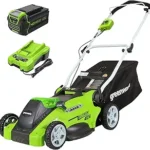
Many homeowners rely on cordless tools and want to learn how to fix a greenworks battery at home. This guide shows safe steps to diagnose and repair common battery faults.
Simply put, fixing a Greenworks battery involves testing lithium cells, replacing a blown fuse, or resetting the battery management system. Most faults come from over-discharge or loose links, not dead packs. You can repair many units in under an hour with a multimeter and basic safety gear.
Greenworks builds cordless outdoor gear powered by lithium-ion packs. The most common lines are the 24V, 40V G-MAX, and 80V systems. Each pack holds multiple 18650 cells wired in series and parallel groups.
A small circuit called the battery management system (BMS) watches voltage and temperature. The BMS cuts power if cells drop too low or heat up. This protects the pack but can lock it after long storage.
Knowing the parts helps you repair instead of replace. You will find cells, a fuse, balance wires, and the BMS inside the plastic shell. The Greenworks brand uses standard cells, so parts are easy to source.
Key Takeaways
- Fixing a Greenworks battery takes about 30 to 60 minutes if you replace a blown internal fuse.
- A multimeter helps you find weak cells by measuring each cell group below 3.0 volts.
- Greenworks provides a 2-year limited warranty on their lithium battery packs for defects.
- Opening the battery case may void warranty but saves money on packs costing over 100 dollars.
- The battery management system locks out packs after deep discharge, but you can reset it safely.
What You Need Before You Start
Gather basic tools and safety gear before you open any battery pack. Work in a dry, well-vented area away from heat sources.
What If Your Patio Became Your Favorite Spot This Fall?
Cooler evenings don’t have to send everyone indoors. Discover simple ways to turn your porch or patio into a warm, cozy place to gather after sunset.
- A digital multimeter to test cell voltage and continuity inside the pack.
- A small Phillips and Torx screwdriver set to remove case screws.
- Plastic pry tools to open the shell without damaging internal clips.
- Spot welder or soldering iron to attach new cells or fuse links.
- Safety glasses and nitrile gloves to protect from sparks and chemicals.
- A fire extinguisher rated for Class D or ABC near your workbench.
Warning: Lithium-ion cells can vent fire if punctured or shorted. Never use metal tools near exposed terminals and keep a fire extinguisher close.
How to Diagnose a Greenworks Battery
Diagnosis saves time. Follow these steps to find the fault before opening the case.
- Charge the battery on the original Greenworks charger for a full cycle.
- Check the LED indicator; no lights may signal a blown fuse or BMS lockout.
- Use a multimeter on the outer terminals; read below 30 volts on a 40V G-MAX pack means trouble.
- Note any warmth on the pack; hot spots point to a shorted cell or failed BMS.
According to Battery University, a healthy lithium cell rests at 3.6 to 4.2 volts. Anything under 3.0 volts is over-discharged and weak.
How to Open the Battery Case
Greenworks shells use hidden screws and clips. Use patience to avoid cracking the plastic.
- Remove all visible screws on the back and bottom of the pack.
- Slide a plastic pry tool along the seam to release internal clips.
- Lift the top half slowly to expose the cell array and BMS board.
- Take a photo of wire positions before disconnecting any balance lead.
Some 80V packs have a glued seam. Apply light heat from a hair dryer to soften glue, then pry gently. Never force the case or you will crack the housing.
What If Your Patio Became Your Favorite Spot This Fall?
Cooler evenings don’t have to send everyone indoors. Discover simple ways to turn your porch or patio into a warm, cozy place to gather after sunset.
How to Replace Faulty Cells or Fuse
Most repairs need a new fuse or balanced cells. Follow safe order.
- Locate the small blade fuse on the BMS; test it for continuity with the multimeter.
- If blown, solder a matching 5-amp fuse in place using lead-free solder.
- For dead cells, spot weld new 18650 cells of same capacity in parallel groups.
- Reconnect the BMS balance leads exactly as your photo shows.
- Close the case and run a charge cycle to confirm reset and full voltage.
Tip: Match cell brand and mAh rating. Mixed cells cause imbalance and early failure in the battery management system.
If the BMS stays locked, touch a good 3.7-volt cell briefly to the balance port. This wakes the circuit. Remove the donor cell once the LED blinks.
What to Expect After Repair
Repairs vary by fault. The table shows typical time and cost for common fixes at this time.
| Repair Type | Time Needed | Cost Estimate |
|---|---|---|
| Fuse replacement | 15 minutes | 2 to 5 dollars |
| Single cell swap | 45 minutes | 8 to 15 dollars |
| BMS reset only | 10 minutes | 0 dollars |
| Full pack rebuild | 2 hours | 40 to 80 dollars |
According to Greenworks warranty, a new pack costs 80 to 200 dollars depending on voltage. Repair saves money if the shell is intact. According to the Environmental Protection Agency, recycling recovers over 90 percent of battery metals, so dispose of dead cells properly.
What If Your Patio Became Your Favorite Spot This Fall?
Cooler evenings don’t have to send everyone indoors. Discover simple ways to turn your porch or patio into a warm, cozy place to gather after sunset.
Common Mistakes to Avoid
- Skipping the multimeter test leads to replacing good cells and wasting money.
- Using a steel screwdriver near cells can short terminals and cause a fire.
- Charging a punctured cell risks thermal runaway and toxic smoke release.
- Forgetting to photo wire layout causes reverse polarity during reassembly.
- Ignoring the BMS reset leaves the pack locked even after fixing hardware.
- Throwing swollen cells in trash breaks local rules and harms the environment.
Pro Tips for Longer Battery Life
- Store packs at about 40 percent charge in a cool dry place during off-season.
- Clean terminal contacts with isopropyl alcohol to stop resistance buildup.
- Avoid full discharges; recharge when the tool slows to protect cell health.
- Use only Greenworks chargers to prevent mismatch with the BMS protocol.
- Label each pack with purchase month to track the 2-year warranty window.
Important: According to Battery University, lithium cells lose 20 percent capacity after 500 cycles, so track usage.
Common Myths vs Facts
Many users believe false ideas about how to fix a greenworks battery. The table clears them up.
| Myth | Fact |
|---|---|
| All dead batteries need full replacement. | A blown fuse or single weak cell causes most failures and is cheap to fix. |
| Opening the pack always voids warranty with no exception. | Out-of-warranty packs are fair game; in-warranty ones should go to Greenworks. |
| Any charger works for lithium power tool batteries. | Wrong chargers confuse the BMS and may overcharge cells, per CPSC safety guidance. |
Frequently Asked Questions
Why does my Greenworks battery show no lights?
A dead fuse or BMS lockout from deep discharge stops the LED. Test the fuse with a multimeter and reset the BMS by briefly connecting a good cell to the balance port.
Can I use any 18650 cell for replacement?
No, you must match voltage and capacity. According to Battery University, mixed cells unbalance and cut pack life short.
How long does a Greenworks battery last?
Typical packs give 2 to 3 years of weekly use. Greenworks offers a 2-year warranty on defects, and proper storage extends life beyond that.
What If Your Patio Became Your Favorite Spot This Fall?
Cooler evenings don’t have to send everyone indoors. Discover simple ways to turn your porch or patio into a warm, cozy place to gather after sunset.
Is it safe to repair a swollen battery?
No, swelling signals gas buildup. The Consumer Product Safety Commission warns swollen cells can ignite; recycle them at an EPA-approved center.
What tools do I need to fix a Greenworks battery?
You need a multimeter, Torx screwdrivers, plastic pry tools, and a soldering iron. These basic items let you test and replace cells or fuses at home.
Final Thoughts
Repairing your pack saves cash and cuts waste. Learn how to fix a greenworks battery with a multimeter, safe tools, and patience. Start with diagnosis, then tackle the fuse or cells. You will extend the life of your cordless tools with these steps.