Last Updated on October 23, 2026 by D. Ruddy
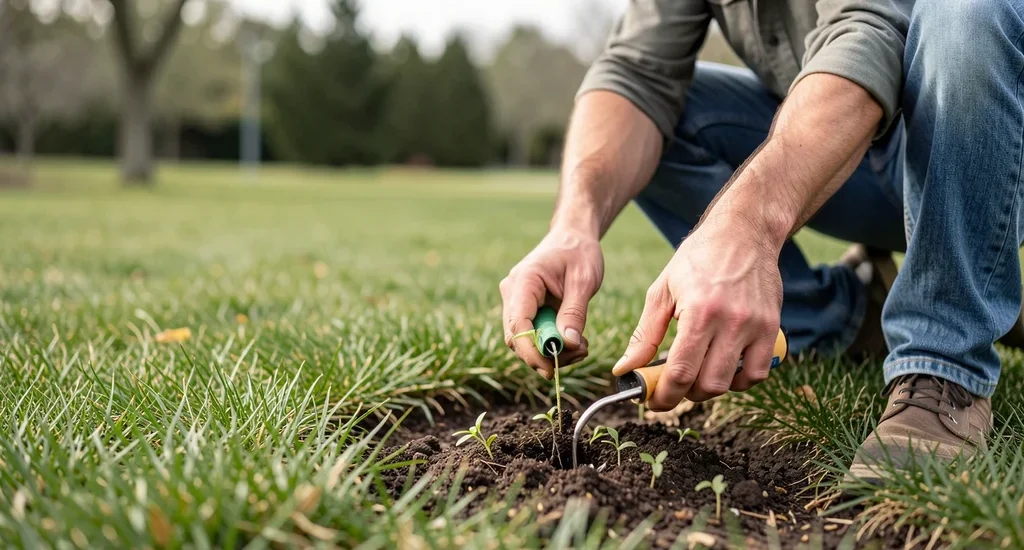
If your lawn is freshly seeded or sodded, you may wonder can i use winterizer fertilizer on new grass without causing damage. New grass is delicate, and applying the wrong fertilizer at the wrong time can stunt growth or even kill young seedlings. This post covers when it’s safe to use winterizer, how it works, and what alternatives exist for protecting new grass before winter.
You can use winterizer fertilizer on new grass only after it is fully established, typically after 6-8 weeks or 4-5 mowings. For newly seeded lawns, wait until the grass reaches at least 3 inches tall. Applying winterizer too early can burn young roots.
What Is Winterizer Fertilizer and How Does It Work
Winterizer fertilizer is a specialized lawn product designed to strengthen grass roots before winter dormancy. Unlike regular fertilizers, it has a higher potassium (K) content, which helps grass withstand cold temperatures, disease, and drought stress.
Most winterizer fertilizers have an NPK ratio like 10-0-20 or 12-0-24, meaning they contain no phosphorus. The potassium promotes root development and cell wall strength, while nitrogen supports late-season growth. The fertilizer slowly releases nutrients, feeding the lawn for weeks after application.
According to the University of Nebraska-Lincoln Extension, potassium is crucial for winter hardiness in cool-season grasses. It helps grass store carbohydrates, which act as energy reserves during dormancy. Without enough potassium, grass may struggle to recover in spring.
Key Components of Winterizer Fertilizer
- High Potassium (K): Strengthens roots and improves cold tolerance
- Moderate Nitrogen (N): Encourages late-season growth without excessive top growth
- Low or No Phosphorus (P): Reduces the risk of runoff and environmental harm
- Slow-Release Formula: Feeds grass gradually over 6-8 weeks
- Iron and Other Micronutrients: Enhances color and overall health
| Nutrient | Typical Percentage | Purpose |
|---|---|---|
| Nitrogen (N) | 10-12% | Promotes late-season growth |
| Phosphorus (P) | 0% | Reduces environmental impact |
| Potassium (K) | 20-24% | Strengthens roots for winter |
| Iron | 1-2% | Enhances green color |
The high potassium content in winterizer fertilizer is what sets it apart from regular lawn fertilizers. This nutrient helps grass build stronger cell walls, which are more resistant to freezing temperatures and disease.
Why New Grass Is More Sensitive to Fertilizer
New grass, whether from seed or sod, has underdeveloped root systems that are highly sensitive to fertilizer. The young roots lack the protective barrier that mature grass develops, making them vulnerable to fertilizer burn.
Fertilizer burn occurs when the salts in fertilizer draw moisture out of the grass roots, causing them to dehydrate and die. New grass also has limited ability to absorb nutrients efficiently. According to Penn State Extension, newly seeded lawns should not receive fertilizer until they have been mowed at least 3-4 times.
Signs Your New Grass Isn’t Ready for Winterizer
- Seedlings are less than 2 inches tall
- Grass has been mowed fewer than 4 times
- Roots are shallow and easily pulled from soil
- Lawn appears thin or patchy
- Grass blades are light green or yellowing
Warning: Applying winterizer fertilizer to new grass that isn’t fully established can cause permanent damage to your lawn. Always test a small area first if you’re unsure.
Young grass needs time to develop a strong root system before it can handle the nutrient load of winterizer fertilizer. The first few weeks after germination are critical for root development, and adding fertilizer too soon can disrupt this process.
When Is It Safe to Apply Winterizer to New Grass
The general rule is to wait until new grass is fully established before applying winterizer fertilizer. For most grass types, this means waiting 6-8 weeks after seeding or until the grass has been mowed 4-5 times.
Here are specific timelines for different grass types:
| Grass Type | Time to Establishment | Safe Time for Winterizer |
|---|---|---|
| Kentucky Bluegrass | 14-21 days | 6-8 weeks after seeding |
| Perennial Ryegrass | 5-10 days | 4-6 weeks after seeding |
| Tall Fescue | 14-21 days | 8-10 weeks after seeding |
| Fine Fescue | 14-21 days | 6-8 weeks after seeding |
| Bermuda Grass | 14-21 days | Not typically winterized (warm-season) |
For sodded lawns, you can typically apply winterizer fertilizer after 2-3 weeks, as the grass already has an established root system. However, it’s still important to check that the sod has firmly rooted into the soil before fertilizing.
How to Test if New Grass Is Ready for Winterizer
- Tug Test: Gently pull on a few grass blades. If they resist and stay firmly in the ground, roots are likely established.
- Height Check: Measure your grass. It should be at least 3 inches tall before applying winterizer.
- Mowing Count: Count how many times you’ve mowed. Most new lawns need 4-5 mowings before they’re ready.
- Color and Density: The lawn should be uniformly green and filling in well with no large bare spots.
- Time Since Seeding: Check the calendar. Most grasses need at least 6 weeks after seeding.
If your lawn passes these tests, it’s likely ready for winterizer fertilizer. When in doubt, it’s always safer to wait a little longer than to risk damaging your new grass.
How to Apply Winterizer Fertilizer to New Grass
Once your new grass is established, proper application of winterizer fertilizer is crucial for effectiveness and safety. The key is even distribution and proper timing.
According to the Lawn Care Academy, the best time to apply winterizer is when grass is still actively growing but before the first frost. For most regions, this is mid to late fall, about 4-6 weeks before the ground freezes.
Step-by-Step Application Process
- Choose the Right Day: Apply on a calm, dry day when no rain is forecast for at least 24 hours. Early morning is ideal as it allows the fertilizer to settle before evening dew.
- Mow the Lawn: Mow your grass to its normal height (usually 2.5-3 inches for most cool-season grasses) 1-2 days before fertilizing. This helps the fertilizer reach the soil.
- Water the Lawn: Water your lawn lightly the day before application. Damp soil helps the fertilizer adhere to the soil rather than sitting on top.
- Calibrate Your Spreader: Set your broadcast or drop spreader according to the fertilizer manufacturer’s recommendations. Each product has different settings.
- Apply the Fertilizer: Walk in straight lines, slightly overlapping each pass to ensure even coverage. Start at one corner of the lawn and work your way across.
- Water After Application: Lightly water the lawn after applying to help the fertilizer soak into the soil. Avoid heavy watering that could wash the fertilizer away.
- Clean Up: Sweep any fertilizer off driveways, sidewalks, or patios to prevent it from washing into storm drains.
| Equipment | Best For | Coverage |
|---|---|---|
| Broadcast Spreader | Large lawns | Wide coverage, fast application |
| Drop Spreader | Small lawns, precise areas | Exact rows, less waste |
| Handheld Spreader | Very small areas, touch-ups | Limited coverage, more control |
Remember that more fertilizer isn’t better. Over-application can lead to fertilizer burn, runoff, and environmental damage. Always follow the manufacturer’s recommended rates.
Tip: To ensure even application, divide your fertilizer into two equal parts. Apply the first half in one direction, then the second half perpendicular to the first pass. This cross-hatching method helps prevent streaks.
Winterizer Alternatives for New Grass
If your new grass isn’t ready for winterizer fertilizer, there are several alternatives to help it survive the winter and come back strong in spring.
These alternatives focus on protecting and nurturing young grass without the risk of fertilizer burn:
Starter Fertilizer
- Lower Nitrogen Content: Typically has an NPK ratio like 10-10-10 or 12-12-12, which is gentler on new grass
- Includes Phosphorus: Helps with root development, which is crucial for new grass
- Quick-Release Formula: Provides immediate nutrients for fast establishment
- Safe for New Seedlings: Can be applied as early as the time of seeding
Starter fertilizers are specifically designed for new lawns and are a safer choice for grass that hasn’t fully established. They provide a balanced mix of nutrients that support both root and blade growth.
Compost or Organic Matter
- Natural Nutrient Source: Provides slow-release nutrients without the risk of burn
- Improves Soil Structure: Enhances water retention and root penetration
- Adds Microorganisms: Promotes healthy soil biology
- Safe for All Grass Types: Can be applied at any stage of grass development
A thin layer (about 1/4 inch) of compost can be applied to new lawns to provide gentle nutrition. This is particularly beneficial for soils that are poor or compacted.
Lime Application
- Adjusts Soil pH: Helps create optimal growing conditions (pH 6.0-7.0 for most grasses)
- Improves Nutrient Availability: Allows grass to better absorb existing soil nutrients
- Safe for New Grass: Can be applied any time the grass is actively growing
- Long-Lasting Effects: One application can last several years
Soil testing is recommended before applying lime. Many university extension services offer affordable soil testing that can tell you exactly how much lime (if any) your lawn needs.
| Alternative | When to Apply | Best For |
|---|---|---|
| Starter Fertilizer | At seeding or 4-6 weeks after | New lawns needing balanced nutrition |
| Compost | Anytime during growing season | Improving soil health naturally |
| Lime | Early fall or spring | Adjusting soil pH |
| Organic Fertilizer | Anytime during growing season | Slow-release, eco-friendly option |
These alternatives can be used individually or in combination to give your new grass the best chance of surviving winter and thriving in spring.
Common Mistakes to Avoid with New Grass and Winterizer
Even experienced lawn care enthusiasts can make mistakes when it comes to new grass and winterizer fertilizer. Being aware of these common pitfalls can help you avoid costly errors.
Applying Winterizer Too Early
- Risk of Burn: Young grass roots can’t handle the high salt content in fertilizer
- Stunted Growth: Can set back the establishment process by weeks
- Weak Spring Recovery: Grass may struggle to green up in spring
Many homeowners make the mistake of thinking that more fertilizer will help their new lawn establish faster. In reality, young grass needs time to develop its root system before it can benefit from fertilizer.
Overapplying Fertilizer
- Fertilizer Burn: Excess salts draw moisture out of grass roots
- Environmental Damage: Runoff can pollute waterways
- Wasted Money: Excess fertilizer doesn’t provide additional benefits
Always follow the manufacturer’s recommended application rates. More is not better when it comes to fertilizer. In fact, over-application can be more harmful than under-application.
Applying to Wet Grass
- Uneven Distribution: Fertilizer can clump and create uneven patches
- Sticking to Blades: Can cause fertilizer to stick to grass blades, increasing burn risk
- Wasted Product: May wash away before it can be absorbed
Wait until the grass is dry before applying winterizer. If rain is forecast within 24 hours, it’s best to postpone your application.
Skipping the Watering Step
- Reduced Effectiveness: Fertilizer may not reach the root zone
- Increased Burn Risk: Dry fertilizer can concentrate and damage grass
- Wasted Investment: Fertilizer may remain on the surface and wash away
Lightly watering after application helps the fertilizer soak into the soil where the roots can access it. This step is crucial for both effectiveness and safety.
Important: Always sweep up any fertilizer that lands on driveways, sidewalks, or other hard surfaces. This prevents the fertilizer from washing into storm drains and potentially polluting waterways.
Best Winterizer Fertilizers for New Grass
When your new grass is ready for winterizer, choosing the right product is important. Look for fertilizers specifically formulated for fall application with a high potassium content.
Here are some top-rated winterizer fertilizers that are safe for established new grass:
1. Scotts Turf Builder WinterGuard Fall Lawn Food
- NPK Ratio: 32-0-4
- Coverage: 5,000 sq ft
- Form: Granular
- Best For: Quick greening and root strengthening
This popular winterizer from Scotts provides a high nitrogen boost for late-season growth along with potassium for root development. It’s designed to feed your lawn for up to 3 months.
Pros: Easy to apply, fast results, widely available
Cons: Higher nitrogen content may not be ideal for very new grass
2. Milorganite 0636 Organic Nitrogen Fertilizer
- NPK Ratio: 6-4-0
- Coverage: 2,500 sq ft
- Form: Granular
- Best For: Organic lawn care
Milorganite is an organic, slow-release fertilizer made from heat-dried microbes. While it’s not a traditional winterizer with high potassium, it provides gentle, consistent feeding that’s safe for new grass.
Pros: Organic, slow-release, won’t burn grass, improves soil health
Cons: Lower potassium content than dedicated winterizers
3. Pennington UltraGreen Winterizer Plus Weed & Feed
- NPK Ratio: 22-0-14
- Coverage: 5,000 sq ft
- Form: Granular
- Best For: Winterizing plus weed control
This winterizer includes both fertilizer and herbicide to control winter weeds. It’s a good choice if you’re dealing with weed issues in your new lawn.
Pros: Dual action (fertilizer + weed control), good potassium content
Cons: Herbicide component may not be suitable for very new grass
| Product | NPK Ratio | Coverage | Type | Price Range |
|---|---|---|---|---|
| Scotts WinterGuard | 32-0-4 | 5,000 sq ft | Synthetic | $$ |
| Milorganite Organic | 6-4-0 | 2,500 sq ft | Organic | $$$ |
| Pennington UltraGreen | 22-0-14 | 5,000 sq ft | Synthetic | $$ |
| Jonathan Green Winter Survival | 10-0-20 | 5,000 sq ft | Synthetic | $$ |
| Espoma Organic Winterizer | 8-0-8 | 1,500 sq ft | Organic | $$$ |
When choosing a winterizer for new grass, look for products with a balanced approach. While high potassium is important, you don’t want to overload young grass with too much nitrogen or other nutrients.
How to Prepare New Grass for Winter Without Fertilizer
If your new grass isn’t ready for winterizer fertilizer, there are still several steps you can take to help it survive the winter and come back strong in spring.
Proper Watering Techniques
- Deep and Infrequent: Water deeply (6-8 inches into the soil) 1-2 times per week rather than shallow daily watering
- Morning Watering: Water in the early morning to allow grass to dry before evening, reducing disease risk
- Adjust for Weather: Reduce watering frequency as temperatures drop in fall
- Check Soil Moisture: Use a soil moisture meter or dig a small hole to check moisture levels
Proper watering is crucial for new grass, especially as it prepares for winter. Deep watering encourages deep root growth, which helps grass survive winter stress.
Mowing Best Practices
- Keep Blades Sharp: Dull blades tear grass, making it more susceptible to disease
- Mow High: Set your mower to 3-4 inches for the last few cuts of the season
- Don’t Remove More Than 1/3: Never cut more than one-third of the grass blade length at a time
- Leave Clippings: Grass clippings return nutrients to the soil as they decompose
As the growing season winds down, gradually raise your mowing height. Taller grass provides better insulation for the crown and roots during winter.
Leaf and Debris Management
- Regular Removal: Remove leaves and debris to prevent smothering grass
- Use a Leaf Blower: Gently blow leaves off the lawn rather than raking, which can damage new grass
- Compost Leaves: Shred leaves and use them as mulch in garden beds
- Avoid Heavy Build-Up: A thick layer of leaves can block sunlight and trap moisture
A thick layer of leaves can smother new grass and create ideal conditions for disease. Regular removal is especially important for young lawns going into their first winter.
Soil Aeration
- Relieves Compaction: Allows water, air, and nutrients to reach roots more easily
- Improves Root Growth: Encourages deeper, stronger root development
- Enhances Fertilizer Effectiveness: Helps any future fertilizer applications work better
- Best Timing: Early fall is ideal for cool-season grasses
For new lawns, core aeration (removing small plugs of soil) is gentler than spike aeration. This process creates small holes that allow air, water, and nutrients to penetrate the soil more deeply.
Tip: If your new lawn has thin or bare spots, consider overseeding in early fall. This gives the new grass time to establish before winter. Use a mix of grass seed that matches your existing lawn.
Frequently Asked Questions
Can I use winterizer fertilizer on new sod?
Yes, you can typically apply winterizer fertilizer to new sod after 2-3 weeks, as sod comes with an established root system. However, always check that the sod has firmly rooted into the underlying soil before applying any fertilizer.
What happens if I apply winterizer too early to new grass?
Applying winterizer too early to new grass can cause fertilizer burn, which appears as brown or yellow patches. The high salt content in fertilizer can draw moisture out of young roots, damaging or even killing the grass. In severe cases, you may need to reseed damaged areas.
How often should I apply winterizer fertilizer?
Winterizer fertilizer should be applied once per year, in early to mid-fall. This timing allows the grass to absorb the nutrients and strengthen its roots before winter dormancy. A second light application can be made in late fall if your lawn is in poor condition, but this isn’t typically necessary for healthy lawns.
Is organic winterizer safer for new grass?
Organic winterizers are generally safer for new grass because they release nutrients more slowly and have a lower risk of burning. However, even organic fertilizers should be used with caution on very young grass. Always follow the manufacturer’s recommendations for application rates and timing.
Can I use winterizer on new grass in spring?
Winterizer fertilizer is specifically formulated for fall application to prepare grass for winter. Using it in spring isn’t recommended because the high potassium content isn’t what grass needs for spring growth. Instead, use a balanced spring fertilizer with higher nitrogen content to promote top growth.
Final Thoughts
You can use winterizer fertilizer on new grass, but only after it’s fully established, typically 6-8 weeks after seeding or 4-5 mowings. Until then, focus on proper watering, mowing, and gentle alternatives like starter fertilizer or compost. When your grass is ready, apply winterizer in early to mid-fall using proper techniques for the best results.