Last Updated on October 23, 2026 by D. Ruddy
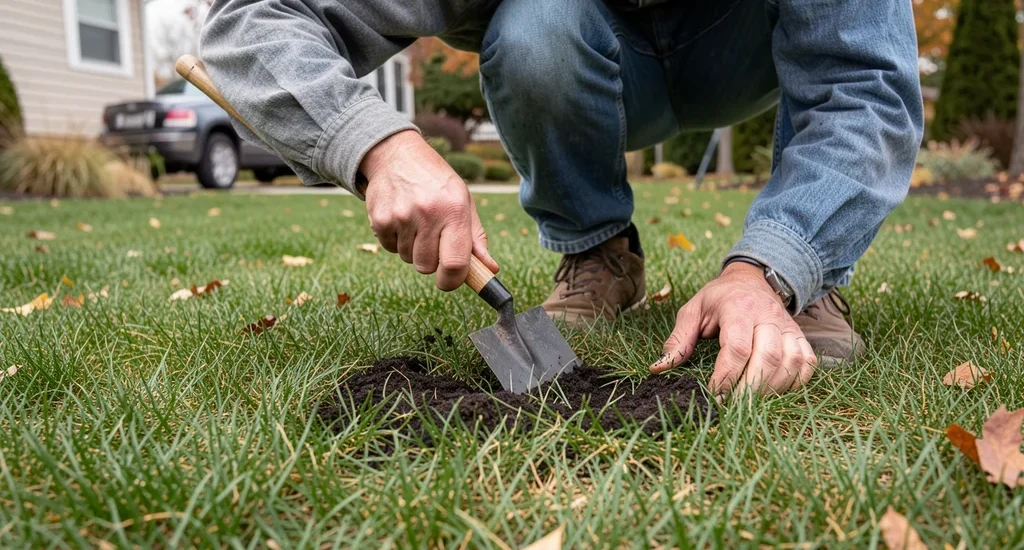
As the temperatures drop and leaves begin to change, giving your lawn the right nutrients now sets the stage for a lush, vibrant yard next year. How to fertilize lawn in fall is a question every homeowner should answer before winter arrives, as this is the most critical time to strengthen roots and promote healthy growth. Doing it correctly ensures your grass survives the cold and bounces back stronger.
Fertilizing your lawn in fall delivers essential nutrients that promote root growth and repair summer damage. Apply a slow-release, high-nitrogen fertilizer when grass is still actively growing but temperatures are cooler, typically 6-8 weeks before the first frost.
Why Fall Fertilization Is the Most Important Feeding of the Year
Many homeowners focus on spring fertilization, but fall is actually the optimal time to feed your lawn. During this season, grass shifts its energy from top growth to root development, making it more receptive to nutrients. Cool temperatures and consistent moisture help fertilizer work effectively without the risk of burning the grass.
According to the Turfgrass Science program at Penn State University, fall fertilization can improve root density by up to 30% compared to spring feeding. This means your lawn will be better equipped to withstand winter stress and bounce back quickly in the spring. Additionally, fall feeding helps repair damage from summer heat, drought, and foot traffic.
- Stronger root systems develop in cooler weather, leading to healthier grass
- Weed prevention improves as thick grass crowds out unwanted plants
- Disease resistance increases with proper fall nutrition
- Faster green-up occurs in spring with fall-fed lawns
- Nutrient storage happens as grass builds reserves for winter
Tip: Test your soil before fertilizing. A soil test reveals exactly what nutrients your lawn needs and helps you avoid over-application.
When to Fertilize Your Lawn in Fall
Timing is everything when it comes to fall lawn care. The ideal window for fertilization depends on your grass type and local climate. For cool-season grasses like Kentucky bluegrass, tall fescue, and ryegrass, late summer to early fall (late August through September) is prime time.
A second application can follow 6-8 weeks later, just before winter dormancy sets in.
Warm-season grasses like Bermuda, Zoysia, and St. Augustine have different needs. These grasses go dormant in winter, so their last feeding should occur in early fall, about 4-6 weeks before the first expected frost.
Fertilizing too late can stimulate new growth that will be damaged by cold weather.
| Grass Type | First Fall Feeding | Second Fall Feeding |
|---|---|---|
| Cool-Season (KBG, Fescue, Rye) | Late August – Early September | Mid-October – Early November |
| Warm-Season (Bermuda, Zoysia, St. Augustine) | Early September | Not Recommended |
The University of Nebraska-Lincoln Extension recommends applying fertilizer when grass is actively growing but not during extreme heat. For most regions, this means daytime temperatures between 60-75°F (15-24°C). Always check your local frost dates and adjust accordingly.
Choosing the Right Fertilizer for Fall Lawn Care
Not all fertilizers are created equal, especially for fall applications. The ideal fall fertilizer has a higher nitrogen content to promote leaf and root growth, with a balanced amount of phosphorus and potassium for overall plant health. Look for a product with a nitrogen-phosphorus-potassium (NPK) ratio like 24-0-11 or 20-5-10.
Slow-release fertilizers are particularly effective in fall because they feed your lawn gradually over several weeks. This matches the grass’s natural growth pattern and reduces the risk of nutrient runoff. Organic options, such as compost or manure-based fertilizers, also work well but may require more frequent applications.
| Fertilizer Type | NPK Ratio Example | Best For | Duration |
|---|---|---|---|
| Slow-Release Synthetic | 24-0-11 | Cool-season grasses | 6-8 weeks |
| Organic Compost | 5-3-4 | All grass types | 4-6 weeks |
| Winterizer Blend | 10-0-20 | Late fall application | 3-4 months |
| Liquid Fertilizer | 20-5-10 | Quick nutrient boost | 2-4 weeks |
For the best results, consider a two-step approach. Start with a balanced fertilizer in early fall, then apply a winterizer blend (high in potassium) 6-8 weeks later. This combination ensures your lawn gets the right nutrients at the right time.
Important: Avoid fertilizers with high phosphorus content unless your soil test indicates a deficiency. Excess phosphorus can run off into waterways and cause environmental harm.
Step by Step Guide to Fertilizing Your Lawn in Fall
Proper application is just as important as choosing the right fertilizer. Follow these steps to ensure even coverage and maximum effectiveness. The process is straightforward but requires attention to detail for the best results.
- Mow and Prepare
Cut your grass to about 2-2.5 inches for cool-season grasses or 1-1.5 inches for warm-season types. This height allows fertilizer to reach the soil more effectively. Remove any leaves or debris that could block the fertilizer from reaching the grass.
- Water the Lawn
Water your lawn lightly 1-2 days before applying fertilizer. Moist soil helps the granules stick and prevents them from washing away. Avoid fertilizing right after heavy rain, as the nutrients may run off before they can be absorbed.
- Calibrate Your Spreader
Whether you’re using a broadcast, drop, or handheld spreader, proper calibration is crucial. Set your spreader according to the manufacturer’s instructions for the specific fertilizer you’re using. Test the setting on a small area first to ensure even distribution.
- Apply the Fertilizer
Start at one corner of your lawn and walk in straight lines, slightly overlapping each pass to avoid missing spots. For broadcast spreaders, walk at a normal pace. For drop spreaders, be especially careful around edges and obstacles.
Apply fertilizer in two perpendicular directions (north-south and east-west) for the most even coverage. This cross-hatching technique helps prevent streaks or uneven growth.
- Water After Application
Lightly water your lawn after fertilizing to help the granules dissolve and penetrate the soil. This step is especially important for granular fertilizers. Use about 0.25 inches of water, enough to moisten the soil without causing runoff.
- Clean Up
Sweep any fertilizer that lands on driveways, sidewalks, or patios back onto the lawn. This prevents the nutrients from washing into storm drains and potentially harming local waterways. Store any leftover fertilizer in a dry, secure place.
How Much Fertilizer to Use for Fall Lawn Care
Applying the right amount of fertilizer is crucial for achieving a healthy lawn without causing harm. Too little won’t provide the needed nutrients, while too much can burn your grass and contribute to water pollution. The general recommendation is 0.5 to 1 pound of nitrogen per 1,000 square feet of lawn per application.
To calculate the exact amount, you’ll need to know your lawn’s size and the nitrogen percentage in your fertilizer. For example, if you’re using a 24-0-11 fertilizer (24% nitrogen) and want to apply 1 pound of nitrogen per 1,000 sq ft:
- 1 pound ÷ 0.24 = 4.17 pounds of fertilizer per 1,000 sq ft
- For a 5,000 sq ft lawn: 4.17 × 5 = 20.85 pounds total
| Lawn Size (sq ft) | 24-0-11 Fertilizer Needed (lbs) | 20-5-10 Fertilizer Needed (lbs) |
|---|---|---|
| 1,000 | 4.2 | 5.0 |
| 2,500 | 10.5 | 12.5 |
| 5,000 | 21.0 | 25.0 |
| 10,000 | 42.0 | 50.0 |
The Michigan State University Extension advises that homeowners should never apply more than 1 pound of nitrogen per 1,000 square feet in a single application. For clay soils, you can err on the higher side of the range, while sandy soils may need slightly less to prevent leaching.
Warning: Over-fertilizing can cause fertilizer burn, which appears as brown or yellow patches on your lawn. If this happens, water the area thoroughly to dilute the excess nutrients.
Common Mistakes to Avoid When Fertilizing in Fall
Even with the best intentions, many homeowners make mistakes that can reduce the effectiveness of their fall fertilization efforts. Being aware of these common pitfalls can help you achieve better results and avoid damaging your lawn.
- Fertilizing at the wrong time
Applying fertilizer too early in fall can promote top growth that will be damaged by frost. Too late, and the grass won’t have time to absorb the nutrients before going dormant. Stick to the recommended timing for your grass type.
- Using the wrong fertilizer type
Spring fertilizers are often high in nitrogen for quick greening, while fall fertilizers should have a more balanced or potassium-heavy formula. Using the wrong type can lead to weak root development or excessive top growth.
- Skipping the soil test
Without knowing your soil’s current nutrient levels, you might be adding what’s already abundant or missing what’s deficient. A soil test every 2-3 years ensures you’re applying the right nutrients in the right amounts.
- Uneven application
Inconsistent spreading leads to patchy growth, with some areas getting too much fertilizer and others too little. Always calibrate your spreader and use the cross-hatching technique for even coverage.
- Forgetting to water
Fertilizer needs moisture to activate and reach the roots. Failing to water before or after application can result in wasted product and poor results.
- Ignoring weather conditions
Applying fertilizer right before heavy rain can wash away the nutrients before they can be absorbed. Similarly, fertilizing during a drought can stress the grass. Check the forecast and choose a day with light rain or plan to water afterward.
According to a study by the Professional Lawn Care Association of America, nearly 60% of homeowners over-apply fertilizer, leading to wasted money and potential environmental harm. Always measure carefully and follow package instructions.
Additional Fall Lawn Care Tips for Best Results
Fertilization is just one part of a comprehensive fall lawn care routine. Combining fertilization with other seasonal tasks will give your lawn the best chance to thrive. These additional steps help create the ideal environment for your grass to absorb nutrients and prepare for winter.
- Aerate Compacted Soil
Core aeration removes small plugs of soil, allowing water, air, and nutrients to penetrate deeper into the root zone. This is especially important for lawns with heavy clay soil or high foot traffic. The best time to aerate is in early fall, before your first fertilization.
Aeration also helps with thatch control. A thatch layer thicker than 0.5 inches can prevent water and nutrients from reaching the soil. Aerating breaks up this layer and promotes its decomposition.
- Overseed Thin Areas
Early fall is the perfect time to overseed your lawn. The cooler temperatures and consistent moisture create ideal conditions for seed germination. After aerating, spread grass seed over thin or bare areas, then lightly rake to ensure good seed-to-soil contact.
Choose a seed blend that matches your existing grass type. For best results, use a starter fertilizer with your new seed to give it a nutritional boost.
- Control Weeds
Fall is also an excellent time to tackle weeds. Many broadleaf weeds, like dandelions and clover, are actively absorbing nutrients in fall, making them more susceptible to herbicides. Apply a selective herbicide to target weeds without harming your grass.
For a more natural approach, manual removal or spot treatment with vinegar can be effective for small weed problems. Just be careful with vinegar, as it can also harm your grass.
- Adjust Mowing Height
As fall progresses, gradually lower your mowing height. For the final mowing of the season, cut your grass slightly shorter than usual (about 1.5-2 inches for cool-season grasses). This helps prevent snow mold and other winter diseases.
However, avoid cutting more than one-third of the grass blade length at any one time, as this can stress the grass. Always use a sharp mower blade to prevent tearing the grass.
- Clean Up Leaves
A thick layer of leaves can smother your grass and prevent sunlight from reaching the blades. While a light covering isn’t harmful, remove heavy leaf buildup promptly. You can use a rake, leaf blower, or mulching mower to manage leaves.
If you choose to mulch leaves with your mower, make sure they’re dry and not too thick. The mulched leaves will decompose and add organic matter to your soil.
| Task | Best Time | Frequency |
|---|---|---|
| Core Aeration | Early Fall | Every 1-2 years |
| Overseeding | Early Fall | As needed |
| Weed Control | Early to Mid Fall | As needed |
| Leaf Removal | Throughout Fall | Weekly as needed |
Frequently Asked Questions
Can I fertilize my lawn in fall if it’s already brown?
Yes, you can and should fertilize a brown lawn in fall. Brown grass is often dormant due to summer stress, and fall fertilization helps it recover and build stronger roots. The nutrients will be stored and used for spring regrowth.
However, if the brown areas are dead (not dormant), you may need to overseed those spots.
How long after fertilizing can I mow my lawn?
Wait at least 2-3 days after fertilizing before mowing your lawn. This gives the fertilizer time to dissolve and begin working. Mowing too soon can remove the fertilizer granules before they’ve had a chance to penetrate the soil.
Always mow when the grass is dry to prevent spreading the fertilizer unevenly.
Is it better to fertilize in fall or spring?
Fall is generally better for fertilization because it strengthens roots and prepares the lawn for winter. Spring fertilization is important too, but it’s more about promoting top growth and greening. For the healthiest lawn, implement a year-round fertilization schedule with emphasis on fall feeding.
Can I use the same fertilizer for both fall applications?
It’s better to use different fertilizers for your early fall and late fall applications. For the first feeding, use a balanced fertilizer with a good amount of nitrogen. For the second (winterizer) application, choose a fertilizer higher in potassium to help with winter hardiness and disease resistance.
What should I do if it rains right after I fertilize?
If light rain occurs within a day of fertilizing, it can actually help activate the fertilizer. However, if heavy rain is expected within a few hours of application, it’s best to postpone fertilizing. Heavy rain can wash away the fertilizer before it has a chance to work.
If this happens, you may need to reapply.
Final Thoughts
Fertilizing your lawn in fall is one of the most effective ways to ensure a healthy, vibrant yard year-round. By choosing the right fertilizer, applying it at the correct time, and combining it with other fall lawn care tasks, you’ll give your grass the best chance to survive winter and thrive next spring. How to fertilize lawn in fall properly means paying attention to timing, technique, and follow-up care.
With these tips and a little effort, you’ll be rewarded with a lawn that’s the envy of your neighborhood.