Last Updated on October 22, 2026 by D. Ruddy
Preserving the sweet taste of summer peaches is simple with the right method. Canning peaches in light syrup keeps them flavorful while reducing sugar content compared to heavy syrup options. This guide walks you through the process step by step, ensuring your peaches stay fresh and delicious for months.
You can safely can peaches in light syrup by packing them in jars with a 20-30% sugar solution, processing in a water bath for 20-30 minutes depending on jar size. This method preserves texture and natural sweetness without overpowering sugar content.
What You Need for Canning Peaches in Light Syrup
Before starting, gather all necessary equipment and ingredients. Having everything ready streamlines the process and prevents delays that could affect food safety.
You’ll need fresh, ripe peaches—about 17-20 pounds for a canner load of 7 quarts or 11 pounds for 9 pints. Choose firm peaches that yield slightly to pressure for the best results. Overripe peaches turn mushy during processing.
- Fresh peaches (17-20 lbs for quarts, 11 lbs for pints)
- Water bath canner with rack
- Glass canning jars with lids and bands (sterilized)
- Canning salt (optional, ½ tsp per quart)
- Granulated sugar (for light syrup: 2-¼ to 3-¾ cups per gallon of water)
- Lemon juice (bottled, for acidity: 2 tbsp per quart, 1 tbsp per pint)
- Jar lifter, lid lifter, bubble remover, and headspace tool
- Large pot for syrup and blanching
| Jar Size | Peaches Needed (lbs) | Light Syrup (cups per gallon) | Lemon Juice |
|---|---|---|---|
| Pints | 11 lbs | 2¼ cups sugar + 5¾ cups water | 1 tbsp per pint |
| Quarts | 17-20 lbs | 3¾ cups sugar + 4¼ cups water | 2 tbsp per quart |
Light syrup uses less sugar than medium or heavy syrups, making it ideal for those who prefer a subtler sweetness. Adjust sugar levels slightly based on peach ripeness—sweeter peaches need less sugar.
Choosing the Best Peaches for Canning
Not all peaches are created equal when it comes to canning. The best varieties for canning peaches in light syrup are freestone peaches, which have pits that separate easily from the flesh. Clingstone peaches work but require more effort to remove the pit.
Look for peaches that are tree-ripened, firm, and free of bruises. Slightly underripe peaches hold their shape better during processing, while overripe ones may turn to mush. Heirloom varieties like Elberta, Redhaven, or O’Henry are popular choices for their rich flavor and texture.
Tip: Buy peaches in season (late summer) for the best flavor and price. Visit local farmers’ markets for freshly picked options that haven’t traveled long distances.
- Freestone vs. Clingstone: Freestone peaches have pits that fall away easily, while clingstone pits stick to the flesh. Freestone is preferred for canning.
- Size Matters: Medium to large peaches (2½-3 inches in diameter) are easier to peel and pack into jars.
- Color and Aroma: Ripe peaches have a fragrant smell and a golden-yellow color with a slight blush. Avoid green or overly soft peaches.
- Organic vs. Conventional: Organic peaches may have thinner skins, which can be easier to peel but may require more careful handling.
| Peach Variety | Type | Best For | Flavor Profile |
|---|---|---|---|
| Elberta | Freestone | Canning, eating fresh | Sweet, juicy, classic peach flavor |
| Redhaven | Freestone | Canning, baking | Balanced sweet-tart, firm texture |
| O’Henry | Freestone | Canning, preserves | Rich, syrupy, low acid |
According to the USDA, freestone peaches make up about 60% of commercial production, making them widely available for home canners. Always taste-test a peach before buying in bulk to ensure quality.
Preparing Peaches for Canning
Proper preparation is key to achieving perfect canned peaches. Start by washing the peaches thoroughly under cool running water to remove dirt and any residue. Gently rub the surface with your hands or a soft brush to clean without bruising.
Next, peel the peaches. The easiest method is blanching: dip peaches in boiling water for 30-60 seconds, then transfer them to an ice bath. The skins will slip off easily.
For firmer peaches, you may need to blanch for up to 90 seconds. Alternatively, use a vegetable peeler, but this method can remove more flesh.
- Wash: Rinse peaches under cool water and pat dry.
- Blanch: Boil water in a large pot. Cut an “X” on the bottom of each peach to help peeling. Submerge peaches in boiling water for 30-90 seconds.
- Cool: Immediately transfer peaches to an ice bath for 1-2 minutes to stop cooking.
- Peel: Remove skins starting from the “X” mark. Use a paring knife if needed.
- Pit: Cut peaches in half along the seam and twist to remove the pit. For halves, leave whole; for slices, cut into uniform wedges.
- Prevent Browning: Keep peeled peaches in a solution of 1 gallon water + 1 cup lemon juice (or 1 tbsp ascorbic acid) until ready to pack.
Warning: Do not let peaches soak in the anti-browning solution for more than 4-6 hours, as they may absorb too much liquid and become waterlogged.
Peach slices should be ½ to ¾ inch thick for even cooking and attractive jars. Halves are popular for gift-giving and desserts, while slices work well for pies and cobblers. Consistency in size ensures even heating during processing.
Making Light Syrup for Canning
Light syrup strikes the perfect balance between preserving the peaches’ natural flavor and adding just enough sweetness. Unlike heavy syrup (50% sugar) or medium syrup (30-40%), light syrup uses about 20-25% sugar, making it a healthier option without sacrificing taste.
To make light syrup, combine sugar and water in a large pot and heat until the sugar dissolves completely. Do not boil vigorously, as this can create a thicker syrup than desired. You’ll need about 5-6 cups of syrup for every 7 quarts of peaches, depending on how much liquid the fruit absorbs.
| Syrup Type | Sugar per Gallon Water | Yield (cups) | Best For |
|---|---|---|---|
| Extra Light | 1¾ cups | 6½ cups | Very sweet peaches, low-sugar diets |
| Light | 2¼ to 3¾ cups | 6 to 7 cups | Most peach varieties, balanced sweetness |
| Medium | 4¼ cups | 7 cups | Tart peaches, long-term storage |
For a gallon of light syrup, use 2¼ to 3¾ cups of sugar. This range allows you to adjust based on the natural sweetness of your peaches. Taste the syrup before packing—it should be lightly sweet but not overpowering.
- Sugar Alternatives: You can substitute up to half the sugar with honey or maple syrup, but this may alter the flavor and color. Note that honey is not recommended for water bath canning due to potential botulism risk in low-acid foods.
- Spiced Syrup: Add cinnamon sticks, vanilla beans, or lemon zest to the syrup while heating for extra flavor. Remove spices before packing.
- Clear Syrup: Strain the syrup through a fine-mesh sieve to remove any undissolved sugar crystals before use.
- Temperature: Syrup should be hot when packed over peaches to prevent jar breakage from temperature shock.
Packing Peaches into Jars
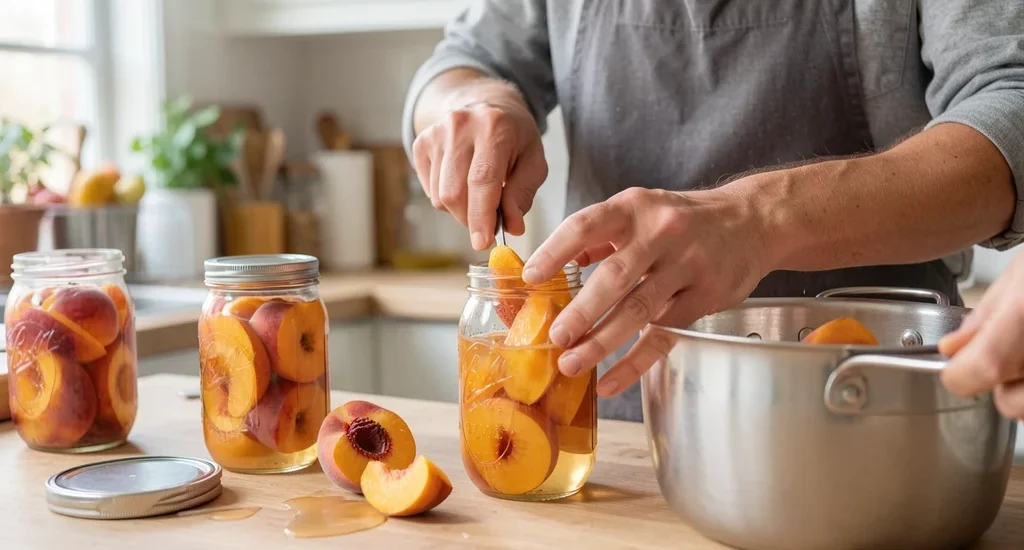
Packing peaches properly ensures they retain their shape, color, and texture. You can choose between raw pack and hot pack methods. Raw pack involves filling jars with uncooked peaches and covering with hot syrup, while hot pack means pre-cooking the peaches in syrup before jar packing.
For canning peaches in light syrup, hot pack is generally preferred because it removes air from the peaches, resulting in a better vacuum seal and less floating. However, raw pack is faster and works well for firm, ripe peaches. Both methods are safe as long as proper processing times are followed.
Raw Pack Method
- Fill clean, hot jars with peeled and pitted peaches, leaving ½ inch headspace for pints and 1 inch for quarts.
- For halves, pack cavity side down. For slices, pack vertically for an attractive presentation.
- Ladle hot light syrup over peaches, maintaining the required headspace. Use a bubble remover to release air bubbles.
- Wipe jar rims with a clean, damp cloth to ensure a good seal.
- Adjust lids and process according to the recommended time for your altitude.
Hot Pack Method
- In a large pot, combine peaches and hot light syrup. Bring to a gentle boil and simmer for 5 minutes.
- Using a slotted spoon, fill jars with hot peaches, packing tightly but without crushing.
- Ladle hot syrup over peaches, leaving ½ inch headspace for pints and 1 inch for quarts.
- Remove air bubbles with a non-metallic tool. Wipe rims and adjust lids.
Important: Always leave the recommended headspace to allow for expansion during processing. Insufficient headspace can cause jars to overflow or fail to seal properly.
- Pack Tightly but Gently: Peaches will shrink slightly during processing, so pack them snugly to minimize floating.
- Mix Sizes: Use a combination of halves and quarters in a jar for a visually appealing look.
- Avoid Overfilling: Too many peaches in a jar can prevent proper heat penetration, leading to unsafe canning.
- Check for Bruises: Discard any peaches with bruises or bad spots, as they can spoil the entire jar.
Processing Peaches in a Water Bath Canner
Processing is the critical step that ensures your canned peaches are safe to store at room temperature. A water bath canner is sufficient for peaches because their natural acidity (pH below 4.6) prevents the growth of harmful bacteria like Clostridium botulinum.
Fill the canner with enough water to cover jars by 1-2 inches. Heat the water to 140°F (60°C) for raw pack or 180°F (82°C) for hot pack. This prevents jar breakage from sudden temperature changes.
Place jars on the rack, ensuring they don’t touch each other or the sides of the canner.
| Jar Size | Processing Time (Pints) | Processing Time (Quarts) |
|---|---|---|
| 0-1,000 ft | 20 minutes | 25 minutes |
| 1,001-3,000 ft | 25 minutes | 30 minutes |
| 3,001-6,000 ft | 30 minutes | 35 minutes |
| 6,001+ ft | 35 minutes | 40 minutes |
According to the National Center for Home Food Preservation, processing times account for altitude because water boils at lower temperatures at higher elevations, requiring longer processing to achieve the same sterilization effect.
- Load the Canner: Place jars on the rack, ensuring they are covered by 1-2 inches of water. Add more boiling water if needed.
- Bring to a Boil: Cover the canner and bring the water to a full rolling boil before starting the timer.
- Process: Maintain a gentle, steady boil for the entire processing time. Do not start counting until the water is fully boiling.
- Cool Down: After processing, turn off the heat and let the canner sit undisturbed for 5 minutes. Then, remove jars and place them on a towel-lined countertop.
- Cool Jars: Let jars cool for 12-24 hours without touching or tightening lids. You may hear popping sounds as the lids seal.
Tip: If a jar doesn’t seal within 24 hours, refrigerate it and use within a week, or reprocess with a new lid within 24 hours.
Common Mistakes to Avoid When Canning Peaches
Even experienced canners can make mistakes that affect the safety or quality of their preserves. Being aware of these pitfalls helps ensure your canning peaches in light syrup turns out perfectly every time.
One of the most common errors is using overripe peaches. While they may seem sweeter, they often turn mushy during processing, resulting in an unappetizing texture. Always choose peaches that are ripe but still firm to the touch.
- Skipping the Acid: Peaches are acidic, but adding lemon juice ensures the pH stays low enough for safe water bath canning. Never omit this step, even if your peaches seem tart.
- Inconsistent Headspace: Too much or too little headspace can prevent proper sealing or cause siphoning. Always measure with a headspace tool.
- Underprocessing: Cutting processing time short can lead to spoilage. Follow the recommended times for your altitude and jar size precisely.
- Overfilling Jars: Packing too many peaches into a jar can prevent proper heat circulation, resulting in uneven processing.
- Using Damaged Jars: Chipped or cracked jars can break during processing. Always inspect jars for damage before use.
- Reusing Lids: Canning lids are designed for one-time use. Reusing them may result in failed seals.
- Ignoring Altitude: Processing times increase with altitude. Using sea-level times at higher elevations can lead to underprocessed food.
| Mistake | Risk | Solution |
|---|---|---|
| Not adding lemon juice | Botulism risk, color loss | Always add 2 tbsp per quart, 1 tbsp per pint |
| Using cold jars | Jar breakage | Keep jars hot until filling |
| Processing in oven or microwave | Uneven heating, unsafe food | Only use water bath or pressure canner |
According to a study by the University of Georgia, improper canning practices cause about 10% of home-canned food spoilage cases. Following tested recipes and procedures dramatically reduces this risk.
Storing and Using Canned Peaches
Once your jars are sealed and cooled, it’s time to store them properly. Label each jar with the contents and date using a permanent marker or label. Store jars in a cool, dark, dry place like a pantry or basement.
Avoid areas with temperature fluctuations, such as near a stove or in direct sunlight.
Properly canned peaches in light syrup will maintain their quality for 12-18 months. While they remain safe to eat beyond this time, the color, texture, and flavor may degrade. For best results, use your canned peaches within a year.
- Ideal Storage Conditions:
- Temperature: 50-70°F (10-21°C)
- Humidity: Below 60%
- Light: Minimal to none
- Signs of Spoilage:
- Lid bulging or leaking
- Mold or unusual growth
- Foul or off odors
- Cloudy liquid or bubbles
- Slimy texture
If you notice any of these signs, discard the jar immediately without tasting.
- Using Canned Peaches:
- Drain and rinse for fresh peach texture in salads or yogurt
- Use syrup in smoothies or cocktails
- Add to oatmeal or pancakes for a sweet topping
- Incorporate into baked goods like cobblers, pies, or muffins
- Blend into sauces or chutneys for savory dishes
Important: If a jar loses its seal during storage, refrigerate it immediately and use within a week.
Frequently Asked Questions
Can I can peaches without sugar?
Yes, you can can peaches without sugar by packing them in water or their own juice. However, the peaches may have a blander taste and lighter color. Adding 1-2 tablespoons of lemon juice per quart is still necessary for safety.
The texture may also be slightly softer compared to peaches packed in syrup.
How do I prevent peaches from floating in the jar?
Floating occurs when air is trapped in the peaches or jar. To minimize this, use the hot pack method, which removes more air. Pack peaches tightly but gently, and always remove air bubbles with a non-metallic tool before sealing.
Processing time also helps—floating often decreases after 24-48 hours as the peaches absorb syrup.
Can I reuse the syrup from canned peaches?
Yes, the syrup from canned peaches can be reused for cooking, baking, or making beverages. Store it in the refrigerator for up to a week or freeze for longer storage. To reuse for canning, bring it to a boil and use it within 24 hours for the best safety and flavor.
Avoid reusing syrup more than once for canning.
Why did my canned peaches turn brown?
Peaches may turn brown due to oxidation, which occurs when the fruit is exposed to air before processing. To prevent this, work quickly when peeling and packing, and use an anti-browning solution (water + lemon juice or ascorbic acid) while preparing the peaches. Adding extra lemon juice to the syrup can also help maintain color.
Is it safe to can peaches in honey syrup?
It is not recommended to can peaches in honey syrup using a water bath canner. Honey has a pH above 4.6, which means it may not provide enough acidity to prevent botulism. If you wish to use honey, it’s safer to use a tested recipe from a reliable source that includes additional acid, or opt for pressure canning.
Always follow USDA-approved guidelines for canning with honey.
Final Thoughts
Canning peaches in light syrup is a rewarding way to preserve the taste of summer with a healthier twist. By following these steps—from selecting the right peaches to proper processing and storage—you can enjoy delicious, home-canned peaches all year. Whether you use them in desserts, breakfasts, or as a sweet snack, your efforts will be well worth it.
Happy canning!