Last Updated on October 22, 2026 by D. Ruddy
Transforming your backyard into a lush garden doesn’t require a big budget. With the best budget gardening tips, you can cultivate a thriving green space while keeping costs low. Whether you’re a beginner or a seasoned gardener, smart strategies like repurposing household items, choosing low-maintenance plants, and DIY solutions can help you grow more for less.
The best budget gardening tips focus on reusing materials, selecting cost-effective plants, and maximizing space. Start with composting, seed saving, and upcycling containers to cut expenses by up to 50 percent.
Start with a Smart Garden Plan
A well-thought-out garden plan prevents waste and ensures every dollar spent goes further. Before buying anything, sketch your garden layout, considering sunlight, soil quality, and plant compatibility. Group plants with similar water and sunlight needs together to save on resources.
- Assess your space – Measure the area and note sunny vs. shady spots.
- Choose low-maintenance plants – Opt for perennials, which regrow yearly, over annuals.
- Prioritize essentials – Focus on soil quality and water access before decorative elements.
- Use free planning tools – Apps like Garden Planner or SketchUp offer free versions.
- Rotate crops – Avoid planting the same vegetables in the same spot yearly to prevent soil depletion.
Tip: Use graph paper to map out your garden scale. This helps visualize spacing and prevents overcrowding.
According to the National Gardening Association, home gardeners can save an average of $530 annually by growing their own produce. Planning ahead ensures you maximize this potential.
Repurpose Household Items for Gardening
One of the best budget gardening tips is to reuse items you already own. Many everyday objects can serve as plant containers, trellises, or garden decor. This reduces waste and saves money on expensive garden supplies.
| Household Item | Gardening Use | How to Prepare |
|---|---|---|
| Plastic bottles | Seedling pots | Cut the top off, poke drainage holes in the bottom, and fill with soil. |
| Egg cartons | Seed starters | Fill each section with soil and plant seeds. Cut apart and plant directly in the ground. |
| Old ladders | Vertical garden | Lean against a wall and place potted plants on each rung. |
| Wooden pallets | Raised beds | Disassemble and reassemble into a frame. Line with landscape fabric. |
| Broken terracotta pots | Drainage layer | Place pieces at the bottom of containers to improve drainage. |
Repurposing items not only saves money but also reduces environmental waste. The EPA reports that only 9% of plastic waste is recycled in the U.S., so giving these items a second life in your garden makes a tangible difference.
Create Your Own Compost at Home
Composting is a cornerstone of the best budget gardening tips because it turns kitchen scraps and yard waste into nutrient-rich soil. Store-bought compost can be expensive, but making your own costs almost nothing and improves soil health dramatically.
- Choose a composting method – Use a bin, pile, or even a simple trash can with holes drilled in it.
- Balance green and brown materials – Green (nitrogen-rich) includes fruit peels and grass clippings. Brown (carbon-rich) includes dry leaves and cardboard.
- Layer your materials – Alternate between green and brown layers, each about 2-4 inches thick.
- Keep it moist – Your compost should be damp like a wrung-out sponge. Add water if it’s too dry.
- Turn the pile regularly – Use a shovel or pitchfork to mix the materials every 1-2 weeks for oxygen flow.
- Avoid certain items – Never compost meat, dairy, or diseased plants, as they attract pests or spread pathogens.
Important: A well-maintained compost pile can produce usable compost in as little as 2-3 months. Speed up the process by chopping materials into smaller pieces.
Compost improves soil structure, retains moisture, and provides essential nutrients. The Rodale Institute found that compost can increase soil organic matter by 1-3% annually, significantly boosting plant growth.
Save Money on Plants with These Strategies
Plants can be one of the biggest expenses in gardening, but there are several ways to cut costs without sacrificing variety or quality. From seed swapping to propagation, these methods ensure you get more plants for your money.
Grow from Seeds
Buying seeds is far cheaper than purchasing mature plants. A packet of seeds often costs the same as a single plant but can yield dozens. Heirloom and open-pollinated seeds allow you to save seeds from year to year, further reducing costs.
- Start indoors – Use egg cartons or recycled containers to start seeds before the last frost.
- Label everything – Keep track of what you’ve planted with DIY labels (e.g., popsicle sticks).
- Use a heat mat – Seedlings need warmth to germinate. A DIY heat mat can be made with a string of holiday lights under a tray.
- Thin seedlings – Once sprouted, thin to the strongest plants to avoid overcrowding.
Propagate from Cuttings
Many plants can be grown from cuttings, a free way to expand your garden. This works especially well with herbs like mint, rosemary, and basil, as well as many perennials and shrubs.
- Take a 4-6 inch cutting from a healthy plant, just below a leaf node.
- Remove the lower leaves, leaving a few at the top.
- Dip the cut end in rooting hormone (optional but helpful).
- Place the cutting in water or moist potting soil.
- Keep it in bright, indirect light and wait for roots to form (usually 2-4 weeks).
Divide Existing Plants
Perennials like hostas, daylilies, and irises can be divided every few years to create more plants. This is best done in early spring or fall when the plants are dormant.
| Plant Type | Best Time to Divide | Method |
|---|---|---|
| Daylilies | Early spring or fall | Dig up the clump, separate into smaller sections with roots, and replant. |
| Hostas | Spring or fall | Use a knife or spade to divide the crown into sections. |
| Irises | Summer (after blooming) | Dig up rhizomes, cut into sections with at least one fan of leaves, and replant. |
Warning: Avoid dividing plants during extreme heat or drought, as this can stress them. Always water plants thoroughly after dividing.
Seed swapping with neighbors or local gardening groups is another excellent way to diversify your garden for free. According to a survey by the National Gardening Association, 35% of gardeners participate in seed or plant swaps, saving an average of $50-$100 per year.
DIY Garden Tools and Equipment
You don’t need expensive tools to maintain a beautiful garden. Many everyday items can be repurposed or upgraded to serve as effective gardening tools. This approach aligns with the best budget gardening tips by reducing upfront costs.
Essential Tools You Can Make or Substitute
- Garden trowel – Use a sturdy kitchen spoon or an old butter knife for small digging tasks.
- Watering can – A large plastic jug with holes poked in the lid works perfectly.
- Plant markers – Write plant names on popsicle sticks, old blinds, or even painted rocks.
- Weed barrier – Lay down cardboard or newspaper under mulch to suppress weeds.
- Trellis – Use old wooden ladders, wire mesh, or even branches tied together.
- Garden kneeler – An old pillow or yoga mat can protect your knees while working.
Upcycle Old Tools
If you already have old or broken tools, don’t toss them. Many can be repaired or repurposed. For example:
- Rusty tools – Soak in white vinegar for a few hours, then scrub with steel wool to remove rust.
- Broken handles – Replace wooden handles with PVC pipes or reattach with strong glue.
- Old rakes or hoes – Use the metal head as a garden edger or for breaking up hard soil.
Tip: Clean and sharpen your tools regularly to extend their lifespan. A simple file can sharpen blades, and a rag dipped in oil can prevent rust.
A study by the University of California found that properly maintained tools can last 10-15 years, saving gardeners hundreds of dollars in replacement costs.
Use Water Wisely to Cut Costs
Watering can be a significant expense, especially in dry climates. Implementing water-saving techniques not only reduces your water bill but also promotes healthier plants by encouraging deeper root growth.
Install a Rainwater Harvesting System
Collecting rainwater is one of the most effective ways to reduce water costs. A simple system can be set up with a barrel and some basic supplies.
- Position barrels – Place them under downspouts to collect runoff from your roof.
- Use a screen – Cover the top with mesh to keep out debris and mosquitoes.
- Elevate the barrel – Put it on a stand to create water pressure for easier access.
- Connect a hose – Attach a spigot or hose to the bottom for easy watering.
- Use overflow valves – Direct excess water away from your home’s foundation.
Water Deeply and Infrequently
Shallow, frequent watering encourages weak root systems. Instead, water deeply and less often to promote stronger, drought-resistant plants.
- Check soil moisture by sticking your finger 1-2 inches into the soil. If it’s dry, it’s time to water.
- Water early in the morning to reduce evaporation.
- Focus on the base of the plant, not the leaves, to prevent disease.
- Use a soaker hose or drip irrigation to deliver water directly to the roots.
| Watering Method | Pros | Cons |
|---|---|---|
| Soaker hoses | Delivers water directly to roots, reduces evaporation | Can be expensive upfront, may clog |
| Drip irrigation | Highly efficient, customizable | Complex setup, requires maintenance |
| Hand watering | Precise, good for small gardens | Time-consuming, inconsistent |
| Rainwater harvesting | Free, eco-friendly | Depends on rainfall, requires storage |
According to the Environmental Protection Agency (EPA), outdoor water use accounts for nearly 9 billion gallons of water daily in the U.S., much of which is wasted due to inefficient watering practices. By adopting water-wise techniques, you can reduce your outdoor water use by 20-50%.
Choose Low-Cost, High-Impact Plants
Not all plants are created equal when it comes to cost and maintenance. Some plants offer more bang for your buck, whether through their hardiness, fast growth, or ability to thrive in poor conditions. Selecting these plants is a key part of the best budget gardening tips.
Best Budget-Friendly Plants
| Plant Type | Why It’s Budget-Friendly | Care Tips |
|---|---|---|
| Marigolds | Cheap seeds, pest-repellent | Full sun, well-drained soil, deadhead for continuous blooms |
| Zinnias | Easy to grow from seed, long bloom time | Full sun, moderate water, pinch back for bushier growth |
| Green beans | High yield, nitrogen-fixing | Full sun, well-drained soil, trellis for pole varieties |
| Swiss chard | Cut-and-come-again, cold-hardy | Partial sun, rich soil, harvest outer leaves first |
| Mint | Fast-growing, spreads easily | Partial shade, moist soil, contain roots to prevent spreading |
Perennials vs. Annuals
Perennials are a smart investment because they return year after year, eliminating the need to replant. Annuals, while often more colorful, require repurchasing each season.
- Top budget perennials:
- Daylilies – Tolerate a wide range of conditions.
- Black-eyed Susans – Drought-tolerant and low-maintenance.
- Hostas – Great for shady areas, easy to divide.
- Lavender – Drought-resistant, attracts pollinators.
- When to use annuals:
- For quick color in gaps.
- In containers for seasonal displays.
- To fill space while perennials establish.
Tip: Buy perennials in late summer or early fall when many nurseries offer discounts to clear out inventory.
The American Society for Horticultural Science reports that perennials can save gardeners up to 70% in long-term costs compared to annuals, as they don’t need to be replaced each year.
Natural Pest Control on a Budget
Pests can quickly derail a budget garden, but you don’t need expensive chemicals to keep them at bay. Natural pest control methods are not only cost-effective but also safer for your plants, your family, and the environment.
DIY Pest Sprays
Many common household items can be turned into effective pest deterrents. These sprays are easy to make and use ingredients you likely already have.
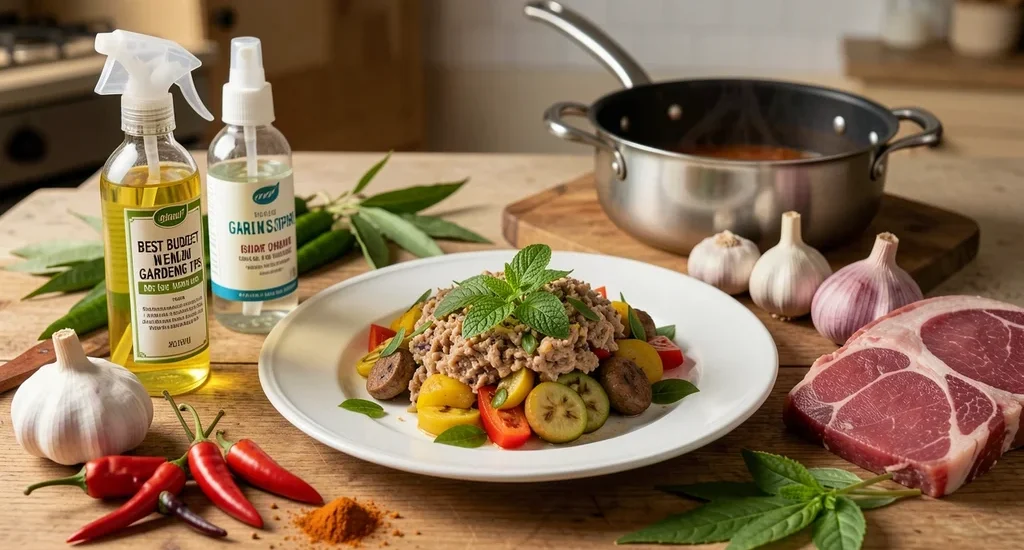
- Neem oil spray – Mix 1 teaspoon of neem oil, 1/2 teaspoon of mild soap, and 1 quart of water. Spray on plants to deter aphids, mites, and whiteflies.
- Garlic spray – Blend 2 garlic bulbs with 1 quart of water, strain, and add a teaspoon of dish soap. Effective against many pests, including beetles and caterpillars.
- Soap spray – Mix 1 tablespoon of liquid soap with 1 quart of water. Targets soft-bodied insects like aphids and spider mites.
- Chili pepper spray – Blend 1 tablespoon of chili powder, 1 quart of water, and a few drops of dish soap. Repels many pests with its strong scent.
Companion Planting
Companion planting involves growing certain plants together to deter pests, improve growth, or enhance flavor. This method reduces the need for pesticides and can improve your garden’s overall health.
| Plant | Good Companions | Pests Deterred |
|---|---|---|
| Tomatoes | Basil, marigolds, onions | Aphids, whiteflies, nematodes |
| Cucumbers | Radishes, dill, nasturtiums | Cucumber beetles, aphids |
| Carrots | Rosemary, sage, onions | Carrot flies |
| Cabbage | Dill, mint, thyme | Cabbage moths, aphids |
Encourage Beneficial Insects
Not all insects are pests. Many beneficial insects prey on garden pests, providing natural pest control. Attract these helpers by planting a variety of flowers and herbs.
- Ladybugs – Eat aphids, mites, and other soft-bodied insects. Attract with dill, fennel, and marigolds.
- Lacewings – Feed on aphids, caterpillars, and mealybugs. Plant cosmos, sweet alyssum, and yarrow.
- Praying mantises – Eat a wide range of pests, including beetles and caterpillars. Attract with tall grasses and shrubs.
- Parasitic wasps – Lay eggs inside pests like caterpillars and aphids. Plant small-flowered herbs like dill and parsley.
Important: Avoid using broad-spectrum pesticides, as they can kill beneficial insects along with pests. Stick to targeted, natural solutions.
A study by the University of California found that gardens with diverse plantings have 60% fewer pest problems than monoculture gardens, thanks to the presence of beneficial insects and other natural controls.
Frequently Asked Questions
How can I start a garden with no money?
Begin with seeds saved from store-bought produce or swapped with neighbors. Use repurposed containers like egg cartons or plastic bottles for seedlings. Collect rainwater for irrigation and make compost from kitchen scraps.
Many local libraries and community gardens also offer free seeds or plants.
What are the easiest vegetables to grow on a budget?
Some of the easiest and most cost-effective vegetables include green beans, zucchini, lettuce, radishes, and tomatoes. These plants are low-maintenance, grow quickly, and produce high yields. Start with seeds or small plants, and prioritize varieties labeled as disease-resistant.
How do I make my own fertilizer at home?
You can make a simple, effective fertilizer using household items. For example, mix 1 tablespoon of Epsom salt, 1 teaspoon of baking soda, and 1 gallon of water for a magnesium and sulfur boost. Another option is compost tea: steep compost in water for 24-48 hours, then strain and use to water plants.
Is it cheaper to grow your own food?
Yes, growing your own food can significantly reduce grocery bills. According to the National Gardening Association, a well-maintained vegetable garden can yield $600 worth of produce annually for an initial investment of around $70. The savings add up over time, especially with perennials and self-seeding plants.
How can I protect my garden from pests without chemicals?
Use natural methods like companion planting, DIY sprays (e.g., neem oil or garlic spray), and physical barriers (e.g., row covers or copper tape). Encourage beneficial insects by planting pollinator-friendly flowers. Regularly inspect plants for early signs of pests and remove them by hand when possible.
Final Thoughts
The best budget gardening tips focus on smart planning, repurposing materials, and leveraging natural resources. By starting small, reusing household items, and adopting cost-saving techniques like composting and seed saving, you can create a thriving garden without breaking the bank. Whether you’re growing vegetables, flowers, or herbs, these strategies ensure your garden is both beautiful and economical.