Last Updated on October 22, 2026 by D. Ruddy
Donating a riding lawn mower is a great way to give back to your community while freeing up space in your garage. Whether your mower is still in good condition or just taking up room, how to donate a riding lawn mower involves a few key steps to ensure the process is smooth and beneficial for both you and the recipient. From finding the right organization to preparing your equipment properly, this guide covers everything you need to know to make your donation count.
You can donate a riding lawn mower by contacting local charities, nonprofits, or vocational programs that accept equipment donations. Clean the mower, perform basic maintenance, and provide documentation like the manual or service records to increase its value.
Why Donate Your Riding Lawn Mower
Donating a riding lawn mower helps organizations that rely on outdoor equipment to maintain their facilities. Schools with agricultural programs, community gardens, and veterans’ groups often need reliable mowers but lack the budget to purchase new ones.
Environmental benefits also come into play. Instead of sending a functional machine to a landfill, you extend its lifespan and reduce waste. According to the Environmental Protection Agency, reusing items like lawn equipment prevents thousands of pounds of waste from entering landfills annually.
- Supports local nonprofits and educational programs
- Reduces environmental waste by reusing functional equipment
- Provides tax deduction opportunities for the donor
- Helps veterans, low-income families, or community projects
- Clears space in your garage or shed for new equipment
Where to Donate Your Riding Lawn Mower
Finding the right organization is the first step in the donation process. Many charities and nonprofits accept riding lawn mowers, but their requirements may vary. Some may only take working models, while others accept non-working mowers for parts or training purposes.
Start by checking with local organizations. Vocational schools, community colleges, and 4-H clubs often need equipment for their agricultural or landscaping programs. Habitat for Humanity ReStores accept working lawn equipment and sell it to fund their housing projects.
Other options include Goodwill, the Salvation Army, and local food banks that maintain community gardens.
| Organization | Accepts Riding Mowers? | Condition Required | Tax Deduction? |
|---|---|---|---|
| Habitat for Humanity ReStore | Yes | Working | Yes |
| Goodwill | Yes | Working or repairable | Yes |
| Salvation Army | Yes | Working | Yes |
| Local Vocational Schools | Yes | Any (for training) | Sometimes |
| Community Gardens | Yes | Working | No |
Before donating, call ahead to confirm the organization’s policies. Some may require a working demonstration, while others will accept the mower as-is for parts or repairs.
How to Prepare Your Riding Lawn Mower for Donation
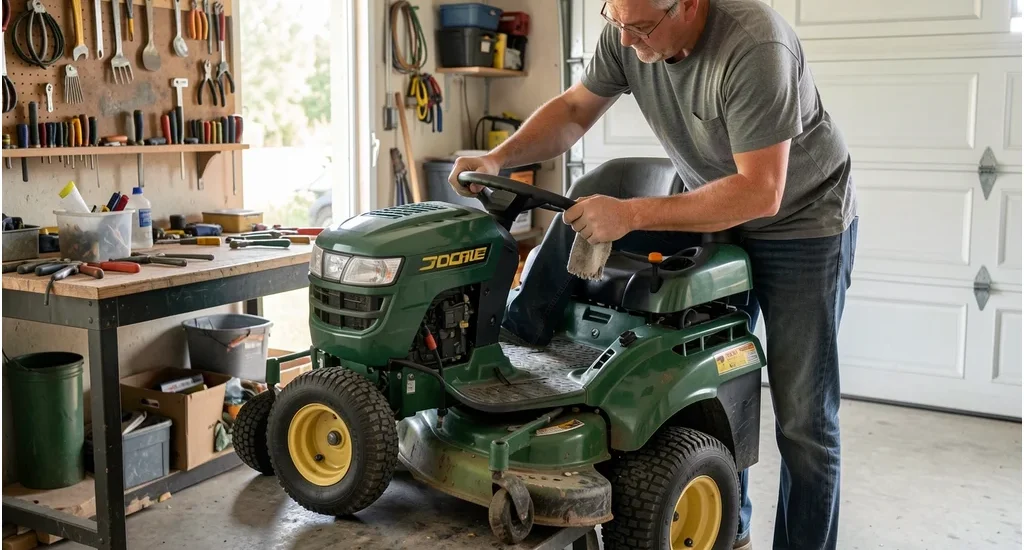
Preparing your riding lawn mower properly ensures the recipient gets a machine that’s ready to use. Start by giving it a thorough cleaning. Remove grass clippings, dirt, and debris from the deck, wheels, and engine area.
A pressure washer can help, but a hose and scrub brush work just as well for most models.
Next, perform basic maintenance. Check the oil level and top it off if needed. Replace the spark plug if it’s worn, and ensure the air filter is clean.
Sharpen or replace the mower blades if they’re dull or damaged. A well-maintained mower is more likely to be accepted and will provide better value to the recipient.
Tip: Take photos of your mower from multiple angles before donating. This helps the organization assess its condition and can be useful for your records.
- Clean the mower – Remove all dirt, grass, and debris from the deck, undercarriage, and engine.
- Check fluids – Top off oil, coolant, and hydraulic fluid if applicable.
- Inspect the battery – Ensure it’s charged and in good condition.
- Test the mower – Start it up and let it run for a few minutes to confirm it’s operational.
- Sharpen blades – Dull blades tear grass instead of cutting it cleanly.
- Gather documentation – Include the owner’s manual, service records, and any warranties.
- Remove personal items – Check for tools, keys, or other items you may have stored on the mower.
What Documents to Include With Your Donation
Providing the right documents with your donation can make the process smoother and may even help with tax deductions. Start with the owner’s manual, which helps the new owner understand how to operate and maintain the mower safely. If you’ve kept service records, include those as well to show the mower has been well-maintained.
If you plan to claim a tax deduction, ask the organization for a receipt. For donations over $250, the IRS requires a written acknowledgment from the charity. For donations over $500, you may need to file Form 8283 with your tax return.
Keep copies of all paperwork for your records.
- Owner’s manual – Essential for safe operation and maintenance.
- Service records – Shows the mower has been properly maintained.
- Warranty information – If still valid, transfer it to the new owner.
- Receipt from the organization – Required for tax deduction purposes.
- Bill of sale (if applicable) – Some organizations may provide this for your records.
Important: The IRS requires that the acknowledgment from the charity includes a description of the property, but not its value. It must also state whether the organization provided any goods or services in exchange for the donation.
How to Transport Your Riding Lawn Mower Safely
Transporting a riding lawn mower requires care to avoid damage to the machine or your vehicle. If the mower is operational, you may be able to drive it onto a trailer. Otherwise, you’ll need to load it using a ramp or a lift.
Always secure the mower with straps or chains to prevent it from shifting during transport.
If you’re not comfortable transporting the mower yourself, many organizations offer pickup services. Habitat for Humanity ReStore, for example, often has a truck and crew available to pick up large donations. Schedule the pickup in advance and ensure the mower is accessible on the day of the appointment.
- Check the mower’s weight – Most riding mowers weigh between 300-600 pounds. Ensure your trailer or truck can handle the load.
- Use a ramp or lift – If the mower isn’t operational, you’ll need a way to load it safely.
- Secure the mower – Use heavy-duty straps or chains to keep it in place during transport.
- Protect the mower – Cover it with a tarp to shield it from dirt and debris during transit.
- Drive carefully – Take corners slowly and avoid sudden stops to prevent the mower from shifting.
| Transport Method | Pros | Cons |
|---|---|---|
| Trailer | Can carry multiple mowers, easy loading with a ramp | Requires a trailer hitch, may need a permit for heavy loads |
| Truck Bed | No trailer needed, good for short distances | Limited space, may require a lift for loading |
| Organization Pickup | No transport hassle, often free | Need to schedule in advance, may not be available in all areas |
Tax Benefits of Donating a Riding Lawn Mower
Donating a riding lawn mower can provide tax benefits if you itemize deductions on your federal tax return. The amount you can deduct depends on the fair market value of the mower at the time of donation. For items valued under $5,000, you can determine the value yourself using resources like the IRS’s Publication 561 or online valuation guides.
For donations valued over $5,000, you’ll need a qualified appraisal. Keep in mind that the deduction is limited to 30% of your adjusted gross income (AGI) for most property donations. If your deduction exceeds this limit, you can carry it forward for up to five years.
Warning: The IRS does not allow deductions for donations to individuals or political organizations. Only donations to qualified 501(c)(3) organizations are tax-deductible.
- Fair market value – The price a willing buyer would pay for the mower in its current condition.
- Itemized deductions – You must itemize to claim the deduction; the standard deduction won’t include it.
- Form 8283 – Required for donations over $500, with an appraisal for items over $5,000.
- Receipt requirement – The charity must provide a written acknowledgment for donations over $250.
- AGI limits – Deductions are capped at 30% of your AGI for most property donations.
Common Mistakes to Avoid When Donating
Donating a riding lawn mower seems straightforward, but there are pitfalls to avoid. One common mistake is not preparing the mower properly. Donating a dirty, non-working mower may result in the organization refusing it or spending extra time and money to get it in working condition.
Always clean and perform basic maintenance before donating.
Another mistake is not researching the organization. Some charities may not accept lawn equipment, while others have specific requirements for the condition of the mower. Always call ahead to confirm their policies and avoid wasted time and effort.
- Not cleaning the mower – A dirty mower may be rejected or require extra work from the recipient.
- Ignoring maintenance – A mower that doesn’t start or has mechanical issues may not be accepted.
- Forgetting documentation – Without the owner’s manual or service records, the new owner may struggle with maintenance.
- Not checking tax rules – Failing to get a receipt or properly value the mower can lead to issues with your tax deduction.
- Choosing the wrong organization – Some charities don’t accept lawn equipment, so always confirm first.
Alternative Ways to Donate or Repurpose Your Mower
If you’re struggling to find an organization that accepts riding lawn mowers, consider alternative donation or repurposing options. Local farmers or neighbors with large properties may appreciate a free or low-cost mower. Online platforms like Freecycle, Craigslist, or Facebook Marketplace allow you to give away items directly to individuals in your community.
Another option is to repurpose the mower for parts. If the engine or transmission is still in good condition, you can sell or donate these components separately. Some hobbyists or small engine repair shops may be interested in salvaging parts for other projects.
- Sell for parts – List the mower on online marketplaces as a parts machine.
- Donate to a neighbor – Offer it to someone in your community who could use it.
- Trade-in programs – Some lawn equipment dealers offer trade-in credit for used mowers.
- Recycling programs – If the mower is beyond repair, check with local recycling centers for metal recycling.
- DIY projects – Repurpose the mower frame or engine for other projects, like a go-kart or generator.
Tip: If you’re unsure about the best way to repurpose your mower, post it on a local community board or online forum. You may find someone with a creative idea or a specific need for it.
Frequently Asked Questions
Can I donate a non-working riding lawn mower?
Yes, but it depends on the organization. Vocational schools or repair programs may accept non-working mowers for training purposes. However, most charities prefer working models.
Always call ahead to confirm the organization’s policy.
Do I need a receipt for tax purposes?
For donations over $250, the IRS requires a written acknowledgment from the charity. For smaller donations, a receipt is still recommended for your records. The acknowledgment should include a description of the property but not its value.
How do I determine the fair market value of my mower?
You can use online valuation guides, check similar listings on marketplaces like Craigslist or Facebook Marketplace, or consult the IRS’s Publication 561. For items valued over $5,000, a professional appraisal is required.
Can I donate a riding lawn mower to Goodwill?
Yes, Goodwill accepts working riding lawn mowers and some non-working models if they can be repaired. Call your local Goodwill to confirm their policies and schedule a pickup if needed.
What should I do if no organizations in my area accept riding lawn mowers?
Consider alternative options like selling the mower for parts, donating it directly to a neighbor or local farmer, or listing it on online platforms like Freecycle or Craigslist. You can also check with local recycling centers for metal recycling programs.
Final Thoughts
Donating a riding lawn mower is a rewarding way to give back to your community while freeing up space and potentially earning a tax deduction. Start by researching local organizations that accept lawn equipment, then prepare your mower by cleaning it and performing basic maintenance. Don’t forget to gather the necessary documents and arrange for safe transport.
By following these steps, you’ll ensure your donation makes a meaningful impact.