Last Updated on October 22, 2026 by D. Ruddy
If your garden plants are disappearing overnight, garden snails might be the culprits. These small mollusks can wreak havoc on vegetables, flowers, and herbs if left unchecked. While they play a role in the ecosystem, an infestation can quickly turn your thriving garden into a feeding ground.
This guide covers natural and chemical-free methods to manage snail populations without harming beneficial insects or the environment.
You can control garden snails naturally using barriers like copper tape, handpicking at night, and organic baits such as beer traps. These methods are safe for plants, pets, and wildlife while effectively reducing snail damage.
Why Garden Snails Are a Problem for Your Plants
Garden snails are nocturnal feeders, coming out at night to munch on leaves, stems, and even fruits. A single snail can consume up to half its body weight in plant material daily, and with their rapid reproduction rate, a few can turn into hundreds in weeks.
They leave behind a distinctive slime trail, which is not only unsightly but can also spread plant diseases. Their feeding habits often target young seedlings, making them particularly damaging in vegetable gardens and nurseries.
- Rapid reproduction – Each snail can lay up to 200 eggs in a season
- Nocturnal feeding – Most active during damp nights and early mornings
- Wide diet – They eat almost any plant material, including decaying matter
- Disease spread – Slime trails can transfer fungal spores between plants
- Soil impact – Their waste changes soil pH over time
| Plant Type | Snail Damage Risk |
|---|---|
| Leafy greens (lettuce, spinach) | High – Favorite target |
| Herbs (basil, parsley) | High – Tender leaves |
| Tomatoes and peppers | Medium – Fruits and leaves |
| Woody plants | Low – Rarely attacked |
According to the Royal Horticultural Society, garden snails can reduce crop yields by up to 40% in untreated gardens. Their preference for tender new growth makes them especially problematic for home gardeners trying to establish new plantings.
How to Identify a Garden Snail Infestation
Spotting snail damage early can save your plants. The most obvious sign is the silvery slime trail they leave behind. These trails are most visible in the morning when dew makes them more apparent.
Look for irregular holes in leaves, often with smooth edges rather than the jagged tears caused by other pests. Snails typically start feeding from the outer edges of leaves, working their way inward. Severely infested plants may appear skeletonized, with only the toughest veins remaining.
- Slime trails – Shiny, silvery lines on plants and soil
- Leaf damage – Irregular holes with smooth edges
- Missing seedlings – Young plants completely eaten overnight
- Snail sightings – Look under pots and mulch during the day
- Egg clusters – Small, translucent eggs in moist soil
Tip: Check for snails at dusk or dawn when they’re most active. Use a flashlight to spot them on plants and the soil surface.
| Sign | What It Means |
|---|---|
| Fresh slime trails | Active snails nearby |
| Holes in leaf centers | Recent feeding activity |
| Plants with only stems left | Severe infestation |
Natural Methods to Control Garden Snails
Chemical pesticides can harm beneficial insects and the environment. Fortunately, several natural methods effectively control garden snails while maintaining your garden’s ecological balance.
Physical barriers work by preventing snails from reaching your plants. Copper tape creates a mild electric charge when snails touch it, repelling them without harm. Crushed eggshells or diatomaceous earth create sharp barriers that deter snails from crossing.
Physical Barriers
- Copper tape – Create a 2-inch band around pots and beds
- Eggshells – Crush and spread around plants (needs replacement after rain)
- Diatomaceous earth – Food-grade powder that dehydrates snails
- Gritty materials – Sharp sand or gravel around plant bases
Manual Removal
- Go out at night with a flashlight when snails are active
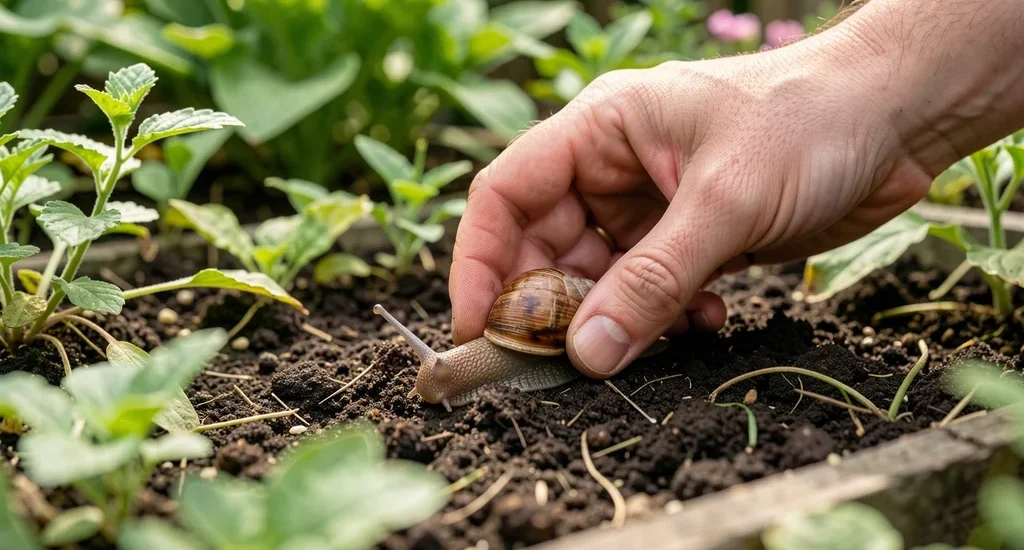
- Handpick snails and drop them in soapy water
- Check hiding spots: under pots, in dense foliage, near mulch
- Remove snails daily for best results
Natural Predators
- Birds – Encourage thrushes, blackbirds, and robins
- Ground beetles – Natural snail hunters in healthy soil
- Frogs and toads – Create a small pond to attract them
- Hedgehogs – Provide shelter and water sources
Important: If using diatomaceous earth, choose food-grade quality and reapply after rain or watering.
Effective Snail Traps and Baits
Traps can significantly reduce snail populations when used correctly. Beer traps are particularly effective because snails are attracted to the yeast in beer. Commercial iron phosphate baits work well and are safe for organic gardening.
Place traps in the evening when snails become active. Bury a shallow container (like a yogurt cup) so the rim is level with the soil. Fill it with beer or a sugar-water and yeast mixture.
Snails will crawl in and drown.
| Trap Type | Effectiveness | Best For |
|---|---|---|
| Beer traps | High | Large gardens |
| Yeast traps | Medium | Organic gardens |
| Iron phosphate baits | Very High | Severe infestations |
| Grapefruit halves | Medium | Small gardens |
How to Make a Beer Trap
- Take a shallow container (plastic cup or saucer)
- Bury it in the soil so the rim is at ground level
- Fill with cheap beer (snails aren’t picky)
- Cover with a loose lid to prevent rain dilution
- Empty and refill every 2-3 days
Warning: Beer traps can attract slugs too and may harm beneficial insects if not properly maintained. Use selectively.
Preventive Measures to Keep Snails Away
Prevention is always better than cure when dealing with garden snails. Creating an environment that’s less attractive to snails can save you significant time and effort in the long run.
Start with good garden hygiene. Remove debris, old boards, and dense mulch where snails can hide during the day. Regularly clean up fallen leaves and plant debris that provide both food and shelter for snails.
Garden Maintenance Tips
- Water in the morning – Allows soil to dry by evening when snails are active
- Remove hiding spots – Clear rocks, logs, and dense ground covers
- Use drip irrigation – Reduces moisture on plant surfaces
- Keep garden clean – Remove dead leaves and plant debris regularly
- Rotate crops – Avoid planting susceptible plants in the same spot yearly
Plant Selection
Some plants are naturally resistant to snails due to their texture, taste, or chemical composition. Incorporating these into your garden can create a natural barrier.
| Snail-Resistant Plants | Why They Resist |
|---|---|
| Rosemary | Strong scent and fuzzy leaves |
| Lavender | Aromatic oils deter snails |
| Thyme | Low-growing and fragrant |
| Geraniums | Hairy stems and leaves |
| Fuchsias | Toxic to snails |
Soil Management
- Improve drainage – Snails prefer moist, compacted soil
- Add organic matter – Well-composted material creates healthier soil
- Avoid overwatering – Let top inch of soil dry between waterings
- Use raised beds – Makes it harder for snails to access plants
Tip: Plant snail-resistant varieties around the perimeter of your garden to create a natural barrier that protects more vulnerable plants.
Common Mistakes to Avoid When Dealing With Garden Snails
Many gardeners unknowingly make mistakes that can worsen snail problems. Using salt as a snail killer, for example, is a common misconception. While salt does kill snails, it also harms the soil, making it infertile and potentially killing nearby plants.
Another frequent error is relying solely on one control method. Snails can adapt to single approaches, making integrated pest management the most effective strategy. Combining several natural methods usually yields the best results.
- Using salt – Damages soil and plants, only kills visible snails
- Overusing chemicals – Harms beneficial insects and soil health
- Ignoring prevention – Focusing only on killing snails rather than deterring them
- Inconsistent control – Applying methods sporadically instead of regularly
- Creating perfect hiding spots – Using thick mulches or leaving debris around plants
- Not checking at night – Missing the most active feeding period
| Mistake | Why It’s Bad | Better Approach |
|---|---|---|
| Salt barriers | Harms soil and plants | Use copper or eggshells |
| Beer trap overuse | Can attract more snails | Use selectively and rotate locations |
| Chemical pesticides | Harm beneficial insects | Use iron phosphate baits |
When to Call in Professional Help
While most garden snails problems can be handled with DIY methods, there are situations where professional help might be necessary. If you have a large garden or commercial operation, the scale of the problem might be beyond what home remedies can handle.
Consider professional assistance if you’ve tried multiple methods without success, or if the infestation is causing significant economic damage to your garden or farm. Professional pest control services have access to more potent treatments and can provide integrated pest management plans tailored to your specific situation.
- Large-scale infestations – Covering more than an acre of garden
- Commercial operations – Farms, nurseries, or market gardens
- Persistent problems – Despite trying multiple DIY methods
- Sensitive environments – Organic farms or environmental reserves
Important: When hiring professionals, ensure they use eco-friendly methods that won’t harm your soil or local wildlife.
Long-Term Strategies for Snail-Free Gardening
Achieving a snail-free garden requires a combination of immediate actions and long-term strategies. Creating a balanced ecosystem where natural predators thrive is one of the most effective long-term solutions.
Start by encouraging biodiversity in your garden. Plant a variety of species, including those that repel snails and attract their natural predators. Maintain healthy soil through proper composting and avoid chemical treatments that can disrupt the natural balance.
Ecosystem Balance
- Encourage birds – Install nesting boxes and bird baths
- Create habitats – Rock piles and log heaps for ground beetles
- Plant diversity – Mix of snail-resistant and susceptible plants
- Avoid pesticides – Protect natural predator populations
- Maintain soil health – Healthy soil supports beneficial organisms
Seasonal Considerations
- Spring – Focus on prevention as snails become active
- Summer – Maintain barriers and traps during peak activity
- Fall – Clean up garden debris to remove hiding spots
- Winter – Check for egg clusters in soil to prevent spring hatching
| Season | Focus | Key Actions |
|---|---|---|
| Spring | Prevention | Install barriers, start traps |
| Summer | Control | Maintain methods, check daily |
| Fall | Cleanup | Remove debris, check for eggs |
Frequently Asked Questions
Are garden snails harmful to all plants?
While garden snails will eat almost any plant material, they tend to prefer tender, young growth. They’re particularly fond of leafy greens, herbs, and some fruits. Woody plants and those with strong scents or fuzzy leaves are generally less affected.
How fast do garden snails reproduce?
Garden snails can reproduce rapidly under ideal conditions. Each snail can lay up to 200 eggs in a season, and these eggs can hatch in as little as 2-4 weeks depending on temperature and moisture. The young snails reach maturity in about 2 months.
Can I use coffee grounds to deter garden snails?
Yes, coffee grounds can be an effective natural deterrent. The caffeine in coffee is toxic to snails, and the gritty texture creates a barrier they dislike. Sprinkle used grounds around plants, but avoid using too much as it can alter soil pH.
What’s the most effective natural snail control method?
The most effective method often depends on your specific situation, but many gardeners find that combining copper barriers with regular handpicking and beer traps provides excellent control. The key is consistency and using multiple approaches together.
How do I prevent garden snails from coming back?
Long-term prevention requires a multi-faceted approach. Maintain good garden hygiene, use physical barriers, encourage natural predators, and plant snail-resistant varieties. Regular monitoring and early intervention when you spot the first signs of snails are crucial for keeping them from returning.
Final Thoughts
Dealing with garden snails requires patience and persistence, but the effort is worth it to protect your plants. Natural methods like barriers, traps, and encouraging predators offer effective control without harming the environment. Remember that prevention is key, and maintaining a balanced garden ecosystem will provide the best long-term protection against these persistent pests.