The $500 Mistake You Make Every Fall
April arrives. The grass is green. You walk to the garage, turn the key on your riding mower, and nothing happens. The engine cranks weakly. Maybe it does not crank at all. The gas from last October has turned into a sticky varnish that clogged your carburetor. The battery died over the winter. Now you are looking at a $150 carburetor cleaning and an $80 battery replacement.
All of this is preventable. Winterizing your riding mower takes 45 minutes and costs about $15 in supplies. It is the difference between a mower that starts on the first try in spring and one that needs a trip to the repair shop. Here is exactly what to do before you park your mower for the winter.
Supplies You Need
- Fuel stabilizer (STA-BIL or similar, $8)
- Fresh engine oil and filter (if due for a change)
- Battery trickle charger or battery maintainer ($20)
- Rags and cleaning supplies
- Mower cover or tarp (optional but recommended)
- Spray lubricant (WD-40 or similar)
Step 1: Add Fuel Stabilizer and Run the Engine
This is the single most important step. Modern gasoline contains ethanol. Ethanol attracts moisture. Over 3 to 4 months of winter storage, that moisture separates from the gas and creates a corrosive sludge that plugs the tiny passages in your carburetor. Come spring, the engine will not start or runs rough.
Fill your fuel tank to about 95% full. Leaving a small air gap prevents pressure buildup. Add the recommended amount of fuel stabilizer (check the bottle, usually 1 ounce per 2.5 gallons). Start the engine and let it run for at least 5 minutes. This pulls the stabilized fuel through the entire fuel system: lines, pump, carburetor. Your fuel system is now protected.
Alternative method (some people prefer this): Empty the fuel tank completely. Run the engine until it dies from lack of fuel. This leaves no gas in the system to go bad. Both methods work. I use the stabilizer method because running a carburetor dry can damage seals in some engines.
Step 2: Change the Oil
Used engine oil contains acids and contaminants. If that dirty oil sits in your engine all winter, those acids slowly corrode internal engine parts. Change the oil before storage, not after. Fresh oil protects your engine through the winter months.
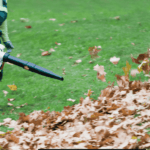
🍂 The Silent Lawn Killer: Damp Leaves Will Suffocate Your Grass
Trapped wet leaves create a breeding ground for destructive snow mold. Clear the yard fast with a high-power cordless blower before the ground freezes.
Warm up the engine for 5 minutes. Drain the old oil. Replace the oil filter if your engine has one. Fill with fresh oil to the correct level. Run the engine for 30 seconds to circulate the new oil. Check the dipstick and top off if needed.
Step 3: Remove and Store the Battery
A lead-acid battery left in a cold garage over winter will be dead by spring. Cold temperatures slow the chemical reaction inside the battery. Even a fully charged battery can freeze and crack if the temperature drops low enough.
Disconnect the negative (black) cable first, then the positive (red) cable. Remove the battery from the mower. Clean the terminals with a wire brush if they are corroded. Store the battery indoors in a cool, dry place (not on concrete, which can discharge it faster). Connect it to a trickle charger or battery maintainer. A maintainer keeps the battery at full charge all winter without overcharging. A dead battery costs $50 to $100 to replace. A maintainer costs $20.
Step 4: Clean the Mower Thoroughly
Dirt, grass clippings, and moisture left on the mower all winter cause rust. Give your mower a deep clean before storage.
Scrape the underside of the deck clean. Use a putty knife for caked-on grass. Use the deck wash port if your mower has one. Wash the exterior with a hose and mild soap. Do not spray water directly at the engine, electrical connections, or air intake. Dry the mower with a rag or let it air dry completely before covering. Wipe down metal surfaces with a light spray of WD-40 or silicone lubricant to prevent rust. Do not spray the belts or pulleys.
Step 5: Lubricate Moving Parts
Grease all the zerk fittings on your mower (spindle bearings, front axle, steering linkage). Pump 2 to 3 shots of grease into each fitting. Lubricate the deck lift linkage, PTO engagement mechanism, and any pivot points with spray lubricant. A mower that is lubed before storage is protected from corrosion and ready to go in spring.
🍂 The Silent Lawn Killer: Damp Leaves Will Suffocate Your Grass
Trapped wet leaves create a breeding ground for destructive snow mold. Clear the yard fast with a high-power cordless blower before the ground freezes.
Step 6: Inspect and Service Wear Items
Since the mower is already cleaned and partially disassembled for winter, take 15 minutes to inspect the wear items. Sharpen the blades now instead of waiting until spring. Inspect the drive belt for cracks or fraying. Replace it now if it is worn. Check the air filter. Replace if dirty. Doing these tasks now means your first spring mow requires zero prep.
Step 7: Cover and Store Properly
Store the mower indoors if possible. A garage or shed is ideal. If you must store it outside, use a waterproof mower cover that breathes (not a plastic tarp that traps moisture). Make sure the mower is completely dry before covering. Inflate the tires to the recommended pressure. Tires lose air over winter and flat-spot if the mower sits on deflated tires.
Step 8: Spring Startup Checklist
When spring arrives, do these things before the first mow. Reinstall the charged battery. Check the oil level. Check tire pressure. Remove any rodent nests (mice love mowers over winter). Fill with fresh fuel if you emptied the tank. Start the engine and let it idle for a minute before engaging the blades. Mow a small test area to check cut quality.

Shop Mower Winterizing Supplies

🍂 The Silent Lawn Killer: Damp Leaves Will Suffocate Your Grass
Trapped wet leaves create a breeding ground for destructive snow mold. Clear the yard fast with a high-power cordless blower before the ground freezes.
Disclosure: This article contains affiliate links. As an Amazon Associate, I earn from qualifying purchases. This means if you click a link and buy something, I may receive a small commission at no extra cost to you. I only recommend products I have personally tested or thoroughly researched. Thank you for supporting GrassBlogger.
Shop How to Winterize Your Riding Lawn Mower (Off-Season Storage) on Amazon