Last Updated on October 22, 2026 by D. Ruddy
If your lawn has brown patches that feel spongy underfoot, you likely have a grub problem. Learning how to treat grubs in lawn early can save your grass from severe damage. These white, C-shaped larvae feed on grass roots, causing wilting and death.
The good news is that with the right approach, you can eliminate them and restore your lawn’s health.
You can treat grubs in lawn by applying natural predators like nematodes or using organic insecticides. Early detection and consistent watering after treatment boost effectiveness. Prevent future infestations with proper lawn care and regular monitoring.
Signs Your Lawn Has a Grub Problem
Grubs often go unnoticed until the damage becomes severe. Recognizing the early signs can help you act fast. Look for irregular brown patches that don’t improve with watering. These patches often feel soft and spongy when you walk on them, as if the grass is floating. Another telltale sign is increased activity from animals like raccoons, skunks, or birds digging up your lawn—they’re feasting on the grubs beneath the surface.
Here are the most common indicators of a grub infestation:
- Brown, wilting grass that doesn’t recover after watering
- Sponge-like texture when stepping on the lawn
- Visible tunnels or holes in the soil
- Increased wildlife activity (digging from raccoons, moles, or birds)
- Grass that pulls up easily like loose carpet, revealing grubs underneath
- Thinning turf despite regular fertilizing and care
| Sign | What It Means |
|---|---|
| Brown patches that don’t recover with water | Grubs are feeding on roots, cutting off water and nutrient supply |
| Spongy, loose turf | Grubs have eaten the roots, causing the grass to detach from the soil |
| Animals digging in your lawn | Predators are searching for grubs as a food source |
If you notice two or more of these signs, it’s time to inspect your lawn. Peel back a small section of grass in the affected area. If you see more than 5-10 grubs per square foot, treatment is necessary.
How to Confirm a Grub Infestation
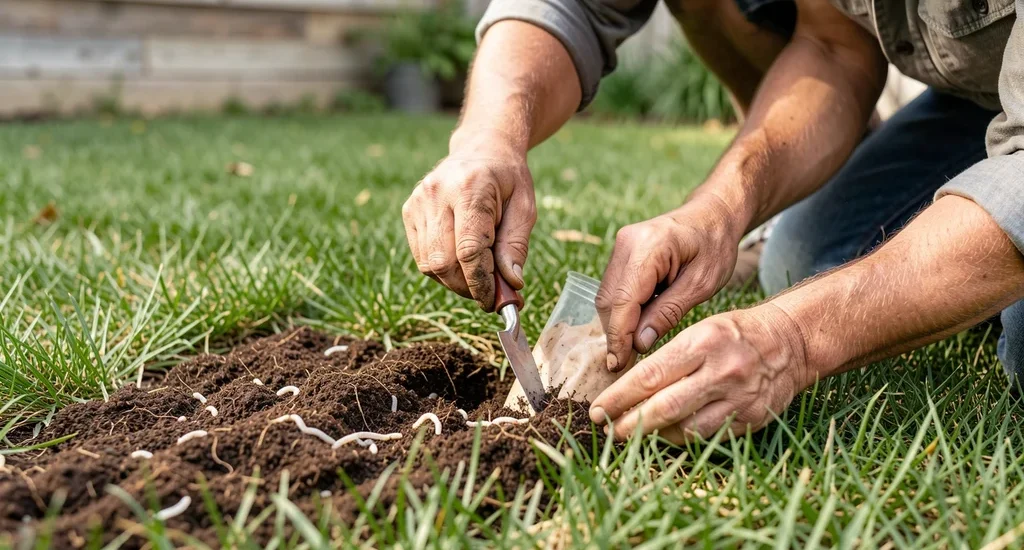
Before treating, you need to confirm that grubs are the culprit. Start by checking the affected areas. Use a shovel or garden trowel to lift a small section of turf in the brown patch. Dig about 2-3 inches deep and look for white, C-shaped larvae. Healthy grubs are plump, creamy white with a brown head.
Here’s a step-by-step method to test for grubs:
- Choose a test spot in the damaged area and another in a healthy section for comparison.
- Cut a 1-foot-square section of turf about 2-3 inches deep.
- Peel back the grass and examine the top layer of soil.
- Count the grubs you find in each square foot.
- Compare the numbers—if the damaged area has significantly more grubs, they’re likely the cause.
Warning: If you find more than 10 grubs per square foot, your lawn is at risk of severe damage. Immediate treatment is recommended.
According to the University of Nebraska-Lincoln Extension, a healthy lawn can tolerate up to 5 grubs per square foot without noticeable damage. However, populations above this threshold can quickly escalate, leading to significant turf loss if left unchecked.
Natural Methods to Treat Grubs in Lawn
If you prefer eco-friendly solutions, several natural methods can effectively reduce grub populations without harming beneficial insects or the environment. These approaches are safe for pets and children while being gentle on your lawn.
Beneficial Nematodes
Beneficial nematodes (Heterorhabditis bacteriophora) are microscopic worms that parasitize and kill grubs. They’re one of the most effective natural treatments available. When applied correctly, they can reduce grub populations by up to 80%.
- Best for: Organic lawn care and long-term prevention
- Application time: Early morning or late evening when soil is moist
- Effectiveness: Works best in soil temperatures between 42-90°F
- Coverage: Typically 1 million nematodes treat 1,000-2,000 sq ft
| Pros | Cons |
|---|---|
| Safe for pets, children, and beneficial insects | Requires precise timing and moisture for effectiveness |
| Long-term prevention when used regularly | More expensive than chemical options |
| No harmful residues in soil | Must be applied when grubs are young and active |
Neem Oil
Neem oil is a natural insecticide derived from the neem tree. It disrupts the feeding and breeding cycles of grubs, making it an effective organic treatment. It also has antifungal properties, which can benefit your lawn’s overall health.
- Application method: Mix with water and spray evenly over the lawn
- Frequency: Apply every 2-3 weeks during grub season
- Best time: Early morning or evening to avoid sunlight breakdown
- Coverage: Follow product instructions for dilution rates
Tip: For best results with neem oil, apply after mowing and when no rain is forecast for 24 hours to allow it to soak into the soil.
Milky Spore
Milky spore (Bacillus popilliae) is a naturally occurring bacterium that specifically targets Japanese beetle grubs. Once established in your soil, it can provide protection for several years. It’s particularly effective in warmer climates where Japanese beetles are prevalent.
- Effectiveness: Can take 2-3 years to fully establish but provides long-term control
- Application: Apply as a powder to the lawn, then water in
- Best for: Japanese beetle grub infestations
- Longevity: Can remain active in soil for 10-20 years
According to the USDA, milky spore is most effective when applied in late summer to early fall when grubs are actively feeding near the soil surface.
Chemical Treatments for Severe Infestations
While natural methods are preferred for eco-friendly lawn care, severe infestations may require chemical intervention. These products work quickly and can save a lawn that’s on the brink of destruction. However, they should be used as a last resort due to their impact on beneficial insects and the environment.
Curative vs. Preventative Treatments
Chemical grub treatments come in two main types: curative and preventative. Curative treatments are designed to kill existing grubs, while preventative treatments stop new grubs from hatching and feeding.
| Type | Active Ingredient | Best Application Time | Effectiveness |
|---|---|---|---|
| Curative | Carbaryl, Trichlorfon | When grubs are actively feeding (late summer to early fall) | Kills existing grubs within days |
| Preventative | Imidacloprid, Chlorantraniliprole, Thiamethoxam | Early spring to early summer before eggs hatch | Prevents new grubs from establishing |
How to Apply Chemical Grub Treatments
Applying chemical treatments correctly is crucial for effectiveness and safety. Always follow the product instructions carefully, and consider these general guidelines:
- Choose the right time – Apply curative treatments in late summer or early fall when grubs are young and actively feeding. Preventative treatments should go down in early spring.
- Mow your lawn first – This helps the treatment reach the soil more effectively.
- Water before and after – Moisten the soil before application and water lightly afterward to help the product penetrate.
- Use a spreader – For granular products, a spreader ensures even distribution.
- Wear protective gear – Gloves, long sleeves, and a mask are recommended when handling chemicals.
- Avoid treatment before rain – Heavy rain can wash away the product before it takes effect.
Important: Always store chemical treatments in their original containers, out of reach of children and pets. Never apply more than the recommended dose, as this can harm your lawn and the environment.
Preventing Future Grub Infestations
Prevention is always better than cure when it comes to lawn grubs. By implementing good lawn care practices, you can make your turf less attractive to adult beetles looking to lay eggs. A healthy, well-maintained lawn is more resistant to grub damage and can often recover from minor infestations on its own.
Proper Lawn Maintenance
Maintaining a healthy lawn is your first line of defense against grubs. Strong, deep roots make it harder for grubs to establish and feed. Here’s how to keep your lawn in top shape:
- Mow high – Keep your grass at 3-4 inches tall. Taller grass develops deeper roots, making it more resilient.
- Water deeply but infrequently – Water your lawn 1-2 times per week with about 1 inch of water each time. This encourages deep root growth.
- Aerate annually – Aerating your lawn improves soil structure and helps roots grow deeper, making it harder for grubs to feed.
- Fertilize regularly – A well-fertilized lawn can recover from minor grub damage more quickly.
- Remove thatch – Thatch buildup can provide a perfect environment for beetles to lay eggs. Dethatch if the layer exceeds 0.5 inches.
- Overseed in fall – Thick, dense grass deters beetles from laying eggs.
Encourage Natural Predators
Many natural predators feed on grubs, helping to keep their populations in check. Encouraging these beneficial creatures can reduce your need for treatments.
- Birds – Robins, starlings, and crows love to eat grubs. Install birdhouses and birdbaths to attract them.
- Toads and frogs – These amphibians consume large numbers of grubs. Create a small pond or damp area to attract them.
- Ground beetles – These beneficial insects feed on grub eggs and young larvae. Avoid broad-spectrum pesticides that can kill them.
- Nematodes – As mentioned earlier, beneficial nematodes can be applied preventatively to keep grub populations low.
- Moles and shrews – While their digging can be a nuisance, they do eat grubs. Tolerate their presence if possible.
Tip: Leave a small section of your lawn un-mowed during the summer to provide habitat for beneficial insects and wildlife that prey on grubs.
Common Mistakes to Avoid When Treating Grubs
Even with good intentions, many homeowners make mistakes that reduce the effectiveness of their grub treatments. Avoiding these common pitfalls can save you time, money, and frustration.
- Treating at the wrong time – Applying treatments when grubs aren’t actively feeding (e.g., in winter or during drought) wastes product and money. Time your applications for late summer or early fall for curative treatments.
- Not watering before or after treatment – Many treatments, especially granular ones, need moisture to activate and penetrate the soil. Always water your lawn before and after application.
- Using expired products – Check the expiration date on chemical treatments. Expired products may be ineffective or even harmful.
- Applying in extreme temperatures – Avoid treating your lawn during heatwaves or when temperatures exceed 90°F. This can stress your grass and reduce treatment effectiveness.
- Ignoring the instructions – Always follow the product’s label instructions for application rates, timing, and safety precautions. More isn’t always better.
- Treating the entire lawn when only parts are affected – Focus on the damaged areas to save money and reduce environmental impact. Spot-treatment is often more effective.
- Not monitoring after treatment – Check your lawn 2-3 weeks after treatment to see if the grubs are gone. If not, you may need a second application.
When to Call a Professional
While many grub infestations can be handled with DIY methods, there are times when calling in a professional is the best course of action. If your lawn is severely damaged or you’re dealing with a large infestation, a lawn care expert can provide targeted treatments and advice.
Signs You Need Professional Help
Consider hiring a professional if:
- Your lawn has extensive damage covering more than 50% of the area
- You’ve tried multiple treatments without success
- You’re dealing with a recurring infestation year after year
- You lack the time or equipment to treat the lawn properly
- You’re unsure about the type of grubs or the best treatment method
- You want a long-term prevention plan tailored to your lawn
What to Expect from a Professional Service
A professional lawn care service will typically:
- Inspect your lawn to confirm the type and extent of the infestation
- Identify the grub species to determine the most effective treatment
- Apply targeted treatments using commercial-grade products
- Provide follow-up care to monitor the results and adjust as needed
- Offer prevention advice to help you avoid future infestations
| Service Type | Cost Range | What’s Included |
|---|---|---|
| One-time treatment | $50 – $150 | Inspection, treatment, and follow-up |
| Seasonal program | $200 – $500 | Multiple treatments, prevention plan, monitoring |
| Organic treatment | $75 – $200 | Natural products, eco-friendly approach |
According to HomeAdvisor, the average cost for professional grub treatment is between $100 and $300, depending on the size of your lawn and the severity of the infestation.
Frequently Asked Questions
How long does it take for grub treatments to work?
Natural treatments like nematodes may take 1-3 weeks to show results, as they need time to infect and kill the grubs. Chemical treatments often work faster, with noticeable results in 2-5 days. Preventative treatments may take several weeks to fully protect your lawn.
Can I treat grubs in my lawn myself, or do I need a professional?
Most homeowners can treat grubs themselves with products available at garden centers. However, for large lawns or severe infestations, a professional can provide more effective, targeted treatments. If DIY methods fail after 2-3 attempts, it’s time to call in an expert.
Will treating grubs harm my pets or children?
Natural treatments like nematodes, neem oil, and milky spore are generally safe for pets and children once applied. Chemical treatments may require keeping pets and children off the lawn for 24-48 hours after application. Always follow the product’s safety instructions.
How often should I treat my lawn for grubs?
Preventative treatments are typically applied once a year in early spring. Curative treatments should be applied in late summer or early fall when grubs are actively feeding. If you’ve had recurring issues, you may need to treat twice a year—once in spring and once in fall.
What’s the best time of day to apply grub treatment?
Apply treatments in the early morning or late evening when temperatures are cooler and the soil is moist. This helps the product penetrate the soil effectively and reduces the risk of evaporation or runoff. Avoid applying during the heat of the day or when rain is forecast within 24 hours.
Final Thoughts
Learning how to treat grubs in lawn effectively can save your turf from unsightly damage and costly repairs. Start with natural methods like nematodes or milky spore for eco-friendly control, and only resort to chemicals for severe infestations. Consistent lawn care, proper watering, and encouraging natural predators can prevent future problems.
Monitor your lawn regularly, and act quickly at the first signs of trouble to keep your grass green and healthy year-round.