Last Updated on October 23, 2026 by D. Ruddy
If you’re preparing your lawn for fall seeding, do you fertilize your lawn in the fall before seeding is a question that can make or break your results. Timing and technique matter when it comes to giving new grass the best start. Proper fertilization before seeding helps create a nutrient-rich environment that supports seed germination and root development.
Yes you should fertilize your lawn in the fall before seeding but use a starter fertilizer low in nitrogen and high in phosphorus to promote root growth without burning new seeds.
Why Fertilize Before Seeding in the Fall
Fall is the ideal time for lawn renovation because cool temperatures and consistent moisture create perfect conditions for seed germination. Fertilizing before seeding accomplishes several important goals that benefit your new grass:
- Soil Preparation: Fertilizer adds essential nutrients that may be missing from your soil, creating a better environment for seed growth.
- Root Development: Phosphorus-rich fertilizers encourage strong root systems, which is crucial for new grass establishment.
- Weed Competition: A well-fertilized lawn helps new grass outcompete weeds that might otherwise take over bare spots.
- Faster Establishment: New grass grows more quickly when it has access to the right nutrients from day one.
- Winter Survival: Grass seeded in fall with proper fertilization has a better chance of surviving the winter and thriving next spring.
According to the University of Minnesota Extension, fall seeding with proper fertilization can result in up to 70% better germination rates compared to spring seeding. The cooler temperatures reduce stress on new grass while allowing roots to establish before winter.
Tip: Test your soil before fertilizing. A soil test will tell you exactly what nutrients your lawn needs and help you choose the right fertilizer.
Best Fertilizer Types for Pre-Seeding
Not all fertilizers are created equal when it comes to pre-seeding applications. The type you choose can significantly impact your seeding success.
| Fertilizer Type | NPK Ratio | Best For |
|---|---|---|
| Starter Fertilizer | 5-10-10 or 6-12-12 | New lawns, overseeding |
| Slow-Release | 16-4-8 or 18-6-12 | Established lawns needing gradual feeding |
| Organic | 4-3-3 or 5-4-4 | Eco-friendly options, slow release |
Starter fertilizers are specifically formulated for new grass seed. They typically have higher phosphorus content (the middle number in the NPK ratio) to promote root development. Look for products labeled as “starter fertilizer” or “new lawn fertilizer.”
For organic options, consider products made from compost, manure, or other natural materials. These release nutrients more slowly but improve soil health over time. The Organic Materials Review Institute (OMRI) reports that organic fertilizers can improve soil structure by up to 30% over two years of consistent use.
When to Fertilize Before Seeding
Timing is everything when it comes to fertilizing before seeding. Apply fertilizer at the right time to maximize its effectiveness and avoid wasting product or harming new grass.
- 2-4 Weeks Before Seeding: Apply fertilizer to existing lawn areas you plan to overseed. This gives the fertilizer time to break down and start improving soil conditions.
- Day of Seeding: For new lawn areas, apply starter fertilizer just before seeding. This ensures nutrients are immediately available to germinating seeds.
- Avoid Fertilizing After Seeding: Don’t apply regular fertilizer to newly seeded areas for at least 4-6 weeks. The tender new grass can be burned by too much nitrogen.
The ideal timing also depends on your grass type. Cool-season grasses like Kentucky bluegrass, fescue, and ryegrass should be seeded in early fall (late August to early September). Warm-season grasses are typically seeded in late spring, but some varieties can be seeded in early fall in warmer climates.
Warning: Never apply herbicides or weed killers at the same time as fertilizer when seeding. These products can prevent grass seed from germinating.
How to Apply Fertilizer Before Seeding
Proper application technique ensures even coverage and prevents waste or damage to your lawn. Follow these steps for the best results:
Equipment You’ll Need
- Broadcast or drop spreader
- Starter fertilizer (appropriate for your grass type)
- Rake or lawn aerator
- Garden hose or irrigation system
- Lawn mower
- Soil test kit (optional but recommended)
Step-by-Step Application Process
- Mow Low: Cut your existing grass shorter than usual (about 1.5-2 inches) to allow seed to make contact with soil.
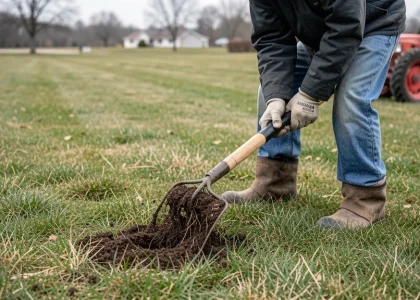
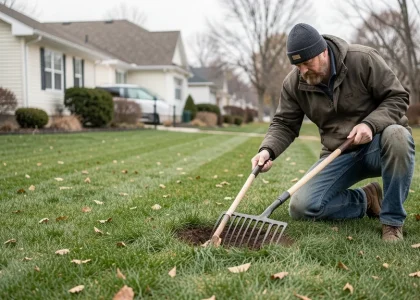
- Aerate the Soil: Use a core aerator to create small holes in the soil. This improves seed-to-soil contact and helps fertilizer penetrate.
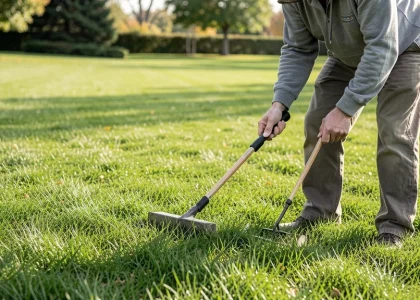
- Remove Debris: Rake up any thatch, leaves, or other debris that could prevent seed and fertilizer from reaching the soil.
- Calibrate Your Spreader: Set your spreader according to the fertilizer manufacturer’s instructions for the correct application rate.
- Apply Fertilizer: Walk in straight lines, slightly overlapping each pass to ensure even coverage. Apply half the fertilizer walking north to south, then the other half walking east to west.
- Water Thoroughly: Water the lawn immediately after fertilizing to help the granules dissolve and start working into the soil.
- Seed Immediately: If you’re seeding the same day, apply seed right after fertilizing. For overseeding existing lawns, seed within 1-2 days.
According to the National Association of Landscape Professionals, proper aeration before fertilizing and seeding can improve germination rates by up to 50%. The holes created by aeration allow for better water, air, and nutrient movement in the soil.
How Much Fertilizer to Use Before Seeding
Applying the right amount of fertilizer is crucial. Too little won’t provide enough nutrients, while too much can burn your lawn or pollute waterways.
| Grass Type | Fertilizer Amount | Timing |
|---|---|---|
| Cool-Season (Bluegrass, Fescue, Rye) | 1-1.5 lbs N per 1000 sq ft | Early Fall |
| Warm-Season (Bermuda, Zoysia, St. Augustine) | 0.5-1 lb N per 1000 sq ft | Late Spring or Early Fall |
| New Lawns | Follow product label (usually 2-3 lbs per 1000 sq ft) | At Seeding |
For most starter fertilizers, the application rate is typically 2-3 pounds per 1,000 square feet. However, always follow the specific instructions on your fertilizer package, as rates can vary between products.
To calculate how much fertilizer you need:
- Measure your lawn area in square feet
- Divide by 1,000 to get the number of “thousand square feet”
- Multiply by the application rate (in pounds per 1,000 sq ft)
For example, if your lawn is 5,000 square feet and the fertilizer calls for 2 pounds per 1,000 square feet, you’ll need 10 pounds of fertilizer (5 × 2 = 10).
Common Mistakes to Avoid
Even with the best intentions, it’s easy to make mistakes when fertilizing before seeding. Being aware of these common pitfalls can help you achieve better results.
- Using the Wrong Fertilizer: Regular lawn fertilizers are often too high in nitrogen for new seed. Always use a starter fertilizer with higher phosphorus content for pre-seeding applications.
- Overlapping Spreader Patterns: Walking in the same pattern can lead to uneven distribution. Change direction for the second pass to ensure even coverage.
- Fertilizing Right Before Rain: Heavy rain can wash away fertilizer before it has a chance to work. Check the weather forecast and aim for a dry period of at least 24-48 hours after application.
- Skipping Soil Testing: Without knowing your soil’s current nutrient levels, you might be adding nutrients that aren’t needed or missing ones that are deficient.
- Applying Too Much: More isn’t better with fertilizer. Over-application can burn your lawn, waste money, and contribute to water pollution.
- Not Watering After Application: Fertilizer needs moisture to dissolve and start working. Always water thoroughly after applying.
- Seeding at the Wrong Time: Fertilizing won’t help if you seed too late in the fall. New grass needs at least 4-6 weeks to establish before the first frost.
The Environmental Protection Agency (EPA) estimates that up to 50% of fertilizer applied to lawns can be wasted due to improper application techniques or timing. This not only wastes money but can contribute to water pollution through runoff.
What to Do After Fertilizing and Seeding
Your work isn’t done once you’ve spread fertilizer and seed. Proper post-application care is crucial for germination and establishment.
Watering Schedule
- Days 1-7: Water lightly twice daily (morning and early afternoon) to keep the top inch of soil moist. Avoid watering in the evening to prevent disease.
- Days 8-21: Reduce to once daily watering, but increase the amount slightly to encourage deeper root growth.
- Weeks 4-6: Gradually reduce to every other day, watering more deeply each time to encourage strong root systems.
- After 6 Weeks: Water as needed based on weather conditions, typically 1-1.5 inches per week including rainfall.
Mowing and Maintenance
- Wait until the new grass reaches about 3-4 inches tall before mowing for the first time.
- Set your mower to a high setting for the first few mowings to avoid stressing the new grass.
- Avoid heavy foot traffic on newly seeded areas for at least 4 weeks.
- Remove any leaves or debris that accumulate on the new grass to prevent smothering.
Fertilizing New Grass
After your new grass has established (typically 4-6 weeks after germination), you can apply a light application of fertilizer to promote continued growth. Use a balanced fertilizer (like 10-10-10) at half the recommended rate for established lawns.
Wait until the new grass has been mowed at least 3-4 times before applying any herbicides for weed control. The young grass needs time to establish a strong root system before it can compete with weeds or tolerate herbicide applications.
Important: The first mowing is critical. Make sure your mower blade is sharp to avoid tearing the tender new grass blades.
Organic vs. Synthetic Fertilizers for Pre-Seeding
Both organic and synthetic fertilizers can be effective for pre-seeding, but they have different characteristics that may make one more suitable for your situation.
| Factor | Organic Fertilizers | Synthetic Fertilizers |
|---|---|---|
| Nutrient Release | Slow (weeks to months) | Fast (days to weeks) |
| Nutrient Content | Lower NPK percentages | Higher NPK percentages |
| Cost | Higher per pound of nutrients | Lower per pound of nutrients |
| Soil Health | Improves soil structure | No direct impact on soil |
| Environmental Impact | Lower runoff risk | Higher runoff risk if overapplied |
Organic fertilizers are made from natural materials like compost, manure, bone meal, or blood meal. They release nutrients slowly as they break down, which can be beneficial for new grass as it provides a steady supply of nutrients over time. Organic options also improve soil structure and microbial activity, which can benefit your lawn in the long term.
Synthetic fertilizers provide nutrients in a form that plants can use immediately. This can be advantageous for quick greening and growth, especially when you want to see results fast. However, they need to be applied more carefully to avoid burning the grass or contributing to water pollution.
For pre-seeding applications, many experts recommend a blend of both types. This gives you the immediate nutrient availability of synthetic fertilizers combined with the long-term soil benefits of organic options.
Frequently Asked Questions
Can I fertilize and seed on the same day?
Yes, you can fertilize and seed on the same day, and this is actually the recommended approach for new lawn areas. Apply the starter fertilizer first, then immediately seed afterward. This ensures that nutrients are available as soon as the seeds start to germinate.
Just make sure to water thoroughly after both applications.
How long after fertilizing can I seed?
For existing lawns that you’re overseeding, you can seed 1-2 days after fertilizing. This gives the fertilizer a little time to start working into the soil. For new lawn areas, you can seed immediately after applying starter fertilizer.
The key is to make sure the fertilizer is a starter type with higher phosphorus content.
What happens if I fertilize too much before seeding?
Over-fertilizing before seeding can lead to several problems. Excess nitrogen can burn the germinating seeds or young grass. Too much fertilizer can also create a saline environment in the soil that prevents seeds from absorbing water, effectively drowning them.
Additionally, excess fertilizer can wash away with rainfall or irrigation, polluting waterways.
Should I aerate before fertilizing and seeding?
Yes, aerating before fertilizing and seeding is highly recommended. Aeration creates small holes in the soil that improve seed-to-soil contact, which is crucial for germination. It also helps fertilizer penetrate deeper into the soil where it can be most effective.
For best results, aerate, then fertilize, then seed.
Can I use weed and feed before seeding?
No, you should never use weed and feed products before seeding. The herbicides in these products are designed to prevent seeds from germinating, which would include your grass seed. Wait until your new grass has been mowed at least 3-4 times before applying any herbicides.
For existing lawns, if you need to treat weeds, do it at least 4-6 weeks before you plan to overseed.
Final Thoughts
Do you fertilize your lawn in the fall before seeding is a question with a clear answer: yes, but with the right approach. Using a starter fertilizer with higher phosphorus content, applying it at the correct time, and following up with proper seeding techniques will give your new grass the best chance to thrive. Remember to test your soil, choose the right fertilizer for your grass type, and follow proper application and post-care procedures.
With the right preparation and care, your fall seeding project can result in a lush, healthy lawn that will be the envy of your neighborhood.