Last Updated on October 22, 2026 by D. Ruddy
A chainsaw that smokes excessively or refuses to oil the bar properly often has clean clogged oiler ports chainsaw bar issues. Sawdust and debris can block these tiny openings, cutting off lubrication to the chain. This guide walks you through identifying the problem, clearing the ports safely, and preventing future buildup so your saw runs smoothly and lasts longer.
You can clean clogged oiler ports on a chainsaw bar using compressed air, a wire brush, or a small drill bit. Regular maintenance prevents costly damage to the bar and chain.
Signs Your Chainsaw Oiler Ports Are Clogged
When oiler ports get blocked, your chainsaw gives clear warning signs. The most obvious is a dry bar and chain, even when the oil reservoir is full. You might also notice excessive heat from the bar during use, which happens when metal grinds against metal without lubrication.
Another common symptom is oil leaking from the saw body instead of reaching the bar. This means the oil is backing up because it cannot pass through the clogged ports. You may also see more sawdust than usual accumulating near the bar area, as the oil that should be flushing debris away is no longer flowing.
- Dry bar and chain despite full oil reservoir
- Excessive heat from the bar during operation
- Oil pooling at the saw body instead of the bar
- Increased sawdust buildup around the bar
- Chain moves sluggishly or binds during cutting
- Visible smoke from the bar area due to friction
Warning: Running a chainsaw with clogged oiler ports can cause permanent damage to the bar and chain. Address the issue immediately to avoid costly replacements.
Tools and Materials You Need
Gather the right tools before starting to ensure a smooth process. You will need basic items like a screwdriver to remove the bar and chain, as well as specialized tools for cleaning the ports. A wire brush or compressed air works well for removing loose debris, while a small drill bit or needle can clear stubborn clogs.
Safety gear is equally important. Wear gloves to protect your hands from sharp edges and oil residue. Safety glasses prevent debris from getting into your eyes, especially when using compressed air or drilling.
A clean workspace and a container for small parts will also help keep things organized.
| Tool/Material | Purpose |
|---|---|
| Screwdriver | Remove bar and chain |
| Wire brush | Clean loose debris from ports |
| Compressed air | Blow out sawdust and dirt |
| Small drill bit or needle | Clear stubborn clogs |
| Gloves and safety glasses | Protect hands and eyes |
| Clean rag | Wipe down parts |
Having these tools ready will save time and make the job easier. If you do not have compressed air, a can of air duster for electronics works as a substitute.
Step by Step Process to Clean the Oiler Ports
Start by disconnecting the spark plug wire to prevent accidental starts. This safety step is critical when working on any part of the chainsaw. Next, remove the bar and chain by loosening the nuts or screws that hold them in place.
Most chainsaws have a side access panel for the bar, which you can remove with a screwdriver.
Once the bar is off, locate the oiler ports. These are small holes along the bar where oil flows to lubricate the chain. Use a wire brush to remove any visible sawdust or debris around the ports.
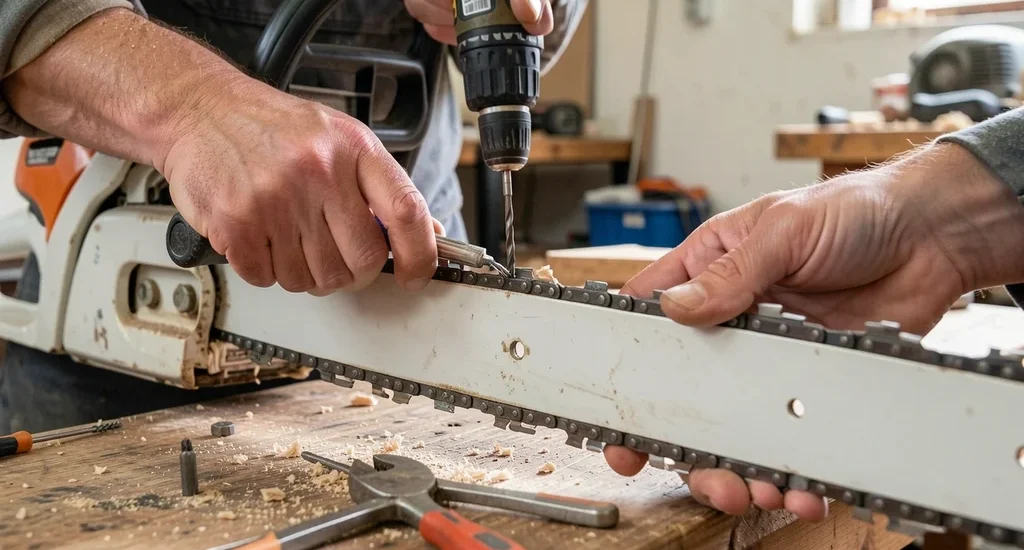
For deeper clogs, insert a small drill bit or needle into the holes and gently twist to break up the blockage.
- Disconnect the spark plug wire to ensure safety.
- Remove the bar and chain by loosening the retaining nuts or screws.
- Inspect the bar for visible clogs and sawdust buildup.
- Use a wire brush to clean around the oiler ports.
- Clear stubborn clogs with a small drill bit or needle.
- Blow out debris with compressed air to ensure ports are fully clear.
- Reassemble the chainsaw and test the oil flow.
Tip: If compressed air is not available, soaking the bar in warm soapy water for 10-15 minutes can help loosen stubborn debris before brushing.
How to Test if the Oiler Ports Are Clear
After cleaning, it is important to verify that the oiler ports are fully functional. Reassemble the chainsaw, refill the oil reservoir with fresh bar and chain oil, and start the saw. Hold the bar over a clean surface like a piece of cardboard or a white cloth to observe the oil flow.
You should see a steady stream or droplets of oil appearing along the bar. If oil flows freely, the ports are clear. If not, repeat the cleaning process, paying extra attention to any ports that still seem blocked.
Sometimes, clogs can be deeper in the oil passages, requiring more thorough cleaning.
- Reassemble the chainsaw with the bar and chain securely in place.
- Fill the oil reservoir with fresh bar and chain oil.
- Start the saw and hold the bar over a clean surface.
- Look for oil flow along the bar and chain.
- Check for even distribution across the entire bar.
- Listen for unusual noises that might indicate remaining blockages.
Common Mistakes to Avoid
One frequent mistake is using the wrong tools to clean the ports. Avoid metal picks or sharp objects that can scratch or enlarge the oiler ports, as this can cause oil to leak excessively. Always use soft-bristled brushes or plastic tools to prevent damage to the bar.
Another error is neglecting to clean the oil passages inside the saw itself. Sometimes, the clog is not just in the bar ports but also in the oil pump or tubes leading to the bar. If oil still does not flow after cleaning the ports, check these areas as well.
Over-tightening the bar and chain during reassembly can also restrict oil flow, so ensure everything is snug but not overly tight.
| Mistake | Why It’s Bad | How to Avoid |
|---|---|---|
| Using metal picks | Can scratch or enlarge ports | Use plastic tools or wire brushes |
| Ignoring internal passages | Clogs may remain in oil pump or tubes | Clean oil pump and tubes if needed |
| Over-tightening bar | Restricts oil flow to the chain | Tighten snugly, not excessively |
| Skipping safety steps | Risk of accidental starts | Always disconnect spark plug first |
Preventing Future Clogs in Oiler Ports
Regular maintenance is the best way to prevent clogs in your chainsaw’s oiler ports. After each use, take a few minutes to clean the bar and chain with a brush to remove sawdust and debris. This simple step can significantly reduce the buildup that leads to clogs.
Using the right type of oil also matters. Bar and chain oils are specifically formulated to withstand high temperatures and provide proper lubrication. Avoid using motor oil or other substitutes, as they can leave deposits that clog the ports over time.
Additionally, check the oil level before each use and top it off as needed to ensure consistent lubrication.
- Clean the bar and chain after every use with a brush.
- Use high-quality bar and chain oil designed for chainsaws.
- Check oil levels before each use and refill as needed.
- Inspect oiler ports regularly for early signs of clogging.
- Store the chainsaw in a clean, dry place to prevent dust buildup.
- Follow manufacturer guidelines for maintenance intervals.
Important: According to the Outdoor Power Equipment Institute, regular chainsaw maintenance can extend the life of your equipment by up to 50%.
When to Seek Professional Help
While most oiler port clogs can be cleared at home, some situations require a professional. If you have cleaned the ports thoroughly but still experience no oil flow, there may be an issue with the oil pump or internal passages. A professional technician can diagnose and repair these deeper issues.
Another sign that you need expert help is if the chainsaw overheats consistently, even after cleaning the ports. This could indicate a more serious problem with the saw’s lubrication system or engine. Additionally, if you are uncomfortable disassembling the chainsaw or lack the necessary tools, it is safer to take it to a certified repair shop.
- No oil flow after cleaning ports
- Persistent overheating of the bar or engine
- Unusual noises from the oil pump or saw
- Lack of tools or experience for disassembly
- Visible damage to the bar or chain
Frequently Asked Questions
How often should I clean the oiler ports on my chainsaw?
Clean the oiler ports every 5-10 hours of use, or whenever you notice reduced oil flow. Regular cleaning prevents buildup and ensures consistent lubrication. If you use your chainsaw frequently, consider cleaning the ports after each use to extend the life of your equipment.
Can I use WD-40 to clean the oiler ports?
WD-40 is not recommended for cleaning oiler ports, as it is not a lubricant and can leave residue that attracts more debris. Stick to compressed air, wire brushes, or soapy water for cleaning. Always use bar and chain oil for lubrication after cleaning.
What happens if I ignore clogged oiler ports?
Ignoring clogged oiler ports can lead to excessive friction between the bar and chain, causing overheating and premature wear. In severe cases, the bar or chain may warp or break, requiring costly replacements. Addressing clogs early saves time and money.
How do I know if my chainsaw oil pump is bad?
A bad oil pump may result in no oil flow, even after cleaning the ports. You might also notice oil leaking from the saw body or uneven oil distribution on the bar. If you suspect a pump issue, consult a professional for diagnosis and repair.
Is it safe to use a needle to clean oiler ports?
Yes, a needle can be used to clear stubborn clogs, but be gentle to avoid scratching or enlarging the ports. If the clog is deep, a small drill bit may be more effective. Always prioritize soft tools like brushes or compressed air first.
Final Thoughts
Keeping your chainsaw’s oiler ports clean is essential for smooth operation and longevity. Regular maintenance, proper tools, and timely cleaning prevent clogs and ensure consistent oil flow. By following the steps outlined here, you can address issues early and avoid costly damage to your equipment.