Last Updated on October 22, 2026 by D. Ruddy
Growing your own juicy tomatoes is simpler than you think. With the right approach, how to grow tomatoes becomes a rewarding experience that yields fresh produce all season long. This guide covers everything from seed selection to harvest, ensuring you avoid common pitfalls and maximize your yield.
You can grow thriving tomato plants by choosing the right variety for your climate, providing full sunlight, consistent watering, and nutrient-rich soil. Most gardeners see their first harvest within 60-85 days after planting.
What You Need to Get Started
Before planting, gather the essentials to set your tomatoes up for success. The right tools and materials make the process smoother and increase your chances of a bountiful harvest.
Start with high-quality seeds or seedlings from a reputable nursery. Heirloom varieties often offer better flavor, while hybrid types tend to be more disease-resistant. You’ll also need well-draining soil, ideally enriched with compost or organic matter.
Tomatoes thrive in slightly acidic to neutral soil with a pH between 6.0 and 7.0.
- Seeds or seedlings: Choose disease-resistant varieties like ‘Early Girl’, ‘Roma’, or ‘Cherry Tomatoes’ for beginners
- Containers or garden space: At least 1-2 feet of space per plant; 5-gallon pots work well for container gardening
- Soil: Loamy, well-draining soil with organic compost mixed in
- Fertilizer: Balanced 10-10-10 fertilizer or organic options like fish emulsion and bone meal
- Support structures: Stakes, cages, or trellises to keep plants upright as they grow
- Watering tools: A watering can or drip irrigation system for consistent moisture
- Mulch: Straw or wood chips to retain moisture and prevent weeds
Tip: Test your soil pH before planting. Most garden centers sell inexpensive test kits. If your soil is too acidic, add lime to raise the pH. If it’s too alkaline, sulfur can help lower it.
Choosing the Best Tomato Varieties
Not all tomatoes are created equal. The best variety for you depends on your climate, available space, and how you plan to use the tomatoes. Some thrive in hot climates, while others do better in cooler regions.
Determinate tomatoes, like ‘Roma’ and ‘Celebrity’, grow to a certain size and produce fruit all at once, making them ideal for canning or sauces. Indeterminate varieties, such as ‘Beefsteak’ and ‘Cherry Tomatoes’, continue growing and producing fruit throughout the season, perfect for fresh eating.
| Variety | Type | Days to Maturity | Best For |
|---|---|---|---|
| Early Girl | Indeterminate | 50-60 | Fresh eating, early harvests |
| Roma | Determinate | 70-80 | Sauces, canning, paste |
| Beefsteak | Indeterminate | 80-90 | Sandwiches, burgers |
| Cherry Tomatoes | Indeterminate | 55-65 | Salads, snacking |
| San Marzano | Determinate | 80-90 | Italian sauces, paste |
For beginners, ‘Early Girl’ and ‘Cherry Tomatoes’ are excellent choices because they’re forgiving and produce fruit quickly. If you live in a cooler climate, consider ‘Stupice’ or ‘Siberian’ varieties, which tolerate lower temperatures better than most.
Step by Step Guide to Planting Tomatoes
Planting tomatoes correctly is crucial for strong, healthy plants. Whether you’re starting from seeds or transplanting seedlings, timing and technique matter.
If starting from seeds, begin indoors 6-8 weeks before the last frost date in your area. This gives the seedlings enough time to grow strong before moving them outside. Harden off the seedlings by gradually exposing them to outdoor conditions over a week before transplanting.
Starting from Seeds
- Sow seeds: Plant seeds ¼ inch deep in seed-starting mix. Keep the soil warm (70-80°F) and moist.
- Provide light: Place under grow lights or in a sunny window. Seedlings need 14-16 hours of light daily.
- Fertilize lightly: Use a diluted liquid fertilizer once the first true leaves appear.
- Harden off: One week before transplanting, place seedlings outside for a few hours each day, gradually increasing the time.
Transplanting Seedlings
- Choose the right time: Transplant after the last frost when soil temperatures are at least 60°F.
- Prepare the soil: Loosen the soil to a depth of 12-18 inches and mix in compost or aged manure.
- Plant deeply: Bury ⅔ of the stem to encourage strong root growth. Remove the lower leaves if necessary.
- Space properly: Place plants 18-24 inches apart for determinate varieties, 24-36 inches for indeterminate.
- Water thoroughly: Give each plant 1-2 inches of water immediately after planting.
Warning: Avoid planting tomatoes in the same spot as other nightshade plants (peppers, potatoes, eggplants) from the previous year. This can increase the risk of disease.
Essential Care for Healthy Tomato Plants
Tomatoes need consistent care to thrive. Watering, fertilizing, and pruning are key to preventing diseases and ensuring a strong harvest.
Water deeply and consistently, aiming for 1-2 inches per week. Avoid wetting the leaves to reduce the risk of fungal diseases like early blight. Drip irrigation is ideal because it delivers water directly to the roots.
Mulching around the base of the plants helps retain moisture and keeps the soil temperature stable.
Watering Tips
- Water in the morning to allow foliage to dry during the day
- Use a moisture meter to check soil moisture at a depth of 2-3 inches
- Avoid overhead watering to prevent fungal diseases
- Increase watering during hot, dry spells but avoid waterlogging the soil
- Reduce watering as tomatoes ripen to enhance flavor concentration
Fertilizing Schedule
| Stage | Fertilizer Type | Frequency | Notes |
|---|---|---|---|
| At Planting | Balanced 10-10-10 | Once | Mix into soil before transplanting |
| After Flowering | Low-nitrogen 5-10-10 | Every 2-3 weeks | Encourages fruiting over leaf growth |
| Mid-Season | Organic compost tea | Every 4 weeks | Boosts soil microbes and overall health |
Tomatoes are heavy feeders, so don’t skimp on fertilizer. However, too much nitrogen can lead to lush foliage but few tomatoes. Switch to a low-nitrogen, high-phosphorus fertilizer once the plants start flowering to promote fruiting.
Pruning and Support
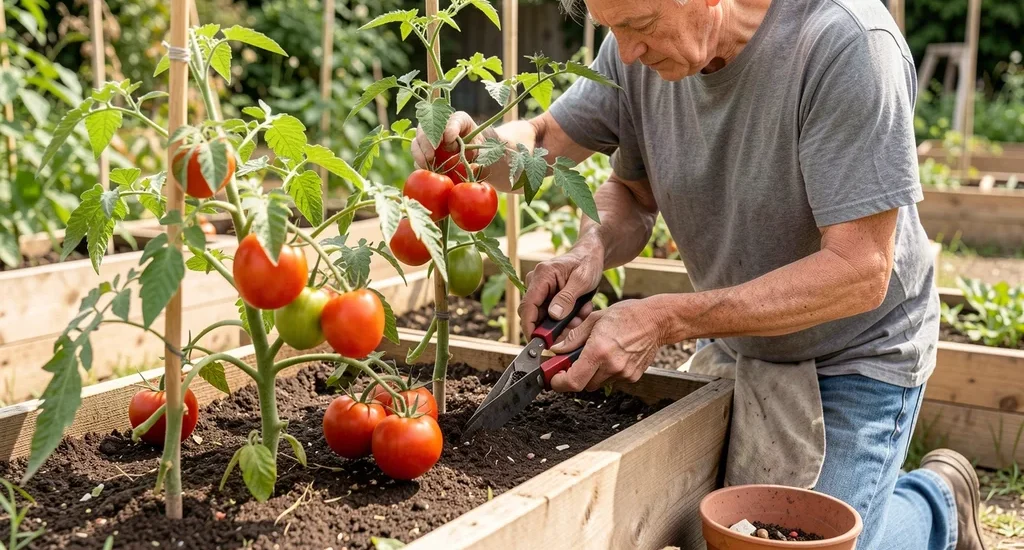
- Prune suckers: Remove the small shoots that grow in the crotch between the stem and a branch. This directs energy toward fruit production.
- Use supports: Install cages, stakes, or trellises at planting time to avoid disturbing roots later.
- Tie stems: Secure stems to supports with soft ties or old pantyhose to prevent damage.
- Remove lower leaves: Trim leaves touching the ground to reduce disease risk and improve airflow.
Important: Indeterminate tomatoes need more aggressive pruning than determinate varieties. Pruning determinate tomatoes can reduce your yield, so only remove diseased or damaged leaves.
Common Pests and Diseases to Watch For
Tomatoes are susceptible to various pests and diseases, but early identification and treatment can save your crop. Regular inspection of your plants helps catch problems before they spread.
According to the University of California Agriculture and Natural Resources, over 200 pests and diseases can affect tomato plants. The most common issues include aphids, hornworms, blight, and powdery mildew. Organic and chemical treatments are available, but prevention is always the best strategy.
| Problem | Symptoms | Prevention/Treatment |
|---|---|---|
| Aphids | Curled leaves, sticky residue (honeydew) | Spray with neem oil or insecticidal soap; introduce ladybugs |
| Hornworms | Large green caterpillars, stripped leaves, missing fruit | Handpick and destroy; use BT (Bacillus thuringiensis) spray |
| Early Blight | Brown spots on lower leaves with concentric rings | Remove infected leaves; apply copper fungicide; rotate crops |
| Powdery Mildew | White powdery coating on leaves | Improve airflow; spray with sulfur or potassium bicarbonate |
| Blossom End Rot | Dark, sunken spots on the bottom of fruit | Maintain consistent soil moisture; add calcium (crushed eggshells or lime) |
Preventive Measures
- Rotate crops: Avoid planting tomatoes in the same spot year after year
- Use mulch: Prevents soil-borne diseases from splashing onto leaves
- Space plants properly: Ensures good airflow, reducing humidity and disease risk
- Water at the base: Keeps leaves dry and minimizes fungal growth
- Remove debris: Clear old plant material at the end of the season to eliminate hiding spots for pests and diseases
When and How to Harvest Tomatoes
Knowing when to pick your tomatoes ensures the best flavor and texture. Harvesting at the right time also encourages the plant to produce more fruit.
Most tomatoes are ready to pick when they’re fully colored and slightly soft to the touch. However, some varieties, like ‘Green Zebra’, are naturally green when ripe. According to the National Gardening Association, the average home gardener can expect to harvest 10-15 pounds of tomatoes per plant over the season, depending on the variety and growing conditions.
Signs of Ripeness
- Color: Fully colored according to the variety (red, yellow, orange, green, etc.)
- Texture: Slightly soft when gently squeezed; should give slightly under pressure
- Smell: Ripe tomatoes have a strong, sweet tomato scent at the stem end
- Ease of picking: Ripe tomatoes come off the vine easily with a gentle twist
Harvesting Techniques
- Use the right method: Grasp the tomato gently and twist it until it snaps off the vine. Avoid pulling, which can damage the plant.
- Harvest in the morning: Tomatoes picked in the morning are cooler and less likely to bruise.
- Pick regularly: Check plants every 2-3 days during peak harvest season. Leaving overripe tomatoes on the vine can slow down new fruit production.
- Handle with care: Place harvested tomatoes in a shallow container to prevent bruising. Avoid stacking them.
Tip: If frost threatens and you have green tomatoes on the vine, pick them before the frost hits. Wrap them in newspaper and store in a cool, dark place. They’ll continue to ripen slowly.
Storing and Using Your Harvest
- Room temperature: Store ripe tomatoes at room temperature, stem-side down, away from direct sunlight. They’ll keep for about a week.
- Refrigeration: Only refrigerate fully ripe tomatoes if you need to extend their shelf life. This can make them mealy, so use them within a few days.
- Freezing: Wash, dry, and freeze whole tomatoes for later use in sauces or soups. The skin will split, but the flavor remains intact.
- Canning: Preserve your harvest by canning tomatoes as sauce, salsa, or whole tomatoes in jars.
Common Mistakes to Avoid
Even experienced gardeners make mistakes with tomatoes. Being aware of these common pitfalls can help you avoid them and grow a more successful crop.
The USDA reports that home gardeners lose up to 30% of their tomato yield due to preventable mistakes like improper watering, poor soil preparation, and inadequate support. Learning from these errors can significantly improve your harvest.
Overwatering or Underwatering
- Overwatering: Leads to root rot, fungal diseases, and bland-tasting tomatoes. Soil should be moist but not soggy.
- Underwatering: Causes blossom end rot, cracked fruit, and stress to the plant. Consistent moisture is key.
- Solution: Use a moisture meter and water deeply but infrequently. Aim for 1-2 inches of water per week, including rainfall.
Planting Too Early or Too Late
- Too early: Cold soil and frost can stunt growth or kill young plants. Tomatoes need soil temperatures of at least 60°F.
- Too late: Plants may not have enough time to mature before the first frost, leading to a smaller harvest.
- Solution: Start seeds indoors 6-8 weeks before the last frost date, and transplant seedlings 2-3 weeks after the last frost.
Ignoring Support Structures
- Problem: Without support, tomato plants sprawl on the ground, leading to poor airflow, increased disease risk, and fruit rot.
- Solution: Install cages, stakes, or trellises at planting time. Tie stems gently to the support as they grow.
Skipping Soil Preparation
- Problem: Poor soil leads to weak plants, nutrient deficiencies, and lower yields.
- Solution: Amend your soil with compost, aged manure, or other organic matter before planting. Test your soil pH and adjust if necessary.
Neglecting to Prune
- Problem: Overgrown plants with too many leaves can reduce airflow, increase disease risk, and direct energy away from fruit production.
- Solution: Regularly prune suckers (the small shoots that grow between the stem and branches) and remove lower leaves that touch the ground.
Frequently Asked Questions
How often should I water tomato plants?
Tomato plants need consistent moisture, so water deeply 1-2 times per week, providing about 1-2 inches of water in total. Adjust based on rainfall and temperature. In hot, dry climates, you may need to water every other day.
Always check the soil moisture at a depth of 2-3 inches before watering.
Can I grow tomatoes in containers?
Yes, tomatoes grow well in containers as long as the pot is large enough. Use at least a 5-gallon container for each plant, with good drainage holes. Dwarf or bush varieties like ‘Patio’, ‘Tiny Tim’, or ‘Balcony Red’ are ideal for containers.
Ensure the pots receive at least 6-8 hours of sunlight daily.
Why are my tomato leaves turning yellow?
Yellow leaves can indicate several issues, including overwatering, underwatering, nutrient deficiencies, or diseases. Check the soil moisture first. If it’s too wet or dry, adjust your watering.
If the problem persists, test your soil for nutrient deficiencies. Common culprits include nitrogen, magnesium, or iron deficiency.
Do tomato plants need full sun?
Tomatoes thrive in full sun, which means at least 6-8 hours of direct sunlight per day. Less sunlight can lead to leggy plants, fewer fruits, and slower ripening. If your garden doesn’t get full sun, choose a variety that tolerates partial shade, like ‘Stupice’ or ‘Siberian’.
How can I prevent blossom end rot?
Blossom end rot is caused by a calcium deficiency, often due to inconsistent watering. To prevent it, maintain even soil moisture, add calcium to the soil (using crushed eggshells or lime), and avoid over-fertilizing with nitrogen. Mulching can also help keep soil moisture consistent.
Final Thoughts
Growing tomatoes at home is a fulfilling experience that rewards you with fresh, flavorful produce. By selecting the right varieties, providing proper care, and avoiding common mistakes, you can enjoy a bountiful harvest. Remember that how to grow tomatoes successfully starts with good soil, consistent watering, and a little patience.