Last Updated on October 22, 2026 by D. Ruddy
If your agastache plants have finished their vibrant display, you may wonder should I cut back agastache after it blooms to encourage more flowers or maintain plant health. Pruning at the right time can extend the blooming season and keep your garden looking tidy. This guide covers when and how to trim agastache for optimal growth.
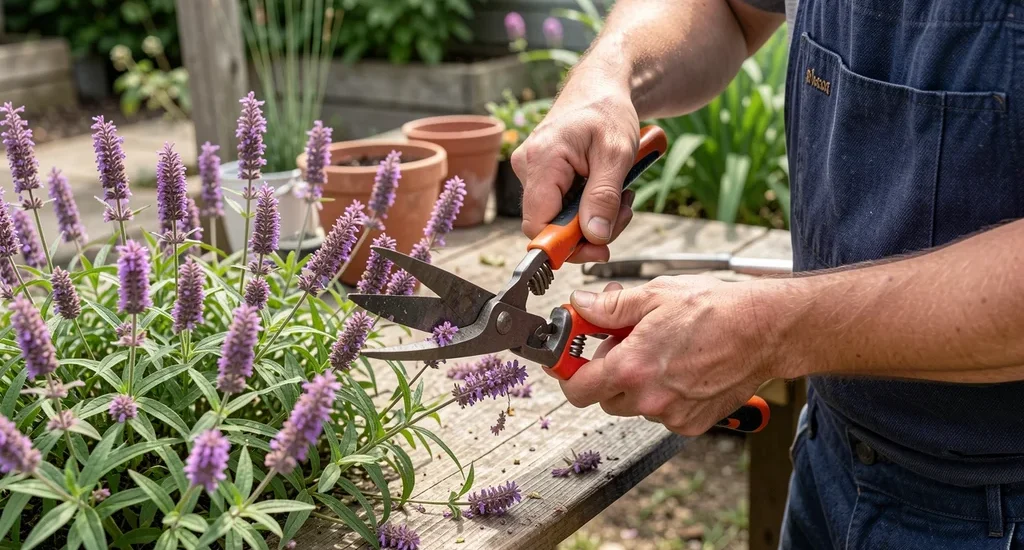
Yes you should cut back agastache after it blooms to encourage a second flush of flowers and prevent self-seeding. Trim spent flower stems just above a set of leaves or side buds using clean shears.
Why Pruning Agastache After Blooming Matters
Deadheading spent blooms redirects the plant’s energy from seed production to new growth and additional flowers. Agastache, also known as hummingbird mint, responds well to pruning and often produces a second wave of blooms within weeks.
Regular pruning also maintains the plant’s shape and prevents it from becoming leggy or overgrown. Since agastache is a prolific self-seeder, cutting back flower stems stops unwanted seedlings from spreading across your garden.
- Encourages reblooming – Many varieties will flower again 4-6 weeks after pruning
- Improves plant health – Removes diseased or damaged stems before they spread
- Maintains appearance – Keeps the plant compact and tidy throughout the growing season
- Prevents overcrowding – Controls self-seeding that can become invasive
- Attracts pollinators – Fresh blooms continue to draw bees and hummingbirds
| Benefit | Impact on Agastache |
|---|---|
| Extended blooming | Second flower cycle 4-8 weeks after pruning |
| Healthier foliage | Reduces disease risk and improves air circulation |
| Better shape | Prevents flopping and maintains compact form |
When to Cut Back Agastache After Flowering
Timing is crucial for effective pruning. The best time to cut back agastache depends on your climate and the specific variety. In most regions, you can start deadheading as soon as the first flush of flowers begins to fade.
For continuous blooms, prune in stages rather than all at once. This staggered approach ensures you always have some flowers while encouraging new growth. In warmer climates, you may get two or even three blooming cycles per season.
- Early summer varieties – Cut back immediately after first blooms fade, typically in late June or early July
- Late summer bloomers – Prune in mid to late July for a fall rebloom
- Fall blooming types – Light pruning in early September can extend the display
- Cold climates – Finish all pruning at least 6-8 weeks before first frost
- Mild climates – Can prune lightly through early winter
Important: Avoid heavy pruning after late summer in cold climates, as new growth may not have time to harden off before winter.
Step by Step How to Prune Agastache Properly
Proper technique ensures healthy regrowth and prevents damage to the plant. Always use clean, sharp tools to make precise cuts that heal quickly.
Start by examining the plant for spent flower spikes. Look for stems where at least 70% of the flowers have faded. These are ready for pruning.
Work from the outside in to maintain the plant’s natural shape.
- Choose the right tools
- Use sharp bypass pruners for clean cuts
- Have rubbing alcohol ready to sterilize tools between plants
- Consider long-handled pruners for tall varieties
- Identify the cutting point
- Locate the first set of healthy leaves below the spent flowers
- Look for side buds that can develop into new stems
- Avoid cutting into woody stems unless removing dead wood
- Make the cut
- Cut at a 45-degree angle just above a leaf node or side bud
- Remove the entire flower spike, not just the faded blooms
- Cut back to a point where the stem is still green and healthy
- Shape the plant
- Trim longer stems to maintain uniform height
- Remove any crossing or rubbing branches
- Thin out crowded centers to improve air circulation
- Clean up
- Remove all cut material from the garden to prevent disease
- Dispose of or compost healthy plant material
- Sterilize pruners between plants to prevent disease spread
| Tool | Purpose | When to Use |
|---|---|---|
| Bypass pruners | Clean cuts on live stems | Regular deadheading |
| Long-handled pruners | Reach tall stems | Tall agastache varieties |
| Hedge shears | Shape multiple stems at once | Light shaping only |
How Much to Cut Back Agastache for Best Results
The amount you prune depends on your goals and the plant’s condition. Light pruning encourages faster reblooming, while heavier cuts can rejuvenate overgrown plants but may delay new flowers.
For most situations, removing just the spent flower spikes is sufficient. This approach maintains the plant’s size while stimulating new blooms. However, if your agastache has become leggy or overgrown, more drastic pruning may be necessary.
| Pruning Level | Amount to Remove | Best For | Rebloom Time |
|---|---|---|---|
| Light pruning | Just spent flower spikes | Regular maintenance | 3-4 weeks |
| Moderate pruning | 1/3 of stem length | Shape control | 4-6 weeks |
| Heavy pruning | 1/2 to 2/3 of plant | Rejuvenation | 6-8 weeks |
Tip: If your agastache is overgrown, prune it back by one-third in early summer before it blooms, then deadhead regularly afterward.
Different Agastache Varieties and Their Pruning Needs
Not all agastache varieties have the same pruning requirements. Some are more vigorous and can handle heavier pruning, while others benefit from a lighter touch. Understanding your specific variety helps you provide the best care.
Hybrid varieties often have more complex pruning needs than species types. The most popular garden varieties fall into a few main categories, each with slightly different characteristics and pruning requirements.
- Agastache foeniculum (Anise Hyssop) – Very hardy, can be cut back hard. Often reblooms quickly after pruning. Drought tolerant once established.
- Agastache rugosa (Korean Mint) – More spreading habit, benefits from regular shaping. Can be invasive in some areas.
- Agastache cana (Texas Hummingbird Mint) – Drought tolerant, prefers lighter pruning. More sensitive to over-pruning.
- Agastache aurantiaca (Orange Hummingbird Mint) – Vigorous grower, handles heavy pruning well. Long blooming season.
- Hybrid varieties (e.g., ‘Blue Fortune’, ‘Black Adder’) – Bred for garden performance, usually respond well to regular deadheading.
| Variety | Height | Bloom Time | Pruning Tolerance | Special Notes |
|---|---|---|---|---|
| Anise Hyssop | 3-5 feet | Early to mid summer | High | Very hardy, fast rebloom |
| Korean Mint | 2-4 feet | Mid to late summer | Moderate | Can spread aggressively |
| Texas Hummingbird Mint | 2-3 feet | Late summer to fall | Low | Drought tolerant, light pruning |
| ‘Blue Fortune’ | 2-3 feet | Early summer to fall | High | Long bloom season, hybrid vigor |
| ‘Black Adder’ | 2-3 feet | Mid summer to fall | High | Compact habit, dark flowers |
Common Mistakes to Avoid When Pruning Agastache
Even experienced gardeners can make errors when pruning agastache. Being aware of these common pitfalls helps you avoid setbacks and ensures your plants thrive after pruning.
The most frequent mistake is pruning at the wrong time, which can remove potential blooms or leave the plant vulnerable to cold weather. Other issues include using dull tools or making improper cuts that damage the plant.
- Pruning too late in the season
- In cold climates, avoid pruning after late summer as new growth won’t have time to harden off
- Late pruning can stimulate tender growth that’s vulnerable to frost damage
- Exception: In mild winter areas, light pruning can continue into early winter
- Cutting too much at once
- Never remove more than one-third of the plant at a time unless rejuvenating an old plant
- Heavy pruning can shock the plant and delay reblooming
- Gradual pruning over several weeks is gentler on the plant
- Using dull or dirty tools
- Dull pruners create ragged cuts that heal slowly and can invite disease
- Dirty tools can spread plant diseases from one plant to another
- Always clean pruners with rubbing alcohol between plants
- Cutting at the wrong place
- Avoid leaving stubs, which can die back and become entry points for disease
- Don’t cut below a leaf node, as this removes potential growth points
- Always cut just above a healthy leaf or bud
- Removing all foliage
- The plant needs leaves to photosynthesize and produce energy for new growth
- Never remove all leaves, even when cutting back heavily
- Always leave at least some healthy foliage on the plant
Warning: Never prune agastache when the foliage is wet, as this can spread fungal diseases. Always wait for dry conditions.
What to Do With Agastache After Pruning
Post-pruning care is essential for helping your agastache recover quickly and produce new blooms. Proper aftercare ensures the plant has the resources it needs to regrow and thrive.
Start by watering the plant deeply after pruning to help it recover from the stress. This is especially important during hot, dry weather. However, avoid overwatering, as agastache prefers well-drained soil.
- Watering
- Give a deep watering immediately after pruning
- Water at the base of the plant, not on the foliage
- Reduce watering once new growth appears
- Agastache is drought tolerant once established
- Fertilizing
- Avoid heavy fertilizing after pruning, which can produce excessive foliage at the expense of flowers
- A light application of balanced fertilizer can help if the plant looks stressed
- Compost or well-rotted manure can be worked into the soil around the plant
- Over-fertilizing can lead to weak, leggy growth
- Mulching
- Apply a 2-3 inch layer of organic mulch around the base
- Mulch helps retain moisture and suppress weeds
- Keep mulch away from the plant’s crown to prevent rot
- Shredded bark or compost work well as mulch
- Monitoring
- Check the plant regularly for new growth, which should appear within 1-2 weeks
- Watch for signs of stress or disease, such as wilting or discolored leaves
- Remove any damaged or diseased foliage promptly
- Keep an eye out for pests, though agastache is relatively pest-resistant
| Care Task | Timing | Importance |
|---|---|---|
| Deep watering | Immediately after pruning | High – helps recovery |
| Light fertilizing | 1 week after pruning if needed | Low – only if plant looks stressed |
| Mulch application | After pruning | Medium – retains moisture |
| Pest inspection | Regularly after pruning | Medium – early detection |
Frequently Asked Questions
Will agastache bloom again after cutting back?
Yes, most agastache varieties will produce a second flush of blooms 4-6 weeks after pruning, provided the pruning is done at the right time and the plant is healthy. Some vigorous varieties may even bloom a third time with proper care.
How far back can I cut my agastache?
You can safely cut back agastache by up to one-third of its height at a time. For regular deadheading, just remove the spent flower spikes. For rejuvenation pruning on overgrown plants, you can cut back up to two-thirds, but do this in early summer before blooming begins.
What happens if I don’t cut back agastache after it blooms?
If you don’t prune agastache after blooming, the plant will focus its energy on producing seeds rather than new flowers. This means you’ll likely get fewer subsequent blooms. Additionally, the plant may become leggy and overgrown, and it will self-seed prolifically, potentially becoming invasive in your garden.
Can I prune agastache in the fall?
In cold climates, it’s best to avoid pruning agastache in the fall. Late pruning can stimulate new growth that won’t have time to harden off before winter, making the plant more vulnerable to cold damage. In mild climates, light pruning can continue into early winter.
Should I cut back agastache to the ground in winter?
No, you should not cut agastache back to the ground in winter. Leave the spent foliage and stems in place to provide winter protection and interest. In early spring, you can cut back the old growth to make way for new shoots.
This old growth also helps protect the crown from freeze-thaw cycles.
Final Thoughts
Cutting back agastache after it blooms is one of the best ways to extend its flowering season and maintain plant health. By deadheading spent blooms and pruning at the right time, you can enjoy multiple waves of colorful flowers that attract pollinators to your garden. Remember to use proper techniques, avoid common mistakes, and provide good aftercare for the best results.
With the right approach, your agastache will reward you with continuous blooms throughout the growing season.