Last Updated on October 22, 2026 by D. Ruddy
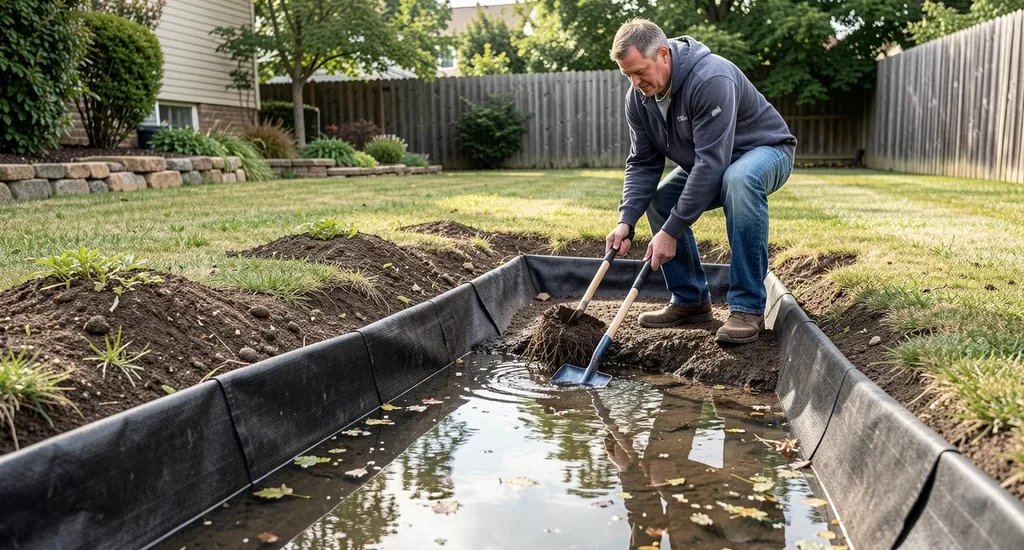
If your yard turns into a swamp after every rain, solutions for standing water in yard are likely at the top of your priority list. Poor drainage not only ruins your landscape but can also attract mosquitoes, damage plant roots, and even cause foundation issues for your home. The good news is that there are practical, long-lasting fixes you can implement to keep your outdoor space dry and usable.
You can solve standing water issues by improving drainage with French drains, grading adjustments, or permeable surfaces. The best approach depends on your yard’s slope, soil type, and the severity of the problem.
Identify the Root Cause of Standing Water
Before jumping into fixes, pinpoint why water pools in your yard. Common culprits include poor grading, compacted soil, or a high water table. Walk around your property after a heavy rain to observe where water collects and how long it lingers.
Check for low spots where water naturally gathers. Use a level or a long board with a bubble level to see if your yard slopes toward your house instead of away from it. Soils rich in clay are notorious for poor drainage, while sandy soils drain too quickly, often leaving other areas waterlogged.
- Compacted Soil: Foot traffic, construction, or heavy equipment can press soil particles together, reducing pore space and water absorption.
- Poor Grading: A yard that slopes toward the house or has depressions will trap water instead of directing it away.
- Clogged Drains: Gutters, downspouts, or existing drainage systems may be blocked by leaves, dirt, or debris.
- High Water Table: In some regions, groundwater naturally sits close to the surface, especially after prolonged rain.
- Impermeable Surfaces: Driveways, patios, or sheds can prevent water from soaking into the ground, forcing it to pool elsewhere.
According to the Environmental Protection Agency (EPA), improper drainage can lead to 10,000 gallons of water running off a typical roof annually—much of which can end up in your yard if not managed properly.
Improve Yard Grading and Slope
One of the simplest and most effective solutions for standing water in yard is regrading. The goal is to create a gentle slope that directs water away from your home and toward a drainage area, street, or dry well. A slope of 1-2% (about 1-2 inches of drop per 10 feet) is usually sufficient.
Start by identifying the highest and lowest points in your yard. Use a laser level or a water level (a clear tube filled with water) to mark consistent heights. Then, add or remove soil to create the desired slope.
For small areas, a shovel and wheelbarrow may suffice, but larger yards might require a skid-steer loader.
- Mark the Area: Use stakes and string lines to outline the new grade.
- Remove Topsoil: Strip the top layer of grass or plants to expose the base soil.
- Add or Remove Soil: Use fill dirt to build up low spots or excavate high areas.
- Compact the Soil: Use a hand tamper or plate compactor to settle the soil and prevent future settling.
- Replace Topsoil: Add a layer of nutrient-rich topsoil and reseed or sod the area.
Tip: Always slope the yard away from your home’s foundation to prevent water damage. A minimum of 6 inches of fall over 10 feet is ideal for most residential properties.
Install a French Drain System
A French drain is a tried-and-true solution for yards with persistent standing water. It consists of a trench filled with gravel and a perforated pipe that redirects water away from problem areas. This system works by collecting water through the gravel and channeling it through the pipe to a designated discharge point.
French drains are particularly effective for low-lying areas or yards with clay soil. They can be installed as a standalone solution or combined with other drainage methods for maximum efficiency. The key to a successful French drain is proper slope—aim for at least a 1% grade to ensure water flows freely.
| Component | Purpose | Notes |
|---|---|---|
| Perforated Pipe | Collects and transports water | Use 4-inch corrugated pipe for residential yards |
| Gravel | Filters debris and allows water entry | Use 3/4-inch washed gravel for best drainage |
| Landscape Fabric | Prevents soil from clogging the system | Wrap the pipe and gravel to extend system life |
| Outlet | Discharges water safely | Direct to a dry well, street, or storm drain |
A well-installed French drain can last 20-30 years with minimal maintenance. The National Association of Home Builders (NAHB) reports that proper drainage systems can increase a home’s resale value by up to 5%.
Create a Dry Well for Water Collection
A dry well is an underground structure designed to collect and slowly disperse standing water into the surrounding soil. It’s an excellent solution for yards where water pools in a specific area, such as near downspouts or low spots. Dry wells are simple to install and require minimal maintenance.
To build a dry well, dig a hole about 3-4 feet deep and 3-4 feet in diameter. Fill the bottom with a layer of large stones or gravel, then place a perforated container (or a simple barrel with holes drilled into it) in the center. Surround the container with more gravel and cover the top with landscape fabric and soil.
- Location: Place the dry well at least 10 feet away from your home’s foundation to avoid water seepage into the basement.
- Size: For residential use, a 50-gallon dry well is typically sufficient for small to medium yards.
- Materials: Use a plastic dry well basin or a repurposed plastic barrel with drainage holes.
- Maintenance: Inspect the dry well annually to ensure it’s not clogged with debris.
- Drainage: Connect downspouts or French drains to the dry well for maximum efficiency.
Important: Check local regulations before installing a dry well. Some municipalities require permits for underground drainage systems.
Use Permeable Paving for Driveways and Walkways
If your yard’s standing water issues stem from impermeable surfaces like concrete or asphalt, consider replacing them with permeable materials. Permeable paving allows water to pass through the surface and soak into the ground below, reducing runoff and pooling.
Permeable options include gravel, permeable interlocking concrete pavers (PICPs), porous asphalt, and plastic grid systems filled with gravel or grass. These materials are ideal for driveways, patios, and walkways, and they can significantly improve drainage in your yard.
| Material | Drainage Rate | Best For | Cost (per sq. ft.) |
|---|---|---|---|
| Gravel | High | Driveways, walkways | $1 – $3 |
| Permeable Pavers | Very High | Patios, driveways | $8 – $15 |
| Porous Asphalt | Moderate | Driveways | $6 – $10 |
| Plastic Grid Systems | High | Grass driveways, walkways | $4 – $8 |
Permeable paving not only solves drainage issues but also reduces heat island effect in urban areas. Studies by the EPA show that permeable surfaces can reduce stormwater runoff by up to 90% in residential areas.
Add a Rain Garden for Natural Drainage
A rain garden is a shallow, planted depression that collects and absorbs rainwater runoff from roofs, driveways, and other impermeable surfaces. It’s a beautiful, eco-friendly way to manage standing water while enhancing your yard’s aesthetics.
Rain gardens work by temporarily holding water, allowing it to soak into the ground over 12-48 hours. The plants and soil in the garden filter pollutants, making the water cleaner as it recharges the groundwater supply. Choose native plants with deep roots to maximize absorption and minimize maintenance.
- Choose the Location: Place the rain garden at least 10 feet away from your home’s foundation and in a low-lying area where water naturally collects.
- Determine the Size: A rain garden should be about 20-30% of the size of the impermeable surface draining into it (e.g., a 100 sq. ft. roof section needs a 20-30 sq. ft. rain garden).
- Dig the Basin: Excavate a shallow depression (6-12 inches deep) with gently sloping sides.
- Add Soil Mix: Use a mix of 50-60% sand, 20-30% compost, and 20-30% topsoil for optimal drainage.
- Plant Native Species: Select plants that tolerate both wet and dry conditions, such as sedges, rushes, or wildflowers.
- Mulch the Garden: Apply a 2-3 inch layer of mulch to retain moisture and suppress weeds.
Tip: Group plants with similar water needs together. Place water-loving plants in the center (where water pools deepest) and drought-tolerant plants on the edges.
Extend Downspouts and Gutters
Clogged or improperly directed gutters and downspouts are a leading cause of standing water near a home’s foundation. If your downspouts deposit water too close to your house, it can pool and eventually seep into your basement or crawl space.
Extend downspouts at least 5-10 feet away from your home’s foundation to direct water toward a drainage area, dry well, or rain garden. Use downspout extenders or underground drainage pipes for a cleaner look. Ensure the slope of the extension is sufficient to carry water away efficiently.
- Clean Gutters Regularly: Remove leaves, twigs, and debris at least twice a year to prevent clogs.
- Install Gutter Guards: Use screens or mesh covers to keep debris out while allowing water to flow freely.
- Check for Leaks: Inspect gutters and downspouts for holes or cracks that could spill water onto the ground.
- Use Splash Blocks: Place concrete or plastic splash blocks at the end of downspouts to prevent erosion and direct water flow.
- Consider Underground Drains: For a seamless look, bury drainage pipes to carry water from downspouts to a remote discharge point.
The National Roofing Contractors Association (NRCA) recommends inspecting gutters and downspouts every spring and fall to ensure they’re functioning properly.
Common Mistakes to Avoid
Even the best-laid drainage plans can fail if you overlook critical details. Avoid these common pitfalls to ensure your solutions for standing water in yard work as intended.
| Mistake | Why It’s a Problem | How to Fix It |
|---|---|---|
| Ignoring Soil Type | Clay soils drain poorly; sandy soils drain too quickly | Amend soil with compost or install a drainage system tailored to your soil |
| Slope Toward the House | Water pools near the foundation, risking structural damage | Regrade the yard to slope away from the house (1-2% grade) |
| Using Non-Perforated Pipe | Water cannot enter the pipe, rendering the drain useless | Replace with perforated pipe and surround with gravel |
| Skipping Landscape Fabric | Soil clogs the gravel and pipe, reducing drainage efficiency | Line the trench with landscape fabric before adding gravel |
| Improper Downspout Placement | Water discharges too close to the foundation | Extend downspouts at least 5-10 feet away from the house |
Warning: Never direct downspouts toward a neighbor’s property, as this can cause legal disputes and water damage to their land.
Frequently Asked Questions
How do I know if my yard has a drainage problem?
Look for standing water that lingers for more than 24 hours after rain, soggy or spongy grass, erosion in low areas, or water stains on your home’s foundation. If you notice any of these signs, your yard likely has a drainage issue that needs addressing.
Can I fix standing water in my yard myself?
Yes, many drainage solutions can be DIY projects, such as regrading, installing a French drain, or extending downspouts. However, for large yards or complex issues, hiring a professional landscaper or drainage specialist may be worth the investment for long-term results.
How much does it cost to install a French drain?
The cost of a French drain varies depending on the length, depth, and materials used. On average, homeowners spend between $10 and $30 per linear foot for professional installation. A typical 50-foot French drain costs around $1,000 to $1,500, including labor and materials.
What are the best plants for a rain garden?
Choose native plants that thrive in both wet and dry conditions. Some excellent options include:
- Swamp Milkweed
- Blue Flag Iris
- Soft Rush
- Purple Coneflower
- Joe-Pye Weed
These plants have deep roots that help absorb water and filter pollutants.
How long does it take for a rain garden to start working?
A rain garden typically begins absorbing water immediately after installation, but it may take 1-2 growing seasons for the plants to establish deep root systems and reach full drainage capacity. During this time, monitor the garden to ensure it’s draining properly and adjust as needed.
Final Thoughts
Standing water in your yard doesn’t have to be a permanent problem. By identifying the root cause and implementing the right solutions for standing water in yard—such as regrading, French drains, or rain gardens—you can transform your soggy landscape into a functional, beautiful space. Start with the simplest fixes, like extending downspouts or improving soil quality, then move on to more advanced solutions if needed.
With the right approach, you’ll enjoy a drier, healthier yard for years to come.