Last Updated on October 22, 2026 by D. Ruddy
Transforming your balcony into a lush garden oasis is easier than you think. How to create a balcony garden starts with smart planning and the right plants for your space. Whether you have a tiny apartment ledge or a spacious terrace, this guide covers everything you need to build a thriving green retreat.
You can create a beautiful balcony garden by choosing the right containers, selecting space-efficient plants, and providing proper sunlight and water. Even small spaces can yield herbs, flowers, or vegetables with the correct approach.
Assess Your Balcony Space and Conditions
Before buying plants or pots, evaluate your balcony’s limitations and possibilities. Start by measuring the available floor space and railings where you can place containers. Note how much direct sunlight the area receives daily—most edible plants need at least 6 hours of sun, while shade-loving plants thrive with less.
Check the weight capacity of your balcony, especially if you live in an apartment. Concrete floors typically support more weight than wooden decks. According to the National Association of Home Builders, standard balconies can hold about 50-100 pounds per square foot, but always verify with your building management.
- Sunlight exposure: Track how many hours of direct sun your balcony gets (full sun, partial shade, or full shade)
- Wind conditions: High-rise balconies often experience stronger winds that can dry out plants quickly
- Microclimates: South-facing balconies are warmer, while north-facing ones stay cooler
- Access to water: Consider how far you’ll need to carry watering cans from your nearest water source
- Privacy needs: Tall plants or trellises can create natural screens from neighbors
Important: Always check your building’s regulations about balcony modifications and weight limits before starting your garden project.
Choose the Right Containers for Your Plants
Containers are the foundation of your balcony garden, and selecting the right ones makes all the difference. The material, size, and drainage capabilities all affect your plants’ health. Terracotta pots are porous and allow air to reach roots but dry out faster, while plastic containers retain moisture but may need more frequent watering adjustments.
For small spaces, consider vertical gardening solutions. Wall-mounted planters, hanging baskets, and tiered shelves maximize growing area. The University of Georgia Extension reports that vertical gardens can increase growing space by up to 400% in small urban areas.
Just ensure each container has proper drainage holes to prevent root rot.
| Container Type | Best For | Pros | Cons |
|---|---|---|---|
| Terracotta Pots | Mediterranean plants, herbs | Breathable, natural look, good for root health | Heavy, breaks easily, dries out quickly |
| Plastic Containers | Most plants, beginners | Lightweight, retains moisture, affordable | Less breathable, can look cheap |
| Wooden Planters | Vegetables, larger plants | Insulates roots, natural aesthetic | Can rot, needs lining, heavier |
| Hanging Baskets | Trailing plants, flowers | Saves floor space, decorative | Needs frequent watering, limited root space |
| Window Boxes | Railing plants, herbs | Space-efficient, easy to access | Limited depth, may need securing |
For each container, ensure it has drainage holes or create them yourself. Without proper drainage, water will pool at the bottom, leading to root rot. You can also use saucers under pots to catch excess water while still allowing the container to drain properly.
Select the Best Plants for Your Balcony Garden
Your plant selection should match your balcony’s conditions and your gardening goals. For beginners, start with easy-to-grow options that are forgiving of occasional neglect. Herbs like basil, mint, and parsley thrive in containers and are useful in the kitchen.
Leafy greens such as lettuce and spinach grow quickly and don’t require deep containers.
If you want colorful blooms, consider petunias, geraniums, or marigolds—these are all excellent for containers and provide season-long color. For edible gardens, dwarf varieties of tomatoes, peppers, and cucumbers work well in pots. According to the National Gardening Association, container vegetable gardening has increased by 29% in urban areas over the past five years.
- Herbs: Basil, mint, parsley, cilantro, thyme, rosemary (most need 6+ hours of sun)
- Leafy Greens: Lettuce, spinach, kale, Swiss chard (can tolerate partial shade)
- Vegetables: Cherry tomatoes, peppers, radishes, green onions, dwarf cucumbers
- Fruits: Strawberries, dwarf citrus trees, blueberries (need larger containers)
- Flowers: Petunias, geraniums, marigolds, pansies, impatiens
- Succulents: Perfect for sunny, dry balconies with minimal care needs
Tip: Start with 3-5 plant varieties to avoid feeling overwhelmed. Choose plants with similar water and sunlight needs to make care easier.
Use Quality Soil and Fertilizers
Regular garden soil is too dense for container gardening and can compact, preventing proper root growth. Instead, use a high-quality potting mix designed for containers. These mixes are lighter, drain better, and often contain perlite or vermiculite to improve aeration.
Organic potting mixes are ideal as they provide slow-release nutrients without synthetic chemicals.
Your plants will need regular feeding since nutrients in container soil deplete faster than in the ground. Liquid fertilizers work well for most balcony plants, while slow-release granules are convenient for longer-term feeding. The Old Farmer’s Almanac recommends fertilizing container plants every 2-4 weeks during the growing season.
| Soil Type | Best For | Key Features |
|---|---|---|
| All-Purpose Potting Mix | Most container plants | Lightweight, good drainage, balanced nutrients |
| Organic Potting Soil | Edible plants, organic gardening | No synthetic chemicals, rich in compost |
| Cactus & Succulent Mix | Succulents, cacti | Sandy, excellent drainage, low organic matter |
| Seed Starting Mix | Germinating seeds | Fine texture, sterile, low nutrients |
For fertilizers, consider these options based on your plants:
- Liquid fertilizers: Fast-acting, easy to apply with watering (use every 1-2 weeks)
- Slow-release granules: Convenient, lasts 2-3 months (good for busy gardeners)
- Organic options: Compost tea, fish emulsion, seaweed extract (great for edible plants)
- Specialty fertilizers: Acid-loving plant food for blueberries, tomato-specific formulas
Step by Step Planting Process
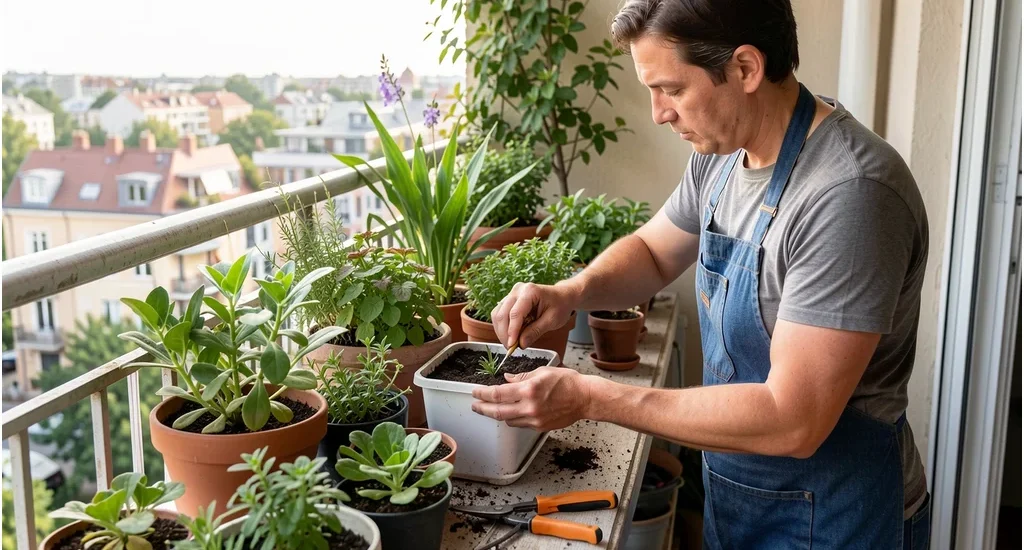
Once you have your containers, plants, and soil ready, it’s time to start planting. Follow these steps carefully to ensure your balcony garden gets off to the best start. Proper planting techniques prevent common issues like root bound plants or poor drainage that can stunt growth.
Remember that container plants often need more frequent attention than their in-ground counterparts. The limited soil volume means roots can’t reach out for more water or nutrients when they’re depleted. This makes your initial planting technique even more crucial for long-term success.
- Prepare your containers
Clean containers with soap and water if they’ve been used before. For new terracotta pots, soak them in water for an hour to prevent them from absorbing moisture from the soil. Ensure all containers have drainage holes—drill them yourself if necessary.
- Add drainage material
Place a layer of small stones, pebbles, or broken pottery pieces at the bottom of each container. This creates space for excess water to collect without saturating the soil. Aim for a layer about 1-2 inches deep, depending on container size.
- Fill with soil
Add your potting mix to the container, filling it about 2/3 full. For larger containers, you can fill the bottom third with lightweight filler like foam packing peanuts (covered with landscape fabric) to reduce weight without sacrificing root space.
- Plant your selections
For seedlings, gently remove them from their nursery pots and loosen the roots if they’re root-bound. Place the plant in the container so the top of the root ball is about 1 inch below the rim (to allow for watering). For seeds, follow the packet instructions for planting depth and spacing.
- Water thoroughly
After planting, give each container a deep watering until water runs out the drainage holes. This helps settle the soil and ensures the roots make good contact with their new environment. For the first week, check soil moisture daily.
- Add mulch (optional)
A thin layer of organic mulch like straw or bark chips can help retain moisture and suppress weeds. This is especially helpful for larger containers and in hot climates where soil dries out quickly.
Warning: Never use garden soil in containers as it compacts and prevents proper drainage, leading to root rot. Always use a quality potting mix.
Watering and Maintenance Tips
Proper watering is the most critical aspect of balcony garden care. Container plants dry out faster than those in the ground, especially in hot or windy conditions. The general rule is to water when the top inch of soil feels dry to the touch.
However, this can vary by plant type—succulents need much less water than tomatoes, for example.
Consistency is key with watering. Plants do best with regular moisture rather than alternating between drought and flood. The American Society for Horticultural Science found that inconsistent watering can reduce plant growth by up to 30%.
Early morning is the best time to water, as it gives plants time to absorb moisture before the heat of the day and reduces evaporation.
- Check soil moisture: Stick your finger 1 inch into the soil—if it’s dry, it’s time to water
- Water deeply: Continue watering until it runs out the drainage holes to ensure the entire root ball is moistened
- Use the right amount: Smaller containers may need daily watering in hot weather, while larger ones can go 2-3 days
- Consider self-watering: For frequent travelers or busy people, self-watering containers can maintain consistent moisture
- Adjust for weather: Plants need more water in hot, dry periods and less in cool, rainy weather
- Use room-temperature water: Cold water can shock plant roots, especially for tropical plants
Beyond watering, regular maintenance keeps your balcony garden thriving:
- Deadhead flowers: Remove spent blooms to encourage more flowers
- Prune regularly: Trim back leggy growth to promote bushier plants
- Rotate containers: Turn pots weekly for even growth, especially important for plants on railings
- Clean leaves: Dust or rinse leaves occasionally to help plants photosynthesize efficiently
- Monitor for pests: Check undersides of leaves weekly for aphids, spider mites, or other pests
Common Balcony Gardening Mistakes to Avoid
Even experienced gardeners make mistakes with balcony gardens. Being aware of these common pitfalls can save you time, money, and frustration. One of the most frequent errors is overcrowding containers—while it might look lush at first, plants will compete for resources and struggle to thrive.
Another common issue is neglecting to rotate plants. In container gardening, plants naturally grow toward the light. Without regular rotation, you’ll end up with lopsided plants.
The University of Minnesota Extension found that rotating container plants weekly can improve growth uniformity by up to 40%.
| Mistake | Why It’s a Problem | How to Fix |
|---|---|---|
| Overcrowding plants | Plants compete for water, nutrients, and space | Follow spacing guidelines, use larger containers |
| Using garden soil | Poor drainage, compacts easily, can contain weeds | Use quality potting mix designed for containers |
| Overwatering | Leads to root rot, fungal diseases, nutrient leaching | Water only when top inch of soil is dry |
| Ignoring drainage | Water pools at bottom, suffocates roots | Ensure all containers have drainage holes |
| Not rotating plants | Results in lopsided growth toward light | Turn containers weekly for even growth |
| Skipping fertilization | Container soil nutrients deplete quickly | Fertilize every 2-4 weeks during growing season |
Creative Balcony Garden Design Ideas
Your balcony garden can be more than just a collection of pots—it can be a carefully designed outdoor living space. Vertical gardening is one of the most effective ways to maximize small spaces. You can use wall-mounted planters, hanging pockets, or trellises to grow plants upward instead of outward.
For a cohesive look, choose containers in similar colors or materials. Group plants with similar care requirements together to make maintenance easier. The Royal Horticultural Society suggests using the “thriller, filler, spiller” technique for container arrangements: one tall plant for height (thriller), some mid-height plants to fill the space (filler), and trailing plants to spill over the edges (spiller).
- Vertical garden: Use wall planters or hanging systems to grow herbs, flowers, or strawberries
- Tiered shelves: Create levels with different plant heights for visual interest
- Railing planters: Attach planter boxes to balcony railings for space-saving greenery
- Hanging garden: Suspend baskets or macramé hangers from the ceiling for a bohemian look
- Theme gardens: Create a herb garden, salad garden, or pollinator garden with specific plant selections
- Color coordination: Choose plants with complementary colors for a designed appearance
- Seasonal displays: Rotate plants seasonally for year-round interest (spring bulbs, summer annuals, fall mums)
Tip: Use mirrors or reflective surfaces on your balcony to create the illusion of more space and to reflect light onto your plants.
Frequently Asked Questions
How much sunlight do balcony plants need?
Most vegetables, herbs, and flowering plants need at least 6-8 hours of direct sunlight daily. Leafy greens and some herbs can tolerate partial shade (4-6 hours), while shade-loving plants like ferns or impatiens need 2-4 hours of indirect light. Observe your balcony’s sun patterns throughout the day to choose appropriate plants.
Can I grow vegetables on my balcony?
Absolutely! Many vegetables thrive in containers on balconies. Cherry tomatoes, peppers, lettuce, spinach, radishes, green onions, and herbs are all excellent choices.
Dwarf varieties of larger plants like cucumbers or zucchini can also work well. Just ensure your containers are large enough to accommodate the plant’s root system and that you provide adequate sunlight and water.
How often should I water my balcony garden?
Watering frequency depends on several factors: container size, plant type, weather, and sun exposure. In general, check the soil daily in hot weather—if the top inch is dry, it’s time to water. Smaller containers may need daily watering, while larger ones can often go 2-3 days between waterings.
Always water deeply until it runs out the drainage holes.
What are the best low-maintenance plants for a balcony?
For beginners or those with limited time, choose plants that are forgiving and require minimal care. Succulents like aloe or echeveria need very little water. Herbs like mint, oregano, and thyme are hardy and drought-tolerant once established.
Snake plants and pothos are excellent low-light options. Marigolds and zinnias are colorful, pest-resistant flowers that bloom all season with little care.
How do I protect my balcony garden from pests?
Prevent pests by keeping your garden clean and healthy. Remove dead leaves and debris regularly, as they can harbor pests. Use organic pest control methods like neem oil or insecticidal soap for common issues like aphids or spider mites.
Companion planting can also help—marigolds repel many pests, while basil can deter mosquitoes. For larger pests like squirrels, physical barriers or deterrent sprays may be necessary.
Final Thoughts
How to create a balcony garden comes down to smart planning, proper plant selection, and consistent care. Start small with easy-to-grow plants, ensure good drainage and soil quality, and don’t be afraid to get creative with your space. Even the smallest balcony can become a productive and beautiful garden with the right approach.
Remember that container gardening offers the flexibility to experiment and adjust as you learn what works best for your space. With each season, you’ll gain more confidence and can expand your balcony garden to include more varieties or design elements.