Last Updated on October 23, 2026 by D. Ruddy
If your lawn looks tired after summer heat, what to do after aerating lawn in fall makes all the difference for next year’s growth. Aeration opens up compacted soil, but the real magic happens in the steps that follow. Proper post-aeration care ensures nutrients, water, and air reach the roots, setting the stage for a thicker, greener lawn when spring arrives.
After aerating, overseed immediately with cool-season grass, apply a starter fertilizer, and keep the soil consistently moist for 2-3 weeks. Avoid heavy foot traffic and mow only when the new grass reaches 3-4 inches.
Why Fall Aeration Works Best
Fall is the ideal time to aerate cool-season grasses like Kentucky bluegrass, fescue, and ryegrass. The soil is still warm enough to encourage root growth, while the air temperatures are cooler, reducing stress on the grass. According to the National Association of Landscape Professionals, lawns aerated in early fall recover faster and develop deeper root systems before winter dormancy.
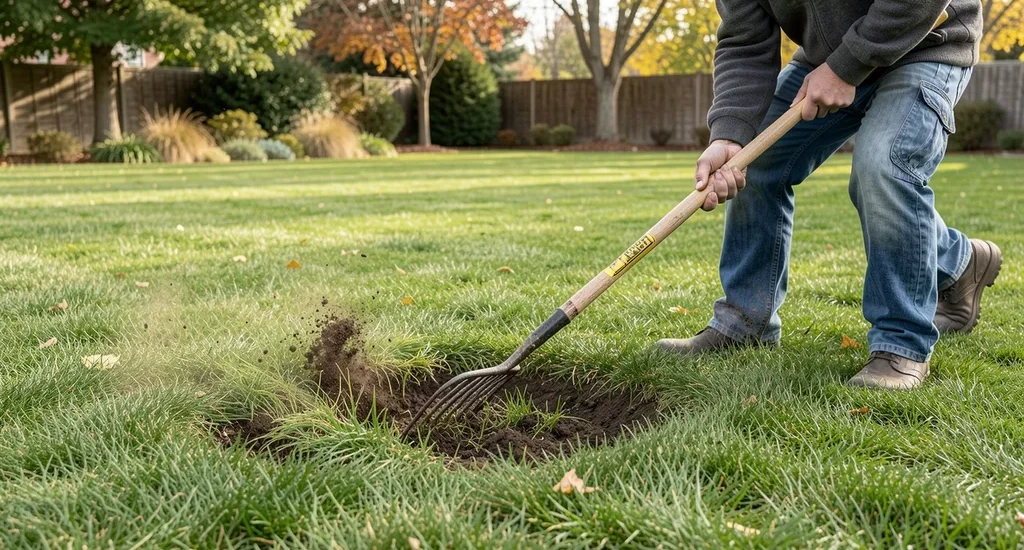
Aeration relieves soil compaction, which is a common issue in high-traffic areas or clay-heavy soils. When soil is compacted, air, water, and nutrients struggle to penetrate, leading to thin, weak grass. By removing small cores of soil, aeration creates pathways for these essential elements to reach the root zone.
- Optimal timing: Aerate 4-6 weeks before the first frost
- Soil temperature: Should be above 55°F for best results
- Grass types: Best for cool-season grasses (not warm-season)
- Equipment: Use a core aerator that removes soil plugs
- Depth: Plugs should be 2-3 inches deep for maximum effectiveness
Important: Never aerate during drought conditions or when the lawn is stressed. Always water deeply 1-2 days before aerating to soften the soil.
Overseeding Right After Aeration
Overseeding immediately after aeration is one of the most effective ways to thicken your lawn and fill in bare spots. The holes created by aeration provide the perfect environment for seed-to-soil contact, which is critical for germination. Without this contact, many seeds will simply wash away or fail to sprout.
Choose a high-quality seed blend that matches your existing grass type. For most cool-season lawns, a mix of Kentucky bluegrass, perennial ryegrass, and fine fescue works well. The University of Nebraska-Lincoln recommends using 4-6 pounds of seed per 1,000 square feet for new lawns and 2-3 pounds for overseeding existing lawns.
Best Grass Seed Types for Fall Overseeding
| Grass Type | Germination Time | Shade Tolerance | Drought Resistance |
|---|---|---|---|
| Kentucky Bluegrass | 14-30 days | Moderate | Moderate |
| Perennial Ryegrass | 5-10 days | Low | Low |
| Fine Fescue | 10-14 days | High | High |
| Tall Fescue | 7-14 days | High | High |
For best results, use a seed spreader to ensure even distribution. Walk in perpendicular passes to avoid missing spots. Lightly rake the seed into the aeration holes to improve contact, then apply a thin layer of compost or peat moss to help retain moisture.
Tip: Mix your seed with a small amount of sand or sawdust to help you see where you’ve already spread it and avoid double-coverage.
Applying the Right Fertilizer
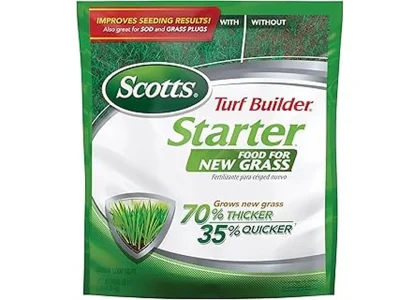
Fertilizing after aeration and overseeding gives your lawn the nutrients it needs to recover and grow strong roots. A starter fertilizer high in phosphorus is ideal for new seed, as phosphorus promotes root development. Look for a fertilizer with an NPK ratio of approximately 10-20-20 or similar.
The Michigan State University Extension recommends applying 1 pound of nitrogen per 1,000 square feet for fall fertilization. This can be split into two applications: one immediately after aeration and overseeding, and another 6-8 weeks later. The second application helps strengthen the grass before winter.
Fertilizer Application Steps
- Choose the right product: Select a slow-release starter fertilizer with phosphorus
- Calibrate your spreader: Follow the manufacturer’s settings for your specific fertilizer
- Apply evenly: Walk in straight lines, slightly overlapping each pass
- Water immediately: Lightly water after application to activate the fertilizer
- Avoid over-application: More isn’t better – follow the recommended rates
| Fertilizer Type | NPK Ratio | Best For | Application Rate |
|---|---|---|---|
| Starter Fertilizer | 10-20-20 | New seed and sod | 1 lb N/1000 sq ft |
| Fall Lawn Food | 24-0-11 | Established lawns | 1 lb N/1000 sq ft |
| Winterizer | 12-0-22 | Late fall feeding | 1 lb N/1000 sq ft |
After applying fertilizer, water your lawn lightly to help the granules dissolve and reach the soil. Avoid heavy watering that could wash the fertilizer away. If rain is forecast within 24 hours, you can skip watering, but otherwise, plan to water within a day of application.
Proper Watering Techniques Post-Aeration
Watering is the most critical factor in the success of your post-aeration lawn care. New grass seed needs consistent moisture to germinate, and the aeration holes help water penetrate deeper into the soil. According to the Iowa State University Extension, the top inch of soil should stay consistently moist but not waterlogged during the germination period.
For the first 2-3 weeks after aeration and overseeding, water your lawn daily if there’s no rain. After germination (when you see new grass sprouts), you can reduce watering to every other day. Once the new grass is established (about 4-6 weeks), return to a normal watering schedule of 1-1.5 inches per week, including rainfall.
Watering Schedule for New Seed
| Time Period | Frequency | Amount per Session | Notes |
|---|---|---|---|
| First 2 weeks | Daily | 1/4 inch | Keep soil moist |
| Weeks 3-4 | Every other day | 1/4 inch | After germination |
| After 4 weeks | 2-3 times per week | 1/2 inch | Normal schedule |
- Best time to water: Early morning (6-10 AM) to reduce evaporation and disease risk
- Watering method: Use a sprinkler that provides even coverage
- Soil check: Insert a screwdriver into the soil – it should go in easily if moisture is adequate
- Avoid: Watering in the evening, which can promote fungal diseases
- Adjust for rain: Reduce watering if rainfall provides adequate moisture
Warning: Overwatering can wash away seed and fertilizer, while underwatering will prevent germination. Find the right balance for your soil type.
Top Dressing for Enhanced Results
Top dressing after aeration helps improve soil structure, retain moisture, and provide additional nutrients for your lawn. This practice involves spreading a thin layer of organic matter over your lawn, which fills in the aeration holes and creates an ideal environment for new grass growth.
The best materials for top dressing are compost, peat moss, or a sand-compost mix. The University of California Cooperative Extension recommends using a 1:1:1 ratio of sand, compost, and topsoil for most lawns. For clay soils, a higher proportion of compost can help improve drainage.
How to Apply Top Dressing
- Choose your material: Use well-aged compost or a commercial top dressing mix
- Prepare the material: Ensure it’s fine and free of large chunks or debris
- Apply evenly: Use a shovel or top dressing tool to spread a 1/4 to 1/2 inch layer
- Work it in: Use a rake to lightly work the material into the aeration holes
- Water thoroughly: Help settle the top dressing and activate its benefits
| Material | Best For | Application Rate | Pros | Cons |
|---|---|---|---|---|
| Compost | Most lawns | 1/4 to 1/2 inch | Rich in nutrients, improves soil structure | Can introduce weeds if not properly aged |
| Peat Moss | Sandy soils | 1/4 inch | Retains moisture, lightweight | Can be acidic, may need lime |
| Sand-Compost Mix | Clay soils | 1/2 inch | Improves drainage, balanced | More expensive than pure compost |
Top dressing not only improves the immediate results of your aeration but also provides long-term benefits to your lawn’s health. It helps break down thatch, improves soil biology, and can even reduce future compaction.
Lawn Care Timeline After Aeration
Following a proper timeline after aeration ensures each step has the maximum impact. The first 4-6 weeks are critical for seed germination and root establishment. During this period, your lawn needs consistent care to take full advantage of the aeration benefits.
According to the National Turfgrass Evaluation Program, lawns that receive proper post-aeration care show a 30-50% improvement in density and color the following spring compared to untreated lawns. The key is to be patient and follow through with all the recommended steps.
Week-by-Week Care Plan
| Week | Tasks | Watering | Mowing |
|---|---|---|---|
| Week 1 | Overseed, fertilize, top dress | Daily, 1/4 inch | No mowing |
| Week 2 | Monitor germination | Daily, 1/4 inch | No mowing |
| Week 3 | Check for bare spots | Every other day, 1/4 inch | No mowing |
| Week 4 | Apply second fertilizer if needed | Every other day, 1/2 inch | Mow if grass is 3-4 inches |
| Week 6+ | Resume normal care | 1-1.5 inches per week | Normal mowing height |
- Germination signs: You should see new grass sprouts within 7-14 days for most grass types
- Fill bare spots: If areas remain bare after 3 weeks, consider re-seeding those spots
- First mowing: Wait until new grass reaches 3-4 inches, then mow to 2-2.5 inches
- Leaf cleanup: Keep fallen leaves off the lawn to prevent smothering new grass
Common Mistakes to Avoid After Aeration
Even with the best intentions, many homeowners make mistakes that reduce the effectiveness of their aeration efforts. Being aware of these common pitfalls can help you get the most out of your lawn care investment.
The most frequent mistake is skipping the overseeding step. According to a survey by the Professional Lawn Care Association of America, nearly 60% of homeowners who aerate their lawns don’t follow up with overseeding, missing out on a prime opportunity to improve lawn density and health.
Top 5 Aeration Aftercare Mistakes
- Skipping overseeding: Without adding new seed, you’re missing the best chance to thicken your lawn and fill bare spots.
- Improper watering: Either underwatering (preventing germination) or overwatering (washing away seed and fertilizer).
- Using the wrong fertilizer: Applying a high-nitrogen fertilizer instead of a starter fertilizer with phosphorus for new seed.
- Mowing too soon: Cutting the grass before new seedlings are established can damage the tender new growth.
- Ignoring soil test results: Not addressing pH or nutrient deficiencies that could hinder grass growth.
| Mistake | Impact | Solution |
|---|---|---|
| Not removing soil plugs | Can smother grass if left on surface | Break up and distribute plugs or leave to decompose |
| Aerating too late in fall | New grass won’t establish before winter | Aerate at least 4-6 weeks before first frost |
| Using dull aerator tines | Ineffective aeration, poor results | Sharpen or replace tines before use |
| Applying herbicides | Can kill new grass seedlings | Avoid herbicides for 4-6 weeks after overseeding |
Tip: If you’re unsure about your lawn’s specific needs, consider taking a soil test before aerating. This will help you choose the right amendments and fertilizer for optimal results.
When and How to Resume Normal Lawn Care
After 4-6 weeks of special care following aeration, you can gradually return to your normal lawn maintenance routine. However, there are some adjustments you should make to ensure the new grass continues to thrive.
The first normal mowing after aeration and overseeding should be done when the new grass reaches about 3-4 inches in height. Set your mower to a higher setting (about 3 inches) for the first few cuts to avoid stressing the new grass. The University of Illinois Extension recommends never removing more than one-third of the grass blade length in a single mowing.
Transitioning Back to Regular Care
- Mowing: Return to your normal mowing height (typically 2.5-3.5 inches for most cool-season grasses)
- Watering: Gradually reduce frequency while increasing amount per session (1-1.5 inches per week total)
- Fertilizing: Apply a winterizer fertilizer 6-8 weeks after aeration to strengthen roots before winter
- Weed control: Wait until new grass is established (after 3-4 mowings) before applying any herbicides
- Traffic: Limit heavy use of the lawn until new grass is fully established (about 8-10 weeks)
Signs Your Lawn Has Recovered
- New growth: You see dense, green grass filling in previously thin areas
- Root development: Grass pulls up easily with a deep root system when gently tugged
- Color improvement: The lawn has a consistent, healthy green color
- Reduced compaction: A screwdriver or soil probe enters the soil easily
- Weed reduction: Fewer weeds as the dense grass crowds them out
Remember that the benefits of fall aeration often become most apparent the following spring. The improved root system and reduced compaction will help your lawn green up faster and resist summer stress better.
Frequently Asked Questions
How soon after aerating should I overseed?
Overseed immediately after aerating, ideally within the same day. The fresh aeration holes provide the perfect seed-to-soil contact needed for germination. If you wait, the holes may close up or fill with debris, reducing the effectiveness of both the aeration and overseeding.
Can I aerate and fertilize without overseeding?
While you can aerate and fertilize without overseeding, you’ll miss out on a prime opportunity to improve your lawn’s density. The combination of aeration, overseeding, and fertilization is the most effective approach for lawn renovation. However, if your lawn is already thick and healthy, you might skip overseeding and just fertilize.
How much water does my lawn need after aeration?
For the first 2 weeks after aeration and overseeding, your lawn needs about 1/4 inch of water daily to keep the top inch of soil moist. After germination, you can reduce to every other day with 1/4 inch, then transition to deeper, less frequent watering (1-1.5 inches per week) once the new grass is established.
When can I walk on my lawn after aeration?
You can walk on your lawn immediately after aeration, but try to minimize traffic for the first 2-3 weeks, especially in areas where you’ve overseeded. Heavy foot traffic can dislodge seeds or damage tender new grass shoots. After 3 weeks, you can gradually resume normal use as the new grass establishes.
Is it normal for my lawn to look worse after aeration?
Yes, it’s normal for your lawn to look a bit rough immediately after aeration. The soil plugs on the surface and the small holes can make the lawn appear uneven. However, within 1-2 weeks, you should see new growth filling in, and after 4-6 weeks, your lawn should look significantly better than before aeration.
Final Thoughts
Proper care after aerating your lawn in fall sets the foundation for a lush, healthy lawn next spring. Focus on overseeding, fertilizing, and consistent watering in the weeks following aeration. Avoid common mistakes like improper watering or mowing too soon.
With patience and the right approach, you’ll see a noticeable improvement in your lawn’s density, color, and overall health.