Last Updated on October 23, 2026 by D. Ruddy
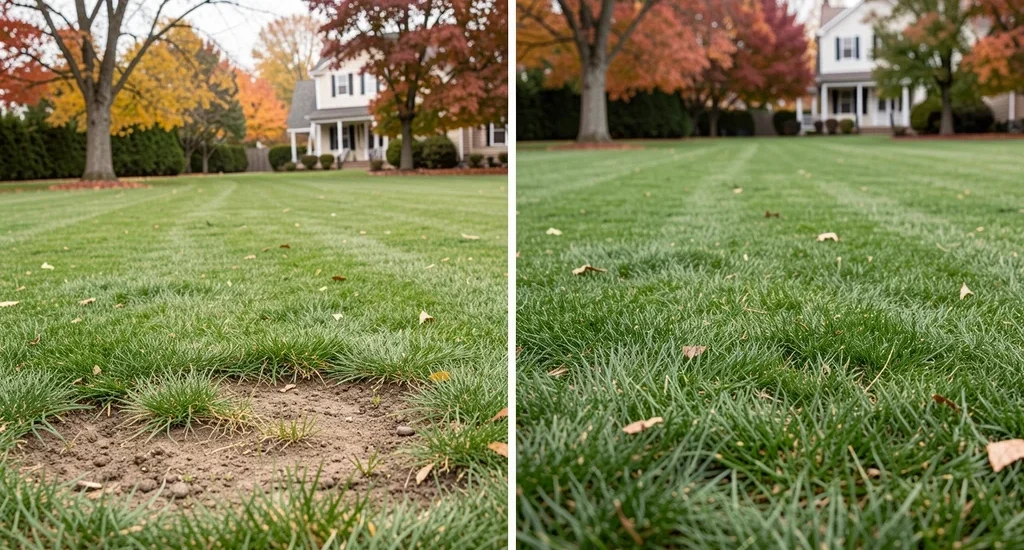
If your lawn looks thin, patchy, or worn out after summer, when to aerate and seed lawn in fall is the key to reviving it. Fall’s cooler temperatures and consistent moisture create the perfect conditions for new grass to establish strong roots before winter. This guide covers the ideal timing, step-by-step process, and expert tips to ensure your lawn thrives next spring.
The best time to aerate and seed your lawn in fall is 4 to 6 weeks before the first frost, when soil temperatures are between 55°F and 65°F. This window allows grass seeds to germinate and roots to establish before winter dormancy.
Why Fall Is the Best Time to Aerate and Seed
Fall offers several advantages for lawn renovation that other seasons simply can’t match. The combination of warm soil and cool air temperatures creates an ideal environment for seed germination and root growth. According to the National Association of Landscape Professionals, lawns aerated and seeded in early fall show a 70% higher survival rate for new grass compared to spring plantings.
- Optimal Soil Temperature: Soil stays warm (55-65°F) from retained summer heat, which is perfect for seed germination.
- Reduced Weed Competition: Many annual weeds die off in fall, giving new grass less competition for resources.
- Moisture Consistency: Cooler temperatures mean less evaporation, so soil stays moist longer after watering.
- Stronger Root Development: Cool-season grasses focus on root growth in fall, establishing deeper systems before winter.
- Fewer Pests: Many lawn pests are less active in fall, reducing the risk of damage to new grass.
| Season | Pros | Cons |
|---|---|---|
| Fall | Best germination rates, less weed competition, ideal soil temps | Limited window before frost |
| Spring | Longer growing season | More weeds, requires more watering, soil may be too cold early |
Fall’s cooler weather also means you’ll need to water less frequently, as evaporation rates are lower. The Turfgrass Water Conservation Alliance reports that fall-seeded lawns require up to 30% less irrigation than those planted in summer. This makes fall the most water-efficient time for lawn renovation.
Signs Your Lawn Needs Aeration and Seeding
Not every lawn needs annual aeration and seeding, but most can benefit from this process every 1-3 years. Look for these clear indicators that your lawn could use some attention:
- Thin or Patchy Grass: If you can see more than 30-40% bare soil between grass blades, it’s time to overseed. Thin lawns are more susceptible to weeds and disease.
- Heavy Thatch Buildup: A thatch layer thicker than ½ inch prevents water, air, and nutrients from reaching the soil. Aeration helps break this up.
- Soil Compaction: If your lawn feels hard to the touch or water pools on the surface, the soil is likely compacted. Aeration relieves this compaction.
- Poor Drainage: Water should absorb into the soil within 15-30 minutes. If it sits on the surface longer, your soil may be compacted.
- High-Traffic Areas: Paths where kids play, pets run, or people frequently walk often show wear first and need extra attention.
Tip: Perform a simple screwdriver test: if you can’t push a screwdriver 6 inches into the soil easily, your lawn needs aeration.
Another way to check for compaction is to look at your grass after a rain. If you see water pooling in low areas or the grass shows signs of stress (yellowing, wilting) in high-traffic spots, these are clear signs your soil needs aeration. According to a study by the University of Nebraska-Lincoln, compacted soils can reduce water infiltration by up to 80%.
Exact Timing: When to Aerate and Seed Lawn in Fall
Timing is everything when it comes to fall lawn renovation. The ideal window depends on your grass type and local climate, but generally falls between late August and early October for most regions.
- Cool-Season Grasses (Kentucky Bluegrass, Fescue, Ryegrass): Aerate and seed 4-6 weeks before the first expected frost. This gives new grass 4-6 weeks to establish before winter dormancy.
- Warm-Season Grasses (Bermuda, Zoysia, St. Augustine): Early fall (late August to early September) is best, as these grasses need warmer soil to germinate.
- Transition Zone: If you have a mix of grass types, aim for early September to give all varieties the best chance.
| Grass Type | Best Fall Timing | Soil Temp Range |
|---|---|---|
| Kentucky Bluegrass | Early to mid-September | 55-65°F |
| Tall Fescue | Late August to early October | 55-65°F |
| Perennial Ryegrass | Early September | 55-65°F |
| Bermuda Grass | Late August to early September | 65-75°F |
To determine your exact timing, check your local frost dates. The Old Farmer’s Almanac provides region-specific frost date information. Aim to complete your aeration and seeding at least 4 weeks before the first expected frost. This gives new grass enough time to establish roots that are 2-3 inches deep before winter.
Important: Soil temperature is more critical than air temperature for seed germination. Use a soil thermometer to check that temperatures are consistently in the 55-65°F range at a depth of 2-3 inches.
If you miss the early fall window, you might still have success with late fall seeding (late October to early November) in some regions. This is called dormant seeding, where seeds lie dormant in the soil over winter and germinate in early spring. However, this method is riskier as seeds may be washed away or eaten by birds.
Step-by-Step Guide to Aerating and Seeding Your Lawn
Follow this comprehensive process to ensure your fall lawn renovation is a success. Proper preparation and technique make all the difference in achieving a lush, healthy lawn.
Step 1: Prepare Your Lawn
Start by mowing your lawn shorter than usual—about 1.5 to 2 inches. This allows the aerator to penetrate the soil more effectively and gives seeds better soil contact.
Remove any debris, sticks, or large rocks from the lawn. These can interfere with the aerator and create uneven results. Also, mark any sprinkler heads, utility lines, or shallow-rooted plants to avoid damaging them.
- Mow lawn to 1.5-2 inches
- Clear debris and mark obstacles
- Water lawn thoroughly 1-2 days before aerating
- Apply herbicide if needed (wait 1-2 weeks before seeding)
Step 2: Aerate the Soil
Use a core aerator (also called a plug aerator) that removes small cores of soil from the lawn. This is more effective than spike aerators, which can compact soil further. Core aerators create holes that allow air, water, and nutrients to penetrate deep into the soil.
Aim for 20-40 holes per square foot, with holes about 2-3 inches deep. For severely compacted soils, make two passes in different directions.
| Aerator Type | Pros | Cons |
|---|---|---|
| Manual Core Aerator | Inexpensive, good for small lawns | Labor-intensive, time-consuming |
| Power Core Aerator | Faster, more efficient for large lawns | More expensive, heavier |
| Tow-Behind Aerator | Covers large areas quickly | Requires a tractor or lawn mower, may be less precise |
Warning: Never aerate when the soil is too dry or too wet. Dry soil makes aeration difficult, while wet soil can clog the aerator and create muddy holes.
Step 3: Overseed the Lawn
After aerating, it’s time to spread your grass seed. Choose a high-quality seed blend that’s appropriate for your climate and lawn conditions. For most cool-season lawns, a mix of Kentucky bluegrass, fine fescue, and perennial ryegrass works well.
Use a broadcast spreader for even distribution. The recommended seeding rate is typically 6-8 pounds of seed per 1,000 square feet for new lawns, and 3-4 pounds for overseeding existing lawns. Make two passes in perpendicular directions to ensure even coverage.
- Select appropriate grass seed for your region
- Use a broadcast spreader for even distribution
- Apply seed at recommended rates (check seed bag for specifics)
- Make two passes in different directions
- Lightly rake the seed to ensure soil contact
Step 4: Fertilize and Mulch
After seeding, apply a starter fertilizer high in phosphorus to promote root development. Look for a fertilizer with an NPK ratio of about 10-20-20 or similar. Phosphorus is the middle number and is crucial for new root growth.
Consider adding a thin layer of compost or peat moss (about 1/4 inch thick) to help retain moisture and protect the seeds. This is especially helpful in areas with poor soil quality or where erosion might be a concern.
| Fertilizer Type | NPK Ratio | Best For |
|---|---|---|
| Starter Fertilizer | 10-20-20 | New lawns, overseeding |
| Winterizer Fertilizer | 20-0-10 | Late fall feeding |
| Balanced Fertilizer | 20-20-20 | Established lawns |
Step 5: Water Properly
Watering is the most critical part of the process after seeding. Keep the soil consistently moist but not waterlogged. The top inch of soil should stay damp until the new grass reaches about 2 inches in height.
Water lightly (about 1/4 inch) 2-3 times per day for the first 1-2 weeks, then gradually reduce to once per day as the grass establishes. After germination, water deeper (about 1 inch) 2-3 times per week to encourage deep root growth.
- First 2 Weeks: Light watering 2-3 times daily (1/4 inch each time)
- Weeks 3-4: Water once daily (1/2 inch)
- After Germination: Deep watering 2-3 times weekly (1 inch)
- Early Morning: Always water in the early morning to reduce evaporation and disease risk
Tip: Use a rain gauge or empty tuna can to measure water depth. Most sprinklers deliver about 1/2 inch of water in 30 minutes.
Choosing the Right Grass Seed for Fall Seeding
Selecting the right grass seed is crucial for a successful fall lawn renovation. The best choice depends on your climate, soil type, sun exposure, and how you use your lawn.
Cool-Season Grass Options
For most northern regions, cool-season grasses are the best choice. These varieties thrive in temperatures between 60-75°F and can survive cold winters.
- Kentucky Bluegrass: Known for its lush, dark green appearance and good wear resistance. Best for full sun to partial shade. Germinates in 14-21 days.
- Tall Fescue: Drought-tolerant and disease-resistant. Handles a variety of soil types and does well in both sun and shade. Germinates in 7-14 days.
- Fine Fescue: Shade-tolerant and low-maintenance. Good for areas with poor soil. Germinates in 7-14 days.
- Perennial Ryegrass: Quick to germinate (5-10 days) and establishes rapidly. Often used in mixes for fast greening. Needs more water than other cool-season grasses.
Warm-Season Grass Options
In southern regions, warm-season grasses are more appropriate. These varieties thrive in temperatures between 80-95°F and go dormant in winter.
- Bermuda Grass: Drought-tolerant and wear-resistant. Best for full sun. Germinates in 7-14 days. Can be invasive in some areas.
- Zoysia Grass: Slow-growing but very durable. Tolerates a range of conditions from sun to partial shade. Germinates in 14-21 days.
- St. Augustine Grass: Shade-tolerant and good for coastal areas. Needs more water than other warm-season grasses. Germinates in 10-21 days.
- Centipede Grass: Low-maintenance and good for acidic soils. Needs less fertilizer than other warm-season grasses. Germinates in 14-21 days.
| Grass Type | Climate Zone | Sun Requirement | Germination Time |
|---|---|---|---|
| Kentucky Bluegrass | Cool | Full sun to partial shade | 14-21 days |
| Tall Fescue | Cool | Sun to shade | 7-14 days |
| Bermuda Grass | Warm | Full sun | 7-14 days |
| Zoysia Grass | Warm | Sun to partial shade | 14-21 days |
For most homeowners, a mixed blend of grasses works best. For example, a mix of Kentucky bluegrass (70%), fine fescue (20%), and perennial ryegrass (10%) provides a good balance of beauty, durability, and quick establishment. According to a study by the National Turfgrass Evaluation Program, mixed grass lawns show better disease resistance and overall resilience than single-variety lawns.
Common Mistakes to Avoid When Aerating and Seeding
Even with the best intentions, many homeowners make mistakes that can reduce the effectiveness of their fall lawn renovation. Being aware of these common pitfalls can help you achieve better results.
- Skipping Soil Preparation: Not testing or amending your soil before seeding can lead to poor germination. Conduct a soil test to check pH and nutrient levels. Most grasses prefer a pH between 6.0 and 7.0. If your soil is too acidic or alkaline, apply the appropriate amendments before seeding.
- Using the Wrong Aerator: Spike aerators can actually compact soil further. Always use a core aerator that removes plugs of soil. Also, ensure the aerator is set to remove cores that are 2-3 inches deep for best results.
- Seeding at the Wrong Rate: Too little seed results in thin grass, while too much can lead to competition and weak plants. Always follow the recommended seeding rates on the seed bag for your specific grass type.
- Not Watering Properly: Inconsistent watering is the number one reason for seed failure. New seeds need to stay consistently moist. Many people water too much, causing seeds to wash away, or too little, allowing seeds to dry out.
- Aerating at the Wrong Time: Aerating too early in fall when soil is still too warm or too late when frost is imminent can reduce success. Stick to the 4-6 week window before the first frost for cool-season grasses.
- Ignoring Weed Control: Applying pre-emergent herbicides before seeding can prevent grass seeds from germinating. Wait until new grass is established (after 3-4 mowings) before applying any herbicides.
- Forgetting to Fertilize: New grass needs nutrients to establish strong roots. Always apply a starter fertilizer after seeding. Skipping this step can result in weak, sparse grass that struggles to compete with weeds.
Warning: Never apply herbicides and grass seed at the same time. Most pre-emergent herbicides will prevent grass seeds from germinating. Wait at least 6-8 weeks after seeding before applying any weed control products.
Another common mistake is not adjusting your mower height after seeding. Keep your mower blade high (about 3-4 inches) for the first few mowings to avoid stressing the new grass. Also, never remove more than one-third of the grass blade length at a time, as this can shock the new plants.
Post-Seeding Lawn Care Tips
Proper care after aerating and seeding is crucial for ensuring your new grass establishes well and survives the winter. Follow these tips to give your lawn the best chance of success.
Mowing New Grass
Wait until your new grass reaches about 3-4 inches in height before the first mowing. This usually takes 4-6 weeks after germination, depending on the grass type and growing conditions.
When you do mow for the first time, set your mower to a high setting (about 3-4 inches) and never remove more than one-third of the grass blade length. This helps the new grass develop strong root systems.
- Wait until grass is 3-4 inches tall
- Set mower to 3-4 inch height
- Never remove more than 1/3 of blade length
- Mow when grass is dry to avoid clumping
- Keep mower blades sharp to prevent tearing grass
Fertilizing Schedule
After your initial starter fertilizer application, follow up with additional feedings to support root development and overall growth.
| Timing | Fertilizer Type | Purpose |
|---|---|---|
| At seeding | Starter (10-20-20) | Promote root growth |
| 4-6 weeks after germination | Balanced (20-20-20) | Support overall growth |
| Late fall (6-8 weeks after seeding) | Winterizer (20-0-10) | Strengthen roots for winter |
Weed Control
While it might be tempting to tackle weeds immediately, it’s important to wait until your new grass is well-established. Most pre-emergent herbicides will prevent grass seeds from germinating, and post-emergent herbicides can damage young grass.
Wait until your new grass has been mowed at least 3-4 times before applying any herbicides. This usually means waiting about 6-8 weeks after seeding. When you do apply herbicides, choose selective products that target weeds without harming your grass type.
Tip: Hand-pulling weeds is the safest option for new lawns. This allows you to target weeds without risking damage to your developing grass.
Winter Preparation
As winter approaches, there are a few steps you can take to protect your new lawn. Continue watering as needed until the ground freezes. New grass needs consistent moisture to establish strong roots before winter dormancy.
Avoid heavy traffic on new grass until it’s fully established (usually after one full growing season). If possible, keep pets and children off the newly seeded areas for at least 4-6 weeks.
- Continue watering until ground freezes
- Avoid heavy traffic on new grass
- Keep leaves and debris cleared from lawn
- Apply winterizer fertilizer 6-8 weeks after seeding
- Mow as needed until grass stops growing
Frequently Asked Questions
Can I aerate and seed my lawn too early in fall?
Yes, aerating and seeding too early in fall can be problematic. If soil temperatures are still above 70°F, cool-season grass seeds may struggle to germinate or could be susceptible to disease. Additionally, early seeding might give weeds a chance to establish before your grass does.
Aim for soil temperatures between 55-65°F, which typically occurs in early to mid-September for most regions.
How long does it take for grass seed to germinate in fall?
Germination time varies by grass type. Cool-season grasses like Kentucky bluegrass take 14-21 days, while perennial ryegrass can germinate in as little as 5-10 days. Tall fescue and fine fescue typically take 7-14 days.
Warm-season grasses like Bermuda may take 7-14 days but need warmer soil temperatures to germinate properly in fall.
Do I need to aerate before overseeding?
Aerating before overseeding is highly recommended. Aeration creates holes that allow seeds to make direct contact with the soil, improving germination rates. It also helps relieve soil compaction, allowing water and nutrients to reach the seeds more effectively.
Without aeration, many seeds will simply sit on the surface of thatch or compacted soil and fail to germinate.
What’s the best grass seed for fall overseeding?
The best grass seed depends on your climate and lawn conditions. For cool-season lawns, a mix of Kentucky bluegrass (for beauty and durability), tall fescue (for drought tolerance), and perennial ryegrass (for quick establishment) works well. For warm-season lawns, consider Bermuda or Zoysia grass.
Always choose high-quality, certified seed and check the label for purity and germination rates.
How often should I water after aerating and seeding?
Watering frequency is crucial after seeding. For the first 1-2 weeks, water lightly (about 1/4 inch) 2-3 times per day to keep the soil consistently moist. After germination, reduce to once daily with about 1/2 inch of water.
Once the grass is established (about 4-6 weeks after germination), water deeply (1 inch) 2-3 times per week to encourage deep root growth. Always water in the early morning to reduce evaporation and disease risk.
Final Thoughts
Knowing when to aerate and seed lawn in fall gives your grass the best chance to establish strong roots before winter. The ideal window is 4-6 weeks before the first frost, with soil temperatures between 55-65°F. Follow the step-by-step process, avoid common mistakes, and provide proper post-seeding care to ensure a lush, healthy lawn next spring.
With the right timing and technique, your fall lawn renovation can transform thin, patchy grass into a vibrant, resilient lawn.