Walk into any garden centre and the lawn care aisle is overwhelming. Dozens of fertilizers. Weed killers. Grub controls. Seed mixes. It is designed to confuse you into buying things you do not need. Here is exactly what products you need each season – and what you can skip.
Spring Products
Pre-Emergent Herbicide
What it does: Prevents crabgrass and other annual weeds from germinating. Does NOT kill existing weeds. Timing is critical – apply before soil temperatures reach 55 degrees F (when forsythia blooms).
Active ingredients to look for: Prodiamine (Barricade), dithiopyr (Dimension), or pendimethalin (Halts). These provide 3 to 6 months of control depending on the rate.
Recommended product: Scotts Halts Crabgrass Preventer with Lawn Food is widely available. For those who want separate weed control and fertilizer, buy a standalone pre-emergent and fertilize separately.
Skip it if: You had no crabgrass problems last year, or you plan to overseed in spring (pre-emergent prevents grass seed from germinating too).
🍂 The Silent Lawn Killer: Damp Leaves Will Suffocate Your Grass
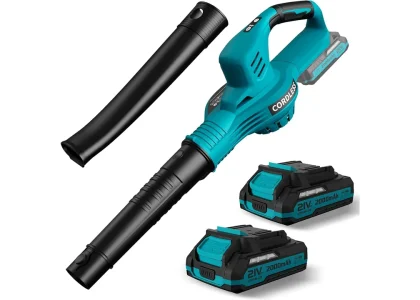
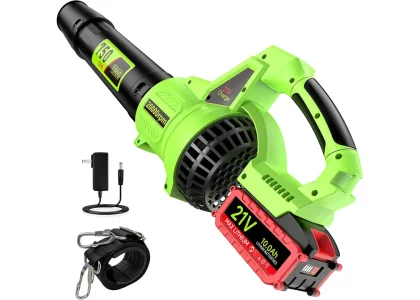
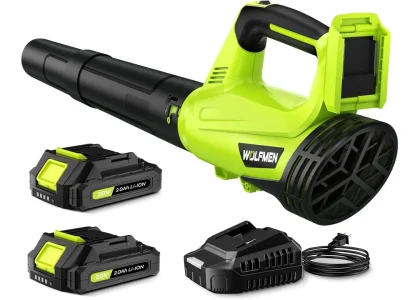
Trapped wet leaves create a breeding ground for destructive snow mold. Clear the yard fast with a high-power cordless blower before the ground freezes.
Spring Fertilizer
What it does: Provides nitrogen for green-up and early growth. Look for slow-release nitrogen for steady feeding.
Recommended NPK: 20-5-10 or 24-4-12 with at least 30% slow-release nitrogen.
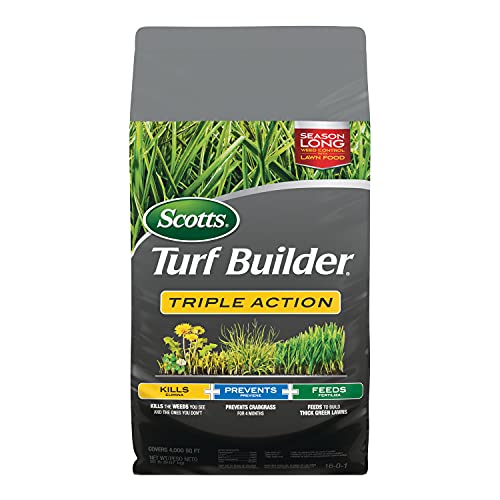
Recommended product: Milorganite (6-4-0, organic, slow-release) or Scotts Turf Builder Lawn Food (28-0-3). Milorganite is foolproof – it does not burn and feeds slowly. Scotts gives a faster green-up.
Skip it if: You applied a winterizer fertilizer in late fall. The lawn may not need spring feeding if it greened up well on its own. Wait and see before applying.
Broadleaf Weed Killer (Post-Emergent)
What it does: Kills existing broadleaf weeds (dandelions, clover, plantain, chickweed) without killing grass. Spot-treat individual weeds – do not broadcast.
🍂 The Silent Lawn Killer: Damp Leaves Will Suffocate Your Grass
Trapped wet leaves create a breeding ground for destructive snow mold. Clear the yard fast with a high-power cordless blower before the ground freezes.
Active ingredients: 2,4-D, dicamba, mecoprop-p (MCPP), or triclopyr. Combination products are more effective than single-ingredient ones.
Recommended product: Ortho Weed B Gon or Spectracide Weed Stop. Both come in ready-to-use spray bottles with a wand for spot treatment.
Skip it if: You have fewer than a dozen weeds. Hand-pull them instead. The chemical is more trouble than it is worth for scattered weeds.
Summer Products
Grub Control (Preventive)
What it does: Applied in early summer (June to July), prevents grub eggs from hatching and larvae from feeding on grass roots.
Active ingredients: Imidacloprid (Merit), chlorantraniliprole (Acelepryn), or nematodes (organic option). Chlorantraniliprole is the most environmentally friendly synthetic option.
🍂 The Silent Lawn Killer: Damp Leaves Will Suffocate Your Grass
Trapped wet leaves create a breeding ground for destructive snow mold. Clear the yard fast with a high-power cordless blower before the ground freezes.
Recommended product: Scotts GrubEx (chlorantraniliprole). Apply once in early summer and it protects all season.
Skip it if: You have never had a grub problem. Do not apply preventive grub control “just in case.” Monitor for grubs in August before treating.
Grub Killer (Curative)
What it does: Kills active grubs feeding on roots. Use only if you find more than 5-10 grubs per square foot in late summer.
Active ingredient: Trichlorfon (Dylox) or carbaryl. These are harsh chemicals – use only when necessary.
Recommended product: BioAdvanced 24-Hour Grub Killer. Apply and water in immediately.
🍂 The Silent Lawn Killer: Damp Leaves Will Suffocate Your Grass
Trapped wet leaves create a breeding ground for destructive snow mold. Clear the yard fast with a high-power cordless blower before the ground freezes.
Fall Products
Fall Fertilizer
What it does: Higher potassium content strengthens roots and improves winter hardiness. The most important fertilizer application of the year for cool-season lawns.
Recommended NPK: 20-5-20 or 24-4-12.
Recommended product: Scotts Turf Builder WinterGuard Fall Lawn Food. Formulated specifically for fall application with higher potassium.
Check Fall Fertilizer on Amazon
Grass Seed
What it does: Overseeding thickens the lawn and fills in bare spots. Fall is the best time to seed cool-season lawns.
🍂 The Silent Lawn Killer: Damp Leaves Will Suffocate Your Grass
Trapped wet leaves create a breeding ground for destructive snow mold. Clear the yard fast with a high-power cordless blower before the ground freezes.
What to look for: Named varieties (not just “tall fescue” but “Rebel IV tall fescue”). Recent test date on the label. 0.0% weed seed or “0.01% other crop.” Avoid cheap seed with “annual ryegrass” or high percentages of “other crop” – those are weeds.
Recommended product: Jonathan Green Black Beauty (premium tall fescue blend) or Scotts Turf Builder Grass Seed (widely available, decent quality).
Lime
What it does: Raises soil pH if your lawn is too acidic (below 6.0). Most common in high-rainfall areas.
Recommended product: Pennington Fast Acting Lime or any pelletized dolomitic lime. Pelletized lime is easier to spread and less dusty than powdered lime.
Skip it if: You have not done a soil test. Never apply lime without knowing your soil pH. Too much lime is as bad as too little.
🍂 The Silent Lawn Killer: Damp Leaves Will Suffocate Your Grass
Trapped wet leaves create a breeding ground for destructive snow mold. Clear the yard fast with a high-power cordless blower before the ground freezes.
Winter Products
Soil Test Kit
Winter is the time to test your soil and plan for next year. Knowing your pH and nutrient levels means you buy only the products you actually need.
Recommended: Luster Leaf Rapitest (basic, $15) or a professional lab test through your local extension office (comprehensive, $15-$25).
Products to Skip (Save Your Money)
Weed and feed: Separate weed control and fertilizer give you better results. The timing for each is different. Weed and feed applies herbicide to the whole lawn when you probably only need it in spots.
Moss killer (unless you have moss): Common in UK and Pacific Northwest but unnecessary in most of North America. If you do have moss, address the underlying cause (shade, compaction, poor drainage) rather than just killing the moss repeatedly.
🍂 The Silent Lawn Killer: Damp Leaves Will Suffocate Your Grass
Trapped wet leaves create a breeding ground for destructive snow mold. Clear the yard fast with a high-power cordless blower before the ground freezes.
Liquid aeration products: These are mostly water and surfactants. They do not relieve compaction the way core aeration does. Save your money for a rental aerator.
Grass paint / lawn dye: It makes the lawn look green temporarily. It does nothing for grass health. It washes off in rain. It is a cosmetic band-aid, not lawn care.
“Lawn repair” mixes with seed and mulch in one bag: These are mostly filler (paper mulch) with a tiny amount of seed. You are paying for shredded paper. Buy seed separately and use straw or compost as mulch.
Frequently Asked Questions
Can I use the same fertilizer year-round?
No. Spring fertilizer should have more nitrogen for growth. Fall fertilizer should have more potassium for winter hardiness. Summer fertilizer (if used) should be light. Using the wrong product at the wrong time gives you poor results.
How do I store leftover lawn products?
Keep them in their original containers with the labels intact. Store in a dry, cool location (not a hot shed). Granular fertilizers absorb moisture and turn into a solid block if exposed to humidity. Liquids can freeze in unheated storage. Keep all chemicals out of reach of children and pets.
Are organic products as effective as synthetic ones?
For fertilizer, yes – organic feeds the soil biology as well as the grass. It works slower but improves soil over time. For weed and pest control, organic options (corn gluten meal, iron-based herbicides, nematodes) are generally less effective and require more precise timing than synthetic alternatives. The tradeoff is environmental safety vs effectiveness.
🍂 The Silent Lawn Killer: Damp Leaves Will Suffocate Your Grass
Trapped wet leaves create a breeding ground for destructive snow mold. Clear the yard fast with a high-power cordless blower before the ground freezes.
How long do lawn products last in storage?
Granular fertilizers: 1 to 2 years if kept dry. Liquid herbicides: 3 to 5 years if not frozen. Grass seed: check the test date on the label – germination drops significantly after 1 year. Pre-emergents: 2 to 3 years. When in doubt, buy fresh. Old products are less effective or completely ineffective.
Where should I buy lawn care products?
Big box stores carry the basics and are fine for most homeowners. Local independent garden centres often carry higher-quality professional products and have knowledgeable staff. Online (Amazon) is convenient but check that you are buying from an authorized seller – counterfeit lawn products exist. Landscape supply stores sell professional-grade products in larger quantities at better per-pound prices if you have a larger lawn.