Last Updated on October 22, 2026 by D. Ruddy
As temperatures drop, overwintering pepper plants becomes essential to protect your investment and enjoy next season’s harvest. Peppers are tropical perennials that can thrive for years with proper care during colder months. This guide covers everything from preparation to spring revival, ensuring your plants stay healthy and productive.
You can overwinter pepper plants by pruning, repotting, and moving them indoors before the first frost. Provide bright light, consistent warmth, and reduced watering to keep them dormant but alive until spring.
Why Overwinter Pepper Plants Instead of Starting New
Peppers are perennial in their native tropical climates, meaning they can live for multiple years if protected from frost. Starting new plants each spring means losing months of growth potential. Overwintered peppers often produce earlier and more abundant harvests the following season.
According to the University of Vermont Extension, mature pepper plants can yield up to 30% more fruit in their second year compared to first-year plants. This is because established root systems and woody stems support faster regrowth when warm weather returns.
Additional benefits include:
- Preserving heirloom or hard-to-find varieties you love
- Avoiding the cost of buying new plants or seeds each year
- Getting a head start on the growing season with established plants
- Reducing waste by keeping plants that are still productive
- Maintaining plants that have developed disease resistance
Tip: Varieties like jalapeños, cayennes, and ornamentals overwinter particularly well due to their hardy nature.
Best Pepper Varieties for Overwintering
Not all peppers respond equally to overwintering. Some varieties handle the stress of indoor conditions better than others. The most successful candidates typically have compact growth habits and good disease resistance.
Based on data from the National Gardening Association, perennial peppers can live 3-5 years with proper care, with some gardeners reporting productive plants for up to a decade. The key is selecting varieties that adapt well to container life.
| Variety | Heat Level | Overwintering Success | Notes |
|---|---|---|---|
| Jalapeño | Medium (2,500-8,000 SHU) | Excellent | Compact, fast regrowth, disease resistant |
| Cayenne | Hot (30,000-50,000 SHU) | Very Good | Long slender fruits, adapts well to containers |
| Thai Chili | Very Hot (50,000-100,000 SHU) | Good | Small plants, prolific producer |
| Bell Pepper | Sweet (0 SHU) | Fair | Larger plants, needs more space |
| Serrano | Hot (10,000-23,000 SHU) | Very Good | Compact, early producer |
Smaller varieties generally overwinter better than large bell peppers, which often struggle with limited indoor space. However, any pepper can be overwintered with the right approach to pruning and container selection.
When to Start Preparing Your Pepper Plants
Timing is critical for successful overwintering. Start preparing your plants 4-6 weeks before your area’s first expected frost date. This gives them time to adjust to changing conditions gradually.
The Old Farmer’s Almanac reports that the average first frost date varies significantly by region, from early September in northern climates to late November or December in southern areas. Check your local frost dates and begin preparations accordingly.
- 8 weeks before frost: Begin reducing fertilizer applications to slow new growth
- 6 weeks before frost: Start pruning to shape the plant and remove diseased or weak branches
- 4 weeks before frost: Check for pests and treat if necessary
- 2 weeks before frost: Move plants to their overwintering location
- 1 week before frost: Final pruning and transition to dormancy conditions
Warning: Waiting until after the first frost to move plants indoors can cause irreversible damage. Peppers cannot tolerate temperatures below 32°F (0°C).
Step by Step Guide to Preparing Pepper Plants
Proper preparation is the foundation of successful overwintering. This process helps your plants transition from active growth to dormancy while minimizing stress and preventing disease.
Pruning for Overwintering Success
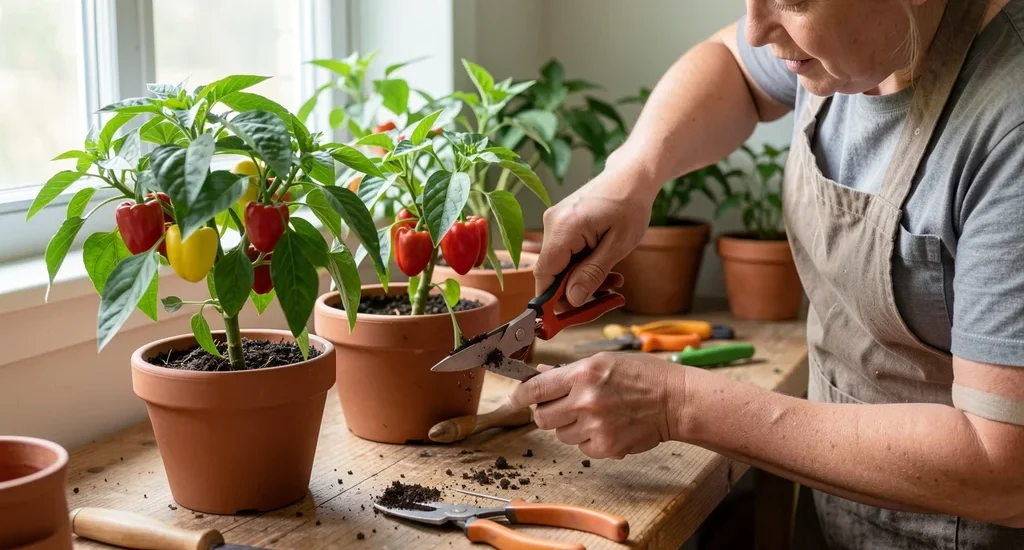
Pruning serves multiple purposes: it reduces the plant’s size for indoor accommodation, removes potential disease vectors, and encourages bushier growth in spring. Aim to remove about one-third of the plant’s foliage.
- Remove all fruits: Harvest any remaining peppers, even small ones. Developing fruits drain energy the plant needs to survive winter.
- Cut back leggy growth: Trim long, sparse branches to encourage compact growth
- Remove diseased leaves: Any leaves with spots, yellowing, or pest damage should be removed
- Thin out dense areas: Improve air circulation by removing some inner leaves and branches
- Shape the plant: Create a balanced shape that will fit well in your indoor space
Pest Inspection and Treatment
Indoor conditions can amplify pest problems, so thorough inspection is crucial. Common pepper pests include aphids, spider mites, and whiteflies, which can quickly spread to other houseplants.
| Pest | Signs | Treatment |
|---|---|---|
| Aphids | Sticky residue, curled leaves, visible green/black bugs | Insecticidal soap, neem oil, or strong water spray |
| Spider Mites | Fine webbing, stippled leaves, tiny moving dots | Neem oil, increase humidity, remove infested leaves |
| Whiteflies | Tiny white flying insects, yellowing leaves, honeydew | Yellow sticky traps, insecticidal soap, vacuum adults |
For organic control, a solution of 1 teaspoon of neem oil per quart of water, sprayed thoroughly on all leaf surfaces (including undersides) and stems, is effective against most common pests. Apply in the evening and repeat every 7-10 days as needed.
Repotting for Indoor Living
If your peppers have been growing in the ground, they’ll need to be transplanted into containers. Even container-grown plants may benefit from fresh soil and a slightly smaller pot to conserve space.
- Container size: Choose a pot that’s 2-4 inches smaller than the current root ball for most varieties. Large plants like bells may need 5-gallon containers.
- Soil mix: Use a well-draining potting mix with added perlite or vermiculite. Avoid garden soil, which can compact and harbor diseases.
- Root pruning: If roots are circling the pot, gently loosen and trim them to encourage new growth into the fresh soil.
- Depth: Plant at the same depth as before. Peppers can develop stem rot if planted too deep.
- Watering after repotting: Water thoroughly to settle the soil, then don’t water again until the top inch of soil is dry.
Important: Use clean pots and fresh potting mix to prevent disease carryover. Sterilize previously used containers with a 10% bleach solution.
Indoor Overwintering Conditions for Pepper Plants
Creating the right indoor environment is crucial for keeping your pepper plants healthy during winter. The goal is to maintain dormancy without letting the plants decline completely.
Research from the University of Florida IFAS Extension shows that peppers require specific light, temperature, and humidity conditions to successfully overwinter. Suboptimal conditions can lead to leaf drop, pest susceptibility, or plant death.
Light Requirements
Peppers need bright light to maintain health during winter. In their natural habitat, they receive consistent sunlight year-round. Indoor light is often insufficient, especially in northern climates.
- Natural light: South-facing windows provide the most light. East or west windows can work but may require supplementation.
- Grow lights: LED or fluorescent grow lights are ideal. Position 6-12 inches above plants for 12-14 hours daily.
- Light intensity: Peppers need high light intensity. If leaves appear pale or plants become leggy, increase light exposure.
- Rotation: Rotate plants weekly to ensure even light distribution and prevent leaning.
- Light spectrum: Full-spectrum lights work best, but peppers particularly benefit from blue spectrum lights during dormancy.
Temperature and Humidity
Consistent temperatures are key to preventing stress. Peppers prefer warm conditions but can tolerate slightly cooler temperatures during dormancy.
| Factor | Ideal Range | Notes |
|---|---|---|
| Day Temperature | 65-75°F (18-24°C) | Consistent warmth is crucial |
| Night Temperature | 55-65°F (13-18°C) | Can tolerate slightly cooler if necessary |
| Humidity | 40-60% | Higher humidity helps prevent leaf drop |
Avoid placing plants near cold drafts, heat sources, or in paths of frequent temperature fluctuations. A consistent environment reduces stress and prevents leaf drop, which is a common issue during overwintering.
Watering and Fertilizing During Dormancy
Watering needs change dramatically during overwintering. With reduced light and cooler temperatures, plants require less water. Overwatering is one of the most common causes of failure during this period.
- Watering frequency: Water only when the top 1-2 inches of soil are dry. This may mean watering just once every 2-3 weeks.
- Watering method: Water deeply but infrequently. Ensure water drains freely from the pot.
- Signs of overwatering: Yellowing leaves, mushy stems, or mold on soil surface.
- Signs of underwatering: Dry, crispy leaves or excessive leaf drop.
- Water quality: Use room-temperature water to avoid shocking the roots. Allow tap water to sit out for 24 hours to let chlorine evaporate.
As for fertilizing, reduce or eliminate fertilizer applications during dormancy. Peppers don’t need much nutrition when they’re not actively growing. Resume light fertilizing in late winter when you see new growth emerging.
Tip: Use a moisture meter to accurately gauge soil moisture. These inexpensive tools take the guesswork out of watering and help prevent both over- and under-watering.
Common Problems and How to Fix Them
Even with the best preparation, issues can arise during overwintering. Recognizing and addressing these problems quickly can save your plants and ensure a successful transition to spring.
According to a survey by the National Gardening Association, about 40% of gardeners who attempt to overwinter peppers encounter at least one significant problem. Most of these can be resolved with quick action.
Leaf Drop
Some leaf drop is normal as plants adjust to indoor conditions, but excessive loss indicates stress. This is often the most alarming problem for new overwintering gardeners.
- Cause: Low light – Plants aren’t getting enough energy to maintain foliage
- Solution: Move to brighter location or add grow lights
- Cause: Temperature shock – Sudden changes in temperature
- Solution: Maintain consistent temperatures, avoid drafts
- Cause: Overwatering – Roots can’t breathe, leading to stress
- Solution: Reduce watering, improve drainage
- Cause: Pest infestation – Insects stressing the plant
- Solution: Inspect thoroughly and treat as needed
Pest Infestations
Indoor conditions can create perfect environments for pests to thrive. The most common overwintering pests are spider mites, aphids, and whiteflies, which can quickly spread from plant to plant.
- Isolate affected plants: Move infested plants away from others immediately
- Remove visible pests: Wipe leaves with a damp cloth or spray with water
- Apply treatment: Use neem oil, insecticidal soap, or other organic controls
- Increase humidity: Many pests thrive in dry conditions; a humidifier can help
- Check regularly: Inspect all plants weekly for early signs of problems
Root Rot
Root rot is a common and serious issue, often caused by overwatering or poor drainage. It can quickly kill a plant if not addressed.
- Signs: Yellowing leaves, wilting despite moist soil, foul smell from soil, black or mushy roots
- Prevention: Use well-draining soil, pots with drainage holes, and proper watering techniques
- Treatment: Remove plant from pot, trim away affected roots, repot in fresh soil, reduce watering
- Recovery: Plants can recover if caught early, but severe cases may require propagation from healthy cuttings
Warning: If the root system is more than 50% affected by rot, it’s often better to take cuttings from healthy growth and start new plants rather than trying to save the original.
Spring Revival and Transitioning Outdoors
As spring approaches, your overwintered peppers will need a gradual transition back to active growth and outdoor conditions. This process is just as important as the initial overwintering preparation.
Research from the University of California Cooperative Extension shows that properly revived overwintered peppers can produce fruit 4-6 weeks earlier than new plants started from seed. This head start can be significant, especially in areas with short growing seasons.
When to Start the Revival Process
Begin reviving your plants about 6-8 weeks before your last expected frost date. This timing allows for gradual acclimation and encourages new growth before moving outdoors.
- 6-8 weeks before last frost: Increase watering gradually as light levels improve
- 4-6 weeks before last frost: Resume light fertilizing with a balanced formula
- 3-4 weeks before last frost: Begin pruning to shape the plant and remove any dead growth
- 2 weeks before last frost: Start hardening off process
- After last frost: Transplant outdoors or move containers outside
Pruning for New Growth
Spring pruning stimulates new growth and helps shape the plant for the coming season. This is different from fall pruning, which was about reducing size. Spring pruning focuses on encouraging productive growth.
- Remove dead or damaged branches: Any wood that didn’t survive winter should be cut back to healthy growth
- Shape the plant: Create an open center to improve air circulation and light penetration
- Encourage branching: Cut back the tips of main branches to promote bushier growth
- Remove weak growth: Thin out sparse or weak branches to direct energy to stronger ones
- Clean up: Remove any leaves or branches touching the soil to prevent disease
Hardening Off Process
Hardening off is the gradual process of acclimating indoor plants to outdoor conditions. This step is crucial to prevent shock, which can set back growth or even kill plants.
| Day | Location | Time Outdoors | Notes |
|---|---|---|---|
| 1-2 | Shaded, protected area | 1-2 hours | Avoid direct sun and wind |
| 3-4 | Partial shade | 2-3 hours | Gradually increase sun exposure |
| 5-7 | Partial to full sun | 3-5 hours | Increase time gradually |
| 8-10 | Full sun | 5-7 hours | Monitor for stress signs |
| 11-14 | Full sun | All day | Ready to plant out after last frost |
During hardening off, watch for signs of stress like wilting or leaf burn. If these occur, reduce the time outdoors and increase gradually more slowly. Remember that wind can be as damaging as cold temperatures for tender plants.
Overwintering Pepper Plants in Different Climates
The approach to overwintering pepper plants varies significantly depending on your climate zone. Gardeners in mild climates have different options than those in harsh winter areas.
According to the USDA Plant Hardiness Zone Map, peppers can survive outdoors year-round in zones 9-11 with some protection. In cooler zones, indoor overwintering is necessary for plant survival.
Cold Climates (Zones 1-5)
In these areas, temperatures regularly drop below freezing, making indoor overwintering essential. The growing season is typically short, so preserving plants can provide a significant advantage.
- Indoor only: Plants must be moved indoors before the first frost
- Light supplementation: Grow lights are often necessary due to short winter days
- Temperature control: Heating may be required to maintain proper temperatures
- Space considerations: Limited indoor space may require more aggressive pruning
- Early start: Begin preparations early, as frost can come suddenly
Moderate Climates (Zones 6-8)
These areas experience cold winters but with less extreme temperatures. Gardeners here have more flexibility in their overwintering approach.
- Garage or shed option: Unheated but insulated spaces can work for some varieties
- Cold frames: Protected outdoor structures can extend the season
- Row covers: Heavy-duty covers can protect plants in mild freezes
- Indoor backup: Have an indoor plan for extreme cold snaps
- Monitor weather: Be prepared to move plants quickly if temperatures drop
Warm Climates (Zones 9-11)
In these regions, peppers can often survive outdoors year-round with some protection. However, even here, some overwintering care can be beneficial.
- Minimal protection: Mulch heavily around the base of plants
- Frost cloth: Use on cold nights to protect from occasional freezes
- Container advantage: Growing in containers allows for moving to protected areas during cold snaps
- Year-round growth: Plants may continue producing in milder winters
- Pest vigilance: Warm climates can have year-round pest pressure
Important: Even in warm climates, peppers benefit from a winter rest period. Reduce watering and fertilizing during cooler months to allow the plant to conserve energy.
Frequently Asked Questions
Can I overwinter pepper plants without grow lights?
Yes, but success depends on your location and the pepper variety. South-facing windows can provide enough light in many cases, especially for compact varieties. However, in northern climates or for larger plants, supplemental lighting is often necessary to prevent leggy growth and leaf drop.
If your plants are struggling with natural light, consider adding an inexpensive LED grow light for 12-14 hours daily.
How do I know if my pepper plant is still alive during winter?
Check for green stems and firm wood. Scratch the bark lightly – if it’s green underneath, the plant is alive. Some leaf drop is normal, but if the stems remain green and firm, the plant should regrow in spring.
Avoid overwatering during this dormant period, as the plant’s needs are reduced. Patience is key, as some varieties take longer to show new growth.
What’s the best container size for overwintering peppers?
The ideal container size depends on the pepper variety. For most compact varieties like jalapeños or serranos, a 1-2 gallon pot is sufficient. Larger varieties like bell peppers may need 3-5 gallon containers.
The pot should have good drainage and be slightly smaller than the root ball to encourage controlled growth. Avoid oversized pots, as excess soil can hold too much moisture and lead to root rot.
Should I fertilize pepper plants during winter?
Generally, no. Peppers enter a semi-dormant state during winter and don’t require much nutrition. Over-fertilizing can lead to weak, leggy growth or salt buildup in the soil.
Resume fertilizing in late winter when you see new growth emerging, using a balanced, water-soluble fertilizer at half the recommended strength. This gentle approach helps ease the plant back into active growth.
Can I propagate new plants from my overwintered pepper?
Absolutely. Overwintered peppers often produce strong cuttings that can be used to start new plants. In late winter, take 4-6 inch cuttings from healthy growth, remove the lower leaves, and place in a rooting medium like perlite or vermiculite.
Keep the medium moist and provide bright, indirect light. Roots typically form in 2-4 weeks. This method allows you to create backups or share plants with other gardeners.
Final Thoughts
Overwintering pepper plants is a rewarding practice that saves money, preserves favorite varieties, and gives you a head start on next season’s harvest. The key is proper preparation, maintaining ideal indoor conditions, and a gradual transition back outdoors in spring. With attention to light, temperature, and care, your pepper plants can thrive for years, providing bountiful harvests season after season.