Most homeowners overwater their lawns. It is the most common mistake I see. Too much water wastes money, promotes disease, and creates shallow roots. Too little water and the lawn goes brown. Here is exactly how much water your lawn needs and how to measure it.
The Basic Rule: 1 to 1.5 Inches Per Week
Most lawns need about 1 to 1.5 inches of water per week during the growing season. This includes rain. If it rains half an inch on Tuesday, your sprinklers only need to supply the remaining half to one inch.
One inch of water penetrates about 6 to 8 inches into the soil. That is the root zone for most lawn grasses. Watering less than an inch wets only the top few inches of soil. The roots stay shallow. The lawn becomes dependent on frequent watering to survive.
How to Measure Sprinkler Output
You need to know how long it takes your sprinklers to deliver 1 inch of water. Every sprinkler is different. Do not guess. Measure it.
Get several empty tuna cans or rain gauges. Tuna cans are exactly 1 inch tall. Place them around the zone you are testing. Put one near the sprinkler. One at the edge of the spray pattern. A few in between. Run the zone for 15 minutes. Measure how much water is in each can with a ruler.
Average the measurements. If the average is 0.25 inches in 15 minutes, your sprinklers deliver 1 inch per hour. If the average is 0.5 inches in 15 minutes, they deliver 2 inches per hour. Now you know how long to run each zone.
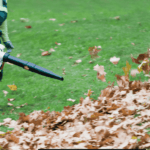
🍂 The Silent Lawn Killer: Damp Leaves Will Suffocate Your Grass
Trapped wet leaves create a breeding ground for destructive snow mold. Clear the yard fast with a high-power cordless blower before the ground freezes.
Example: Your cans average 0.25 inches after 15 minutes. You need 1 inch per week. Run that zone for 1 hour total per week. Split that into two 30-minute sessions or three 20-minute sessions.
Adjust for Your Sprinkler Type
Spray heads deliver water fast. Typically 1 to 2 inches per hour. Run times of 10 to 20 minutes per cycle are normal. If you need more than 20 minutes, use cycle and soak. Run 10 minutes. Wait 30 minutes. Run another 10 minutes. This prevents runoff.
Rotors deliver water slowly. Typically 0.3 to 0.8 inches per hour. Run times of 30 to 60 minutes per cycle are normal. Rotors need longer run times because they water slowly.
Drip systems deliver water very slowly. Typically 0.5 to 1 GPH per emitter. Run times are usually 30 to 90 minutes. Check the soil moisture 6 inches deep after watering to confirm the right duration.
Adjust for Your Soil Type
Sandy soil drains fast. Water disappears quickly. Lawns on sandy soil need more frequent watering but less water per session. About 0.5 inches per session, 3 times per week. More than that and the water drains past the root zone.
Clay soil drains slowly. Water sits. Lawns on clay soil need less frequent watering with more water per session. About 1 inch per session, once or twice per week. Water slowly or runoff will occur.
🍂 The Silent Lawn Killer: Damp Leaves Will Suffocate Your Grass
Trapped wet leaves create a breeding ground for destructive snow mold. Clear the yard fast with a high-power cordless blower before the ground freezes.
Loam soil is the ideal middle ground. It holds water well but drains excess. About 0.75 inches per session, 2 times per week works well for most lawns on loam.
Adjust for Your Grass Type
Cool-season grasses like Kentucky bluegrass, tall fescue, and perennial ryegrass need about 1 to 1.5 inches per week during active growth. They grow most in spring and fall. Water less in the heat of summer when they naturally slow down.
Warm-season grasses like Bermuda, zoysia, and St. Augustine need about 0.5 to 1 inch per week. They are more drought-tolerant. They grow most in summer heat. They need the most water when cool-season grasses need the least.
Signs You Are Watering Too Much
Water runs off the lawn before the sprinklers finish their cycle. The lawn feels spongy when you walk on it. There is moss or algae growing in the grass. You see fungus or mushrooms. The grass is yellowing, not browning. The thatch layer is thick and spongy. If you see any of these signs, reduce watering by 25 percent and observe for two weeks.
Signs You Are Watering Too Little
Footprints stay visible in the grass long after you walk across it. The grass turns a bluish-gray color. Grass blades fold in half lengthwise. The soil is hard and cracked. The lawn browns in patches. If you see these signs, increase watering duration by 25 percent and observe for two weeks.
The Simple Finger Test
Forget the fancy soil moisture meters. Push your finger into the soil. If it goes in easily and the soil feels damp at your fingertip, the lawn has enough water. If it is hard to push in and the soil feels dry, it needs water. If it is muddy and water seeps out, you are overwatering. This test is free and more accurate than most gadgets.
🍂 The Silent Lawn Killer: Damp Leaves Will Suffocate Your Grass
Trapped wet leaves create a breeding ground for destructive snow mold. Clear the yard fast with a high-power cordless blower before the ground freezes.

Disclosure: As an Amazon Associate I earn from qualifying purchases. Prices and availability were checked on June 17, 2026 and may change.
Affiliate Disclosure: As an Amazon Associate, grassblogger.com earns from qualifying purchases. When you buy through our links, we may earn a commission at no extra cost to you.
Shop Lawn Water Requirements on Amazon
🍂 The Silent Lawn Killer: Damp Leaves Will Suffocate Your Grass
Trapped wet leaves create a breeding ground for destructive snow mold. Clear the yard fast with a high-power cordless blower before the ground freezes.