Last Updated on October 23, 2026 by D. Ruddy
If your lawn looks tired or patchy as the seasons change, you might wonder does liming and fertilizing a lawn in fall really help. The short answer is yes—with the right approach. Fall is actually one of the best times to give your lawn the nutrients it needs to recover from summer stress and prepare for winter dormancy.
This post covers how liming and fertilizing work together, the science behind the timing, and practical tips to get it right.
Yes, liming and fertilizing a lawn in fall can significantly improve soil health and grass growth. Liming balances pH for better nutrient absorption while fall fertilizers strengthen roots, leading to a greener lawn next spring.
Why Fall Is the Best Time for Lawn Care
Fall brings cooler temperatures and more consistent moisture, which are ideal conditions for lawn recovery. During this time, grass shifts its energy from leaf growth to root development, making it more receptive to nutrients.
The soil pH tends to drop over the summer due to rain, irrigation, and fertilizer use. This acidity can lock out essential nutrients like nitrogen, phosphorus, and potassium. Liming in fall corrects this imbalance, ensuring your grass can fully absorb the fertilizer you apply.
Additionally, weed growth slows in fall, so your grass faces less competition for the nutrients you provide. This gives your lawn a head start for the next growing season.
- Cooler temperatures reduce stress on grass blades
- More moisture helps nutrients penetrate the soil
- Root growth focus allows for better nutrient uptake
- Reduced weed competition means more nutrients for your grass
- pH stabilization prepares soil for spring growth
Tip: Test your soil pH before liming. Most grasses thrive in a pH range of 6.0 to 7.0. A soil test will tell you exactly how much lime you need, if any.
How Liming Improves Your Lawn
Liming is the process of adding calcium or magnesium to your soil to raise its pH level. Over time, factors like rainfall, fertilizer use, and organic matter decomposition can make your soil more acidic. When soil becomes too acidic, it can prevent your grass from absorbing essential nutrients, even if they’re present in the soil.
By applying lime in the fall, you give it time to break down and adjust the soil pH before the growing season begins. This is particularly important because lime works slowly—it can take several months to fully dissolve and begin affecting the soil pH.
- Neutralizes acidity caused by rain, fertilizer, and organic matter
- Improves nutrient availability for better grass growth
- Enhances microbial activity in the soil
- Strengthens cell walls in grass plants
- Reduces moss growth which thrives in acidic conditions
| Soil pH Level | Effect on Grass Growth |
|---|---|
| Below 5.5 (Very Acidic) | Poor nutrient uptake, weak growth, moss invasion |
| 5.5 – 6.0 (Moderately Acidic) | Some nutrient limitations, slower growth |
| 6.0 – 7.0 (Ideal Range) | Optimal nutrient availability, healthy growth |
| Above 7.5 (Alkaline) | Iron deficiency, yellowing grass, poor growth |
As shown in the table, maintaining the right pH is crucial for healthy grass. If your soil test reveals a pH below 6.0, fall is the perfect time to apply lime to bring it back into the optimal range.
Types of Lime for Your Lawn
Not all lime is created equal. The type you choose can affect how quickly it works and how much you need to apply. The two main types of lime used for lawns are calcitic lime and dolomitic lime.
Calcitic lime is made from calcium carbonate and is ideal for soils that are low in calcium but have sufficient magnesium. Dolomitic lime, on the other hand, contains both calcium and magnesium, making it a good choice for soils deficient in both minerals.
| Lime Type | Composition | Best For | Speed of Action |
|---|---|---|---|
| Calcitic Lime | Calcium Carbonate | Soils low in calcium | Moderate |
| Dolomitic Lime | Calcium Magnesium Carbonate | Soils low in calcium and magnesium | Moderate |
| Pelletized Lime | Calcitic or Dolomitic (granular form) | Easy application, quick dissolution | Fast |
| Liquid Lime | Fine lime particles in suspension | Quick pH adjustment, small areas | Very Fast |
Pelletized lime is often the most convenient for homeowners, as it’s easier to spread evenly with a broadcast spreader. Liquid lime works quickly but may require more frequent applications. Always follow the application rates specified on the product label based on your soil test results.
Warning: Applying too much lime can make your soil overly alkaline, which can be just as harmful as overly acidic soil. Always follow soil test recommendations for application rates.
How to Apply Lime to Your Lawn
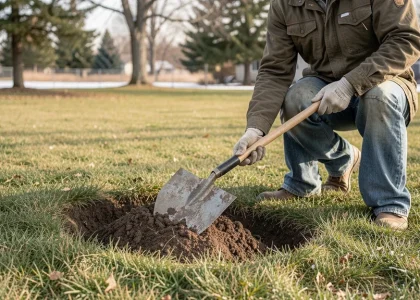
Applying lime correctly is crucial for achieving the desired results without harming your lawn. The process begins with a soil test, which you can do yourself with a home testing kit or send to a local extension service for more accurate results.
Once you know your soil’s pH and the recommended lime application rate, you can begin. The best time to apply lime is when the soil is slightly moist, and no rain is forecast for at least 24 hours. This allows the lime to begin working into the soil rather than being washed away.
- Test your soil to determine current pH and lime requirements
- Choose the right lime based on your soil’s needs (calcitic or dolomitic)
- Calculate the amount needed based on your lawn size and soil test recommendations
- Use a spreader for even distribution (drop spreader for small lawns, broadcast for larger areas)
- Apply in two directions for complete coverage
- Water lightly after application to help lime settle into the soil
- Retest soil pH after 2-3 months to check progress
For most lawns, applying lime in early fall gives it enough time to break down and adjust the soil pH before winter. If your soil is extremely acidic, you might need to apply lime in both fall and spring.
Understanding Fall Fertilizers
While liming addresses soil pH, fertilizing provides the essential nutrients your grass needs to grow strong and healthy. Fall fertilization is particularly important because it helps your lawn recover from summer stress and build up reserves for winter and next spring.
The best fall fertilizers are high in nitrogen but also contain phosphorus and potassium. Nitrogen promotes leaf and stem growth, phosphorus supports root development, and potassium helps with disease resistance and stress tolerance.
Look for fertilizers with a higher first number in the NPK ratio (Nitrogen-Phosphorus-Potassium). For example, a 24-0-11 or 30-0-4 fertilizer is excellent for fall applications. The exact ratio you need depends on your soil test results and your grass type.
- Slow-release nitrogen feeds your lawn over time
- Phosphorus supports root growth for winter survival
- Potassium strengthens grass against disease and cold
- Iron enhances color without promoting excessive growth
- Micronutrients like zinc and manganese support overall health
Important: Avoid fertilizers with high phosphorus content unless your soil test indicates a deficiency. Excess phosphorus can run off into waterways and cause environmental problems.
When to Fertilize Your Lawn in Fall
Timing is everything when it comes to fall fertilization. The ideal window for fall fertilization is typically between late August and early November, depending on your climate and grass type.
For cool-season grasses like Kentucky bluegrass, tall fescue, and perennial ryegrass, the most important feeding is in early fall (late August to early September). This helps the grass recover from summer stress. A second, lighter application in late fall (October to early November) helps strengthen roots and store nutrients for spring.
For warm-season grasses like Bermuda, Zoysia, and St. Augustine, fall fertilization should be done earlier, in late summer to early fall, as these grasses go dormant with the first frost.
| Grass Type | Best Fertilization Time | Recommended NPK Ratio |
|---|---|---|
| Cool-Season (Kentucky Bluegrass, Tall Fescue, Ryegrass) | Early Fall (Late Aug – Early Sept) and Late Fall (Oct – Early Nov) | 24-0-11 or 30-0-4 |
| Warm-Season (Bermuda, Zoysia, St. Augustine) | Late Summer to Early Fall (Aug – Early Sept) | 16-4-8 or 30-0-4 |
According to the University of Nebraska-Lincoln Extension, fall fertilization can increase root growth by up to 50% compared to spring fertilization, leading to a denser, more resilient lawn.
How to Fertilize Your Lawn Properly
Proper fertilization technique ensures that your lawn gets the maximum benefit from the nutrients you apply. The key is even distribution and proper timing.
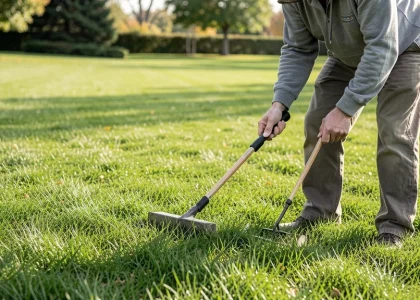
Start by mowing your lawn slightly shorter than usual before fertilizing. This helps the fertilizer reach the soil more effectively. Remove any leaves or debris that might block the fertilizer from reaching the soil.
Use a broadcast spreader for large lawns and a drop spreader for smaller, more precise areas. Calibrate your spreader according to the fertilizer bag’s instructions to ensure you’re applying the correct amount.
- Mow your lawn to a height of 2-2.5 inches
- Remove debris like leaves or twigs from the lawn surface
- Calibrate your spreader according to the fertilizer’s recommended rate
- Apply fertilizer in two perpendicular directions for even coverage
- Water lightly after application to help nutrients soak into the soil
- Avoid fertilizing before heavy rain to prevent runoff
- Store leftover fertilizer in a dry place for future use
Tip: Walk at a steady pace when using a spreader to ensure even distribution. Overlapping your passes slightly helps prevent streaks or missed spots.
Common Mistakes to Avoid
Even with good intentions, it’s easy to make mistakes that can harm your lawn rather than help it. Being aware of these common pitfalls can save you time, money, and frustration.
One of the most common mistakes is applying too much fertilizer. While it might seem like more is better, over-fertilizing can burn your grass, cause excessive top growth at the expense of roots, and contribute to water pollution through runoff.
Another mistake is fertilizing at the wrong time. Applying fertilizer too late in the fall can stimulate new growth that won’t have time to harden off before winter, making it more susceptible to frost damage.
- Over-applying fertilizer can burn grass and harm the environment
- Under-applying lime won’t adequately correct pH imbalances
- Skipping soil tests leads to guesswork rather than precise treatment
- Fertilizing before rain can wash away nutrients before they’re absorbed
- Using the wrong spreader settings results in uneven application
- Ignoring grass type can lead to improper timing and nutrient ratios
- Not watering after application prevents nutrients from reaching the soil
Remember that lawn care is a marathon, not a sprint. Consistent, proper application of lime and fertilizer over time will yield better results than trying to fix everything at once with heavy applications.
Frequently Asked Questions
Can I apply lime and fertilizer at the same time?
It’s generally best to apply lime and fertilizer separately. Lime needs time to break down and adjust the soil pH, and applying it with fertilizer can reduce the effectiveness of both. Wait at least a few weeks between applications, with lime going down first if your soil is acidic.
How often should I lime my lawn?
Most lawns benefit from liming every 2-3 years, but this depends on your soil type and local conditions. Clay soils tend to become acidic faster than sandy soils. Regular soil testing (every 1-2 years) will tell you when it’s time to lime again.
What happens if I don’t lime my lawn?
If your soil becomes too acidic, your grass won’t be able to absorb essential nutrients, even if they’re present in the soil. This can lead to yellowing grass, thin growth, increased weed and moss invasion, and overall poor lawn health. Over time, acidic soil can also lead to nutrient deficiencies that are harder to correct.
Is fall fertilization necessary every year?
For most lawns, yes. Fall is the most important time to fertilize cool-season grasses. However, the exact frequency depends on your grass type, soil conditions, and climate.
A soil test can help determine if your lawn needs annual fall fertilization or if you can skip a year.
How long does it take for lime to work?
Lime works slowly, typically taking 2-3 months to fully dissolve and begin affecting soil pH. Pelletized lime works faster than powdered lime because it dissolves more quickly. For the quickest results, apply lime in early fall so it has time to work before winter.
Final Thoughts
Liming and fertilizing your lawn in fall can make a remarkable difference in its health and appearance come spring. By correcting soil pH with lime and providing essential nutrients with fertilizer, you’re giving your grass the best possible conditions to thrive. Remember to test your soil, choose the right products for your specific needs, and follow proper application techniques.
With consistent care, you’ll be rewarded with a lush, green lawn that’s the envy of the neighborhood.