Last Updated on July 12, 2026 by D. Ruddy
A Toro mower that drops clippings instead of collecting them creates a messy yard. This guide explains why is my toro lawn mower not bagging grass and how to fix it.
Simply put, a Toro mower stops bagging grass due to a clogged deck, worn blade, missing mulch plug, or low engine speed. Check the bagger chute, blade sharpness, and air filter first. Most issues come from simple maintenance gaps that you can fix in minutes.
Key Takeaways
- A clogged mower deck prevents grass from flowing into the bag and causes clippings to drop.
- A dull or bent blade cannot lift grass properly, which reduces bagging performance.
- The mulch plug must be removed and the bagger door closed for proper collection.
- Wet or tall grass overwhelms the bagging system and causes clumping inside the chute.
- Engine speed set too low reduces airflow needed to push clippings into the bag.
- Dirty air filters and wrong tire pressure create hidden bagging failures on Toro models.
What Is the Bagging System on a Toro Mower?
The bagging system on a Toro mower collects cut grass in a removable container. It uses airflow from the spinning blade to move clippings out of the deck. A typical setup includes a blade, deck, chute, and fabric bag.
Several brands like Toro, Honda, and John Deere use similar concepts with small changes. Toro’s Personal Pace walk-behind models often use a rear bagger. Riding models like the TimeCutter use a tractor-mounted collection system.
The Toro Recycler series uses a special blade and deck shape to either mulch or bag. The system shifts mode by removing a mulch plug. This design appears on many current residential mowers sold these days.
🍂 The Silent Lawn Killer: Damp Leaves Will Suffocate Your Grass
Trapped wet leaves create a breeding ground for destructive snow mold. Clear the yard fast with a high-power cordless blower before the ground freezes.
Main Components
- The cutter blade spins to cut and lift grass toward the deck opening.
- The discharge chute guides clippings from the deck to the rear bag.
- The fabric or hard-shell bag collects clippings during mowing.
- The mulch plug blocks the chute when you want to mulch instead of bag.
- The engine drive belt powers the blade and creates suction airflow.
- The bag frame holds the fabric and connects to the mower chassis.
Important: Always disconnect the spark plug before servicing the blade or deck to avoid accidental starts.
Understanding these parts helps you spot failures fast. The Consumer Product Safety Commission notes that blade contact causes many home injuries. Safe handling protects you during inspection.
How Does a Toro Bagging System Work?
The system relies on physics and blade speed to move grass. The blade spins fast and creates a low-pressure zone above the deck. This vacuum pulls grass upright before the blade cuts it.
After cutting, the clippings mix with air and travel through the open discharge chute. The chute must stay clear for the stream to reach the bag. The bag’s mesh lets air escape while trapping grass.
Airflow Principles
- The spinning blade creates a vacuum that pulls grass upright before cutting.
- Cut clippings travel through the open discharge chute at high speed.
- Airflow carries light clippings into the bag while dust escapes mesh vents.
- The bag fills until full, then you must empty it to keep suction strong.
- Deck baffles direct the air pattern to improve collection on hills.
According to the U.S. EPA, yard trimmings including grass make up about 13% of municipal solid waste. Bagging helps reduce that waste stream when composted properly. The agency encourages local composting programs for collected clippings.
🍂 The Silent Lawn Killer: Damp Leaves Will Suffocate Your Grass
Trapped wet leaves create a breeding ground for destructive snow mold. Clear the yard fast with a high-power cordless blower before the ground freezes.
The University of Minnesota Extension reports that grass clippings contain valuable nitrogen. Returning them through mulching feeds the soil. Bagging removes that nutrient unless you compost the bag contents.
What Are the Main Causes of Bagging Failure?
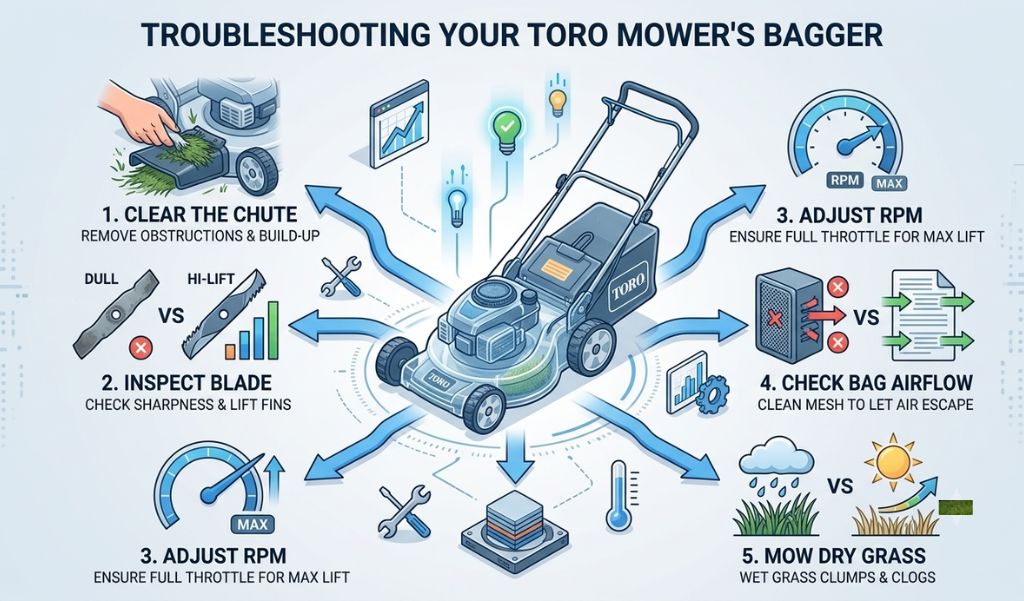
Homeowners often search why is my toro lawn mower not bagging grass after seeing trails of clippings on the lawn. When your mower leaves a trail, one of several parts has failed. The most common reasons involve blockage, blade condition, or setup errors. We list them below with fixes and detail each one.
| Cause | Symptom | Fix |
|---|---|---|
| Clogged deck | Clumps under mower | Clean deck with scraper |
| Worn blade | Uneven cut, poor lift | Sharpen or replace blade |
| Mulch plug in | No flow to bag | Remove plug, close door |
| Low engine speed | Weak discharge | Set throttle to full |
| Wet grass | Sticking in chute | Mow when dry |
| Dirty air filter | Reduced rpm | Replace filter |
Detailed Cause List
- Wet grass sticks to the deck and blocks the chute with heavy clumps.
- A worn blade fails to generate enough lift for bagging after many hours.
- The bagger door left open breaks the airflow seal needed for suction.
- A dirty air filter reduces engine power and slows the blade rotation.
- Incorrect tire pressure tilts the deck and misaligns the chute path.
- A cracked hose or loose clamp on riding models leaks vacuum pressure.
- A full bag restricts airflow and forces clippings to escape backward.
Clogged Deck Explained
Grass builds up under the deck after each mow, especially in damp conditions. The layer thickens and narrows the exit toward the chute. You must scrape the deck after every few uses to keep the path open. A blocked deck is the top reason for weak bagging on Toro walk-behinds.
Blade Condition
Toro blades have a specific angle that creates lift. Once the edge rounds off, the vacuum drops. Inspect the blade monthly and sharpen it with a file or grinder. Replace it if you see cracks or severe bends that alter the balance.
🍂 The Silent Lawn Killer: Damp Leaves Will Suffocate Your Grass
Trapped wet leaves create a breeding ground for destructive snow mold. Clear the yard fast with a high-power cordless blower before the ground freezes.
Setup Errors
Many users forget to remove the mulch plug when switching from mulch to bag. The plug blocks the chute completely. Also, the bagger door must click shut to seal the system. An open door lets air escape and kills suction.
Warning: Never run the mower with the bag removed and the chute open near people. Objects can eject at high speed.
Who Needs to Fix Bagging Issues?
Any homeowner with a Toro mower that leaves clippings needs this guide. Landscapers who use Toro fleet machines also face the same faults. People with health issues may need a bagging mower to avoid allergens from mulched grass.
Those who compost yard waste rely on clean collection. If you value a tidy lawn for events, fix bagging fast. Neglecting the problem spreads weeds and fungus through uncut clumps.
User Groups
- Suburban homeowners with small yards benefit from rear baggers for neatness.
- Professional crews need consistent bagging to meet client expectations.
- Allergy sufferers prefer bagging to remove pollen-rich clippings from the lawn.
- Composters collect material to build nutrient-rich soil at home.
How to Get Started with Repairs
Start with safety and basic tools. You need a scraper, glove, and a spark plug wrench. Gather the mower manual for torque specs and tire pressure numbers. Then follow a simple prep routine.
🍂 The Silent Lawn Killer: Damp Leaves Will Suffocate Your Grass
Trapped wet leaves create a breeding ground for destructive snow mold. Clear the yard fast with a high-power cordless blower before the ground freezes.
- Park the mower on a flat driveway and let the engine cool completely.
- Disconnect the spark plug wire to prevent any accidental crank.
- Put on eye protection and gloves before touching the blade area.
- Review the Toro manual for your model’s bagging diagram and specs.
Tip: Take a photo of the deck before cleaning so you can reattach parts in the right order.
How to Diagnose the Problem Step by Step
Use a safe process to find why bagging fails. Work on a flat surface and keep the engine off during checks. Follow these steps in order.
- Park on flat ground and turn off the engine before inspecting the mower.
- Remove the bag and check the chute for obstruction by hand or stick.
- Lift the deck and look for caked grass on the underside and baffles.
- Inspect the blade for nicks, bends, or excessive wear at the edges.
- Start the mower and observe blade speed at full throttle for weakness.
- Confirm the mulch plug is out and the bagger door is fully closed.
- Check tire pressure with a gauge and compare to the manual spec.
Cleaning the Deck Procedure
If you find buildup, follow this cleaning sequence. It restores airflow and improves bagging at once.
- Disconnect the spark plug and tilt the mower with the carb side up.
- Use a plastic scraper to remove caked grass from the deck walls.
- Spray the underside with a garden hose to wash remaining debris.
- Dry the deck and apply a light coat of silicone spray to reduce sticking.
According to the Consumer Product Safety Commission, proper mower maintenance prevents thousands of injuries each year. A quick check avoids bigger repairs later.
Tip: Keep a deck scraper and a spare blade in your shed to fix bagging issues fast.
What Does a Properly Bagging Toro Look Like?
A healthy system shows no clippings left behind after a pass. The bag fills steadily and the engine sounds steady at full speed. The discharge chute stays clear and the deck underside looks clean.
🍂 The Silent Lawn Killer: Damp Leaves Will Suffocate Your Grass
Trapped wet leaves create a breeding ground for destructive snow mold. Clear the yard fast with a high-power cordless blower before the ground freezes.
- The lawn shows an even cut with no clumps or streaked grass.
- The bag expands as air flows through and fills from the bottom up.
- The mower maintains full rpm without bogging in normal grass.
- The chute has no rattling or blockage sound during operation.
When these signs appear, your Toro performs as designed. If not, revisit the cause table above.
Pro Tips to Improve Bagging
- Mow in the late morning after dew evaporates to keep clippings dry.
- Overlap each pass slightly to avoid overloading the deck on one side.
- Replace the bag mesh if it tears because holes leak suction.
- Use a high-lift blade designed for bagging instead of a mulching blade.
- Service the air filter every 25 hours to maintain full engine speed.
Important: A high-lift blade from Toro increases vacuum and solves many weak-bagging complaints on tall grass.
Common Myths vs Facts
Many owners believe wrong ideas about bagging. These myths lead to poor lawn care and wasted effort. We correct three common ones.
Myth 1: Bagging is always better than mulching.
Fact: According to the University of Minnesota Extension, returning clippings can provide up to 25% of a lawn’s fertilizer needs. Mulching often helps soil more than bagging.
Myth 2: A dull blade still bags fine if the bag is empty.
Fact: A dull blade tears grass instead of cutting it, which reduces lift and clogs the chute. You must sharpen the blade for good bagging.
Myth 3: You must bag wet grass to keep the lawn clean.
Fact: Wet grass clumps and blocks the system. It is better to wait for dry conditions than force a failed bagging run.
🍂 The Silent Lawn Killer: Damp Leaves Will Suffocate Your Grass
Trapped wet leaves create a breeding ground for destructive snow mold. Clear the yard fast with a high-power cordless blower before the ground freezes.
Frequently Asked Questions
Why does my Toro mower throw grass out the side instead of bagging?
Your mulch plug is likely still installed or the bagger door is open. Remove the plug and close the door to direct flow to the bag. The Toro support site shows the correct setup for each model.
How often should I sharpen the blade for good bagging?
Sharpen the blade after every 20 to 25 hours of mowing time. A sharp edge lifts grass and improves airflow to the bag. Dull blades cause most bagging complaints.
Can a clogged air filter stop the mower from bagging?
Yes. A dirty filter lowers engine rpm and slows the blade. The reduced speed cuts suction and leaves clippings behind. Clean or replace the filter each season.
<h