I. Introduction: The Cordless Lawn Mower Revolution
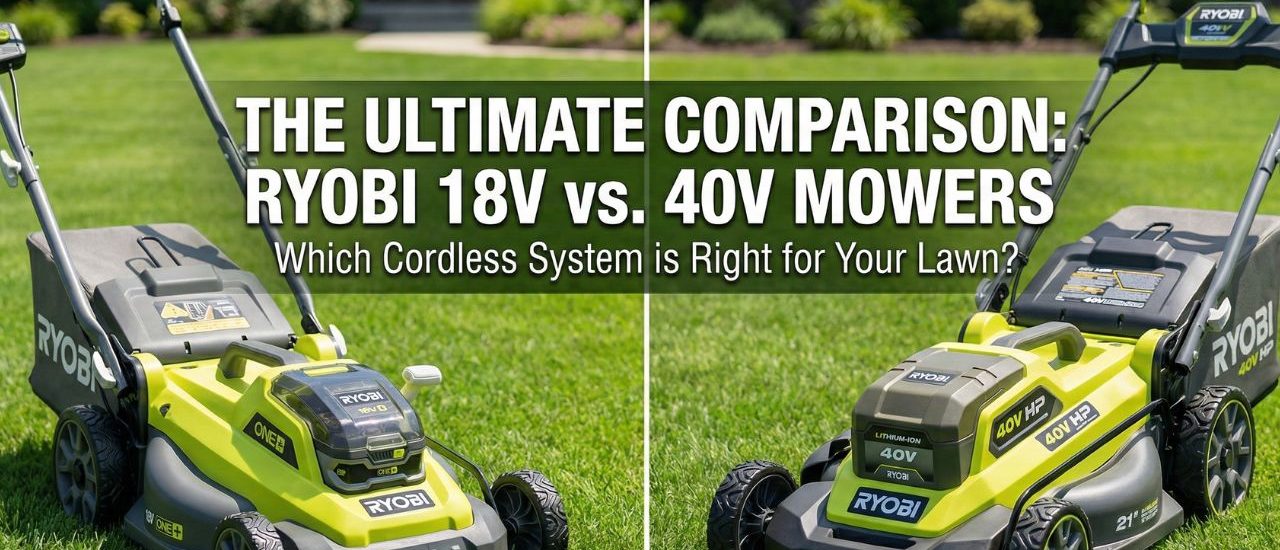
The shift from gas-powered to cordless electric lawn mowers is highlighted, emphasizing benefits like quiet operation, ease of use, and reduced environmental impact. Ryobi is presented as a key player in this transition with its 18V ONE+ and 40V battery platforms. The central question addressed is whether the 18V system is sufficient for smaller lawns or if the 40V system is necessary for larger areas.
II. Ryobi 18V ONE+ System
Concept
The 18V ONE+ system is characterized by its vast ecosystem of over 300 compatible tools powered by a single, interchangeable battery source. It is designed for convenience, portability, and a "grab-and-go" approach, making it ideal for smaller lawns.
Historical Context
- Ryobi began experimenting with battery-powered mowers as early as 1996.
- The standardization on the 18V ONE+ platform was a significant development.
- Early models sometimes used two 18V batteries in tandem (effectively 36V).
- Around 2016, single-18V mowers were introduced, focusing on lightweight design.
- In the late 2020s, brushless motors were integrated, significantly improving efficiency and power.
Advantages (Current Opinions)
- User-Friendly: Featherlight and nimble, making them easy to push, turn, carry, and store.
- Space-Saving: Folding handles enhance storage convenience.
- Quiet Operation: Significantly quieter than gas mowers, allowing for mowing without disturbing neighbors or requiring hearing protection.
- Easy Start: Push-button start eliminates pull cords.
- Low Maintenance: No need for gas or oil.
- Budget-Friendly: Cost-effective, especially for users already invested in the 18V ONE+ system, as existing batteries can be utilized.
Disadvantages (Controversies & User Complaints)
- Battery Run Time: Advertised runtimes (e.g., 40 minutes for a 4.0 Ah battery) often fall short in real-world use, sometimes providing only 20 minutes of power. This necessitates purchasing extra batteries or breaking up mowing tasks.
- Performance in Challenging Conditions: Struggle with tall, dense, or wet grass, potentially faltering or stalling.
- Bagging Performance: Inefficient grass collection or issues with bags not filling properly are reported.
- Durability Concerns: Predominantly plastic construction leads to reports of breakage in parts like the rear skirt or battery cover hinges.
- "Why Not 40V?" Sentiment: Users often wish they had chosen the 40V system for greater power, especially for lawns larger than the smallest sizes.
III. Ryobi 40V System
Concept
The 40V system is Ryobi's dedicated outdoor power tool line, designed to deliver "gas-like power" with cordless convenience. It features its own ecosystem of robust batteries.
Historical Context
- The 40V line has been available since at least 2014.
- Around 2017, self-propelled models with load-sensing technology were introduced.
- Between 2020 and 2021, significant advancements included larger batteries (up to 7.5Ah), some models with metal decks, the Cross-Cut multi-blade system, and HP Brushless technology for enhanced power.
Advantages (Current Opinions)
- Robust Performance: Power is often compared to 150cc-170cc gas engines, capable of cutting thicker, taller grass. Turbo Mode is a notable feature.
- Extended Runtime: Offers 40-80 minutes of operation, especially with dual-battery setups, capable of covering up to 3/4 of an acre.
- User-Friendly Operation: Self-propelled drive (including AWD on some models) with variable speed control simplifies mowing on slopes and larger yards.
- Superior Cut Quality: The Cross-Cut multi-blade system provides finer mulching, better bagging, and a pristine finish.
- Relatively Quiet: Many models are part of the "Whisper Series," maintaining quiet operation.
- Low Maintenance & Gas-Like Performance: Combines electric convenience with performance comparable to gas mowers.
Disadvantages (Controversies & User Complaints)
- Battery Cost for Large Lawns: Very large lawns may still require additional batteries, which are expensive (around $200 each).
- "Plastic Deck Paradox": Some users still desire full metal decks for ultimate durability, although some models now feature metal decks.
- Weak Points: The rear stone flap is often cited as a weak point.
- Self-Propel System Issues: Reports of premature self-propel system failures, potentially linked to the use of non-brushless motors for this function in some models.
- Charging Time: Batteries can take over an hour to fully charge.
- Recalls: Some older 40V models have been subject to recalls due to fire hazards.
IV. The Ultimate Showdown: Choosing the Right Ryobi Mower
- 18V: Best for smaller lawns (under 1/4 acre), compact urban yards, and quick trims on flat surfaces with regular mowing.
- 40V: Ideal for small to medium lawns (1/4 to 3/4 acre), especially those with slopes, uneven terrain, or thicker grass.
- 18V: Cost-effective if already invested in the Ryobi ONE+ ecosystem, allowing for battery interchangeability.
- 40V: A strong choice for building a new outdoor power tool collection, offering a cohesive platform for various tools.
- 18V: Lower upfront cost, lighter, simpler operation. Prioritizes portability and quietness over raw power and endurance.
- 40V: Higher initial investment, but delivers significant power, longer runtime, and advanced features like self-propulsion. Prioritizes performance and efficiency.
V. Glimpse into the Future
Advancements in Mowers
- Expect more powerful HP Brushless 40V models, potentially reaching the equivalent of 196cc gas engines.
- Features like Cross-Cut multi-blade systems, Smart Trek adaptive speed, dual active battery ports, and integrated digital Cut Control Centers are anticipated.
- Increased focus on "Whisper Series" models for near-silent operation.
Battery Innovations
- Ryobi EDGE Batteries: Utilizing new 21700 lithium-ion cells, promising to potentially double power and quadruple runtime of older batteries.
- Built-in temperature control and rapid charging capabilities.
- Refined HP Technology for optimized tool-battery communication.
- Emergence of a new, compact USB Lithium battery platform for specialized tools.
VI. Conclusion
Ryobi offers compelling cordless lawn mower options at both 18V and 40V levels, catering to a growing market. The choice depends on individual lawn requirements, budget, and existing tool ecosystem. Ryobi is positioned to provide evolving electric solutions for efficient and quiet lawn maintenance.