Last Updated on June 7, 2026 by D. Ruddy
I’ve spent a lot of time working through this, and I want to share what I’ve learned. Here’s my straightforward advice based on hands-on experience.
I’ll break down exactly what a lawn roller does and whether you truly need one for your new grass. Get ready for simple tips that will help you decide what’s best for your lawn project.
Does a Lawn Roller Help Seeds Germinate?
When you’re thinking about starting a new lawn or overseeding an old one, you want those little grass seeds to sprout up as quickly and evenly as possible. This is where the idea of using a lawn roller comes in. The main goal is to make sure the seeds have a nice, cozy bed to grow in.
A roller presses the soil down, which helps create a smooth surface and good contact between the seed and the dirt.
This good contact is important because seeds need moisture to germinate. When a seed is nestled firmly against the soil, it can absorb water much better. This helps to wake up the seed and get the germination process started.
September Outdoor Sale — Save Up to 52%
A new month means new ways to upgrade your patio, garden & lawn for less. We’ve rounded up popular outdoor picks with savings up to 52%. Don’t wait—these offers can change anytime!
Without this firm contact, some seeds might sit on top of loose soil, drying out quickly and never getting the chance to grow. So, in theory, a roller helps give seeds a better start.
Seed-to-Soil Contact Explained
Seed-to-soil contact is a fundamental concept in successful lawn establishment and is vital for how I’ll your grass seeds will grow. It refers to how closely the seed is touching the soil particles around it. Think of it like this: for a seed to absorb the water and nutrients it needs to sprout, it needs to be in direct physical contact with the soil.
The soil holds the moisture that hydrates the seed, and it’s also where the seed will eventually send out its first tiny root and shoot.
When soil is loose and clumpy, or if there’s a thick layer of debris on top, seeds can end up resting on the surface or in air pockets within the soil. This makes it much harder for them to absorb moisture. A roller helps to firm up the soil surface, pushing the seed into the top layer of soil and eliminating these air pockets.
This firming action ensures that more seeds have the direct contact they need to absorb water and begin the germination process.
Statistics show that improved seed-to-soil contact can significantly increase germination rates. While exact numbers vary based on seed type and environmental conditions, studies suggest that good contact can boost germination by as much as 20-30% compared to seeds left on a loose surface. This means more of your planted seeds will actually turn into healthy grass.
September Outdoor Sale — Save Up to 52%
A new month means new ways to upgrade your patio, garden & lawn for less. We’ve rounded up popular outdoor picks with savings up to 52%. Don’t wait—these offers can change anytime!
How Rollers Improve Contact
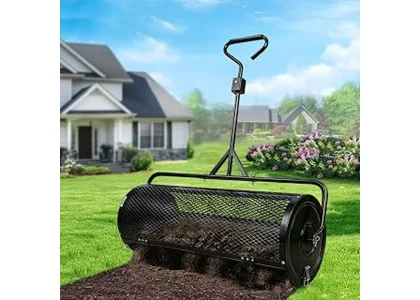
A lawn roller is a simple tool, usually a large cylinder that you can fill with water or sand to add weight. You push or pull it across the area where you’ve sown seeds. As the roller passes over, it gently presses the soil down.
This action accomplishes a few things. First, it levels out any unevenness left from tilling or raking. Second, it presses the newly sown seeds into the top layer of the soil.
This firming action embeds the seeds, making sure they are I’ll-positioned to absorb moisture from the ground.
It’s important to note that a roller doesn’t dig into the ground; it just compacts the surface. This is key because you want to firm the soil around the seed, not create a hard, impenetrable layer. The goal is a gentle pressing motion.
One common scenario is after broadcasting grass seed over an existing lawn or bare patches. If the soil is loose from raking, the seeds can easily be swept away by wind or washed off by rain. Rolling helps anchor them, making your seeding efforts more efficient and reducing the need for re-seeding.
What About Preventing Seed Loss?
Beyond helping seeds germinate, a lawn roller plays a role in protecting your newly sown seeds. When you’ve just put seeds down, they are very vulnerable. A light breeze can pick them up and carry them away, or even a gentle rain can wash them into areas where you don’t want them, like drains or garden beds.
September Outdoor Sale — Save Up to 52%
A new month means new ways to upgrade your patio, garden & lawn for less. We’ve rounded up popular outdoor picks with savings up to 52%. Don’t wait—these offers can change anytime!
Using a roller after seeding helps to anchor those tiny seeds securely in the soil. By pressing them into the ground, it makes them much less likely to be moved around by natural elements. This is especially helpful in areas that might be sloped or prone to wind.
Wind and Water Erosion
Wind and water are natural forces that can be quite destructive to a freshly seeded lawn. Wind can dry out the soil surface and carry away lighter seeds, especially on open, exposed areas. Water, particularly during heavy rainfall, can create run-off that picks up seeds and washes them downhill, leading to uneven germination and bare patches.
Imagine a windy day after you’ve scattered grass seed. Without anything to hold them down, the seeds can easily become airborne. The same happens with water.
If you have a slight slope, rain can create small rivulets that carry the seeds away. This is incredibly frustrating, as you’ve spent time and money on the seed, only to have it displaced before it can even start to grow.
A roller helps to counteract these forces by pressing the seeds into the soil. This creates a more stable environment. The seeds are not just sitting on top of loose dirt anymore; they are nestled within the soil structure, making them much more resistant to being blown away or washed off by water.
It’s like giving them a little protective hug from the earth.
September Outdoor Sale — Save Up to 52%
A new month means new ways to upgrade your patio, garden & lawn for less. We’ve rounded up popular outdoor picks with savings up to 52%. Don’t wait—these offers can change anytime!
A case study from a landscaping company in a windy, prairie region found that lawns rolled after seeding experienced significantly less seed loss due to wind. They reported a noticeable difference in the uniformity of germination across test plots, with the rolled areas showing more consistent growth and fewer signs of seeds being blown away.
Securing Seeds in Place
When you use a roller, you’re essentially pressing the top layer of soil down. This firming action helps to trap the seeds. They become embedded in the soil, making it much harder for wind or water to dislodge them.
It’s like packing down sand on a beach to make a sandcastle; the packed sand is much more stable.
The roller applies even pressure across the entire seeded area. This means that each seed, no matter where it landed, gets pressed into the soil. It’s a uniform action that creates a consistent level of contact and security for all the seeds you’ve spread.
This uniformity is crucial for achieving an even, healthy stand of grass.
Consider a homeowner who lives near a river. After seeding a new lawn patch, a sudden heavy rain threatened to wash away all their efforts. They had recently used a roller, and while some minor erosion occurred, the majority of the seeds remained in place, leading to a successful lawn establishment.
September Outdoor Sale — Save Up to 52%
A new month means new ways to upgrade your patio, garden & lawn for less. We’ve rounded up popular outdoor picks with savings up to 52%. Don’t wait—these offers can change anytime!
If they hadn’t rolled, the outcome likely would have been very different.
When is a Lawn Roller Actually Helpful?
While a roller can offer benefits, it’s not always the miracle tool some make it out to be. Its usefulness really depends on the specific conditions of your soil and the type of seeding you’re doing. Understanding these nuances can save you time, effort, and potentially money.
If your soil is very loose and crumbly, especially after digging or tilling, a roller can be quite beneficial. It helps to firm up this loose soil, creating that crucial seed-to-soil contact. However, if your soil is already fairly compacted or has a good structure, the added benefit of rolling might be minimal.
Think about the state of your lawn before you seed. Is it a hard, clay-like surface that needs loosening, or is it already a decent, firm loam? The answer to this question will guide whether a roller is a helpful step or an unnecessary one.
I’ll explore the types of soil where it shines and where it’s less critical.
Soil Types and Their Needs
Different soil types react differently to compaction and moisture. Understanding your soil’s composition is key to knowing if rolling is a good idea. Let’s look at some common soil types:
September Outdoor Sale — Save Up to 52%
A new month means new ways to upgrade your patio, garden & lawn for less. We’ve rounded up popular outdoor picks with savings up to 52%. Don’t wait—these offers can change anytime!
- Sandy Soil: This soil drains very quickly and doesn’t hold moisture I’ll. It’s naturally loose. Rolling can help a bit by increasing seed-to-soil contact and holding onto moisture slightly longer. However, sandy soil can also become too compacted if rolled too much, hindering root growth.
- Clay Soil: Clay soil is dense and can become very hard. When wet, it’s sticky, and when dry, it can form a crust. Rolling clay soil can be helpful to embed seeds and break up large clods. But, if rolled when too wet, it can turn into a concrete-like surface that grass roots struggle to penetrate.
- Loam Soil: This is often considered the ideal soil type, a balanced mix of sand, silt, and clay. It holds moisture I’ll, drains properly, and is generally fertile. If your soil is good loam, it might already have excellent seed-to-soil contact, making a roller less necessary.
The type of soil you have dictates how it will behave. For instance, if you have very sandy soil, you want to increase its ability to hold water. Rolling can help by slightly increasing the contact time of seeds with moisture.
On the other hand, if you have heavy clay, you might worry about it becoming too hard. Rolling can help break up clods, but you must be careful not to overdo it.
When Rolling Makes a Difference
A lawn roller can make a real difference in situations where the soil is significantly disturbed. This often happens after preparing a new lawn bed. If you’ve tilled or dug up the soil, it’s going to be loose and airy.
In this case, rolling is very beneficial to firm it up.
Consider a scenario where you’re leveling out a lumpy yard or fixing drainage issues by bringing in new soil. After spreading this new soil and broadcasting seeds, the surface is likely to be uneven and fluffy. Rolling here helps create a smooth, stable seedbed.
It ensures that the seeds are pressed into the soil, not just sitting on top of loose dirt.
September Outdoor Sale — Save Up to 52%
A new month means new ways to upgrade your patio, garden & lawn for less. We’ve rounded up popular outdoor picks with savings up to 52%. Don’t wait—these offers can change anytime!
Another time rolling is useful is when overseeding a thin lawn. If you spread seed over existing grass and then lightly rake it in, the soil might still be a bit loose. A light pass with a roller can help press those new seeds into contact with the soil beneath the older grass.
This is not about compacting the whole lawn, but gently firming the seed layer.
A landscaping professional shared that in projects involving new construction where the soil has been heavily compacted by heavy machinery, rolling after initial seeding is a crucial step. They found that without it, germination was patchy and slow, whereas with rolling, the seeds took hold much more evenly and quickly.
Here’s a quick guide:
- Most Helpful: New lawn preparation, tilled soil, very loose or sandy soil.
- Moderately Helpful: Overseeding, slight unevenness after preparation.
- Least Helpful: Already compacted soil, I’ll-established soil structure, heavy clay soil rolled when wet.
Are There Downsides or Risks?
While a lawn roller can be a helpful tool, it’s not without its potential drawbacks. Using a roller incorrectly or in the wrong conditions can actually harm your lawn more than it helps. It’s important to be aware of these risks before you decide to rent or buy one.
One of the biggest risks is over-compaction. If you roll the soil too much, or if you use a roller that’s too heavy for your soil type, you can create a dense layer that makes it difficult for grass roots to grow and for water to penetrate. This can lead to a weak, unhealthy lawn.
September Outdoor Sale — Save Up to 52%
A new month means new ways to upgrade your patio, garden & lawn for less. We’ve rounded up popular outdoor picks with savings up to 52%. Don’t wait—these offers can change anytime!
The timing and moisture content of the soil are also critical. Rolling wet soil is generally a bad idea, especially if it’s clay. It can turn the soil into a hard, unworkable mass.
So, while a roller has its benefits, it’s essential to use it wisely.
The Danger of Over-Compaction
Over-compaction occurs when the soil becomes too dense. This means that the spaces between soil particles, which are essential for air and water movement, are squeezed out. Grass roots need air to breathe and water to survive.
They also need to be able to push through the soil as they grow deeper.
When soil is severely compacted, it becomes difficult for roots to penetrate. This leads to shallow root systems, making the grass less resilient to drought and stress. Water also struggles to drain, which can lead to waterlogging and root rot.
Air pockets are crucial for healthy soil life, including beneficial microorganisms that support grass growth.
September Outdoor Sale — Save Up to 52%
A new month means new ways to upgrade your patio, garden & lawn for less. We’ve rounded up popular outdoor picks with savings up to 52%. Don’t wait—these offers can change anytime!
Imagine a hard-packed dirt path; that’s what you want to avoid with your lawn. A roller, if used excessively, can create a similar effect. This is why it’s important to use the right amount of weight and only roll when necessary.
The goal is to firm the seed into the soil, not to turn your lawn into a paving stone.
A study on turfgrass establishment found that soil compaction levels beyond a certain threshold significantly reduced root depth and shoot density. This highlights the direct negative impact of excessive rolling on young grass plants. The optimal soil density allows for a balance of stability and aeration.
Rolling Wet Soil: A Big Mistake
Rolling soil when it’s too wet is one of the most common mistakes people make with lawn rollers. Wet soil has less structural integrity. When you apply weight to it, it deforms easily and then hardens in that deformed state as it dries.
For clay soils, this can be disastrous. Rolling wet clay can turn it into a very hard, brick-like layer. Grass seeds that are pressed into this layer will have an extremely difficult time germinating and growing.
The roots will struggle to break through, and water and air movement will be severely restricted.
September Outdoor Sale — Save Up to 52%
A new month means new ways to upgrade your patio, garden & lawn for less. We’ve rounded up popular outdoor picks with savings up to 52%. Don’t wait—these offers can change anytime!
Even with sandy soils, rolling when wet is not ideal. While sand doesn’t harden in the same way as clay, it can still become overly dense and lose its beneficial drainage properties. It’s best to wait until the soil is only slightly moist – not muddy or sticky, but also not bone dry.
A classic example is rolling a garden bed right after a heavy rain. The soil sticks to the roller and forms deep ruts. When that soil dries, it’s often much harder and less hospitable to plant roots than it was before.
The same principle applies to seeding your lawn. Always check the soil’s moisture level before you pick up that roller.
Here’s a simple test: Grab a handful of soil. If it forms a tight ball that doesn’t crumble easily when you poke it, it’s likely too wet to roll. If it crumbles apart readily, it’s probably at a good moisture level.
Alternatives to Lawn Rollers
If you’re weighing the decision of whether to get a lawn roller, you might be wondering if there are other ways to achieve similar results without the extra equipment or potential risks. Fortunately, there are several effective methods that can help ensure good seed-to-soil contact and protect your seeds.
Often, a good raking and walking over the seeded area can be sufficient. The goal is to gently press the seeds into the soil, and you can achieve this in various ways. Sometimes, simply walking carefully over the newly seeded area, especially if you’re using a broadcast spreader, can help firm the soil.
September Outdoor Sale — Save Up to 52%
A new month means new ways to upgrade your patio, garden & lawn for less. We’ve rounded up popular outdoor picks with savings up to 52%. Don’t wait—these offers can change anytime!
The key is to create a stable environment for the seeds without over-compacting the soil. Many experienced gardeners and lawn care professionals find that focusing on proper soil preparation and seed distribution can negate the need for a roller altogether.
Gentle Soil Firming Techniques
You don’t always need a heavy piece of equipment to firm the soil. There are simpler, less intensive ways to achieve a similar effect. The idea is to gently press the seeds into the soil, ensuring they are in contact with moisture, but without creating a hardpan.
One effective technique is to use the back of a rake or a shovel to gently tamp down the seeded areas. You don’t need to apply a lot of pressure; just a light pressing motion is enough. This is particularly useful for smaller areas or when you want more control over the pressure being applied.
Another method involves using a sturdy piece of plywood. You can lay it flat on the seeded area and then walk on it. This distributes your weight over a larger surface, providing a gentler form of compaction.
You can move the plywood around to cover the entire area.
For smaller projects, like patching bare spots, simply pressing the seeds in with your hands can be effective. The goal is to make sure each seed is touching the soil. This hands-on approach allows you to feel the soil and adjust your pressure as needed, avoiding any risk of over-compaction.
September Outdoor Sale — Save Up to 52%
A new month means new ways to upgrade your patio, garden & lawn for less. We’ve rounded up popular outdoor picks with savings up to 52%. Don’t wait—these offers can change anytime!
In some cases, simply broadcasting the seed over I’ll-prepared soil and then lightly covering it with a thin layer of compost or topsoil (about 1/8 inch) can provide sufficient seed-to-soil contact. The weight of the compost presses the seeds down. This method also helps retain moisture and protect seeds.
Effective Seeding Without a Roller
Many successful lawns are established without ever using a roller. The secret lies in proper soil preparation and the method of seed application. If your soil is already in good condition, meaning it’s not overly loose or clumpy, you might not need to firm it further.
After raking your soil smooth, you can spread your grass seed. If you’re using a spreader, its weight can sometimes provide enough firming action. For hand-spreading, you can follow up with a very light raking, just enough to lightly cover the seeds with soil.
This is often called “lightly scratching” the seed into the soil.
A common practice is to lightly water the area after seeding. This can help settle the seeds into the soil. Then, a second light watering a day or two later can further improve contact.
The gentle force of the water can help push the seeds down into the soil structure.
September Outdoor Sale — Save Up to 52%
A new month means new ways to upgrade your patio, garden & lawn for less. We’ve rounded up popular outdoor picks with savings up to 52%. Don’t wait—these offers can change anytime!
Consider a scenario where someone is overseeding a lawn in the fall. They rake the existing grass lightly to expose some soil, then spread the seed. They then walk over the area, and the existing grass and slightly uneven surface already provide enough gentle pressure to embed the seeds.
They report excellent results without any rolling.
Here are some effective strategies:
- Proper Raking: Ensure the soil is smooth but not overly loose.
- Light Covering: A thin layer of compost or topsoil helps embed seeds.
- Watering Techniques: Gentle watering can settle seeds into the soil.
- Walking the Area: Carefully walking over the seeded ground provides light pressure.
These methods focus on creating the right conditions for the seeds to thrive, rather than relying on a single piece of equipment to do the job.
The Final Verdict: Is It Worth It?
So, to answer the question: Is a lawn roller necessary after seeding or just a waste of money, the answer is a nuanced “it depends.” For some people in specific situations, it can be a helpful tool that improves their chances of a successful new lawn. For others, it’s an unnecessary step that could even cause problems if done incorrectly.
If you have very loose, crumbly soil after preparation, or if you’re in an area with significant wind or slope, a roller might be a worthwhile investment or rental. It helps anchor those seeds and ensures they get the contact they need with the soil to germinate. However, if your soil is already in good condition, or if you’re comfortable with other methods of gently firming the soil, you can likely skip the roller.
The key is to assess your own situation: your soil type, the condition of your yard, and the weather you expect. By understanding the pros and cons, you can make the best decision for your lawn project and get that lush green grass you’re hoping for.
Frequently Asked Questions
Question: Will rolling my lawn damage existing grass?
Answer: Rolling is typically done on bare soil after seeding, not on established lawns. If you I’m to roll an existing lawn, especially when wet, it could flatten the grass blades, damage the crowns, and compact the soil, which is detrimental to healthy growth.
Question: How much weight should a lawn roller have?
Answer: For seeding purposes, a moderately filled roller is usually best. If you’re filling it with water, aim for about half to two-thirds full. You want enough weight to firm the soil, but not so much that it creates excessive compaction.
Adjust the fill level based on your soil type.
Question: Can I use a lawn roller on very hard, compacted soil?
Answer: Rolling very hard, compacted soil without loosening it first can actually make the problem worse. It’s better to break up compacted soil by aerating or tilling it before seeding. Once loosened, rolling can help firm it for seeding.
Question: What’s the best time of year to seed a lawn?
Answer: The best time depends on your climate and grass type. Cool-season grasses (like fescue, ryegrass, bluegrass) are typically seeded in the fall or early spring. Warm-season grasses (like Bermuda, Zoysia) are best seeded in late spring or early summer when the soil is warm.
Question: How often should I water newly seeded grass?
Answer: Newly seeded grass needs consistent moisture to germinate. You should water lightly two to three times a day, keeping the top inch of soil consistently moist but not waterlogged. As the grass grows, you can gradually reduce watering frequency and increase the amount of water.
Wrap Up
Deciding whether to use a lawn roller after seeding is about more than just following a trend. It’s about improving seed-to-soil contact and protecting your seeds from loss. While it can be beneficial for loose soils and windy conditions, it’s not always required.
You can often achieve great results with careful soil preparation and gentle methods. Choose wisely for your lawn’s success.