

Last Updated on July 12, 2026 by D. Ruddy
A loud pop from your mower can shock you and hint at engine trouble. This guide answers why is my toro lawn mower backfiring and shows simple fixes you can do at home.
Simply put, a Toro lawn mower backfires when unburned fuel ignites outside the cylinder. Stale ethanol fuel, a dirty carburetor, and wrong spark timing cause most cases. You fix it by using fresh gas, cleaning the carburetor, and inspecting the muffler.
Key Takeaways
- A Toro lawn mower backfires because fuel burns in the muffler instead of the combustion chamber.
- Stale ethanol fuel causes approximately 50% of small engine performance issues according to OPEI.
- A clogged air filter creates a rich fuel mix that triggers popping sounds during shutdown.
- You can fix most backfires by draining old gas, cleaning the carburetor, and checking the spark plug.
- The U.S. EPA warns that fuel with over 10% ethanol can damage small engines and cause misfires.
What Is Lawn Mower Backfiring?
Backfiring means a small explosion occurs outside the normal combustion area. You usually hear a sharp pop from the muffler or carburetor. This happens when unburned fuel meets a hot surface or spark.
Two types exist: backfire through the carburetor and afterfire through the muffler. Both signal incomplete combustion in the small engine. Toro mowers use four-stroke engines that need precise fuel-air balance.
Important: A single pop after you shut off the engine is often afterfire. Repeated pops during running need fast repair.
- Carburetor backfire sends flame or noise toward the air filter.
- Muffler afterfire happens after shutdown when fuel burns in the exhaust.
- Continuous backfiring can overheat the muffler and crack the weld.
How Does a Toro Mower Engine Work?
A Toro walk-behind or riding mower uses a four-stroke Briggs & Stratton or Toro built engine. The cycle pulls air and fuel through the carburetor. The piston compresses the mix, and the spark plug ignites it.
Exhaust leaves through the muffler. Any fault in timing or mixture leaves raw fuel behind. That fuel can ignite later and cause the pop you hear. The system relies on clean air, correct fuel, and steady spark.
Core Engine Components
- The carburetor meters fuel to match air entering the throat.
- The spark plug fires at a set angle before top dead center.
- The valve train opens and closes intake and exhaust ports on time.
- The governor controls throttle to keep blade speed steady under load.
- The flywheel key aligns the crank to the ignition timing mark.
Tip: Review your Toro operator manual each season. It lists the exact fuel and oil specs for your model.
What Are the Common Causes of Toro Mower Backfiring?
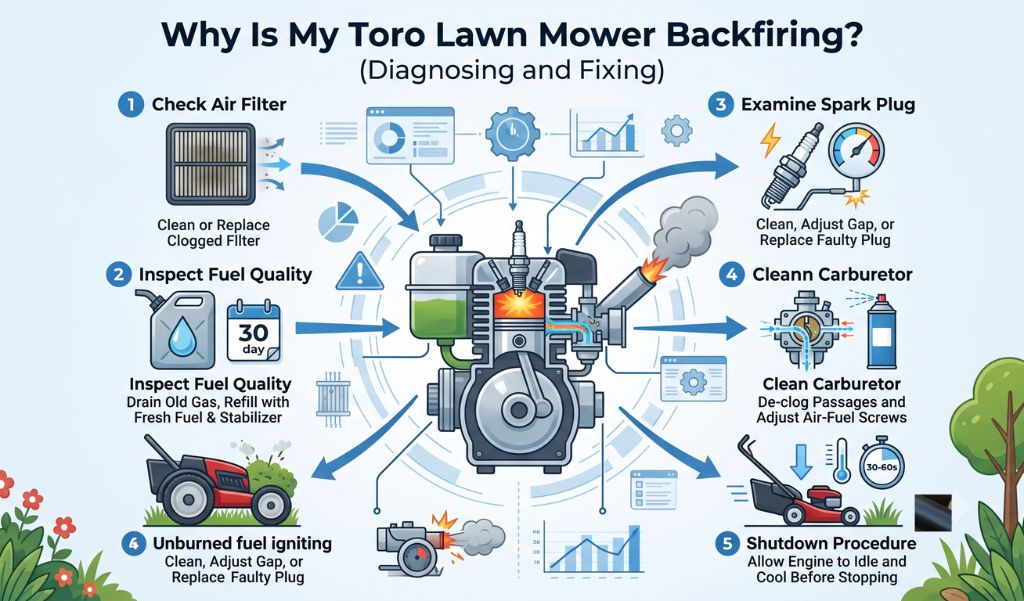
Several faults trigger backfires in Toro machines. Knowing them helps you pick the right fix. The list below covers the top sources reported by repair shops.
- Stale ethanol fuel separates and leaves gum in the carburetor passages.
- A dirty air filter restricts airflow and creates a rich fuel mixture.
- A worn spark plug fires weakly or at the wrong time.
- Low oil level causes overheating that ignites fuel in the exhaust.
- A cracked muffler or loose heat shield lets oxygen feed stray flames.
According to the Outdoor Power Equipment Institute, stale fuel causes roughly 50% of small engine issues. The U.S. Department of Energy notes ethanol fuel can absorb water and separate within 30 days of storage. These facts explain many spring startup backfires.
Warning: Never open the carburetor near an open flame. Fuel vapor can ignite and cause burns.
Stale Ethanol Fuel
Modern gas often contains ethanol that attracts moisture. In a Toro tank, the mix can phase separate during storage. The bottom layer becomes watery acid that corrodes the carburetor.
When you start the mower, that contaminated fuel burns unevenly. Unburned pockets escape to the muffler and explode. The U.S. Environmental Protection Agency states fuel over 10% ethanol can harm small engines.
Restricted Airflow
The air filter keeps dirt out of the intake. A clogged paper or foam filter starves the engine of oxygen. The result is a rich mixture with too much gasoline per spark.
Toro reports that a blocked filter reduces airflow and triggers rich mixture backfires. You should tap or replace the filter every 25 hours of use. Clean filters keep the burn inside the cylinder.
Spark Timing Faults
The flywheel key sets the moment the plug fires. If the key shears from impact, timing retards or advances. Late spark leaves fuel unburned at the exhaust stroke.
A weak plug also misfires under load. The raw charge then lights in the hot muffler. Check the plug gap with a feeler gauge and replace it yearly.
Muffler and Exhaust Damage
The muffler cools and quiets exhaust. A rust hole or broken baffle lets fresh air enter the hot pipe. That oxygen feeds a small flame that sounds like a backfire.
Inspect the muffler each season for black soot or cracks. Replace it if you see holes. A safe exhaust system prevents fire near dry grass.
How to Diagnose and Fix Toro Mower Backfiring
Follow a clear sequence to find the fault. You need basic tools and fresh fuel. The steps below work for most Toro walk-behind and riding models.
- Park the mower on flat ground and let the engine cool fully.
- Remove the spark plug wire and inspect the plug for fouling.
- Drain the old fuel from the tank and carburetor bowl.
- Clean the carburetor with spray and replace the gasket if torn.
- Replace the air filter and check the muffler for holes.
- Refill with ethanol-free gas or stabilizer-treated fuel.
- Restart and listen for steady idle without pops.
Use the table to match symptoms with fixes. This speeds repair and avoids parts waste.
| Symptom | Likely Cause | Fix |
|---|---|---|
| Pop at carburetor on start | Stale fuel, clogged jet | Drain fuel, clean carburetor |
| Pop after shutdown | Rich mix, hot muffler | Replace air filter, tune idle |
| Continuous backfire under load | Bad spark plug, timing | Swap plug, check flywheel key |
| Backfire with smoke | Cracked muffler, oil leak | Replace muffler, fix seal |
Important: The Consumer Product Safety Commission advises disconnecting the spark plug before any engine work to avoid accidental starts.
Tools You Need
- A socket set to remove the carburetor and muffler bolts.
- Carburetor cleaner spray and a soft brush.
- A new air filter matched to your Toro model number.
- A spark plug wrench and gap tool.
- Fresh ethanol-free gasoline or stabilizer.
Who Needs to Address Backfiring?
Any Toro owner who hears abnormal pops should act. Left alone, backfires waste fuel and harm parts. The groups below benefit most from this guide.
- Homeowners with mowers stored over winter without fuel treatment.
- Landscapers using fleet machines daily under heavy load.
- New owners of used Toro mowers with unknown service history.
- People in humid regions where ethanol fuel separates faster.
- Rental users who share equipment that may get poor fuel.
You do not need a mechanic for most fixes. Basic hand tools and a service manual suffice. Toro designs decks and engines for owner maintenance.
Common Myths vs Facts
Backfiring confuses many owners. The myths below spread through forums and shops. We correct them with facts from engine makers and agencies.
- Myth: Backfiring means the engine is destroyed. Fact: Most cases stem from fuel or filter issues you can fix in an hour.
- Myth: Only old mowers backfire. Fact: New Toro models backfire when fed stale ethanol fuel at first start.
- Myth: A backfire is normal on shutdown. Fact: Occasional soft pop is afterfire, but loud repeats signal a rich mixture fault.
Resources and Tools
Use these verified sources to get parts and specs. Each link opens the official page in a new tab.
- Toro Support – Find manuals and model lookup by serial number. Visit Site
- OPEI Fuel Tips – Read storage rules for small engine fuel. Visit Site
- EPA Ethanol Guide – Learn how ethanol affects outdoor equipment. Visit Site
- Briggs & Stratton – Buy genuine carburetor and plug parts. Visit Site
Frequently Asked Questions
Why does my Toro mower backfire when I shut it off?
Shutdown backfire happens when unburned fuel reaches the hot muffler. A rich mixture from a dirty air filter often causes it. According to Toro manuals, replacing the filter stops most afterfire.
Can bad gasoline really make my mower backfire?
Yes. The U.S. EPA states fuel with over 10% ethanol can damage small engines and cause misfires. Stale gas leaves deposits that block carburetor jets and trigger pops.
How often should I clean the carburetor on a Toro mower?
Clean it each season before first use if you did not drain fuel. Heavy users should inspect the carburetor every 50 hours of run time. Use a spray cleaner and compressed air.
Will a new spark plug stop the backfiring?
A fresh plug helps if the old one fouled or mistimed spark. But if the carburetor stays clogged, the pop returns. Always fix fuel and air first, then plug.
Is it safe to run a mower that backfires occasionally?
Short term, a soft pop may not harm. Continuous backfire can crack the muffler or start a fire near dry grass. The CPSC urges prompt repair of any engine fault.
Final Thoughts
A Toro mower backfire usually points to fuel or air faults you can fix at home. Understanding why is my toro lawn mower backfiring helps you act fast and avoid damage. Fresh gas and a clean carburetor keep your engine running smooth.
